What is SHE Doing Here?
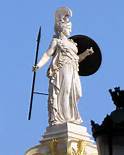 When I was growing up, Athena was my favourite goddess. What’s not to like? She springs fully-armed from the head of Zeus. She’s the goddess of Wisdom, as well as the goddess of War – oh, and the Liberal Arts. Except for that silly apple of discord episode, she’s the perfect role model for a young girl.
The thing is, when I was growing up, and there were only male heroes in the type of story I liked to read, it didn’t really bother me. When you have nothing else to compare it to, the world you have seems normal. For some reason, I didn’t feel excluded, nor did I feel that women couldn’t be the hero. I just thought no one had written those stories yet. See, all the writers seemed to be men, so I guess I figured that explained it. Certainly all the stories I made up to tell my friends had female leads. Swashbuckling, sword-wielding female leads.
Nowadays we tend toward using words like “protagonist” and “main character” rather than “hero,” and I think that’s to avoid the connotations that come along with the word. For some reason, when people say “hero,” they think it means some flawless gem of humanity. Well, maybe there were some of those, somewhere along the way, but if so, I never read about them. Every hero I’ve personally encountered, from Oedipus to Iron Man, is flawed – some even have a “tragic flaw” that results in their undoing.