John Bellairs, Fred Saberhagen and Appendix N: Advanced Readings in D&D
 I know John Bellairs mostly as the author of a host of YA fantasy mysteries — rather dark fantasy mysteries, actually, with a twinge of horror. The first one I purchased was The House With a Clock in its Walls, back when my kids were very young, but I imagined they’d thank me as they grew older and started devouring the fantasy library I’d diligently built for them.
Never happened. Instead, they did the exact same thing I did at their age: found their own books and steadfastly ignored the stuff their boring parents kept recommending.
They read Christopher Paolini’s Eragon series, and Suzanne Collins’s Gregor books, John A. Flanagan’s Ranger’s Apprentice, and Suzanne Collins’s Hunger Games. I ended up with stacks of unread John Bellairs titles like The Eyes of the Killer Robot and The Spell of the Sorcerer’s Skull. At least they looked good on the shelves.
John Bellairs also wrote at least one adult fantasy, The Face in the Frost. And that was apparently enough to win him a space in Gary Gygax’s Appendix N in the back of the Dungeon Masters Guide, which is why we’re talking about him today.
Mordicai Knode and Tim Callahan are examining one Appendix N writer per week at Tor.com, in their Advanced Readings in D&D series. They’ve done 15 installments so far, and for number 16 Tim turns to John Bellairs.
But first, he briefly returns to subject #15, Lin Carter, to say a few words about his exceptional treatise on adult fantasy, Imaginary Worlds.






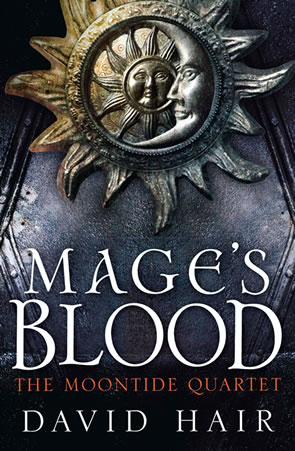 Sprawl is my favorite virtue of the novel. Not just this novel, Mage’s Blood, but novels generally, in all their varied glories. I may be the only person on Earth who is not at all perturbed by the ever-increasing length of George R. R. Martin’s Song of Ice and Fire books and I was probably the only reader of Harry Potter who wished J.K. Rowling had made her last volume about fifty pages longer, though this is not the time to say why. Sprawl may be a virtue in novels, but in blog posts, not so much. I picked up David Hair’s first volume of the new Moontide Quartet series because it promised a large ensemble cast arrayed in a family saga big enough to keep all those characters busy for years. The word “Quartet” in the title helps, too, with its suggestion that the author knows where he is going with the series. And if the first volume is anything to go by, I think he probably does.