Browsed by
Category: Vintage Treasures

Vintage Treasures: Fire Watch by Connie Willis

Vintage Treasures: Fire Watch by Connie Willis

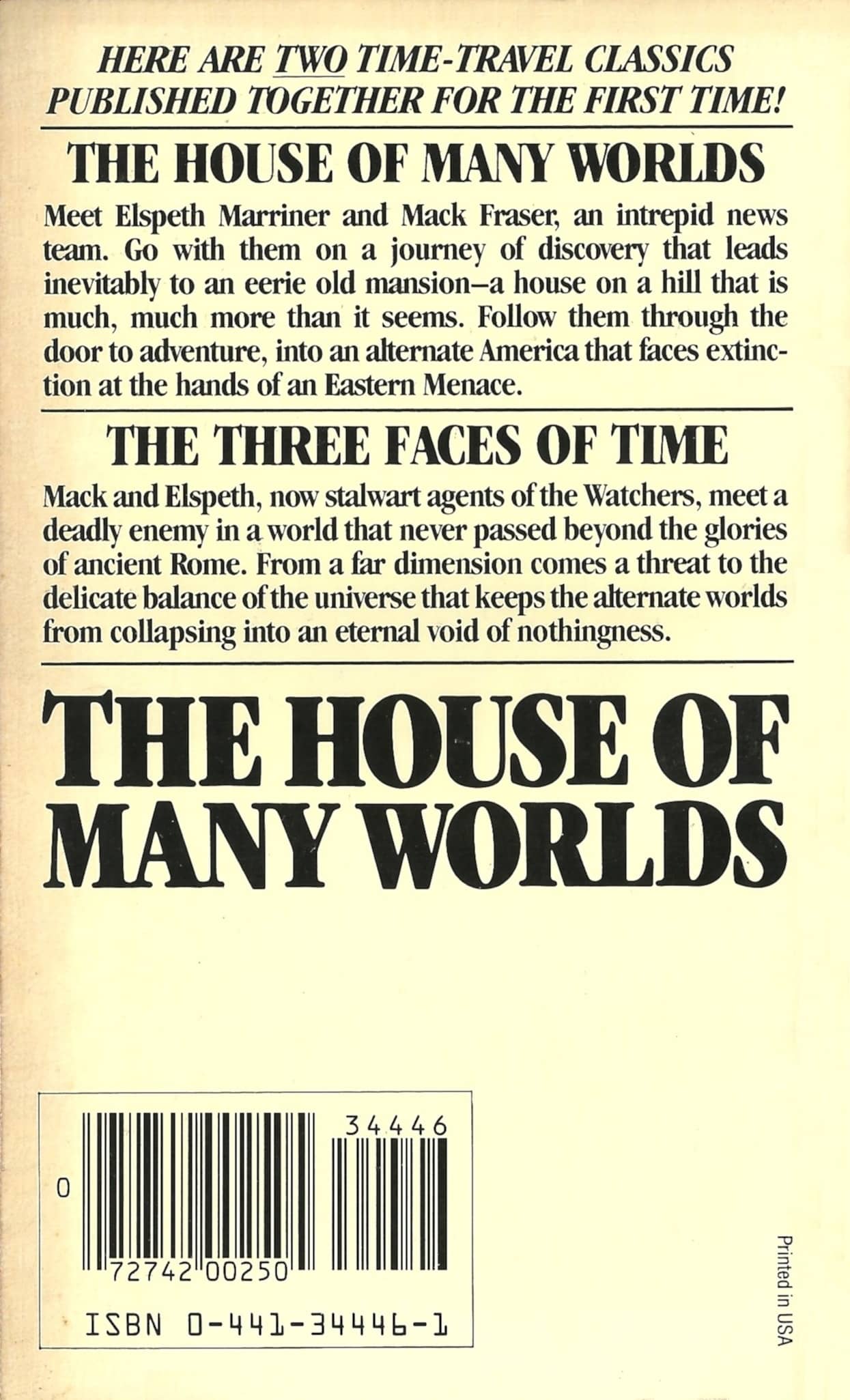
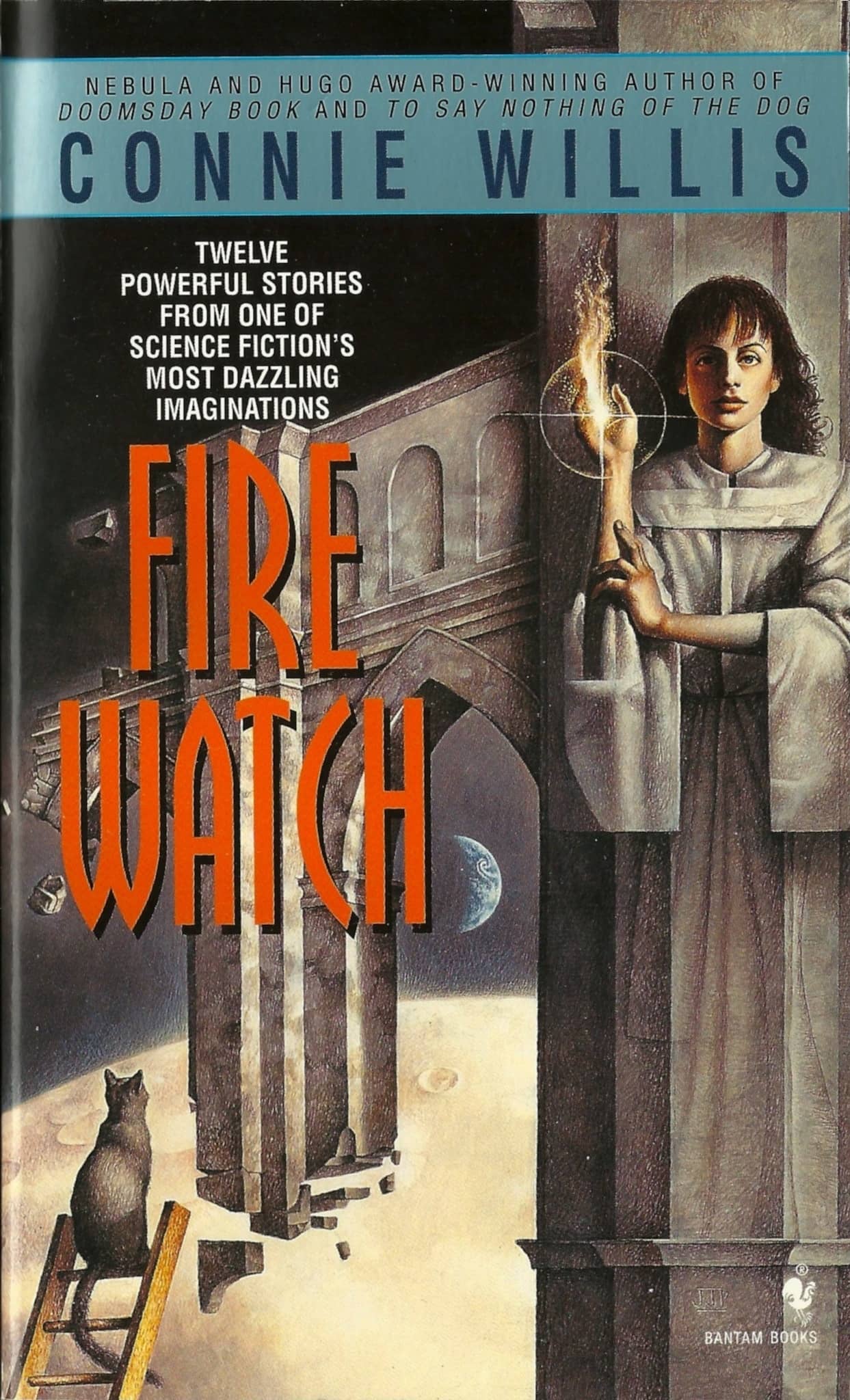
Fire Watch Connie Willis-small Fire Watch Connie Willis-back-small

Fire Watch was the first collection from Connie Willis, and it had a huge impact on the field. It came in second for the Locus Award for Best Collection in 1986 (beating out George R.R. Martin’s Nightflyers, Larry Niven’s Limits, and Viriconium Nights by M. John Harrison, and losing out only to Stephen King’s Skeleton Crew). Its publication announced the arrival of a major new talent.

Willis  published over half a dozen additional collections in the next 30+ years, including the Locus Award-winning Impossible Things (1994), the monumental 740-page The Winds of Marble Arch and Other Stories (2007), and the Locus Award-winning The Best of Connie Willis (2013), but I think it’s fair to say that this is probably still her most famous.

The copy above is the the one I found at Half Price Books last month, and not the first paperback edition. Fire Watch was published in hardcover by James Frenkel’s Bluejay Books in 1985; the first paperback edition appeared from Bantam a year later (see that one below).

Read More Read More

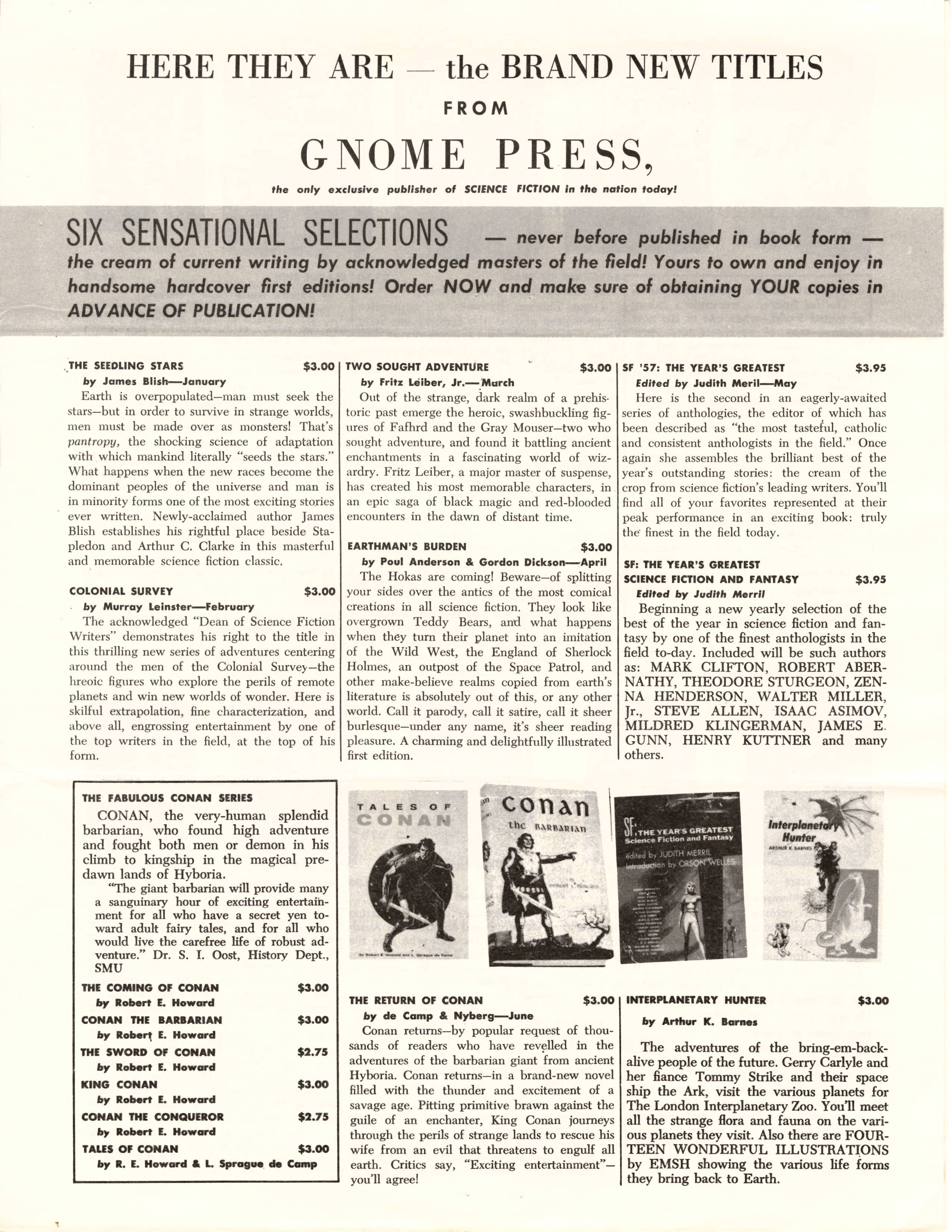
Here They Are — The Brand New 1957 Titles from Gnome Press

Here They Are — The Brand New 1957 Titles from Gnome Press

Gnome Press 1957 brand new titles announcement-small

For tonight, I thought I’d post a rare bit of Robert E. Howard Conan ephemera I’ve been meaning to post for awhile, but hadn’t gotten around to yet. This is the front page of the 1957 Gnome Press catalog — the catalog is four pages long, printed on an 11″ x 17″ sheet of paper folded in half (click the image above for a legible version).

Among other books, it advertises “The Fabulous Conan Series,” stating

CONAN, the very-human splendid barbarian, who found high adventure and fought both men or demon in his climb to kingship in the magical pre-dawn lands of Hyboria.

And then followed by a quote on the Conan stories from a professor in the History Department at SMU.

Inside was a one-sided sheet offering their Christmas Discount Offer, 10 books for $12, which I’ll post below. I’d gladly pay that!

Read More Read More

To Roam the Unreadable Tome: The Night Land Straight Up

To Roam the Unreadable Tome: The Night Land Straight Up

The Night Land Sphere

Anytime that you read a Black Gate article, you do so at your peril. We all know this. How much time and money have you spent tracking down obscure books that you’ve read about here, and how many irreplaceable hours have you spent reading them? Yeah. Me too.

My most recent bout of this fever I blame squarely on Nick Ozment, who recently blew a loud horn on behalf of William Hope Hodgson’s 1912 weird classic The Night Land. Now I’ve had a copy of this book on my shelf for thirty five years and never once come close to reading it. (Wife and kids, working for a living, eating and sleeping, reading a zillion other books, watching Lost and Breaking Bad — you know how it goes, Hodgson, old boy; it was nothing personal.) I never felt any guilt over neglecting this masterpiece; after all, in his article, Nick alluded to the book’s virtual unreadability in its original form (Mr. O was using his piece to boost James Stoddard’s 2010 “translation” of the book into a more modern, accessible idiom.)

Well, to tell me that a book is “difficult” or “impenetrable” or “practically unreadable” (all words that featured prominently in Nick’s article) is like waving a red flag at a bull. My reading fate for the next three weeks was decided at that moment.

Read More Read More

A Tale of Three Covers: Nightflyers by George R.R. Martin

A Tale of Three Covers: Nightflyers by George R.R. Martin

Nightflyers 1987-small Nightflyers 1989-small Nightflyers and Other Stories-small

George R.R. Martin may be the most popular genre writer on the planet. In terms of global book sales his only living rivals are J.K. Rowling and Stephen King.

So it’s not surprising that much of his back catalog is returning to print, including his 1985 short story collection NightflyersNightflyers contains six stories, including the Hugo-award winning novella “A Song for Lya,” but by far the most famous tale within is the title story, a science fiction/horror classic which won the Analog and Locus Awards in 1981, and was nominated for a Hugo for Best Novella.

Nightflyers was originally published by Bluejay in 1985, and reprinted in mass market paperback in February 1987 by Tor with a cover by James Warhola (above left). It was reprinted two years later with a new cover to tie-in with the 1987 movie version (above middle; cover artist unknown). The new edition, with a vibrantly colorful cover from an uncredited artist (above right), is the first over over three decades. It will be published by Tor at the end of the month, in advance of the new series debuting on Syfy later this year.

“Nightflyers” was one of the first major adventures set in Martin’s “Thousand Worlds” universe, home to much of his early short fiction. Here’s my synopsis from my 2012 Vintage Treasures article.

Read More Read More

Vintage Treasures: The Shining Falcon by Josepha Sherman

Vintage Treasures: The Shining Falcon by Josepha Sherman

The Shining Falcon-small The Shining Falcon-back-small

Josepha Sherman’s first short story, “The Shrouded Sorceress,” was published in Space & Time in 1981; her first novel was the YA title The Secret of the Unicorn Queen in 1988. She passed away in 2012, leaving behind a rich legacy of written work: 10 anthologies, including In Celebration of Lammas Night (Baen, 1996) and Urban Nightmares (Baen, 1997; with Keith R. A. DeCandido), and over two dozen novels, including media tie-in books for Bard’s Tale, Buffy the Vampire Slayer, Star Trek, Mage Knight, Highlander, and Xena: Warrior Princess.

But her most acclaimed novel was also her first book for adults, The Shining Falcon. It won the Compton Crook Award for Best First Novel of the Year, and was widely praised when it was first released. Esther Friesner called it “A gloriously rich tapestry of pageant, adventure and magic,” and Morgan Llywelyn said, “A world based on Slavic history and mythology, a world both exotc and darkly familiar… darkly brilliant and shimmering with magic.” Library Journal said:

A shape-changing prince, a magic-fearing noblewoman, a jealous princess, and an unscrupulous courtier find their destinies inextricably linked by the forces of love, hate, and magic. Drawing heavily on Slavic mythology for her first adult fantasy, Sherman creates a richly detailed novel with all the charm and readability of a fairy tale. Highly recommended.

Sherman’s other standalone novels include A Strange and Ancient Name (1993), King’s Son, Magic’s Son (1994), and Son of Darkness (1998). The Shining Falcon was published by Avon Books in November 1989. It is 343 pages, priced at $3.95. The cover was by Kinuko Craft. It has never been reprinted in the US. Copies generally aren’t hard to find; I paid $2 for mine at Half Price Books last month.

DMR Books Brings Pulp Sword & Sorcery Back Into Print

DMR Books Brings Pulp Sword & Sorcery Back Into Print

The Sapphire Goddess The Fantasies of Nictzin Dyalhis-small The Thief of Forthe and Other Stories by Clifford Ball-small

Last month I rented a booth at the Windy City Pulp and Paper show here in Chicago — my favorite local convention — and piled it high with brand new hardcovers and trade paperbacks I was giving away. I had 31 boxes of leftover review copies, duplicates from my collection, and hundreds of rare advance proofs to get out of my basement, and this seemed like the perfect opportunity. Bob Byrne and Steven Silver made long drives to the con to help staff the booth, and we were looking forward to handing out books to grateful attendees.

Reality was a little bit different. Most folks passed by our booth with barely a glance. If Bob and Steve and I hadn’t been tirelessly peddling books, handing out free copies as people passed by, and carting books by the dozens to the freebie pile at registration every few hours, we’d probably still be there. This was an audience more interested in pulps and vintage paperbacks than brand new science fiction and fantasy, apparently.

It’s not true that there was no interest in our booth. After eight long hours unsuccessfully giving away books on Friday, Dave Ritzlin from DMR Books joined us on Saturday, and we gladly made space for him in the booth. Once we did interest picked up immediately, as folks zeroed in on his attractive selection — and especially his new releases, The Sapphire Goddess: The Fantasies of Nictzin Dyalhis and The Thief of Forthe and Other Stories by Clifford Ball.

Read More Read More

A Demon Rising: Ardneh’s World by Fred Saberhagen

A Demon Rising: Ardneh’s World by Fred Saberhagen

oie_3043513UJFHNzOyAnd so we come to the end of the Empire of the East, Fred Saberhagen’s sword & science trilogy. Originally titled Changeling Earth (1973), Ardneh’s World (1988), provides the answers to mysteries raised in the previous two books, The Broken Lands and The Black Mountains, as well as an explosive conclusion. When it’s done, great powers have been broken and the world has been changed again.

The last book ended with the destruction of one of the Empire’s great commanders, Som the Dead, and of one of the great demons at its command, Zapranoth. The armies of the Free Folk of the West, now under the command of Prince Duncan of Islandia, are marching on the Empire. In the East, the utterly bad Emperor John Omninor is himself leading his legions onto the field of battle for a final confrontation.

Moving behind and through the characters is the mysterious and powerful Ardneh. No one knows who or what Ardneh is. He speaks to the commanders and wizards of the West telepathically. To the emperor and his minions, he remains an elusive enemy who must be dealt with by any means necessary if the West is to be defeated, its army crushed, and its people enslaved.

Following an unsuccessful attempt to trick Ardneh into revealing himself, Omninor dispatches a force under his his High Constable, Abner, to find his enemy. Magical divination and electronic tracking has told the emperor that Ardneh resides in a mountain far to the north of civilization.

Simultaneously, farm boy hero Rolf and ex-imperial Chup have been tasked with tracking down a mystic stone and bringing it to Ardneh. Because Rolf has a strange, innate affinity for technology, Ardneh has chosen him as his special connection with the West.

At length and not unexpectedly, the two parties meet, an old villain reappears, and violence ensues. Eventually, Rolf and a new companion, Catherine, are split from Chup and the rest of the company.

So much of Ardneh’s World is exposition, but, oh, what exposition it is. When Rolf and Catherine finally meet Ardneh, his pre-catastrophe origins and how magic came into existence are unveiled. Saberhagen’s big idea is pure pulp insanity. Part of what makes Empire of the East original is its ostensibly realistic take on magic, but there’s absolutely none of that here. In order to prevent Earth’s destruction in the face of a nuclear war, untested new technological safeguards were put in place in America. When the war finally came, those precautions proved invaluable. In the wake of the mostly-averted war, the deepest nature of reality was changed. Ardneh, an intelligent, self-aware being is a result of the change.

Read More Read More

Gary K. Wolfe on Cecelia Holland’s Floating Worlds and Other Classics That Deserve Modern Attention

Gary K. Wolfe on Cecelia Holland’s Floating Worlds and Other Classics That Deserve Modern Attention

Cecelia Holland Floating Worlds-pocket-small Cecelia Holland Floating Worlds-pocket-back-small

1977 Pocket Books paperback. Foil cover by Harry Bennett

On Episode 328 of The Coode Street Podcast, my recent audio addiction, Jonathan Strahan asked his co-host Gary K. Wolfe if there was some book of value, “or simply that you loved when you were a younger reader,” that he wished he could bring modern attention to.

If you know Jonathan and Gary, you appreciate that’s precisely the kind of question that could fill an hour-long episode all on its own. But Gary provided what I thought was a remarkably cogent and focused reply, all the more remarkable for its brevity. After noting that “When you get to be my age, a younger reader covers a span of decades,” and paying homage to Andre Norton’s Cat’s Eye and Star Man Son, Gary called out a long-forgotten SF novel from 1976.

One of the classic one-off science fiction novels, I think from maybe 40 some years ago now, was Cecelia Holland’s Floating Worlds, a historical novelist using her historical imagination to construct a pretty powerful solar system space opera. I’ve not re-read that in a long time. I’d like new people to look at that and see if, hey, was I right? Was this as good as I thought it was?

Although Floating Worlds is a neglected classic here in the US — its last paperback printing was in 1979 from Pocket Books — it has a much richer history in the UK, with eight print versions and an e-book edition between 1976 and 2014.

Read More Read More

Tarzan Swing-By: Tarzan and the Lost Empire (1928–29)

Tarzan Swing-By: Tarzan and the Lost Empire (1928–29)

tarzan-and-lost-empire-grosset-dunlap-cover

Readers have asked me, but the answer is still no: I can’t tackle the entire Tarzan series the way I did Edgar Rice Burroughs’s other book series, Mars, Venus, and Pellucidar. There are twenty-four Tarzan books, not counting the juveniles, and I’d burn out long before the end if I tried to read them in sequence over a compressed time period.

But since I’m always glad to pick up a Tarzan volume here and there among my other Burroughs readings, I’ll negotiate. I’ll do an occasional Tarzan book “swing-by” to give spotlight time to ERB’s biggest contribution to popular culture. No particular order, just whatever Tarzan adventure grabs me at the moment.

So I’ll start with … let’s see … Book #12, Tarzan and the Lost Empire. Wherein the Lord of the Jungle finds yet another civilization lost in time in the heart of Africa: a remnant of the Roman Empire still living the ancient ways. Tarzan also gets a little monkey sidekick.

Tarzan and the Lost Empire falls into a period of the Tarzan novels that I think of as the “Filmation Era” because of how much the 1970s Filmation animated series Tarzan, Lord of the Jungle reflects it. After the tenth book, Tarzan and the Ant Men, Tarzan was distanced from the Greystoke legacy and his former supporting cast, and now has the companionship of both Nkima the monkey and Jad-bal-ja the golden lion. Jane vanished except for a single reappearance in Tarzan’s Quest (1936). The plots became standalone and repeated certain formulas, such as Tarzan discovering lost civilizations or facing a Tarzan imposter.

The writing quality of these books was still high in the late ‘20s and early ‘30s, and Burroughs hadn’t lost his skill at executing pulse-racing action set-pieces. But the plotting was often perfunctory as ERB became a bit fatigued with having to go back to the Tarzan well again and again. The story ideas and the prose popped, but the plots often meandered with overstuffed casts and too much incident that doesn’t go anywhere. Tarzan and the Lost Empire falls prey to these faults. But it also contains one of the most interesting hidden civilizations of the series and a setting that energized Burroughs.

Read More Read More

A Spooky Trip Back to the Golden Age of Weird: The Complete Tales of Jules de Grandin, by Seabury Quinn

A Spooky Trip Back to the Golden Age of Weird: The Complete Tales of Jules de Grandin, by Seabury Quinn

The Horror on the Links The Complete Tales of Jules de Grandin Volume One-small The Devil's Rosary The Complete Tales of Jules de Grandin Volume Two-small The Dark Angel The Complete Tales of Jules de Grandin Volume Three-small

Seabury Quinn’s occult detective Jules de Grandin first appeared in Weird Tales in 1925 and, in over 90 stories published over the next 26 years, he squared off against ghosts, werewolves, satanists, serial killers, and more sinister things. His adventures were among the most popular ever published in that venerable old pulp, surpassing even the legendary exploits of Robert E. Howard’s Conan and H.P. Lovecraft’s Cthulhu Mythos.

Publishers’s Weekly had this to say about the first installment of The Complete Tales of Jules de Grandin, The Horror on the Links, released by Night Shade Books in April 2017:

The first volume… is a fun, spooky trip back to the golden age of weird. Each story is narrated by de Grandin’s bemused and long-suffering friend Dr. Samuel Trowbridge, and most include de Grandin’s concluding explanation of the how and why of the events. Each story has its merits, but standouts include the shudder-worthy “The Isle of Missing Ships,” in which de Grandin and Trowbridge’s ship is overtaken by pirates; they end up stranded on an island where a strange man dwells in a lavish underwater cave and “long pork” is on the menu. “The Great God Pan” sees de Grandin and Trowbridge among a bevy of beauties in thrall to a strange guru. In other stories, the duo face werewolves, disembodied hands, and an evil scientist who keeps horrifying “pets” in his cellar. Seabury had a keen imagination and gift for atmosphere, and, even though modern readers may flinch a bit at some of the dated viewpoints and tropes, they’re likely to still have a grand time.

In the Jules de Grandin entry of The Nightmare Men, his long-running Black Gate series on occult detectives, Josh Reynolds offered his own thoughtful assessment of this great pulp hero. Here it is.

Read More Read More