Short Fiction Review #26: Real Unreal: Best American Fantasy Vol. 3
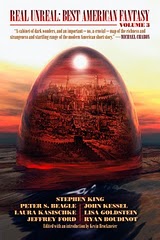 I don’t know whether the third edition of Best American Fantasy, which has found a new home with Underland Press, represents the “best” fantasy, or why it matters whether it’s “American” (meaning, presumably, the United States). Of course, it’s a cliché for any anthology to proclaim its contents represent a “best of,” and the editors who’ve been doing it for a number of years frequently rely on stories from the usual suspects of authors who mostly all publish in the same magazines. While I haven’t read the previous editions of Best American Fantasy, knowing that the series editor is Matthew Cheney and the co-founding editors were Jeff and Ann VanderMeer, I knew what to expect from guest editor Kevin Brockmeier (notwithstanding that Stephen King is the top author listed on the cover page; indeed, his funny riff on the “mysterious telephone call from the dead,” is more in keeping with “traditional” fantasy). This is a collection of _____(New Weird, slipstream, literary, you fill-in-the-blank), the “Real Unreal” about the fantastical state of human consciousness. No elves or adolescents on a quest.
What I didn’t quite expect was the number of authors totally new to me as well as the breadth of source materials, ranging from the tried-and-true (Fantasy and Science Fiction) to the literary (Kenyon Review) to another anthology (Del Rey Book of Science Fiction and Fantasy) to a few I’ve never heard of (The Fairy Tale Review, Pindeldyboz). And the only story I’d previously read was Jeffrey Ford’s “Daltharee,” about the creation of a bottled city and the arrogance and irresponsibility of scientific bureaucracies.
Ramona Ausubel sets the stage with the opening tale of “Safe Passage.” A group of grandmothers find themselves at sea, with no clue as to how they got onboard ship or why. Presumably, they’re dead. Okay, been there before. But the protagonist’s reaction to the banal behavior of her shipmates, and her ultimate decision to take action that results in a sort of enlightened view of her plight, makes the “unreal” here quite “real.”
…
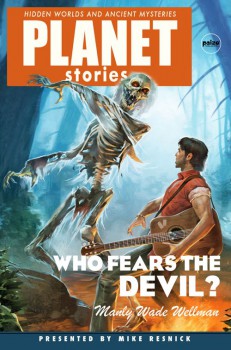 Who Fears the Devil?
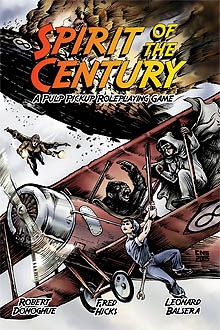 One of the most promising new game systems I reviewed in Black Gate 14 was used for the pulp role-playing game
 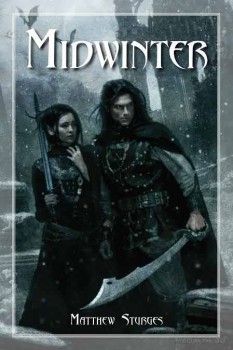 Midwinter
 How to Train Your Dragon (2010)
 Most pulp writers of the 1930s were itching to break into the hardcover book market. Since reprints of pulp stories in book form were rare at the time, these writers did not expect that their work for the newsstands would survive past an issue’s sell-date. They felt comfortable re-working and expanding on them to create novels. Raymond Chandler famously called his process of novelizing his already published work as “cannibalizing.” He welded together different short stories, often keeping large sections of text intact with only slight alterations. Other authors took ideas that they liked, or else felt they could do more justice to in the novel format, and enlarged them into books without text carry-over. Robert E. Howard used “The Scarlet Citadel” as a guide for The Hour of the Dragon. And Cornell Woolrich turned many of his short stories into novels. “Face Work” became The Black Angel. “Call Me Patrice” became I Married a Dead Man. “The Street of Jungle Death” became Black Alibi. And “Speak to Me of Death” became Woolrich’s most depressing novel (which is really saying something), Night Has a Thousand Eyes.
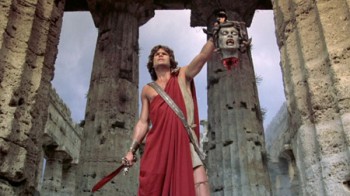 On April 2nd, “Titans Will Clash!” Which is perhaps the worst tag-line I’ve seen since “The Story That Won’t Go Away” for JFK. I wonder why the tag-line on director Louis Lettier’s previous film wasn’t “This Summer, The Hulk Is Incredible!”
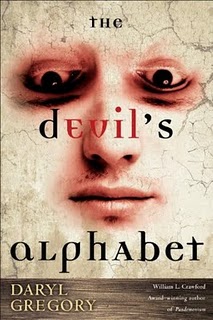 Paxton Martin has come home to Switchcreek, Tennessee, to attend the funeral of a childhood friend. He drove in from Chicago, pulling an all-nighter, because he could not decide until the last minute if he wanted to go back. He’d been living in Chicago since running away from Switchcreek, 13 years ago, after everything changed.
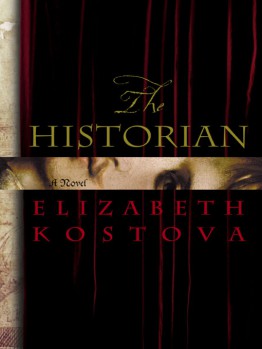 I don’t have a dislike for the vampire in general. I’ve repeatedly reminded myself about this even as I cringe at the saturation in our culture of mediocre work based on supernatural bloodsuckers. (Do I really have to name the book and movie series at the center of this creative blood drain? Of course I don’t.) Vampires are everywhere today, and this visibility has reduced their effectiveness for me, no matter what “new” spin the artists claim they’re putting on the legend. Exceptions are out there—for example the action-packed novels of certain contributor to Black Gate—but today I actively avoid horror and dark fantasy and especially parodies using vampires. I want more werewolves and phantasms and cosmic weirdness. Specifically werewolves. I love werewolves.