Short Fiction Review #24: Realms of Fantasy February 2010
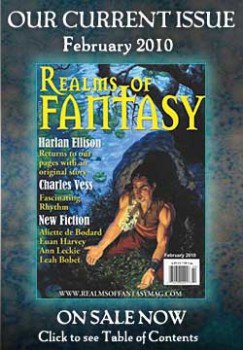 The new Realms of Fantasy coincides with the relaunch (as of December 11, 2009) of an actually informative website since Warren Lapine took over as publisher beginning with the August 2009 issue (and perhaps the fact that the website of previous owner Sovereign Media was essentially just a placeholder was indicative of the company’s general lack of interest in the magazine that eventually led to its sale). There was a free PDF version of this bimonthly available for a time, but the link seems to have been taken down. Fans of Black Gate magazine in particular will no doubt appreciate the largely sword and sorcery, high fantasy type fiction, as well as the related non-fiction gaming, illustration and book genre reviews. Black Gate fans may also appreciate that their favorite magazine dispenses with high gloss interior color; for some reason the graphic designer(s) of the current RoF think that red and yellow headlines and callouts on a white background make the magazine more visually interesting; I find it not only ugly, but in certain lighting, difficult to read.
Of interest to the broader science fiction and fantasy audience, however, is a Harlan Ellision® short story featuring a curmudgeonly character undoubtedly intended to remind you of the copyrighted author. This is another in the genre’s seemingly endless fascination with the Frankenstein trope of the responsibilities between the creator and the created. Ellison’s spin is to introduce the notion of the stupidity and bigotry of political correctness while tacking on two alternate endings reminiscent of classic Golden Age treatments of this theme from the 1950s/1960s. Actually, I thought the story worked well enough if it ended with “But I had been ignorant of the laws of human nature, and we both knew it was all my responsibility. The beginning,the term of the adventure, and now, the ending” (31) before it branches off to present conclusions from two different perspectives. The second has deeper philosophical implications, but for whatever visceral reasons I prefer the first one. No spoilers here — decide and discuss among yourselves.
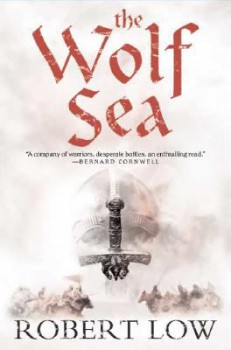 The Wolf Sea
 Don’t talk to a wolf in your Grandma’s nighty, don’t take an apple from a creepy old lady and when in doubt, trust the house mice.
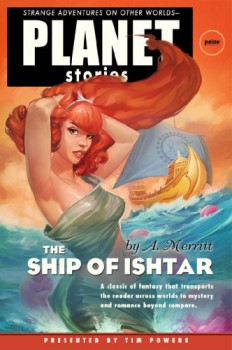 The Ship of Ishtar
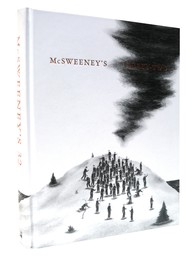 McSweeney’s is a quirky quarterly that breaks conventional publishing boundaries with each issue devoted to a unique theme, both in terms of editorial content and physical packaging. For
 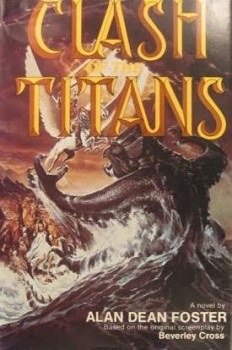 Update: Alan Dean Foster has generously provided some comments of his own about the novelization. Please see the comments section.
 Pax Dakota
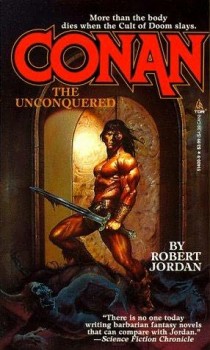 Conan the Unconquered
 There are a lot of things to commend this book to an experienced gamer. The rules are fairly simple yet cover a lot of ground. I like how the abilities are not really tied into specific stats that are sometimes hard to justify - this system is much more fluid. It also is not conducive to rules lawyering and if there is one thing I hate, it is rules-lawyering, so this is a positive for me. I can see where the OCD crowd who wants a rule for everything could be irritated with it, but I game by the principle that story precedes rules, and this rule set is made for that mindset.