Self-Published Book Review: Mistress of the Dancing Bones by Thomas Alexander
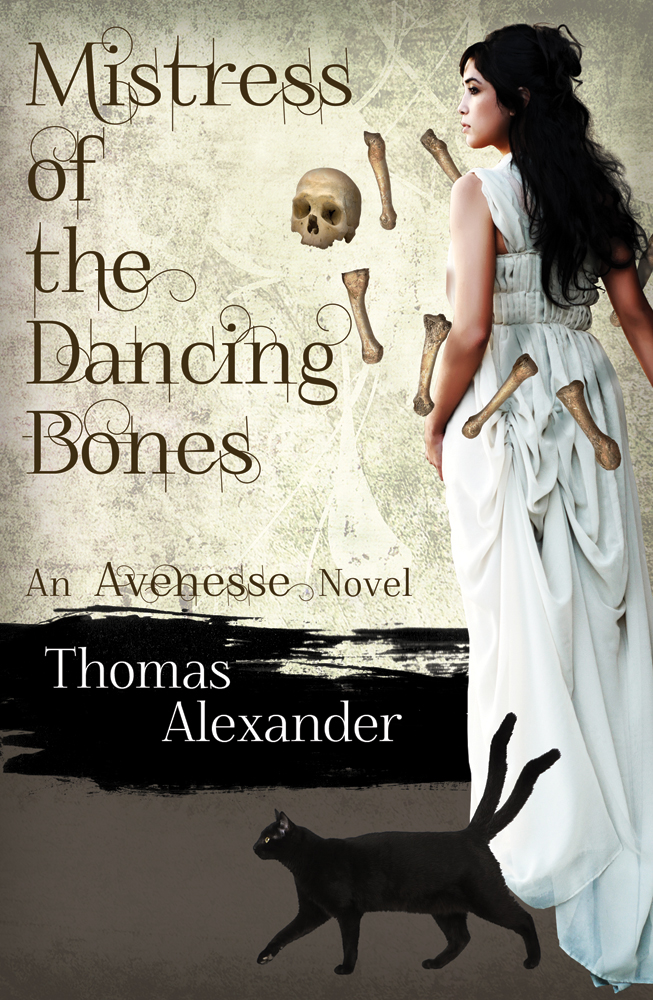 This month’s self-published book is Mistress of the Dancing Bones by Thomas Alexander.
Four hundred years ago, the Deathlords threatened to destroy all of humanity. It was the nephilim who saved the human race. Thus was the Code Sanguine founded: humans swore to serve the nephilim, and if required, give them their blood, while the nephilim swore to protect humanity, and raise the best of the humans to nephilim themselves. For before the Code Sanguine, the nephilim were known by another name: vampires.
Ashia is the daughter of a nephilim warlord, Marcel Boucher, and his human wife. This does not make her a nephilim, or even part nephilim. She is fully human until embraced by the nephilim. She is also, thanks to her mother, Dahraki, one of the dragon-blooded, and that gives her access to another kind of magic, the necromancy of the Than Khet. Unfortunately, the servant who secretly tutored her in Than Khet magic neglected to tell her that it is incompatible with becoming nephilim. Should a Than Khet be embraced as a nephilim, she would go mad as the two parts of herself warred.
When he discovers what has happened, Ashia’s father is furious. All his dreams for his daughter have come crashing down. But larger problems plague Ashia’s family. Renegade vampires are plaguing Marcel’s territory and the family’s enemies are placing the blame squarely on Marcel and his willingness to embrace barbarians rather than civilized Avensh as nephilim. In order to discover the truth, Ashia agrees to accompany the legendary nephilim witch-hunter Dusang and his demon-cat-fey ally, Tama, in tracking down the renegades and discovering the truth behind a conspiracy that involves not only renegades and political enemies, but the Deathlords themselves.
I am generally not a fan of vampire novels. I prefer my vampires as antagonists rather than as love interests. And for the love of God, sunlight better burn, or at least weaken, them, not cause them to sparkle. So I was taking a chance on this novel, but I’m glad I did.
 Don’t start with the cover, or the blurb, or the elevator pitch. Don’t start with which other books The Unexpected Enlightenment of Rachel Griffin resembles.