Fantasia 2020, Part XVI: Me And Me
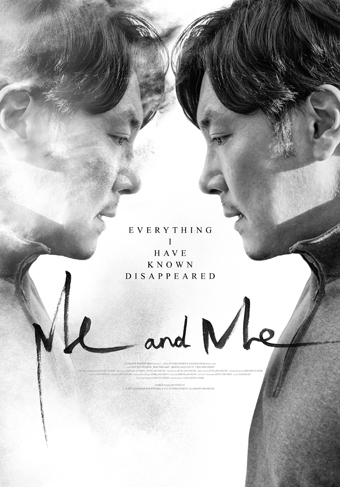 One of the genuinely wonderful things about covering a film festival is occasionally getting to be among the first audiences for a movie trying something new. That is, being an early viewer of a movie that does things unlike other movies, and getting to make one’s own mind up on whether those things work. Movies at a festival have often not had a critical consensus formed around them, and have not yet been defined by other writers or had their influences mapped out. You as the viewer are alone with the thing, almost contextless, in a way that’s rare these days.
I feel this most vividly with movies I don’t fully understand. Not movies I think are bad, or movies I’m wholly sure are good, but movies into which I must feel my way slowly even after seeing them. Like or dislike a blockbuster tentpole, a Marvel film or Star Wars film, I understand what they’re trying to do and how. It’s when watching a movie that gives me clues but baffles me, a movie that clearly is animated by wisdom and intelligence but which I can’t quite assemble into a coherent whole, that I’m aware of being among the first to try to articulate what I’m seeing.
To say all this is to give an idea of the effect of Me And Me (Sarajin Sigan, 사라진 시간). It’s the debut feature from Jung Jin-young, who also wrote the picture. Jung’s a veteran actor, and he’s clearly thought through what he wants to do with his movie. At one viewing, I will not claim to fully understand it. But then, it’s fair to say that understanding is not always necessary to appreciate art.
The movie starts in a small village in Korea, with a young teacher, Soo-hyuk (Bae Soo-bin), and his wife Yi-young (Cha Su-yeon). It soon becomes clear that Yi-young has a problem: at nightfall she’s possessed by a spirit of a dead person. Not necessarily the same dead person every night, either. News of this spreads through the village, and leads to tragedy, which brings a police detective, Hyung-gu (Cho Jin-woong) to town. (Cho’s also the star of Jesters: The Game Changers, an example of a film that does what it does in a much more linear manner.)
With Hyung-gu’s entrance on the scene the story shifts to follow him as he investigates the rustics of the town. By about the middle of the film all the mysteries seem to be cleared up, and we at least think we know what’s happened. Then there’s a swerve. Without wanting to give away too much, it may be said that Hyung-gu wakes up to a very different life. As he, and we, try to work out what’s happened, unexpected connections come to light; the movie does some odd structural things; finally it ends, with the plot apparently not resolved as we might have looked for, but with a circularity (and a shot repeated from the opening) that implies things have worked their way around to a slightly better state.
 Watching a film festival at home instead of in theatres raises a question that’s become a much-debated point over the last couple of years: is the experience of viewing a movie on a TV screen essentially different and essentially lesser than watching the same movie in a theatre? I don’t think there’s a single answer to this question. Different movies and different viewers and different circumstances will create better or worse scenarios. I think it is probably safe to say that the theatrical experience has much more sensory power; that the powerful sound system and the controlled environment and the full dark of a theatre will usually be more immediately overwhelming to a viewer. But it’s reasonable to wonder if a movie that relies on sheer sensory power can be called ‘a good movie.’
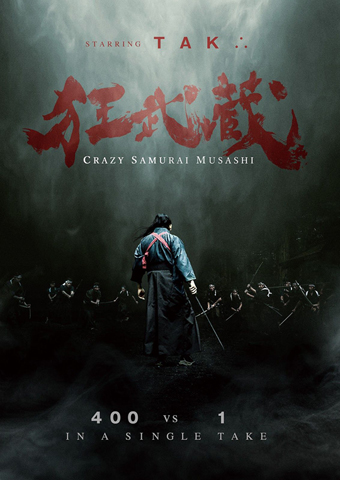 Miyamoto Musashi (1584-1645) was one of the greatest samurai and greatest swordfighters ever to live. By his own account, he fought over sixty duels and won all of them. Stories about Musashi have been told and retold over the centuries, notably including the great novel Musashi (1935-39) by Eiji Yoshikawa. Films about him have proliferated, the most famous likely being Hirohi Inagaki’s Samurai trilogy (1954-55) starring Toshiro Mifune as Musashi.
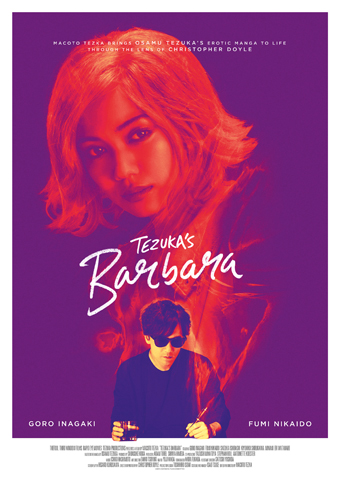 The chain of inspiration behind a work of art can be stunning to behold. Ernst Theodor Amadeus Hoffman was a musician, critic, and fiction writer in the early nineteenth century whose surreal and gemlike short stories are wonders of early fantasy. Some of those stories were worked into the libretto of Jacques Offenbach’s 1881 opera Les contes d’Hoffmann. Adapted to films at least three times, most notably by Michael Powell and Emeric Pressburger in 1951, Offenbach’s work would inspire the great manga creator Osamu Tezuka in 1973. A
 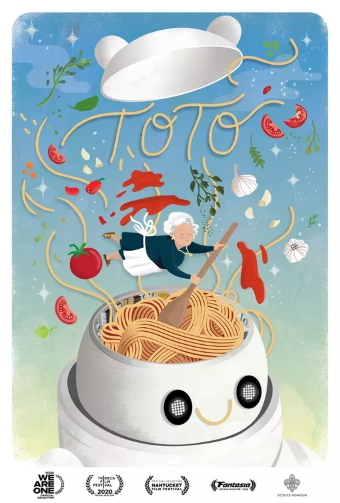 Day 6 of Fantasia 2020 started for me with a panel on folk horror. While you can find the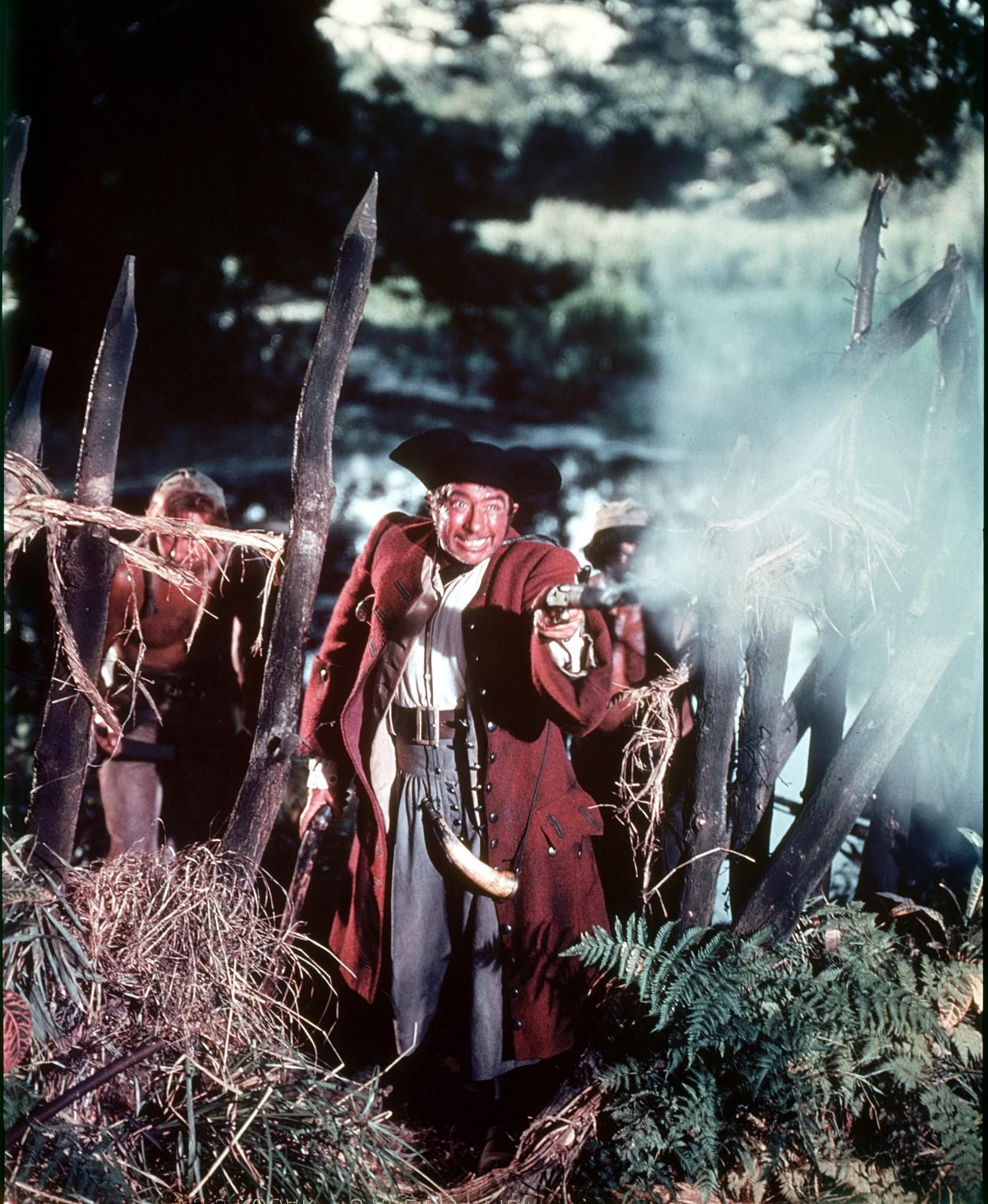
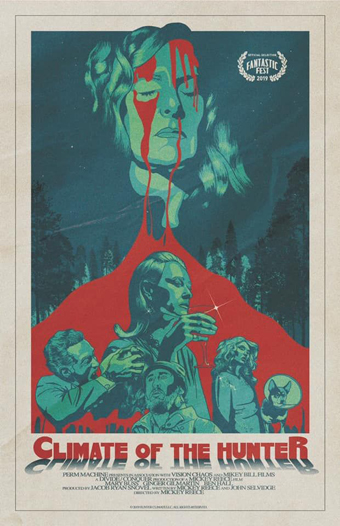 Mickey Reece is a musician turned underground filmmaker with over two dozen features to his credit. In 2019 he came out with Climate of the Hunter, which he directed and wrote with John Selvidge. It streamed on-demand at this year’s Fantasia Festival, and it’s billed as a cross between old-fashioned movie melodramas in the style of Douglas Sirk — what is sometimes called a “
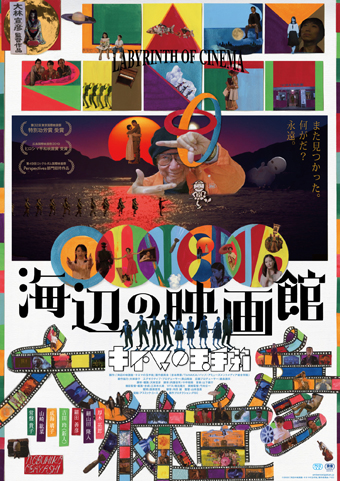 Nobuhiko Obayashi, the director best known for the surreal 1977 horror film House (Hausu, ハウス), died on April 10 this year. His final film is Labyrinth of Cinema (海辺の映画館 キネマの玉手箱), which he wrote as well as directed. Just as visually extravagant as House, it grapples with weightier themes — specifically, the nature of cinema and of war, and how film can be used to protest war. It’s therefore also a rumination on history, specifically the history of Japan in the late nineteenth and early twentieth century, and how that history was depicted in the movies of its time. And Labyrinth gets at these things through the frame of a fantasy story about movie spectators unstuck in time and narrative. Obayashi swung for the fences with this film, a three-hour long experience that feels like a career summation, a director reflecting on his life and craft and art.
 Day 5 of Fantasia began for me by watching Simon Barrett give bad career advice. Barrett’s the writer of horror movies such as The Guest and You’re Next, and he took questions from an online audience for what turned out to be more than two hours in a self-effacing discussion about how the modern movie industry works (or fails to), and how aspiring filmmakers can prepare themselves for entering that world. It was a funny, detailed, and generous discussion, which