Browsed by
Category: Movies and TV

Goth Chick News: M. Night Shyamalan Gets Small
Goth Chick News: M. Night Shyamalan Gets Small

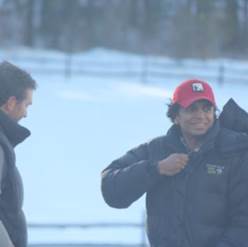
M. Night on the set of Sundowning with his production designer

Okay, don’t immediately blow past this post because your eye caught the name M. Night Shyamalan – this is actually encouraging news.

The last time I wrote something about M. Night (as they call him in the biz that once thought he was the next Spielberg, but then mercilessly crucified him), he had left his tomato-covered director’s chair and returned to writing. M. Night completed the script for Devil back in 2009 and relative newcomer John Dowdle brought it to the big screen with a modest $10M budget. It grossed nearly $340M worldwide, definitively proving that M. Night is a masterful storyteller, but an inconsistent front man.

Case in point: in a rush of optimism following Devil, the Hollywood moneymen turned around and gave M. Night $130M and Will Smith (plus child) to write, direct and executive produce After Earth, which was an apocalyptic film in more ways than one.

So it is either by choice or necessity that M. Night’s latest project is very small and hasn’t been getting a ton of press beyond what M. Night himself has been dolling out; oh, and it’s being called a micro-budgeted horror film.

“Micro budget” is the latest, sexy term for independent films, or films not financially supported or promoted by a large studio or big-budget investors. If you want some examples of micro-budget films that went platinum, IMDB has compiled a handy list (ironically a good percentage of them are horror movies), and in the number 1 slot is The Blair Witch Project.
Read More Read More

One Arthurian Film to Rule Them All: John Boorman’s Excalibur

One Arthurian Film to Rule Them All: John Boorman’s Excalibur

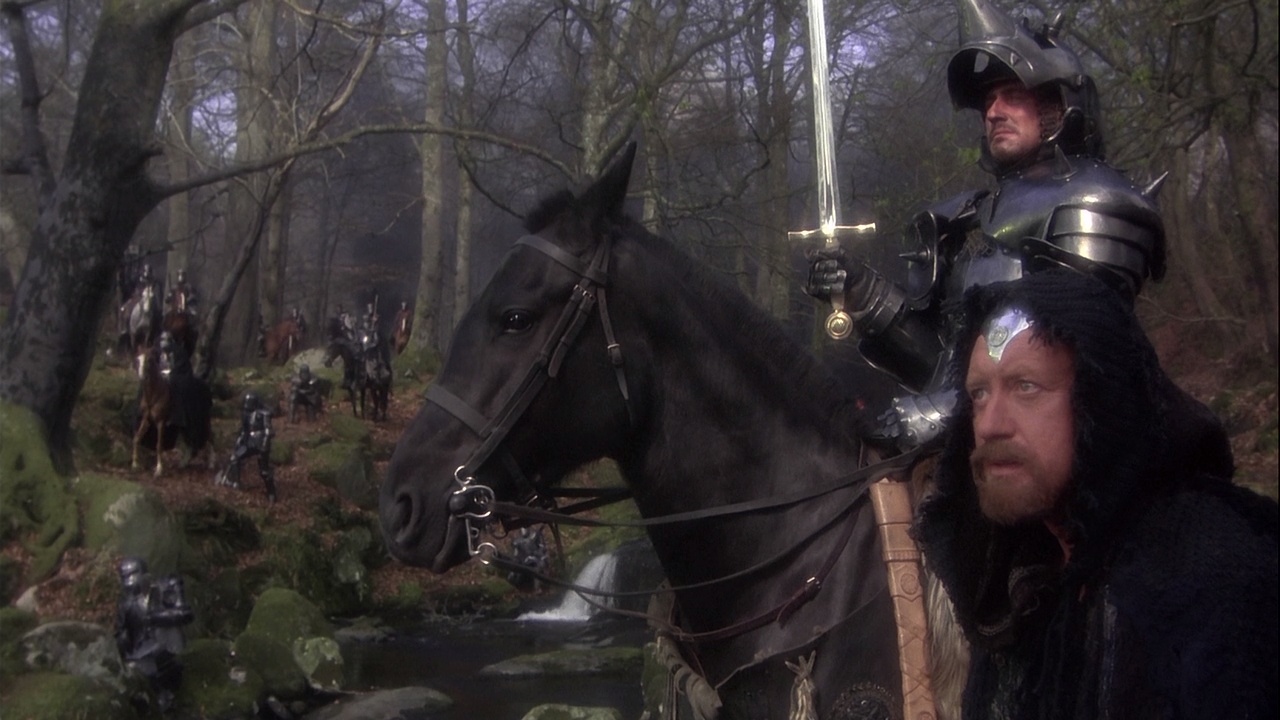
John Boorman's Excalibur-small

“I’m trying to suggest a kind of Middle Earth, in Tolkien terms. It’s a contiguous world; it’s like ours but different.”
— John Boorman, on Excalibur

As I began poking around into the history of Arthurian film adaptations, I was surprised to find a lot less of this sort of thing than I was expecting.

Good old Wikipedia lists 36 “relatively straightforward adaptations” made between 1904 and 2009. Many of these are rather obscure, to say the least, and quite a few deal with tangential aspects of the core legend, such as the stories of Arthurian knights, Parsifal, Launcelot, Gawain, and Galahad.

The earliest so-called adaptation is one of those tangential ones, Parsifal (1904), in which Thomas Edison’s thriving production company essentially just filmed a few scenes from Richard Wagner’s 1882 opera of the same name. Over at IMDB, they list a total of 46 features which star King Arthur. He seems to have first appeared on film in Launcelot and Elaine (1909), which explores a thwarted romance involving Launcelot, as detailed in Lord Alfred Tennyson’s epic poem, Idylls of the King.

Read More Read More

Firefly, A Retrospective — Part 3

Firefly, A Retrospective — Part 3

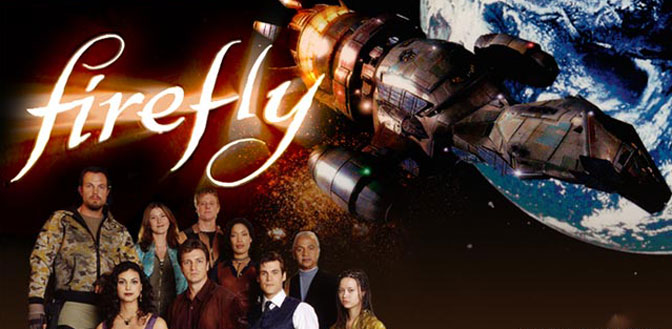
Firefly banner 3-smallI’m back with my third installment of this series about the Firefly show. I covered the pilot in Part 1, and episodes two and three (“Train Job” and “Bushwhacked “) in Part 2.

This week we’re up to the fourth and fifth episodes. Sit back, put your starship on autopilot, and enjoy.

Shindig (Episode 4)

This one begins with a familiar sight: Mal, Zoe, and Jayne are in a cantina, this time playing pool with some traders while Inara watches. It turns out these friendly traders deal in transporting slaves, so Mal lifts their money clip and, naturally, starts a bar brawl.

Next, Serenity stops at the planet of Persephone, which we last saw in the pilot episode. They’re here to find work. Inara is in her shuttle looking for clients. She chats with Atherton Wing, a blueblood who invites her to a fancy party.

Mal comes in and they banter about her work, and his brawling. This scene sets up the rest of the episode, which mainly focuses on their budding relationship.

Read More Read More

NBC’s Heroes to Return in 2015

NBC’s Heroes to Return in 2015

I enjoyed the first season of NBC’s superhero drama Heroes — quite a bit, actually. It was smart and fun, and had a genuinely original take on the ensemble superhero idea. It didn’t hurt that it had a very talented and diverse cast, either, including Hayden Panettiere, Ali Larter, Masi Oka, George Takei, and Zachary Quinto as the sinister supervillian Sylar. Now, I haven’t seen Seasons 2 through 4. I understand the cast expanded a bit — adding Kristen Bell, Zeljko Ivanek, and Malcolm McDowell, among others — and, as usual, the show received a lot of fan criticism for losing its way. Fans. They love you, until they don’t.

Regardless, I was surprised and pleased to read on the CNN website this morning that NBC is bringing back Heroes next year:

NBC helped kickstart the superhero TV trend in 2006 with Heroes, an X-Men-ish action-drama about a group of people with superhuman powers. Now the network is bringing back the show for a 13-episode event series to air in 2015. Original series creator Tim Kring is on board to run the show. Titled Heroes Reborn, the project is billed as a stand-alone story; the characters have not yet been announced.

The announcement has already generated buzz and backlash in the fan press. NBC has also announced they will introduce the new characters and storylines in a digital series before the mini-series airs. Until then, enjoy the 20-second teaser promo that ran during Olympics coverage.

The Madness of True Detective

The Madness of True Detective

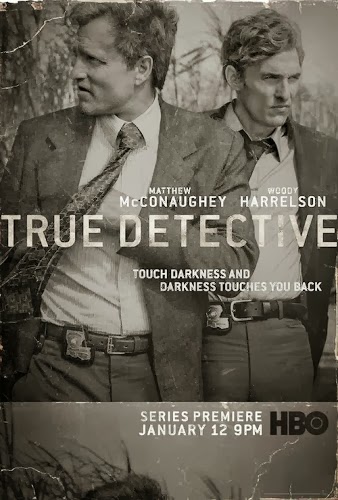
HBO True Detective-smallSo everyone in my office has been talking about the new HBO show True Detective, starring Matthew McConaughey and Woody Harrelson.

They talk in hushed whispers. “Hey, did you watch last night?” Suddenly, the volume drops and all I hear is a low buzz over the cube wall. I hear enough to know they’re taking about McConaughey and that new HBO show — and they’re obviously riveted.

I haven’t seen it. Did see the cool ad and noticed how vastly different McConaughey looked, all gaunt in a suit. He’s really turned into an Actor’s Actor, what with terrific recent performances in Mud and Dallas Buyers Club. Although my favorite McConaughey film is probably Sahara. Man, my kids still spout quotes from that movie. Every day I hear, “Sit down… I’ll get the check.” (And, “Of course I brought the dynamite!”)

Anyway. I’ve been seeing a strange flurry of articles about Robert W. Chambers’s brilliant collection The King in Yellow crop up on Facebook recently, and I saw the headline of that io9 piece, “The One Literary Reference You Must Know to Appreciate True Detective.” But I didn’t really make the connection until I saw this article at The Daily Beast, “Read The King in Yellow, the True Detective Reference That’s the Key to the Show.”

The key to understanding HBO’s enthralling series True Detective might be the references to the Yellow King and Carcosa, which the killer Reggie Ledoux talks about and the show hints at to be figures and symbols of a satanic cult of some sort. But the Yellow King is an allusion to The King in Yellow, an 1895 book of horror and supernatural short stories by the writer Robert W. Chambers…

Holy cow… True Detective is based on The King in Yellow?

Read More Read More

Goth Chick News: Comics Collector as Movie Hero; Or A Valentine From My Favorite Indy Film Crew

Goth Chick News: Comics Collector as Movie Hero; Or A Valentine From My Favorite Indy Film Crew

As you well know, we here at Goth Chick News are mad supporters of the independent film industry.  This is mainly because we’re obsessed with anyone who has the courage and determination to pursue their passion and are willing to let us watch.

That and I’m a sucker for brooding artistic boys…

And no one epitomizes these traits better than my friends at Pirate Pictures, who gave us a peek into the world of real movie magic by allowing us to ride along with their production of Shadowland.  Now, Shadowland star Jason Contini and director Wyatt Weed have teamed up on a new project that isn’t exactly a typical GCN subject matter, but does involve a topic that is near and dear to most Black Gate fans… comics.

Four Color Eulogy is a drama/comedy revolving around the world of comic books and self-publishing. But rather that tell you any more, take a gander at this clip that not only explains the movie, but some of the process of getting a concept from script to big screen.

Read More Read More

Firefly, A Retrospective — Part 2

Firefly, A Retrospective — Part 2

Firefly banner-smallHey gang! I’m back this week with the second part of my look back at the Firefly TV show. Last time, I talked about the pilot episode; this time I’ll be discussing the second and third episodes.

Train Job (Episode 2)

If I’m not mistaken, this was the first episode to air. As I said last week, I think this was a major mistake.

It starts in a cantina where Mal, Zoe, and Jayne are drinking at a table. Some drunk makes a toast to Unification Day, the anniversary of the Alliance’s victory over the Independents. Well, Mal doesn’t take kindly to that. Words are exchanged and a good old-fashioned bar brawl ensues.

Now this is just fine and kinda fun, and I can see why an inexperienced studio executive might think this is exactly the sort of opening a new series needs. But here’s the problem: we (the audience) can’t get invested in this fight because we don’t know the background. You remember. That background we were supposed to see in the pilot that explains how Mal and Zoe fought for the Independents to the bitter end and they still harbor resentment toward the Alliance…

Okay. I’m taking a deep breath.

Read More Read More

A History of Godzilla on Film, Part 4: The Heisei Era (1984–1996)

A History of Godzilla on Film, Part 4: The Heisei Era (1984–1996)

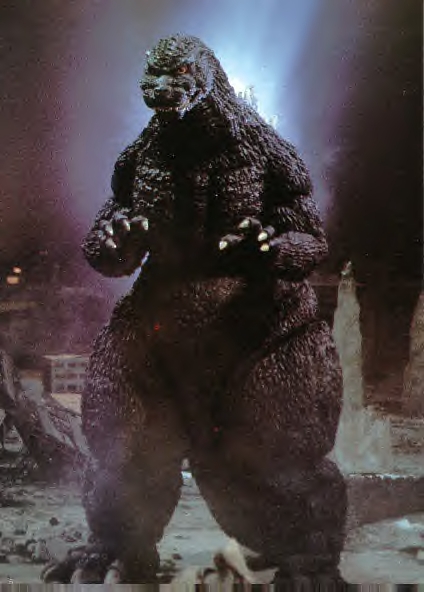
Godzilla 89Other Installments

Part 1: Origins (1954–1962)
Part 2: The Golden Age (1963–1968)
Part 3: Down and Out in Osaka (1969–1983)
Part 5: The Travesty and the Millennium Era (1996–2004)
Addendum: The 2014 Godzilla

The Underwhelming Comeback: The Return of Godzilla (1984) and Godzilla 1985

After an absence of nine years, Godzilla smashed back onto screens in 1984 in a film simply titled Godzilla (Gojira) in Japan, but marketed as The Return of Godzilla to English-speaking markets. In modern movie lingo, The Return of Godzilla is a reboot. It wipes from continuity all the previous G-films except Godzilla ’54 and fashions a new continuity: The Heisei Series.

The new movies developed a recognizable style, but The Return of Godzilla looks different from the installments that followed. Producer Tomoyuki Tanaka aimed to capture the somber tone of the 1954 original and transplant the Godzilla nuclear metaphor into the 1980s Cold War. The monster, having somehow survived Dr. Yamane’s Oxygen Destroyer thirty years past, heads back toward Japan, squeezing the island country between the nuclear superpowers of the U.S. and Soviet Union. Scientists and the Japanese Self-Defense Force race to find a way to stop Godzilla before a greater nuclear confrontation arises.

It’s an ambitious, admirable premise. The actual movie fails to live up to it, either as a serious tale or as a monster show. While the Cold War background is intriguing, the human action is bland and no character stands out. The exception is the Japanese Prime Minister, whose scenes dealing with the U.S. and Soviet envoys evoke a true sense of Japan’s awareness of it legacy in the atomic age. Otherwise, the time spent away from Godzilla is a stodgy bore of people sitting around talking about all the things they aren’t doing, handled with workman-like direction from series newcomer Koji Hashimoto.

The effects scenes are hit-or-miss. The Return of Godzilla was Toho’s most expensive SF film at the time, and it gave VFX supervisor Teruyoshi Nakano his only hefty budget for a kaiju movie. This translated into a few spectacular sequences, such as Godzilla’s first engagement with the JSDF in Tokyo Bay, and the monster’s showdown with the movie’s special-tech weapon, the flying tank Super-X. Godzilla concludes the fight by toppling an entire skyscraper onto the Super-X. Now that’s how you do it!

Read More Read More

Goth Chick News: Phantasmagoria: The Visions of Lewis Carroll by Marilyn Manson – WTF?

Goth Chick News: Phantasmagoria: The Visions of Lewis Carroll by Marilyn Manson – WTF?

image002When I first heard about this, I thought Marilyn Manson was taking on one of my favorite computer games.

In case you don’t remember, Phantasmagoria is the 1995 interactive movie horror adventure game created by Sierra for the PC.

Made at the height of the “interactive movie” boom in the computer game industry, Phantasmagoria is notable not only for being one of the first games to use a live actor as an on-screen avatar, but also for being banned by some retailers due to its fairly graphic depiction of violence.

What I didn’t know until now is that Phantasmagoria is also a famous collection of Lewis Carroll’s poems, as well as the name for live horror shows involving projection onto smoke screens that were invented in the 18th century France.

Oh, and it’s also the title of Marilyn Manson’s first foray into film.

Yes, you read that right. Marilyn Manson, the horror rocker cum performance artist is the writer, producer, and director of this $4.2M venture that has been trying to get legs since 2005.

Read More Read More

Firefly, A Retrospective — Part 1

Firefly, A Retrospective — Part 1

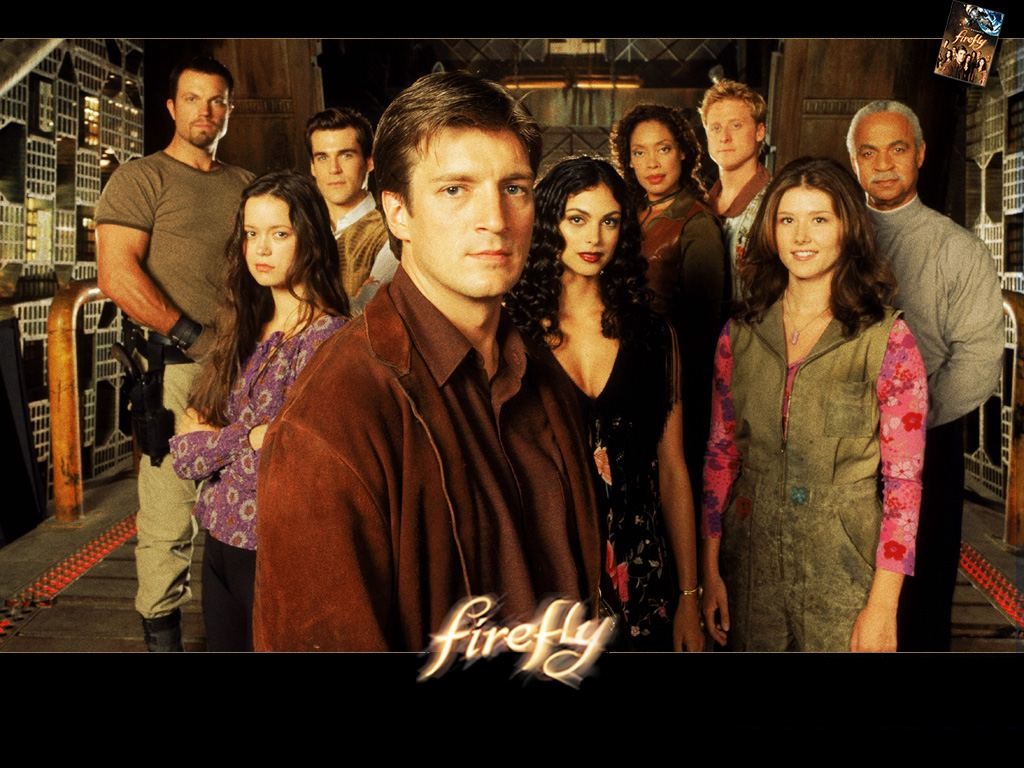
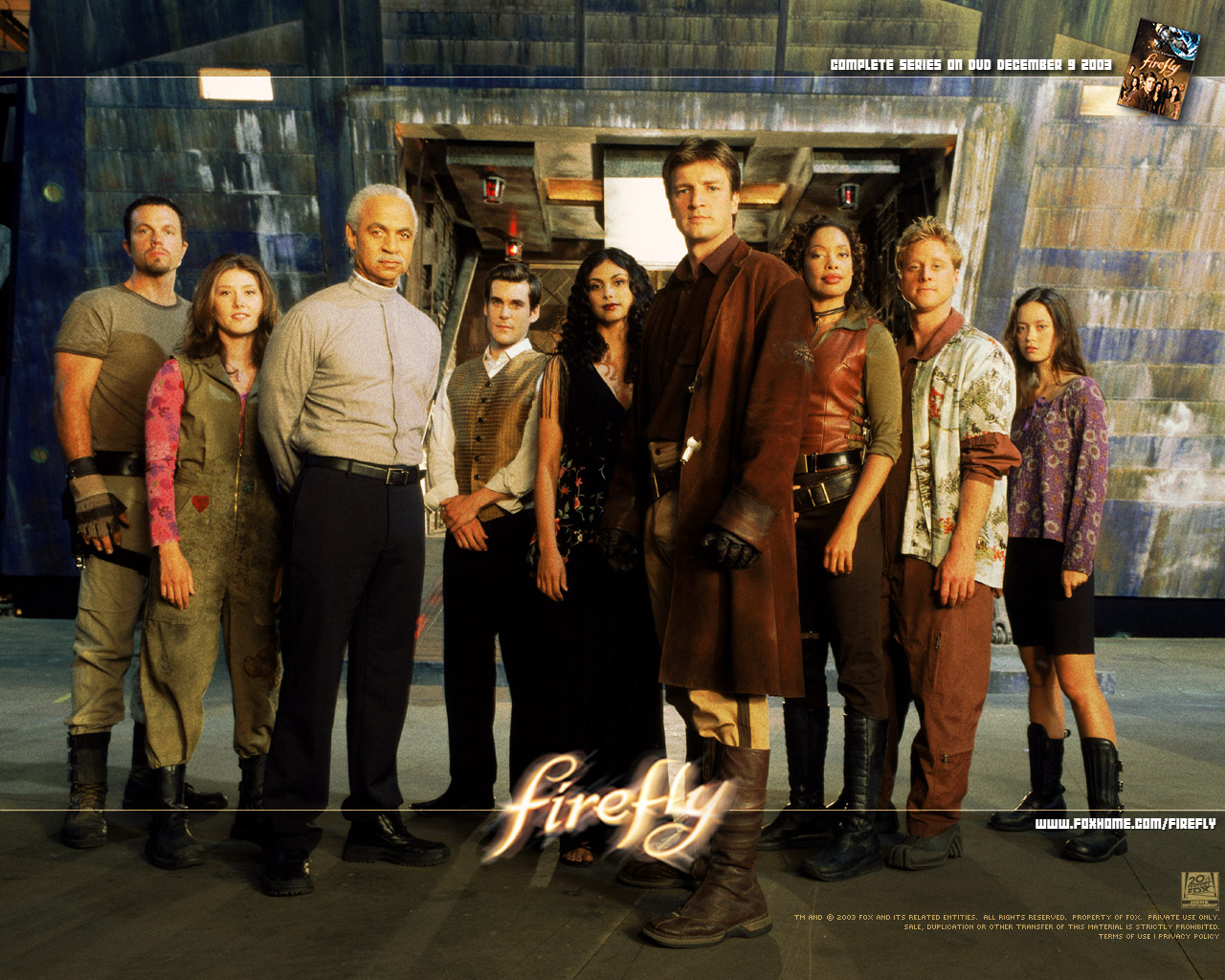
Firefly wallpaper-smallWhen I think of the TV show Firefly, I often compare it in my mind to the original Star Trek series. I wonder if all the Star Trek movies and spin-offs through the decades would have ever occurred if that original show had only run a single season. Yes, I think Firefly is (was) that good. And over the next few weeks, I’m going to be re-watching the episodes and sharing with you because I think this show still has a lot to teach us.

For those of you unfamiliar with the show, it was a “western space opera” created by Joss Whedon, which aired in 2002. The series is set five-hundred years in the future, after Earth has become uninhabitable and mankind went out to find a new star system to call home.

The western vibe comes from the planets on the frontier, which are not so civilized and fancy as the high-tech core worlds. There was a war a few years before the show begins between the system government, the Alliance, and a handful of Independent worlds who wanted autonomy. The Alliance won. The comparisons to the American Civil War are many.

The show’s cast are the crew of a transport starship called Serenity, trying to scratch out a living on the edge of space.

The first episode, or pilot, came in two parts. Titled “Serenity,” it actually didn’t air until the very end of the season. Because this episode sets up so much of the story world and the relationships of its primary characters, I find this criminal. I’ve heard that Fox didn’t think this episode was suitable to open the series, and for that they should be flogged in public. I always insist on watching the episodes in the order they were originally intended. So here goes.

Read More Read More