Browsed by
Category: Movies and TV

What We Can Learn From a Time Lord: Doctor Who and a New Enlightened Perspective

What We Can Learn From a Time Lord: Doctor Who and a New Enlightened Perspective

The DoctorsThere’s an underrated benefit to science fiction and fantasy, and it is not dissimilar from a benefit one gains by being a student of history. Since many folks consider speculative fiction and historical scholarship (or “flights of fancy” and “recorded fact”) to be the antithesis of each other, I think this benefit is worth some attention.

The benefit I here have in mind is the gaining of a healthy detached perspective. Detractors of fantasy and sci-fi will immediately object to my use of the word “healthy,” being that they regard such literature as mere escapism. And it often is that, yes. As is golf, and the Super Bowl, and birthday parties, and most fun things that we do when we aren’t engaged in utilitarian labor. But I’m thinking about a different sort of escape: escape from our own temporal status in this particular time and place and culture and society to which we were born. This is a benefit that is greatly under-appreciated, but I believe it holds real power.

The reader of science fiction, like the historian, steps out of his or her own time frame: if you’re a historian, you step back in time; if you’re a sci-fi fan, you become accustomed to stepping ahead into some speculative future. And if we cultivate that mental exercise, it gives us the unique opportunity to look at our own time from that same detached perspective.

When you do this, it can be liberating. We put so much stock in what people say. We are angered, hurt, offended, cut to the core by what we are bombarded with when we turn on the TV or log onto Twitter or get together with family over Thanksgiving dinner. But the power of these viewpoints — and the hostile ways in which they are sometimes expressed — to affect us is really only predicated on the fact that we are alive now and that these are opinions being expressed by our contemporaries.
Read More Read More

Goth Chick News: J.J. Abrams Sneaks Up On Us Again

Goth Chick News: J.J. Abrams Sneaks Up On Us Again

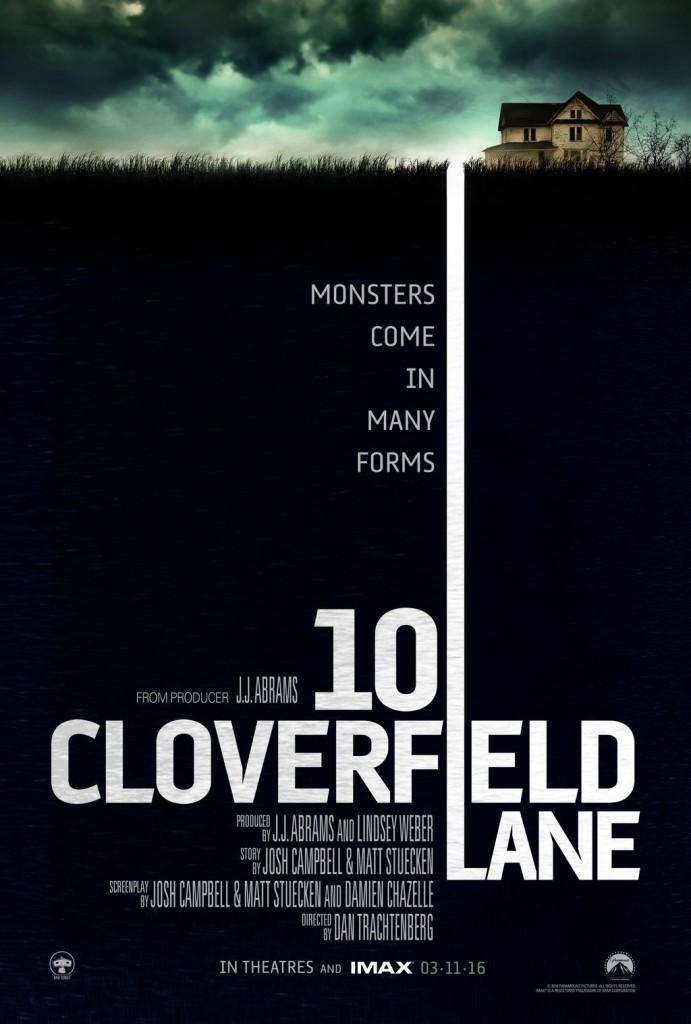
10 Cloverfield Lane posterThe story I’m about to tell you gets a little confusing, but it contains J.J. Abrams, one of my all-time favorite modern-day monster films, Cloverfield and an entire movie filmed right under the noses of the people whose business it is to keep tabs on this sort of thing. So stay with me, I think it will be worth it.

Our tale begins early last week when the internet exploded with the news that a new Cloverfield film was not only confirmed, but that it was already filmed and would be coming out in just under two months. Titled 10 Cloverfield Lane, the film is a. “…blood relative of Cloverfield,” according to J.J. Abrams, who produced the original film, and stars John Goodman, Mary Elizabeth Winstead, and John Gallagher, Jr.

Before we go on, let’s take the way-back machine to 2008 in the months before the release of the original Cloverfield, which was also kept very much under wraps and was credited with being the object of a new concept in millennium marketing; “guerilla campaigns.”

The film appeared to feature a mysterious monster of unknown origin ravaging a large city in the style of Godzilla movies from decades past, but what really made it notable as far as big-budget movies are concerned, was its seeming lack of any promotion at all. The film was ushered into theaters with an incredibly simple teaser trailer that didn’t even feature the title of the film. It only contained the release date – 11/18/08. Beside the fact that it starred a cast of unknown actors and featured a monster doing something in a city that had yet to be identified, almost nothing was known about the film prior to its release. It initially wasn’t even clear if Abrams himself was even involved.

Read More Read More

A Horror-Movie Imagination: The Old Dark House We Lived In

A Horror-Movie Imagination: The Old Dark House We Lived In

Introduction

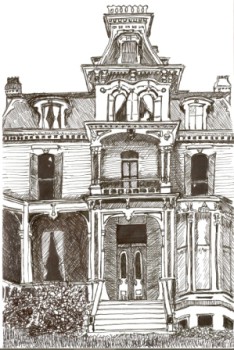
house of twilightMy frame of reference is at least partly informed by years of being entertained by horror stories and films. Frame of reference shapes expectation, and expectation influences perception. In other words, if you’re a horror fan, you may feel a little twinge of nervous anticipation every time you go alone into the basement. You’re primed for it.

Even if you don’t for one second think that anything is actually lurking down there more frightening than a basket of laundry or a bit of black mold (which actually can be pretty scary, health-wise: not good to breathe that stuff), it’s just that you’ve seen so many artful and artless portrayals of What. Might. Be. Down. There… You get that twinge, a frisson that can be quite delightful, given that you know there’s no real bogeyman waiting to pounce from behind the furnace, just the thrill of imagining there is one. Which is why you’re a horror fan.

I am a storyteller, yes. Sometimes I write horror stories, and I am an aficionado of the genre: guilty as charged. But everything I recount in the following pages really happened. I have restrained myself from the storyteller’s natural tendency to exaggerate for the sake of effect. In this case, the facts are arresting enough without embellishment. My aim is simply to reconstruct some of the thoughts and impressions that went through my head at the time, thoughts and impressions colored by a horror-movie imagination. This may thereby serve to illustrate how one’s perspective can shape perception.

Some of what follows may seem a bit strange. But if you doubt any of it, just ask my ex: it might have gotten weird at times, but to the best of my memory it all happened. (Except for the part where she claims I screamed like a little girl. Take that with a grain of salt. When I am startled, I tend to think of my vocalization as a deep, throaty, manly yell.)

Read More Read More

The Public Life of Sherlock Holmes: The Shannara Chronicles

The Public Life of Sherlock Holmes: The Shannara Chronicles

ShannaraChron_PosterI was reading fantasy before I discovered Sherlock Holmes and it’s still one of my two favorite genres. Now, one of my favorite series’ has finally been brought to the screen. Last October, Fletcher Vrendenbuergh posted about his re-read of Terry Brooks’ classic, The Sword of Shannara. Sword, loved by many (me among them) and reviled by many, was a huge hit upon release, appealing to the horde of Tolkien fans who wanted more of that style of fantasy. It’s a good essay with lots of comments: go check it out.

After Sword, Brooks wrote a big chunk of a sequel, which (Lester) Del Rey told him to chuck and start over. Brooks did so and in 1982, we got The Elfstones of Shannara, which took place two generations after Sword. Shea’s grandson, Wil Ohmsford, now had the magical elfstones. Wishsong of Shannara rounded out the trilogy.

Two dozen more Shannara books would follow, with another due out later this year. Some take place before Sword, with most afterwards. Back when fantasy films consisted of “efforts” such as The Sword and the Sorcerer, Krull, Ator and even Ah-nuld’s two Conan movies, I always wondered why someone didn’t take Sword to the screen; be it live-action or animated. But nope: nothing.

Of course, Peter Jackson redefined fantasy films with his six movies from Tolkien’s books. And HBO created a monster with George R. Martin’s Game of Thrones. The 44-episode Legend of the Seeker, based on Terry Goodkind’s Sword of Truth novels, did not fare so well and was cancelled after two seasons on television.

But now, in 2016, we finally have The Shannara Chronicles, a ten-episode miniseries, based on The Elfstones. For that, we have MTV to thank. Well, it’s a mixed blessing.  You got a sneak preview and some Black Gate commentary HERE last summer.

Read More Read More

Feast Or Famine?

Feast Or Famine?

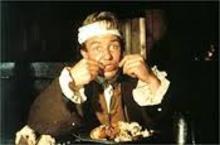
Tom Jones1Typically my characters don’t spend a lot of their time eating. It’s not because I’m not interested in food, quite the contrary (see my previous BG posts on the subject, here, here, and here.) No, it’s usually because, if I can paraphrase my agent for a moment, I’ve found my characters something more interesting to do. Having your characters sit down and eat is a useful device, however, in that it does give them something to do – even if it doesn’t forward the plot – while they’re talking, which usually does forward the plot. As a general rule, characters need to be doing something while they talk to each other, and if they eat, you can also use the details of the food to help with world-building and setting.

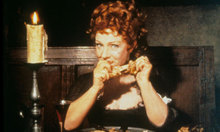
Joyce RedmanStill, even when my characters are eating, they’re not usually attending a banquet. Indeed, banquets and eating scenes in general are usually something we encounter visually, rather than on the page. Who can forget the scene in the Errol Flynn version of The Adventures of Robin Hood, where he walks into Prince John’s supper banquet with a stag on his shoulders?

Read More Read More

Star Trek Movie Rewatch: Star Trek (2009)

Star Trek Movie Rewatch: Star Trek (2009)

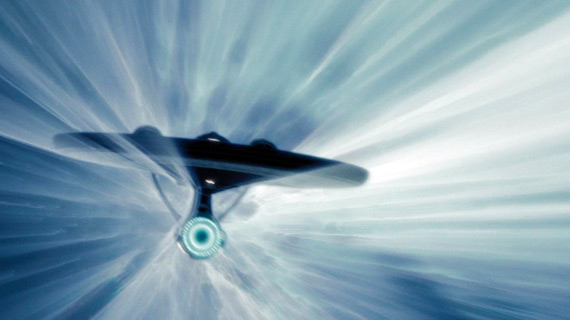
star-trek-2009-enterprise-warp

Fans of Eighties new wave music might remember a song by Timbuk 3 called “The Future’s So Bright, I Gotta Wear Shades.” Which should have been the theme song for the J.J. Abrams “reboot” of Star Trek. I’d heard about the much maligned lens flares favored by Abrams but until I actually watched the movie I truly had no idea. It’s such an extreme exercise in cinematic brightness that I found myself fighting off a headache at a few points.

But enough of that. Let’s have a few words about reboots. I don’t care much for them. Nor do I care much for the concept, in general. Which can only come about when lawyers and accountants make decisions that should be made by “creative” types. Yes, I understand that the making of TV shows and movies is not a charitable endeavor but when a pretense of creativity isn’t present then what’s the point?

Which is the whiner’s way of saying that even though I was a fairly avid fan of the original Star Trek series I had no interest in watching the reboots. I might have never watched them if it hadn’t been for this movie rewatch project. But after tackling the first two “real” Star Trek movies I found myself getting curious about how the reboots had played out. So I skipped ahead in the chronology.

Read More Read More

Notes On Some Dramatic Presentations

Notes On Some Dramatic Presentations

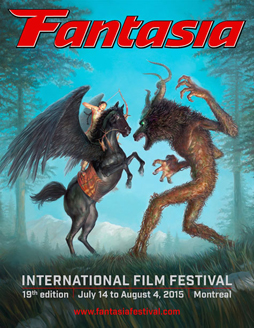
Fantasia FestivalI’d hoped to put up the fourth of my series of posts on the fiction of C.S. Lewis last week; I didn’t, and this isn’t that post either. I ended up spending more time running around over the holidays than I’d expected, so while I’m hoping to get the Lewis post up next Sunday, for the moment I want to do something different. Having seen a number of discussions about Hugo voting emerge over the previous days, I’d like to put forward some suggestions for the Dramatic Presentation categories.
Regular Black Gate readers may remember that this past summer I covered the 2015 Fantasia International Film Festival in my home city of Montréal. I got to see a number of wonderful science-fiction and fantasy films from around the world. And I thought it might be worth looking back at those movies, partly to help people looking for works to nominate on their Hugo ballots, and partly to draw a bit more attention to some excellent work. So here are some films of possible relevance to Hugo voters, with quick summaries and links to my reviews. (I reviewed several movies in each post, so some of the different links go to the same places.)

In this post I’m going to stick to movies that are pretty clearly science-fiction, fantasy, and horror. I’ll divide my lists according to the Hugo rules: films ninety minutes long or more are eligible for Best Dramatic Presentation, Long Form, and those less than ninety are eligible for Short Form. I’m going to list movies in alphabetical order, with brief descriptions and the occasional critical observation. I’ll err on the side of completeness, listing even marginally genre movies. Although Worldcon membership skews American (or so the Hugo Awards web site states, under “Country & Language of Publication”) I’ll include films that have no American release listed, as presumably some readers aren’t American, and I have no idea what’ll be coming on Netflix or other venues in the next month or two. Note that I’m not necessarily recommending all the following films, and certainly not suggesting that Hugo ballots should be put together just from these lists. I’m only trying to highlight movies people might not otherwise have heard of, but might want to investigate now or later. If you want to look through all my reviews of the 2015 festival, you can find links at the bottom of the post linked here.

Read More Read More

The Public Life of Sherlock Holmes: 2015 Links Compendium

The Public Life of Sherlock Holmes: 2015 Links Compendium

Cumberbatch
I don’t have any idea how to salvage this train wreck of a show. Do you?

So, for the first post of 2016, I think the most important thing to recognize is that I made it to the end of my second calendar year at Black Gate without getting axed (it helps that I work cheap. As in, ‘free.”). By my reckoning, The Public Life of Sherlock Holmes has appeared here every single Monday morning for the past 96 weeks. As I had serious doubts that John O’Neill would even approve  a Holmes-themed column (I mean, it’s a fantasy website!), I’m pretty pleased it’s still around.

During 2015, I helped with Black Gate’s outstanding “Discovering Robert E. Howard” series, which featured guest columns from a slew of very knowledgeable folks; and there are still a couple fine posts remaining in the series. Personally, I thoroughly enjoyed putting together Part One of my history of Necromancer and Frog God Games, Dungeons and Dragons and Pathfinder RPG publishers extraordinaire. Part Two is pretty much written, but still needs some serious editing.

The three-part piece on Granada’s Adventures of Sherlock Holmes, starring Jeremy Brett, was a favorite and there will certainly be another in the series: likely a few more. And I even managed to have the most viewed post in a month with a look at what went wrong in season three of BBC Sherlock (sadly, my hopes that the January 1 special episode would get the franchise back on track were horribly dashed).

With a couple of extras that I wrote outside of PLoSH included, I’ve linked 54 posts from 2015 below. It’s no surprise, with the name of this column, 27 were about Sherlock Holmes or Arthur Conan Doyle. With another 5 about the best of the Holmes pastiches, Solar Pons.

Next up were 8 posts related to fantasy and 1 for science fiction. Then we’ve got 5 Hard Boiled/mystery posts and 8 miscellaneous ones.

If you’re at least a semi-regular reader of the column, I try not to write “here’s my opinion” posts. I like to share information about things I like, be it the Richard Diamond radio series or a different way to look at a Holmes story. Hopefully in 2015 you came across a topic that you either wanted to go explore a bit or that you learned a little more about. There’s lots more I plan on writing about in 2016 (can’t believe I didn’t write a single Nero Wolfe post last year!), so grab a cup of coffee and check in on Monday mornings. And thanks for reading The Public Life of Sherlock Holmes!

Read More Read More

Doctor Who at its Zenith: Tom Baker’s The Talons of Weng-Chiang

Doctor Who at its Zenith: Tom Baker’s The Talons of Weng-Chiang

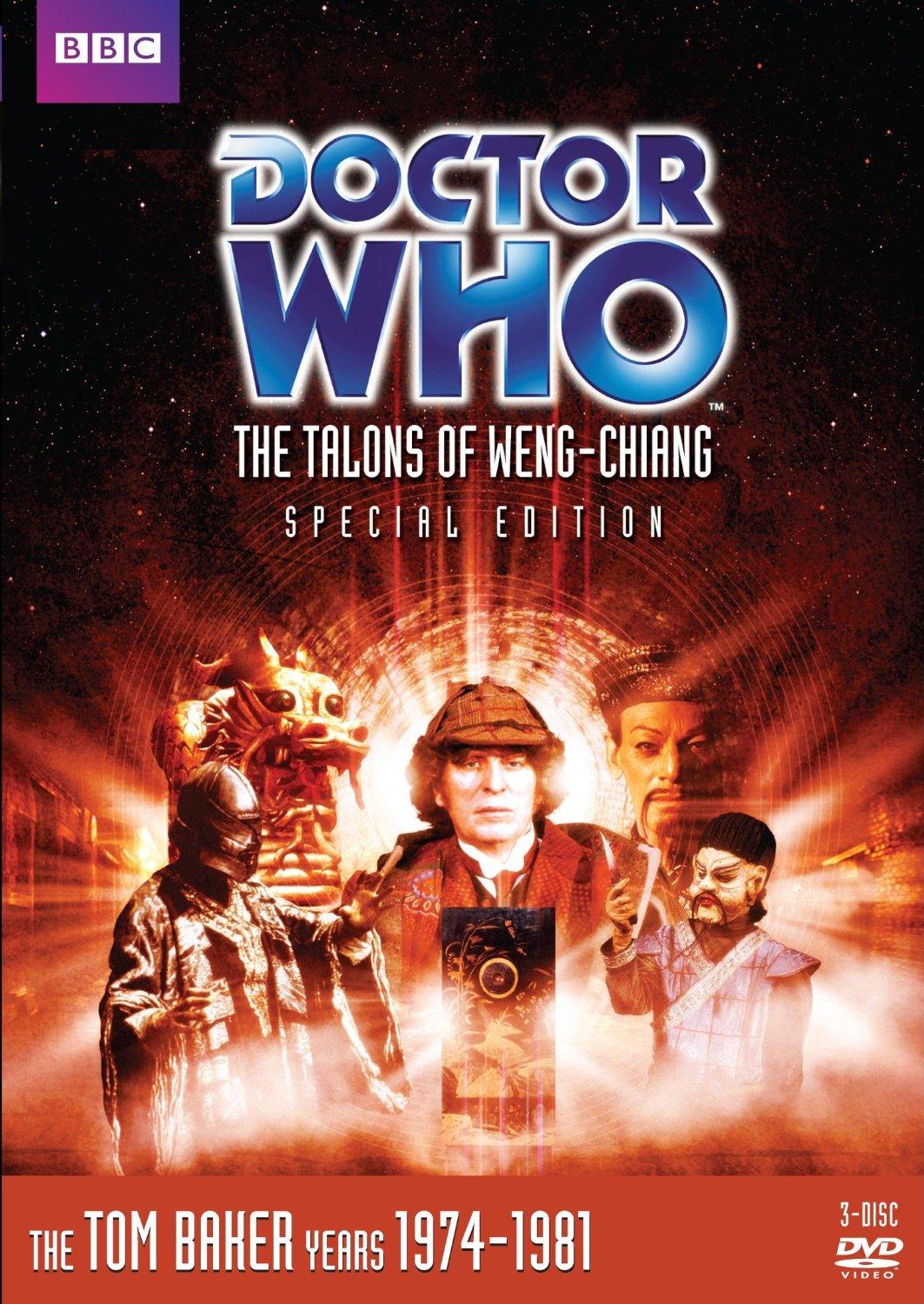
Doctor Who The Talons of Weng-Chiang-smallI want to espouse the virtues of a story written by Robert Holmes for Tom Baker’s Doctor Who: The Talons of Weng-Chiang. This story has got to be counted as one of the high points of (original series) Doctor Who concept and scripting.

John Bennett’s portrayal of the stage magician Li H’sen Chang, sometimes criticized because Bennett was an English actor playing a Chinese character, takes on a new light when one supposes (this is my theory) that Robert Holmes was alluding to the real-life Chung Ling Soo, the stage name of American magician William Ellsworth Robinson.

Like many stories in that period of Doctor Who under the production hand of Philip Hinchcliffe, many of the stories were pastiches or developments from old horror story tropes. Hinchcliffe and Holmes shared an enthusiasm for those old story ideas, like Frankenstein (The Brain of Morbius), Egyptian occult stories (The Pyramids of Mars), King Kong (Robot), The Day of the Triffids (The Seeds of Doom), and locked room mysteries (The Robots of Death).

But it reaches a zenith in The Talons of Weng-Chiang: we not only have an allusion to real-life ‘fake’ stage-magicians, we have subtexts or suggestions of:

The Phantom of the Opera
Sherlock Holmes
Pygmalion
Fu-Manchu (or any ‘Yellow Peril’ tales)

…along with much music hall colour, giant rats in the sewers, and maybe even a hint of the Elephant Man?

Pardon my enthusiasm, but I really do feel there are excellent old series stories, and Talons is one of them.

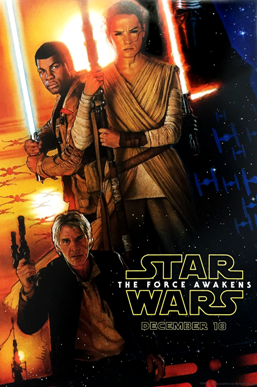
Review: The Force Awakens (and its Roots in Vintage Space Opera)

Review: The Force Awakens (and its Roots in Vintage Space Opera)

SWTheForceAwakensStruzanD23Poster
The Force Awakens is a movie we can be proud of. We can point to and say, “This is why we read books with lasers and rocket ships on the cover.”

(Mild spoilers below the cut.)

The John Williams theme pounded out, the yellow opening crawl rolled up the screen and I wept a little.

I was eight when I saw the Star Wars in the cinema. Now my daughter was eight and beside me seeing the new one. Full circle. A real Country and Western moment.

The word was that this was not the debacle that the prequels were, but a proper SciFi movie where Stuff Happens and other Stuff Gets Blown Up.

And I wasn’t disappointed.

This was Star Wars as it should have always been, with The Empire Strikes Back as a benchmark, a grown-up family movie with few concessions to the younger audience… no jarring Jar Jar Binx… no slapstick farce, just comic moments arising from the plot. Even the stupid looking beach-ball droid makes a kind of sense.

So we can be proud of The Force Awakens. We can point to and say, “This is why we read books with lasers and rocket ships on the cover.”

It’s also playing our tune. The “we” of “our” being fans not just of Star Wars, but of Vintage and Pulp Science Fiction, and of Science Fiction in general.

Let me explain, but behind the Spoiler Shield (though the spoilers are oblique).

Read More Read More