Browsed by
Category: Movies and TV

JourneyQuest: Onwaaard!

JourneyQuest: Onwaaard!

journeyquest

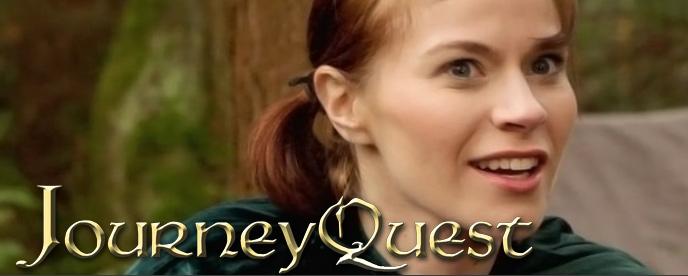
I disbelieved the search results and tried again, but got the same lack of results. Has no one at Black Gate mentioned JourneyQuest? With their Kickstarter for season three underway, this must be corrected! Onwaaard!

JourneyQuest is a web series from writer/director Matt Vancil and many of the other fine folks who brought us The Gamers series of movies. These are known for grabbing RPG tropes with both hands and bashing the scenery, with the same actors portraying the players and their characters. Even my wife, who had led a sheltered gaming life and wasn’t familiar with the tropes, thought these movies were hilarious.

Read More Read More

The Lost World: A Classic Sixties SF Blockbuster

The Lost World: A Classic Sixties SF Blockbuster

Lost World 4

The Lost World (1960)
Directed by Irwin Allen

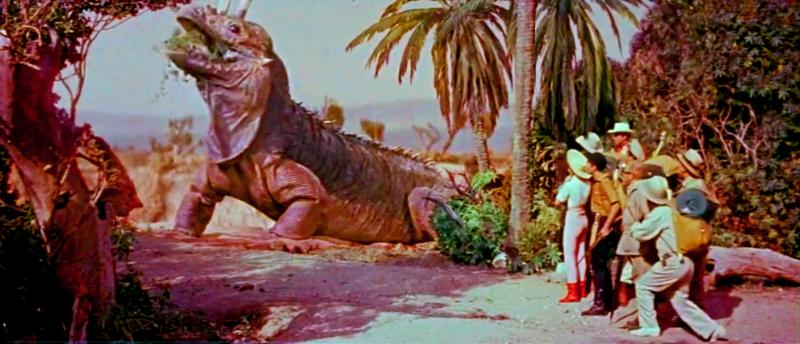
The shorthand version of this review is that The Lost World was directed, co-written and co-produced by Irwin Allen. If you know anything about Allen, who had something of a lock on science fiction TV in the Sixties, you’d probably have a pretty good idea of what to expect. It’s not outstanding production values, award-winning scripts and stellar acting.

To give some perspective, The Lost World was released a year before Allen’s Voyage to the Bottom of the Sea came to the big screen and a few years before the latter as made into a TV show. A show that was followed by in quick succession by other Allen productions, such as Lost in Space, The Time Tunnel, and Land of the Giants. While I didn’t find The Lost World to be a very “good” movie, I thought it was an entertaining example of a blockbuster SF/adventure movie from this era.

Read More Read More

Superhero TV: Watching Supergirl With a 10-Year Old

Superhero TV: Watching Supergirl With a 10-Year Old

supergirl - 1

From my point of view, Marvel has been dominating the superhero movie business. Doing my best to raise a better nerd, I’ve showed the best movies to my son (Avengers, Cap, Iron Man I and II, Ant-Man, etc). I’ve heard good things about Agents of SHIELD and Agent Carter, but I’m not sure if I’d enjoy it with no superheroes. So what’s left for Papa + Boy + popcorn movie night?

I’ve been hearing great things about DC TV: Arrow, Flash and Supergirl. Arrow comes with a PG rating and my son hasn’t been desensitized to violence yet, so I parked that one and all the bullet casings used in its filming.

Then I thought: should I start with the Flash or Supergirl?

I knew he would love the Flash. That’s a no-brainer. Even talking about someone who can run faster than the speed of sound is something that gets his heart tripping. But, thought I, if he loves the Flash, what happens when I show him Supergirl? Will he feel it’s a step down?

Read More Read More

On the Trail of the Octopus

On the Trail of the Octopus

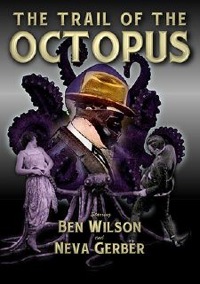
Serial Squadron DVDseriados-the-trail-of-the-octopus-posterEric Stedman of The Serial Squadron has a well-deserved reputation for restoring vintage serials (in many cases salvaging otherwise lost serials) and preserving them for posterity. As Sax Rohmer’s 133rd birthday is rapidly approaching, I thought I would turn our attention to a vintage 1919 serial that borrowed quite a few elements from Rohmer’s work, The Trail of the Octopus. The Serial Squadron released their restored version of this forgotten gem in 2012.

The original serial produced by Hallmark Pictures nearly a century earlier comprises 15 chapters. The serial is centered around an Asian criminal mastermind, Wang Foo (known as “The Octopus”) who commands an international gang of Egyptians, Chinese, Africans, Turks, Jews, even a cult of devil worshippers in pursuit of an ancient Egyptian artifact, the Sacred Talisman of Set. While Fu Manchu was the head of an international secret society that contained Europeans as well as Asians and Arabs, it’s impossible not to see that The Octopus commands all of the stereotypical foreign and/or exotic elements feared by white Europeans just after the First World War.

Read More Read More

Goth Chick News: The Exorcist Gives Us Ear Seizures…

Goth Chick News: The Exorcist Gives Us Ear Seizures…

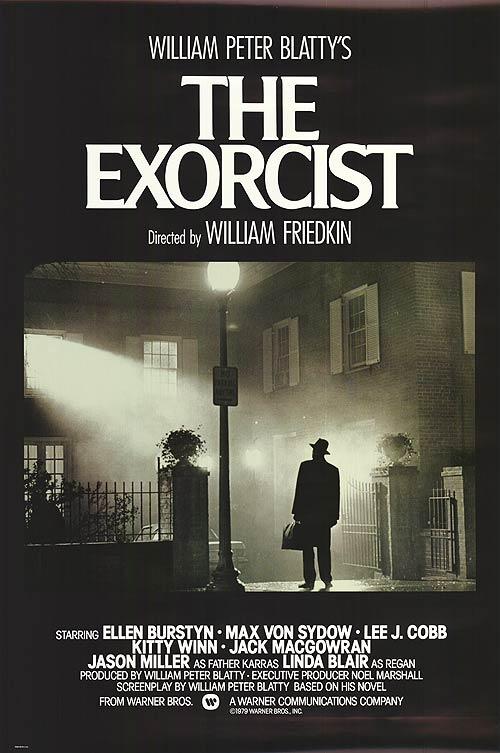
The Exorcist poster-smallWilliam Friedkin’s 1973 film The Exorcist was a landmark in horror cinema, a cultural phenomenon, and (if adjusting for inflation) the ninth highest-grossing film of all time. I remember hearing stories about it from relatives who described the mixture of fascination and revulsion with which the movie-going public met The Exorcist at the time.

I also remember skulking around the library in search of William Blatty’s novel, just to try and figure out what was so awesome about the story, but as I also kept getting caught it wasn’t until many years later that I both read and watched The Exorcist.

As you may or may not recall, the film makes minimal use of music — a stylistic choice which ran contrary to the norm of the 70’s when nearly every film regardless of genre, gave birth to a soundtrack album.

Of the little music used in the film, most famous is Mike Oldfield’s “Tubular Bells,” which went on to become a smash so huge that it essentially birthed the Virgin empire.

Before Friedkin settled on Oldfield’s masterpiece, he had originally commissioned a score from Lalo Schifrin, who had famously done soundtrack work for Cool Hand Luke, Dirty Harry, and the instantly recognizable Mission Impossible TV show theme.

This score was used in an advanced trailer which has often been referred to as the “banned trailer.” As the stories go, this trailer literally made audiences sick when it was shown.

Check it out for yourself below.

Read More Read More

The Public Life of Sherlock Holmes: The Stuff That Dreams are Made of

The Public Life of Sherlock Holmes: The Stuff That Dreams are Made of

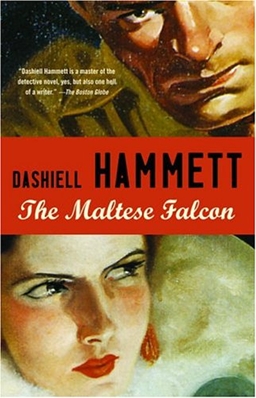
Much of my hard boiled knowledge came from Black Lizard's editions of the classics.Last week marked the 86th anniversary of Dashiell Hammett’s The Maltese Falcon in book form. It had been serialized the year before in the pages of Black Mask Magazine. Hammett gets my vote for best writer of the hard-boiled genre. And I am quite the fan of Red Harvest (the uncredited source for Bruce Willis’ under-appreciated gangster film, Last Man Standing) and of the Continental Op stories (well worth reading). But I happen to think that The Maltese Falcon is the best private eye novel yet to be written. Period.

Sam Spade (who looked like a blonde Satan) also appeared in three short stories, which I wrote about in a prior post here at Black Gate. Sadly, they aren’t particularly memorable and definitely aren’t in the upper half of Hammett’s works. In 2009, Joe Gores wrote Spade and Archer, an authorized prequel. I love Gores’ Daniel Kearney Associates series of books, but I’m still saving this Sam Spade gem for a future read.

A great deal has been written about Hammett’s novel and about Spade himself, including William Maynard’s post here. It’s certainly worthy of a post all by itself. But I’m going to focus on the media Falcon: specifically the third of three filmed versions. It’s far and away the best known and I’m guessing that many people who haven’t actually read the book have seen the movie.

Read More Read More

Star Trek Movie Rewatch: Star Trek Into Darkness

Star Trek Movie Rewatch: Star Trek Into Darkness

Star Trek Into Darkness crash-small

I don’t remember if I groaned aloud when I realized that the second Star Trek “reboot” was going to be a Khan movie. It’s entirely possible. One might reasonably wonder why the production team chose to do a reboot of a reboot, if you’ll pardon the expression, when they could have taken so many directions with the story. I suspect that sheer commerce ruled the day and the notion, common in moviemaking and publishing, that whatever worked before must surely work again.

So did Star Trek Into Darkness work? Not so much for me. I’ll admit that I wasn’t disposed to be too charitable to either of the reboots in the first place. But I made a valiant attempt to be open-minded.

But, anyway. In my review of The Wrath of Khan I noted that it was something of a war of the overactors, with William Shatner going toe to toe with Ricardo Montalban. While Shatner’s character won the day in the movie, I awarded Montalban an honorary retro-Oscar for Best Overacting Performance in a Star Trek Movie.

Read More Read More

Undying Compassion and Fearless Ecoterrorism: Hayao Miyazaki’s Nausicaa of the Valley of Wind

Undying Compassion and Fearless Ecoterrorism: Hayao Miyazaki’s Nausicaa of the Valley of Wind

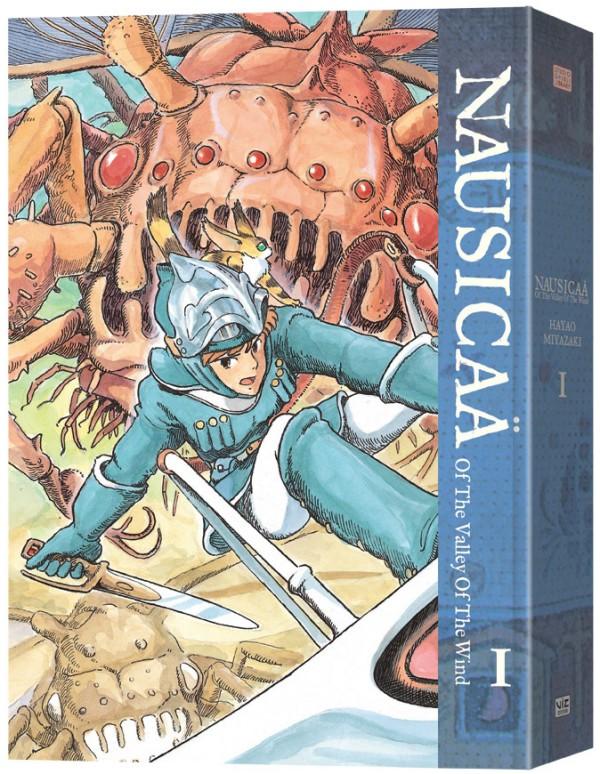
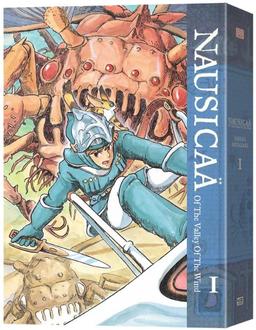
Nausicaa of the Valley of Wind box-smallNausicaa of the Valley of Wind will exceed your expectations. You must have many, what with the comics having been written by Hayao Miyazaki.

Prepare to ask yourself what lengths you would go to save your world from destroying itself, and prepare to detest characters who at first seem like antagonists but then prove that no one is wholly good or bad. More than anything, prepare to fall in love with Nausicaa, one of the most compassionate heroines ever to exist on paper.

The love within an individual who possesses as much compassion as she does can overcome any struggle born from hate. She does so without ceasing. Her story is told within the span of four graphic novels, and they do indeed read like novels.

The people of the Valley of Wind cherish their princess. She lives for them as much as she lives for her world. When the Ohmu, a group of insects inhabiting her world, begin a perilous journey, her compassion compels her to follow.

She then embarks on an endless journey through myriad wars, all the while attempting to bring them all to an end. Along the way, we meet memorable characters such as Kushana, an invincible warlord with a past worthy of a comic of its own and her sidekick, Kurotowa, who could do without Nausicaa. Not everyone shares his sentiments, least of all Lord Yupa, her uncle who adores her and remains by her side through much of the story.

The same can be said for Asbel, a young pilot who devotes much of his time to locating Nausicaa. His superior, an elderly pilot named Mito, guides him through life and acts as the father figure he needs.

This brings me to the relationship between Ketcha, Asbel’s younger sister, and Lord Yupa, whom she encounters with her brother. He remains devoted to her throughout the story, and their friendship mirrors that of his connection to Nausicaa.

Read More Read More

Goth Chick News: Tim Burton’s Used Napkins… Yes, Please

Goth Chick News: Tim Burton’s Used Napkins… Yes, Please

Things-You-Think-About-in-a-Bar-The-Napkin-Art-of-Tim-Burton-small

When I got hold of this news, I was about to type “pinch me!” But then I realized that phraseology would not end well here.

Suffice to say, this is at the “epic” end of the coolness scale.

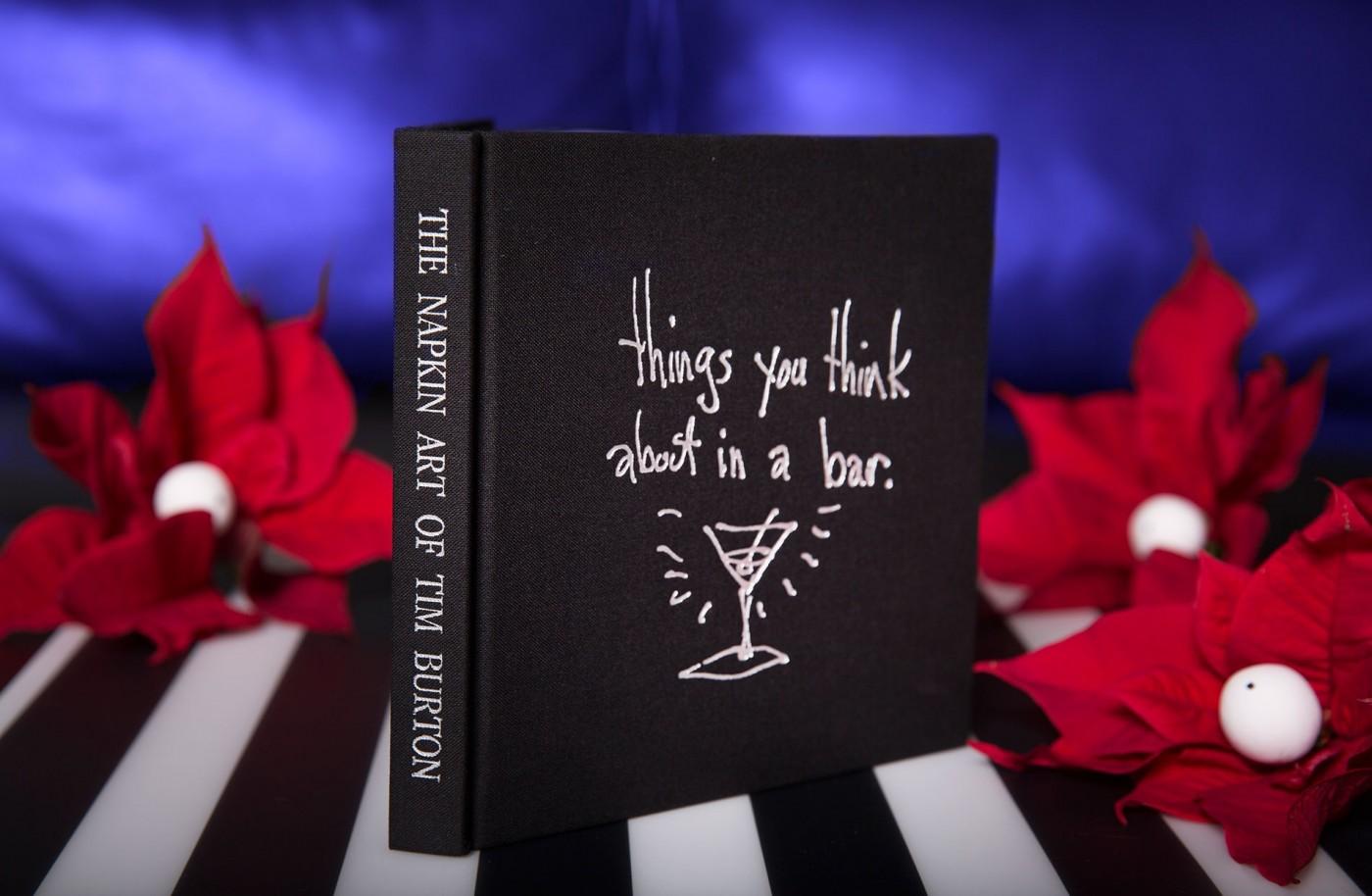
On Tuesday, Steeles Publishing announced their new title, The Napkin Art of Tim Burton; Things You Think About in a Bar. Which is literally what the title claims. The book is a collection of doodles Tim Burton has done on napkins… in bars.

Read More Read More

The Public Life of Sherlock Holmes: Talking About Nero Wolfe

The Public Life of Sherlock Holmes: Talking About Nero Wolfe

Wolfe_FerDeLancedrawingI’m writing this in the aftermath of hosting a sleepover for my son and three of his eight-year old friends. My state is…I don’t know what it is, but it’s not normal. I’ve been reading a lot of Nero Wolfe-related stuff lately, so I’ll riff on that. Speaking of the gargantuan detective, I wrote about him earlier here at Black Gate.

Back in September, I’m sure you read my post, “Who Needs a Hard Boiled Detective?” It looked at how, during the rise, rule and decline of the American hard-boiled school of fiction, August Derleth was writing Solar Pons stories that were pure throwbacks to the Victorian Era mysteries of Sherlock Holmes. I’d say more, but you already either know it or should go read essay if you haven’t!

And the following excerpt is from the initial version of “Hard Boiled Holmes,” an essay I wrote tracing the roots of the American hard boiled school back to Victorian London and Holmes:

Rex Stout created Nero Wolfe in 1934 and the last story was published in 1975, a month before the author’s death. Fortunately, there were over sixty Wolfe tales in between. Stout created a synthesis of Holmes and the hard boiled school that has yet to be surpassed.

Nero Wolfe was a brilliant, disagreeable and incurably lazy detective. He seems very much to be a successor to Mycroft Holmes, with a bit of Sherlock thrown in. His chronicler and assistant was the smooth talking tough guy, Archie Goodwin.

Goodwin himself stacks up with the best of the hard-boiled private eyes. To over-simplify, Stout paired Mycroft/Sherlock Holmes with Sam Spade. Two characters, representing the Doylean and hard-boiled approaches, worked together in each story. This characteristic is probably one of the primary reasons that the Wolfe books have enjoyed so much success over three-quarters of a century.

Read More Read More