Dark Humor and False Floors: A Review of Runebound
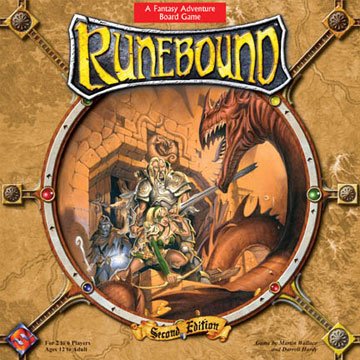 A couple of years ago I was really jonesing for some good old-fashioned tabletop fantasy role playing, but I was without a group and didn’t have the time to run a solo game for my wife. Then, like a beam from heaven, we received Runebound 2nd Edition for Christmas 2009. For the next few months, pretty much any time we had a couple hours of free time, my wife would ask, “Runebound?”
Oh, yeah.
Runebound is a board game of fantasy adventure. Each player takes on the role of one from a dozen (mostly unsavory) heroes, travels the map, faces challenges of ever-increasing difficulty, gains skill and treasure, and visits cities to heal, buy items and hire allies. The goal is to be the hero who defeats the great dragon Lord Margath before he can once again rise to power. (And if he can’t be found, snuffing three other dragons will do.)
The game board is a map that would catch Bilbo’s interest, with regional names (Howling Giant Hills, Moonglow Marsh) scattered liberally about that have zero effect on game play. Each hex has one of five terrain types. To move you roll five (when healthy) movement dice. A movement die is six-sided, with each face containing two or three terrain symbols. Spending a die with the appropriate terrain symbol showing allows you to move into a hex of that type. The odds of rolling each type vary, and on many turns a player is left weighing where she eventually wants to go against where she can get right now.
 In honor of the coming conclusion of
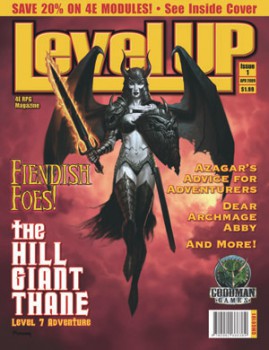 Gaming magazines can be a great asset to planning a roleplaying game, but I’ve often considered them to not be worth the cost. This one, reviewed by our very own Howard Andrew Jones, looks like it gives quite a bit of bang for the buck (or, in this case, 2 bucks). The publisher,
 When a show with a large fan base – especially a large SF fan base – ends, the fans have some small amount of solace, because there’s usually a rich bounty of “extended universe” materials to keep the fix going for a while. Often the avid fan, deprived of new episodes of the show, can enjoy exploring the novels, comic books, and, yes, even role-playing game supplements which are created through license with the show … but all good things must end.