Browsed by
Category: Movies and TV

Goth Chick News: Comics Collector as Movie Hero; Or A Valentine From My Favorite Indy Film Crew

Goth Chick News: Comics Collector as Movie Hero; Or A Valentine From My Favorite Indy Film Crew

As you well know, we here at Goth Chick News are mad supporters of the independent film industry.  This is mainly because we’re obsessed with anyone who has the courage and determination to pursue their passion and are willing to let us watch.

That and I’m a sucker for brooding artistic boys…

And no one epitomizes these traits better than my friends at Pirate Pictures, who gave us a peek into the world of real movie magic by allowing us to ride along with their production of Shadowland.  Now, Shadowland star Jason Contini and director Wyatt Weed have teamed up on a new project that isn’t exactly a typical GCN subject matter, but does involve a topic that is near and dear to most Black Gate fans… comics.

Four Color Eulogy is a drama/comedy revolving around the world of comic books and self-publishing. But rather that tell you any more, take a gander at this clip that not only explains the movie, but some of the process of getting a concept from script to big screen.

Read More Read More

Firefly, A Retrospective — Part 2

Firefly, A Retrospective — Part 2

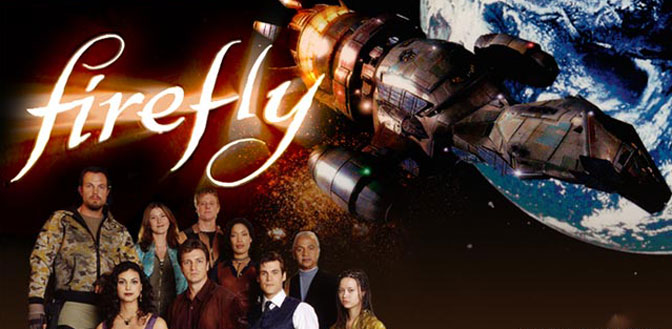
Firefly banner-smallHey gang! I’m back this week with the second part of my look back at the Firefly TV show. Last time, I talked about the pilot episode; this time I’ll be discussing the second and third episodes.

Train Job (Episode 2)

If I’m not mistaken, this was the first episode to air. As I said last week, I think this was a major mistake.

It starts in a cantina where Mal, Zoe, and Jayne are drinking at a table. Some drunk makes a toast to Unification Day, the anniversary of the Alliance’s victory over the Independents. Well, Mal doesn’t take kindly to that. Words are exchanged and a good old-fashioned bar brawl ensues.

Now this is just fine and kinda fun, and I can see why an inexperienced studio executive might think this is exactly the sort of opening a new series needs. But here’s the problem: we (the audience) can’t get invested in this fight because we don’t know the background. You remember. That background we were supposed to see in the pilot that explains how Mal and Zoe fought for the Independents to the bitter end and they still harbor resentment toward the Alliance…

Okay. I’m taking a deep breath.

Read More Read More

A History of Godzilla on Film, Part 4: The Heisei Era (1984–1996)

A History of Godzilla on Film, Part 4: The Heisei Era (1984–1996)

Godzilla 89Other Installments

Part 1: Origins (1954–1962)
Part 2: The Golden Age (1963–1968)
Part 3: Down and Out in Osaka (1969–1983)
Part 5: The Travesty and the Millennium Era (1996–2004)
Addendum: The 2014 Godzilla

The Underwhelming Comeback: The Return of Godzilla (1984) and Godzilla 1985

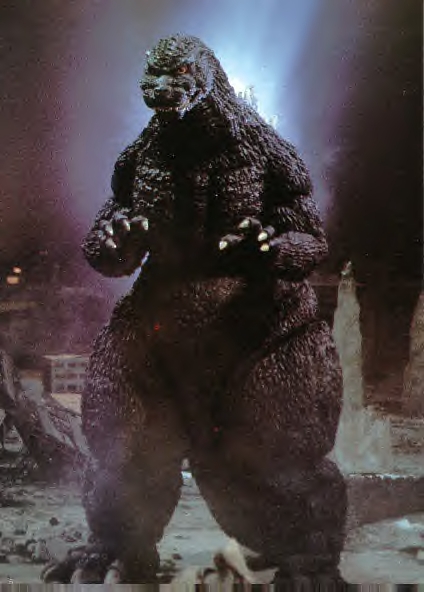
After an absence of nine years, Godzilla smashed back onto screens in 1984 in a film simply titled Godzilla (Gojira) in Japan, but marketed as The Return of Godzilla to English-speaking markets. In modern movie lingo, The Return of Godzilla is a reboot. It wipes from continuity all the previous G-films except Godzilla ’54 and fashions a new continuity: The Heisei Series.

The new movies developed a recognizable style, but The Return of Godzilla looks different from the installments that followed. Producer Tomoyuki Tanaka aimed to capture the somber tone of the 1954 original and transplant the Godzilla nuclear metaphor into the 1980s Cold War. The monster, having somehow survived Dr. Yamane’s Oxygen Destroyer thirty years past, heads back toward Japan, squeezing the island country between the nuclear superpowers of the U.S. and Soviet Union. Scientists and the Japanese Self-Defense Force race to find a way to stop Godzilla before a greater nuclear confrontation arises.

It’s an ambitious, admirable premise. The actual movie fails to live up to it, either as a serious tale or as a monster show. While the Cold War background is intriguing, the human action is bland and no character stands out. The exception is the Japanese Prime Minister, whose scenes dealing with the U.S. and Soviet envoys evoke a true sense of Japan’s awareness of it legacy in the atomic age. Otherwise, the time spent away from Godzilla is a stodgy bore of people sitting around talking about all the things they aren’t doing, handled with workman-like direction from series newcomer Koji Hashimoto.

The effects scenes are hit-or-miss. The Return of Godzilla was Toho’s most expensive SF film at the time, and it gave VFX supervisor Teruyoshi Nakano his only hefty budget for a kaiju movie. This translated into a few spectacular sequences, such as Godzilla’s first engagement with the JSDF in Tokyo Bay, and the monster’s showdown with the movie’s special-tech weapon, the flying tank Super-X. Godzilla concludes the fight by toppling an entire skyscraper onto the Super-X. Now that’s how you do it!

Read More Read More

Goth Chick News: Phantasmagoria: The Visions of Lewis Carroll by Marilyn Manson – WTF?

Goth Chick News: Phantasmagoria: The Visions of Lewis Carroll by Marilyn Manson – WTF?

image002When I first heard about this, I thought Marilyn Manson was taking on one of my favorite computer games.

In case you don’t remember, Phantasmagoria is the 1995 interactive movie horror adventure game created by Sierra for the PC.

Made at the height of the “interactive movie” boom in the computer game industry, Phantasmagoria is notable not only for being one of the first games to use a live actor as an on-screen avatar, but also for being banned by some retailers due to its fairly graphic depiction of violence.

What I didn’t know until now is that Phantasmagoria is also a famous collection of Lewis Carroll’s poems, as well as the name for live horror shows involving projection onto smoke screens that were invented in the 18th century France.

Oh, and it’s also the title of Marilyn Manson’s first foray into film.

Yes, you read that right. Marilyn Manson, the horror rocker cum performance artist is the writer, producer, and director of this $4.2M venture that has been trying to get legs since 2005.

Read More Read More

Firefly, A Retrospective — Part 1

Firefly, A Retrospective — Part 1

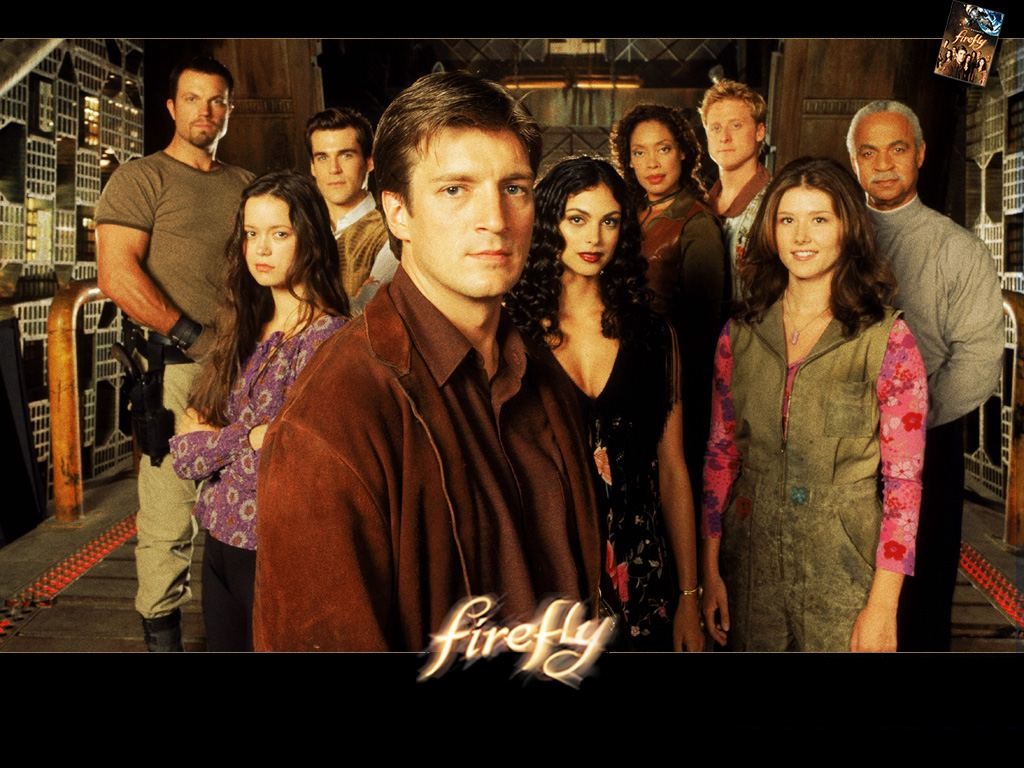
Firefly wallpaper-smallWhen I think of the TV show Firefly, I often compare it in my mind to the original Star Trek series. I wonder if all the Star Trek movies and spin-offs through the decades would have ever occurred if that original show had only run a single season. Yes, I think Firefly is (was) that good. And over the next few weeks, I’m going to be re-watching the episodes and sharing with you because I think this show still has a lot to teach us.

For those of you unfamiliar with the show, it was a “western space opera” created by Joss Whedon, which aired in 2002. The series is set five-hundred years in the future, after Earth has become uninhabitable and mankind went out to find a new star system to call home.

The western vibe comes from the planets on the frontier, which are not so civilized and fancy as the high-tech core worlds. There was a war a few years before the show begins between the system government, the Alliance, and a handful of Independent worlds who wanted autonomy. The Alliance won. The comparisons to the American Civil War are many.

The show’s cast are the crew of a transport starship called Serenity, trying to scratch out a living on the edge of space.

The first episode, or pilot, came in two parts. Titled “Serenity,” it actually didn’t air until the very end of the season. Because this episode sets up so much of the story world and the relationships of its primary characters, I find this criminal. I’ve heard that Fox didn’t think this episode was suitable to open the series, and for that they should be flogged in public. I always insist on watching the episodes in the order they were originally intended. So here goes.

Read More Read More

Goth Chick News: The Kids Who Put You Off Kids – Where Are They Now?

Goth Chick News: The Kids Who Put You Off Kids – Where Are They Now?

Danny Torrance and the twins back then

By this time, it’s no surprise to any of you that The Shining is one film I just can’t get enough of. I like the source material of course, but the movie version never gets old and I can say that with some authority, having seen it about a gazillion times (and written about it here a fair amount as well).

Back in 2010, inspired by a then-recent documentary on the Stanley Hotel (the real Overlook) I did some of my best ever cyber-stalking on a quest to find little Danny Torrance; or really the 38 year-old Danny Lloyd he is today.

Back then, I did manage to track down “Professor Lloyd” at the university in Kentucky where he now teaches, only to be entirely ignored. Not surprising, considering his students posted comments about the verbal smack down you’re likely to receive if you ever brought up the good professor’s past life.

But you know what? A little taste of fame, no matter how brief or how long ago, will inevitably leave you craving more at some point in the future. And apparently that future for Danny Lloyd was the publishing of King’s Shining sequel Doctor Sleep.

Read More Read More

Death Knight Love Story: WMA meets WTF

Death Knight Love Story: WMA meets WTF

Tauren Ninja
…ninja Minotaurs (my idea, apparently)

About ten years ago, I tried to stab this crazy Goth guy and he threw me through a pile of chairs.

Fortunately, we were doing WMA — Western Martial Arts and the daggers were blunt and we were wearing body armor. The chairs however, were real, but the impact fixed my shoulder, which had been painful for the previous month or so. I took this as a good omen and Hugh Hancock and I have been close friends ever since.

hughhancock
Hugh is an independent animator, think Ed Wood does Machinima but actually good.

Hugh is an independent animator, think Ed Wood does Machinima but actually good.

That’s how, years later, I ended up in a warehouse clad in skintight spandex and clutching a plastic sword.

Hugh had had this slightly bonkers idea. He would take the Death Knights from World of Warcraft and use them to make a love story.

Read More Read More

Observations: The Return of the King Movie

Observations: The Return of the King Movie

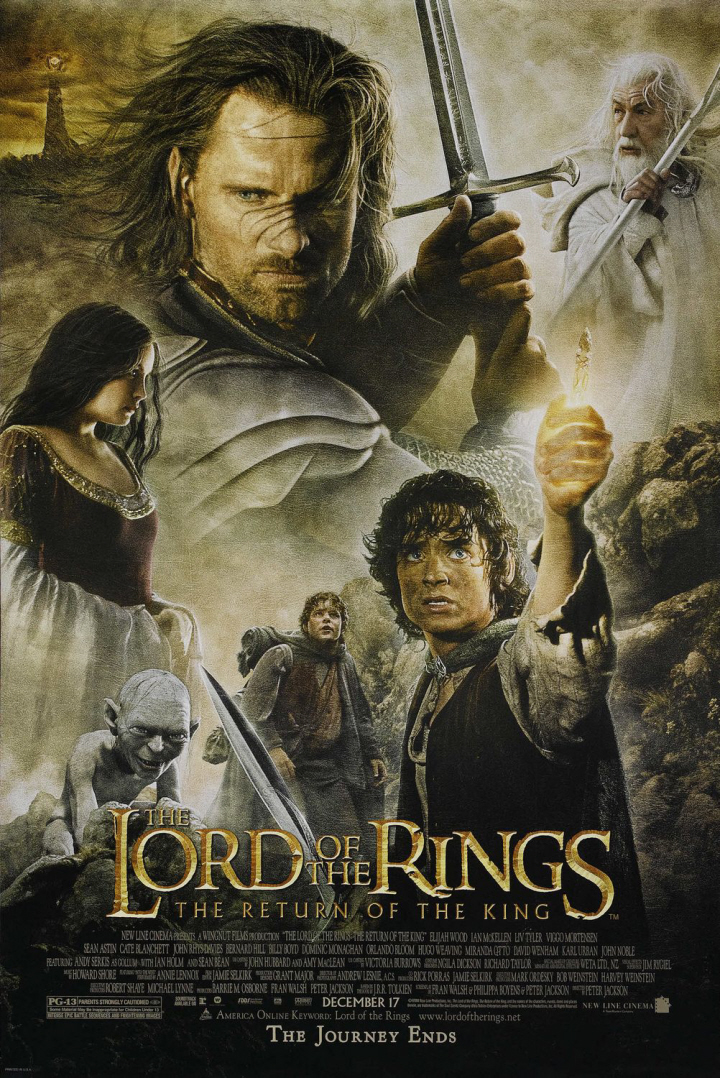
The Return of the King poster-smallHey, folks. Today I’m wrapping up my series about The Lord of the Rings movies with the third installment: The Return of the King (following The Fellowship of the Ring and The Two Towers).

The third film begins with Gollum’s origin tale, telling how he came to be, well, Gollum. Smeagol and his friend Deagol are fishing when Deagol falls in the river and accidentally discovers the One Ring. Smeagol kills Deagol for it and afterward is exiled, forced to live a miserable existence under the Misty Mountains. The main point of this scene is to show us (again) the Ring’s power to inspire intense desire in anyone who sees it.

We then move to Frodo, gazing at the Ring while Sam sleeps. The desire is obvious in his eyes, a reminder that the Ring is taking control. Gollum wakes them to get moving. In a cute exchange that reveals he’s the only remaining optimist in the group, Sam is rationing their food so they have enough for the journey back home.

Aragorn and company (now with Gandalf, King Theoden, and Eomer) ride to Isengard. Merry and Pippin are there to greet them, being silly with the pipeweed. In previous viewings, I missed that this mini-scene is important because it marks the starting place for the two young hobbits, smoking and feasting and drinking. They will never be this naïve and carefree again.

I also love how Treebeard greets Gandalf as “young master Gandalf,” like he’s a little kid. My grandfather used to greet me the same way (without the ‘Gandalf,’ obviously) and it still makes me smile.

Read More Read More

Godzilla Interruption: All Monsters Attack… Because Nobody Talks about It Much

Godzilla Interruption: All Monsters Attack… Because Nobody Talks about It Much

All Monsters Attack Poster with captionI now interrupt my continuing “History of Godzilla on Film” to bring you an Up Close and Personal look at one particular movie: 1969’s All Monsters Attack, also known as Godzilla’s Revenge.

It seems like an out-of-left field pick, since this movie has a poor reputation among the kaiju fans. As film historian Richard Pusateri says on the audio commentary for the current DVD: “Fans cannot decide if this is the worst movie of the series, or the second worst.”

However, I picked this movie for spotlight attention because it rarely receives any attention. Most Godzilla fans have seen it all the way through only once — probably in the English-dubbed version — and then left it on the shelf. With its chunks of stock footage lifted from earlier Godzilla films, fantasy elements that relegate the monsters to existence only in the imagination, and a target audience of third- and fourth-grade children, ­All Monsters Attack is easy for adult viewers to dismiss.

However, the movie contains elements unique among the classic Godzilla series that make it worthy of discussion. And for good or bad, it does have SF legend Ishiro Honda in the director’s chair in his penultimate Godzilla movie.

So let us go pay a visit to late-1960s industrialized Japan and meet a bullied latchkey kid with dreams of monsters.

The Background of All Monsters Attack

Toho Studios planned to conclude the Godzilla series with 1968’s epic Destroy All Monsters. But their resolution did not hold for long. Although the studio system would not collapse for another year, Toho’s movies were doing less business because of television’s popularity. When the studio heads decided to make another Godzilla movie, it was because they devised a way to make it as inexpensively as possible.

Rival studio Daiei’s 1968 movie Gamera vs. Viras inspired Toho’s choice. The Gamera film (released in the U.S. as Destroy All Planets) used battle footage from two previous Gamera movies to expand the running time and reduce the budget, and it used child heroes for direct appeal to the kiddie crowd. Toho gave instructions to producer Tomoyuki Tanaka to create a Godzilla film for children that made extensive use of existing special effects footage.

Read More Read More

Adventure On Film: Paperhouse

Adventure On Film: Paperhouse

By and large, if I had to drop one decade from the annals of cinema, it would be the eighties,SK-Paperhouse-1-334x500 but that period did come up with its share of winners.

One of the eighties’ forgotten gems is the fantasy-horror hybrid, Paperhouse (1988), a British release that did its best to compete with flicks like Heathers for Cineplex space, and failed. U.S. gross, according to the internet movie database, was just over $241 thousand. Sad. Paperhouse deserved better, much better.

Spoiler-free, the plot follows Brit tween Anna, curious about lipstick but not yet ready for boys, as she succumbs to a severe case of glandular fever.  The disease leaves her prone to vivid dreams, all of which stem from Anna’s crayon drawing of a bleak, lonely house. Whatever Anna adds to the house manifests itself in her dreams, and what starts out as a bit of a lark (think Harold and the Purple Crayon) quickly turns sour. Hardly twenty minutes in and it becomes clear that Anna may well have planted (or drawn) the seeds of her own destruction.

Having just read Violette Malan’s piece on John Gardner (On Moral Fiction) right here at Black Gate not a week before sitting down to re-watch Paperhouse, I couldn’t help but be struck by the film’s parallels to Gardner’s own arguments in favor of “moral” art and criticism. But what Gardner posits in his book he pursues by Socratic argument, in essay form; Paperhouse cleverly crafts those same questions into a cohesive dramatic whole.

Yes, the movie can be enjoyed on a purely surface level, without ever ceding the floor to philosophy, but make no mistake, this little chiller has a great deal more on its mind than things that go bump in the night, which is why it holds up so well, twenty-five years on.

Read More Read More