Browsed by
Category: Movies and TV

Revisiting A.B. Mitford’s The 47 Ronin: Japanese Tales of Vampires, Ghosts, and Renegade Samurai

Revisiting A.B. Mitford’s The 47 Ronin: Japanese Tales of Vampires, Ghosts, and Renegade Samurai

The 47 Ronin-smallTwo weeks ago I reviewed the film 47 Ronin, which Universal Pictures labeled a flop only a day after its U.S. release.

At that point the picture had earned about $85 million worldwide. That take has now increased to $116 million (according to BoxOfficeMojo), still well shy of its $175 million budget. Whether or not Universal’s premature announcement doomed the film, it’s now clear they weren’t wrong about its ultimate fate.

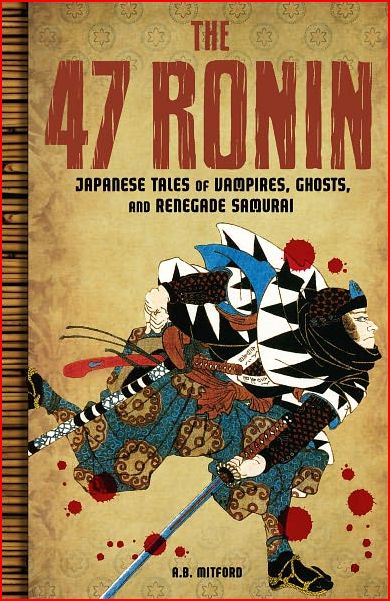
While browsing the remainder tables at Barnes & Noble yesterday, I stumbled on a curious title: The 47 Ronin: Japanese Tales of Vampires, Ghosts, and Renegade Samurai, by A.B. Mitford. I assumed it was a guerrilla tie-in; a cheap reprint timed to capitalize on the release of the movie. Except it was published nearly two years ago, in 2012, and there’s nothing cheap at all about the beautiful design, with striking endpapers and gorgeous color art on nearly every page.

I was right about at least one thing though: it is a reprint. It was originally published as Tales of Old Japan in 1871, one of the very first tomes to bring tales of Japanese monsters to Western shores.

Algernon Bertram Mitford was a British diplomat who later became Baron Redesdale. He developed a keen interest in Japanese folk tales while serving as attaché to the British delegation in Japan from 1866 – 1870 where, among other things, he witnessed the dissolution of the last feudal Japanese military government — the Tokugawa shogunate, ruled by the shoguns of the Tokugawa clans at Edo Castle — and the founding of a modern nation-state under Emperor Meiji.

Mitford was writing at a time when Japan was beginning to open to the West for the first time, less than 20 years after American Commodore Matthew Perry infamously sailed into Tokyo Bay with modern steam ships and explosive shell guns, gave the Japanese two white flags, and told them to hoist the flags when they wanted him to cease shelling the city and surrender. Perry forced the opening of Japan with the Convention of Kanagawa, and Mitford, writing a decade later, is a textbook case of white-guy-stupid, especially in how he’s perpetually surprised that the Japanese don’t greet Westerners with open arms and a bottle of warm saki.

Read More Read More

Goodbye, Professor

Goodbye, Professor

Gilligan's Island ProfessorRussell Johnson, who played the Professor on Gilligan’s Island, died yesterday at the age of 89.

The news reporter for WXRT here in Chicago, Mary Dixon, wryly noted during her morning show that the Professor was the only eligible male on Gilligan’s Island. Watching the show as a young girl, “it was all about the professor,” she said.

For me, a young nerd in Junior High, the professor embodied a little more than that (not that being a brainy sex symbol wasn’t a major accomplishment in itself). Everyone looks for role models at that age, and Russell Johnson’s good-humored, everyman brainiac was perhaps the finest role model on the airwaves in the mid 70s for young science enthusiasts — and I can’t help but wonder who will be cast in the role in the upcoming remake.

There was no shortage of smart characters on television at the time, from Spock to Bruce Bixby’s David Banner (The Incredible Hulk) to Peter Falk’s genius detective Columbo. But none of them was as likable — or as endlessly inventive — as Russell Johnson’s easy-going Professor, who could build a lie detector and a sewing machine out of coconuts. Johnson’s Professor wasn’t just smart… he was funny and charming, and week after week he showed that over-the-top enthusiasm for science didn’t have to be a social liability if you didn’t want it to be. You could be both smart and well-liked; it didn’t have to be a choice.

It was obvious that, in the microcosm of civilization that was Gilligan’s Island, the Professor was the one individual who kept everything running. His was a thankless role. He was constantly taken for granted, many of his ideas failed, and not a single one of his inventions ever got them off the island. But Johnson filled that role with a character who was noble, kind, and constantly upbeat. Here was a man of science who fit in; who was admired and, yes, loved.

Goodbye, professor.

Observations: The Two Towers Movie

Observations: The Two Towers Movie

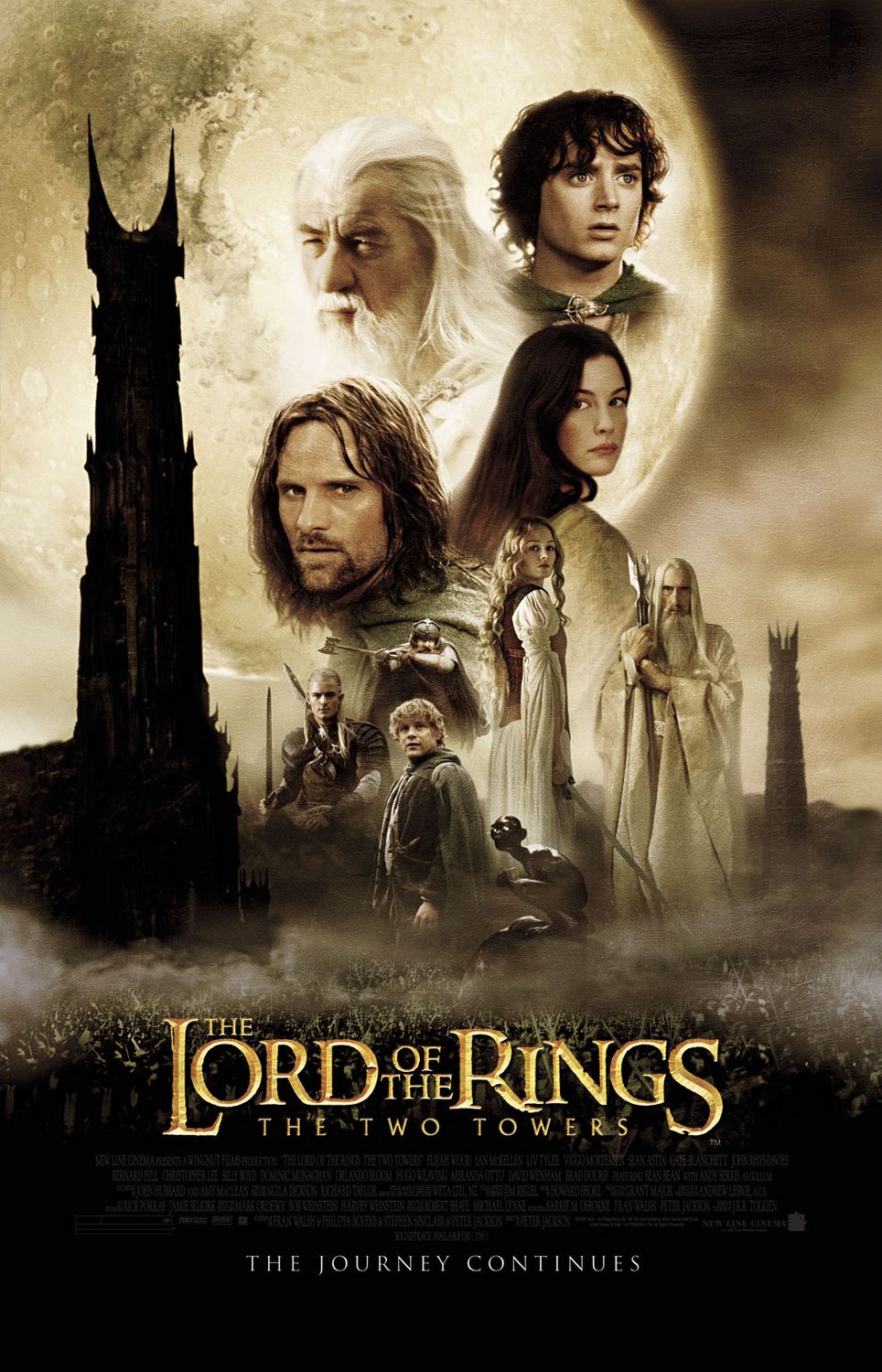
The-Lord-of-the-Rings-The-Two-Towers-poster-smallLast week I wrote about The Fellowship of the Ring movie, and this week I follow up with the sequel, The Two Towers.

One of the first things I noticed about this film was the short, choppy sequencing of scenes. This mainly occurred in the first hour, and it made for a slightly disjointed viewing experience.

The movie picks up right where Fellowship left off, starting with a gorgeous panorama shot of snow-capped mountains. Then we relive Gandalf’s fall from the bridge of Khazad Dum, but this time we get to see more of his battle with the Balrog, which is sheer awesomeness.

The perspective switches (get ready for a lot of this) to Frodo and Sam, tired and lost, as they make their way through the razor cliffs of Emyn Muil. We see that the Ring is getting heavier for Frodo, who feels its pull more than ever before, and certainly more than old Bilbo ever seemed to exhibit (except for brief spells.) This wandering phase is rather dull until the arrival of Gollum, who has been following the hobbits with plans to steal back the Ring. They catch him in the act and truss him up with elven rope. Frodo decides to free Gollum in exchange for leading them to Mordor; Sam doesn’t trust him (with good reason).

I want to pause a moment here to say that the portrayal of Gollum by actor Andy Serkis is – without a doubt — the highlight of this movie. The Two Towers has always been my least favorite book of the trilogy, sometimes tedious in its depression, but Gollum elevates this movie to being almost as good as the first one. A vicious little beast who can turn so sweet and cute, he is a masterstroke of acting and CGI genius.

Read More Read More

A History of Godzilla on Film, Part 3: Down and Out in Osaka (1969–1983)

A History of Godzilla on Film, Part 3: Down and Out in Osaka (1969–1983)

Godzilla01Other Installments

Part 1: Origins (1954–1962)
Part 2: The Golden Age (1963–1968)
Part 4: The Heisei Era (1984–1997)
Part 5: The Travesty and the Millennium Era (1996–2004)
Addendum: The 2014 Godzilla

Sayanora, Tsubaraya — and Sayanora, Golden Age of Japanese Cinema

The end of the Golden Age of Japanese Giant Monster movies coincided with the end of the most productive era for the Japanese film industry. Starting in the early 1950s, the country’s film industry experienced a meteoric rise. The major studios released a combined average of 450 movies to theaters each year. But the growth of television in the 1960s started to erode film attendance. In the late-‘60s, audience levels dropped precipitously, numerous theaters closed, and the studios faced cutbacks. Contract directors and stars were released, departments were scaled down or eliminated, and the studio responsible for the “Gamera” and “Daimajin” films, Daiei, was forced out of business entirely.

Science-fiction and monster movies had it particularly rough because of the growth of television. Popular superhero TV shows offered a cheaper alternative for young audiences to get their giant monster fix. The children who increasingly made up the viewership for Godzilla movies could now see kaiju action daily from their living rooms.

Ironically, the person most responsible for the growth of SF television was Eiji Tsubaraya, Toho Studio’s master of visual effects and one of the four “Godzilla Fathers.” Tsubaraya formed his own independent company, Tsubaraya Productions, in 1963 to create special-effects television programs. The 1966 hit show Ultra Q led to the monumental success of Ultraman the next year. Each week, Ultraman pitted its giant-sized title hero against a new monster. Clone shows sprouted everywhere, and the monsters of cinema screens started to bring in less money.

Read More Read More

New Year’s Resolutions of Oz

New Year’s Resolutions of Oz

one million yearsAfter about ten months of uninterrupted weekly posts, I’m taking a bit of a breather this week. Today, instead of new content, I’ll take inventory and look ahead to what I hope to deliver Black Gate readers in 2014. Perhaps I can couch it in a “New Year’s Resolutions” list — most of us allow for a bit of leeway on those overly optimistic proclamations, anyway…

1. Lose about twenty pounds, preferably at a blackjack table in Derbyshire.

2. Cut back on tobacco consumption, especially my wife’s.

3. Drink more alcohol. (It fell way off in 2013. Obviously I need to get to more conventions.)

And blah blah blah. Okay, let’s get to the stuff that someone else reading this might actually be curious about…

Read More Read More

Was Star Trek‘s Theme Music Stolen From Beethoven?

Was Star Trek‘s Theme Music Stolen From Beethoven?

The CBC’s Tom Allen and the Gryphon Trio do some amazing musical detective work, following the clues from Mahler to Brahms to Beethoven to the 23rd Century, in this delightful single-take through the twisted subterranean corridors of Paul Hahn’s piano studio in Toronto. Also starring teleporting pianist Jamie Parker, and a little cosplay.

Goth Chick News: Samuel L. Jackson Takes On Japanese OVA – Hold On To Your Butts…

Goth Chick News: Samuel L. Jackson Takes On Japanese OVA – Hold On To Your Butts…

image002Frankly, it occurred to me to just post this video clip with “Hell yes!” underneath it and call this week’s GCN done.

When you watch it, you’ll understand you would not have blamed me.

But then I would have missed out on the chance to share some very juicy background tidbits about this little gem.

Here in the US ,the live action film starring Samuel L. Jackson will be called Kite. But in Japan, where the source material originated, it is known as A Kite; Yasuomi Umetsu’s 1998 animated film. Though I have attempted to find out the meaning of the title, my Japanese is a tad rusty and so far no joy.

Kite started out as an OVA (“original video animation”) and the Japanese version ran for two 30-minute episodes. Though anime generally gets away with a heck of a lot more than traditional media could, Kite is still unique in its controversial depiction of extreme gory violence and strong sexuality. It was subsequently banned in many countries including Norway due to some scenes in the film being labeled child pornography, which didn’t stop it from gaining underground-cult-classic status from OVA fans.

Banned or not, it won’t take you much digging to find A Kite online and uncut for free, which I did and be warned — it is pretty hard to watch (and do not try watching it at work). In a rare change of heart I actually feel rather glad the US film version took liberties with the source material, or this post could have been the very first red-band GCN.

Read More Read More

Observations: The Fellowship of the Ring Movie

Observations: The Fellowship of the Ring Movie

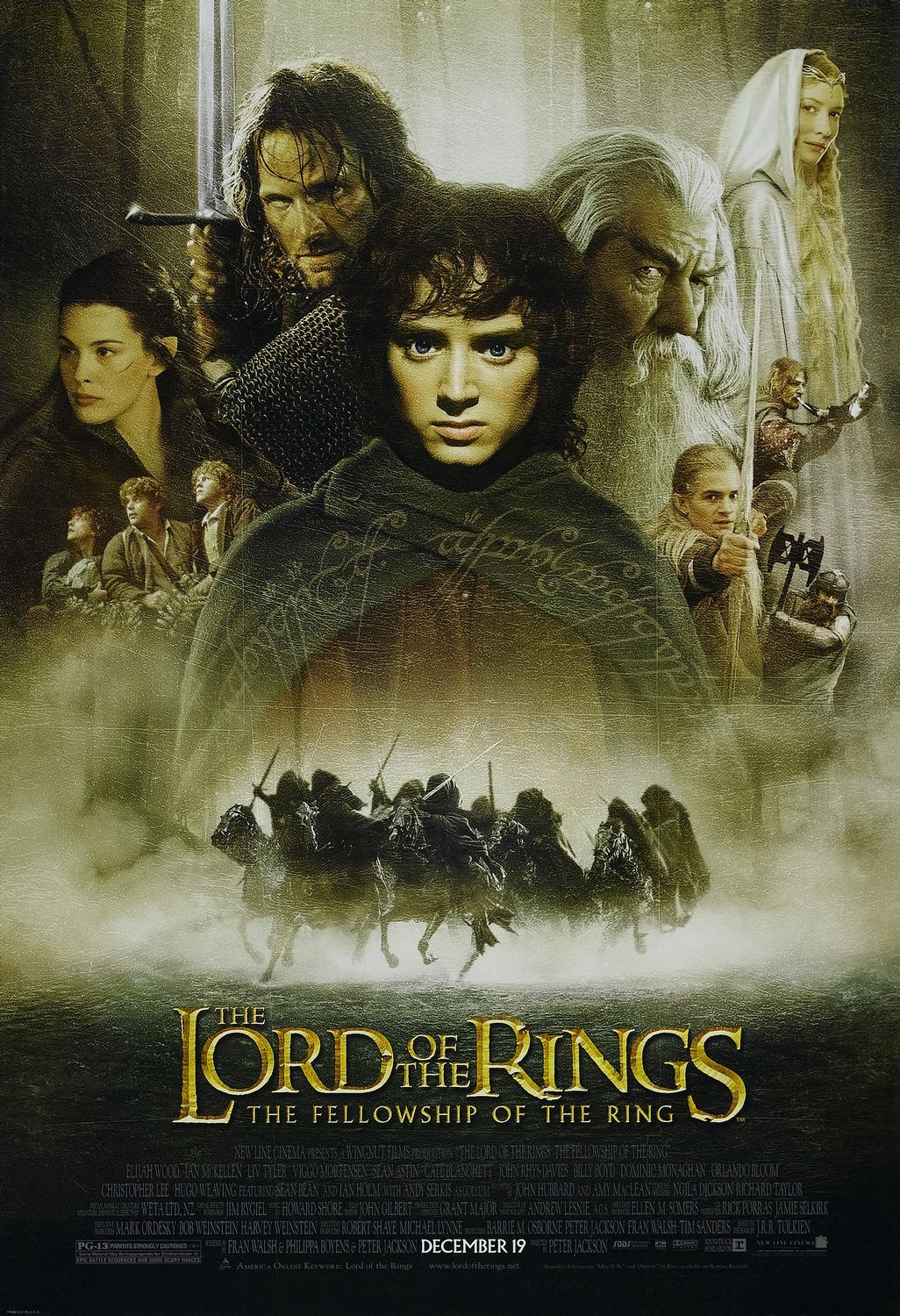
The Fellowship of the Ring poster-smallThe release of the second installment of The Hobbit got me thinking about The Lord of the Rings movies. And since I hadn’t watched them in a couple years, I decided to pop in my extended version DVDs and re-live what I consider to be one of the best film experiences in my lifetime. I watched with an eye toward what worked for me and what didn’t.

What I won’t be doing in this article is comparing the movies to the books. I love the LOTR books. I’ve read them several times and consider them among the most important novels ever written. However, I want to consider the films on their own, because movies and books are such different media.

So, let’s plunge into the fray. Shall we?

The movie begins with an extended introduction that explains who Sauron is and how he lost the One Ring, how it came into the possession of a furry little fellow named Bilbo. It’s well-done and probably very helpful to those who aren’t familiar with the events in The Hobbit. The highlight to me was when the Dark Lord of Mordor comes out and starts dishing out the pain with a huge mace.

Then we move to the real opening of the story, with Frodo in the Shire. The world of the hobbits is simple and charming, exemplifying a “good life.” I actually forgot how much good stuff happens in these first couple scenes while old Bilbo throws his 111th birthday party. There’s a nice bit of foreshadowing as Bilbo writes his book. He says that there’s always been a Baggins living at Bag End, and there always will be. That little nugget, to me, unlocks one of the powerful themes of the entire franchise: the idea of home as a place in your heart that can see you through the bad times, no matter where you are.

Read More Read More

A History of Godzilla on Film, Part 2: The Golden Age (1963–1968)

A History of Godzilla on Film, Part 2: The Golden Age (1963–1968)

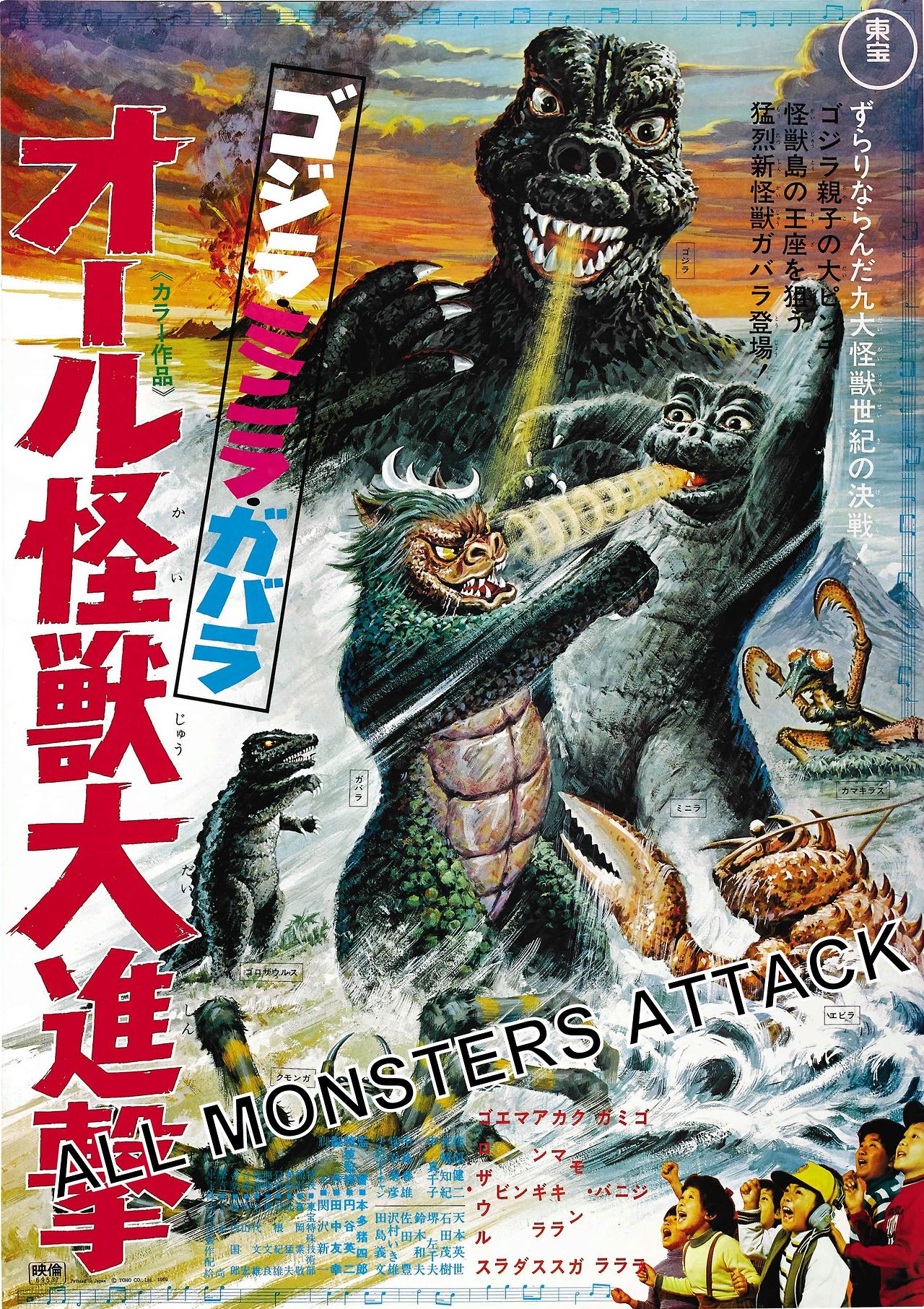
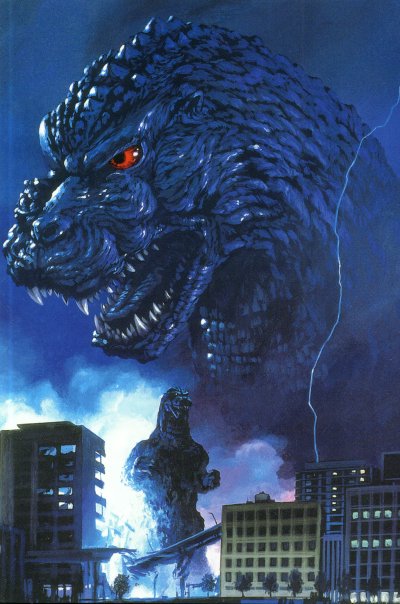
MosuGojiWelcome back… the double holiday interruption delayed this march across (and on top of) the Tokyo skyline. But now the Big-G is back and about to enter the Golden Age of Japanese Fantasy Cinema and the peak of kaiju movie greatness.

Other Installments

Part 1: Origins (1954–1962)
Part 3: Down and Out in Osaka (1969–1983)
Part 4: The Heisei Era (1984–1997)
Part 5: The Travesty and the Millennium Era (1996–2004)
Addendum: The 2014 Godzilla

The Godzilla Masterpiece: Mothra vs. Godzilla (1964)

The astronomical success of King Kong vs. Godzilla made Toho Studios commit to yearly Godzilla movies for the rest of the decade, as well as increasing their giant monster output in general. The studio shifted away from broader science-fiction epics like The Mysterians: the same year that King Kong vs. Godzilla ignited the box-office, Toho’s more ambitious and expensive science-fiction movie from the team of director Ishiro Honda and special effects creator Eiji Tsubaraya, Gorath, made a poorer showing. From now on, Toho would push that they had monsters and were ready to hurl them against each other for audience’s viewing pleasure.

After briefly considering a King Kong re-match, G-series producer Tomoyuki Tanaka turned to a hometown hero: Mothra, the monster-goddess from the popular 1961 Ishiro Honda film of the same name. Mothra was the point where the Japanese kaiju film came into its own as a specific cultural style different from the US model that first inspired it. The lovely yet powerful Mothra was a perfect foe to put in the opposite corner from Godzilla — at least in terms of box-office appeal. From a story and special-effects perspective, it was a trickier idea: Godzilla fighting a giant mystical moth?

But the creative team came through in an astonishing way: Mothra vs. Godzilla is the height of the Godzilla series and one of the finest monster epics ever put on film. This is the movie to show people at the start of a Godzilla odyssey, since it captures so well the Japanese interpretation of the giant monster genre, has Godzilla at his most charismatic yet menacing, and is more fun than most amusement parks.  Eiji Tsubaraya was at his zenith with visual effects; after some wonky optical work in King Kong vs. Godzilla, the effects here are seamless, especially the scenes featuring the miniature Twin Fairies (the shobijin, played by pop singing duo The Peanuts). The two monster battles, with Godzilla against the adult Mothra and then against two larval Mothras, are thrillingly staged and scored.

Read More Read More

Inkjetlings Round eTable: Jackson’s Desolation of The Hobbit?

Inkjetlings Round eTable: Jackson’s Desolation of The Hobbit?

smaugThis week Frederic S. Durbin, Gabe Dybing, and I discuss our impressions of Peter Jackson’s latest film The Hobbit: The Desolation of Smaug. The conversation is a casual and meandering one among friends, although I have tried to group observations under distinct topics. In keeping with the informal nature of the exchange, I have used our first names.

First Impressions (and a link to a completely different review)

FRED: It’s a lot of fun. I was surprised in this one by the extreme departures from the book . . . so this one felt to me like I was watching really well-done fan fiction. But if you can accept that, the movie really is entertaining. It’s fun seeing the characters and settings. I’ll hold off saying any more until I’m sure you guys have seen it.

GABE:  It was a lot of fun, but it certainly will be interesting to talk about. How about you, Nick? Are we waiting for you to see it?

NICK: I finally did get to The Desolation of Smaug — Mel and I arranged a date night and saw it together. She is a HUGE fan of the LOTR movies, but with this film, she feels that something is just off. I found it an enjoyable spectacle, with the caveat that in tone it is very little like Tolkien.

Read More Read More