Fantasia Diary 2015, Day 12: Nowhere Girl and Princess Jellyfish
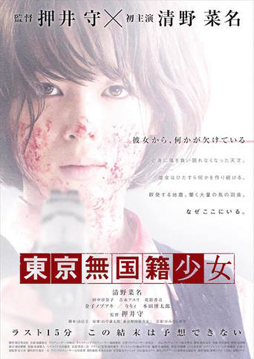 Saturday, July 25, was an odd day. At 4 in the afternoon I was meeting my girlfriend and some other friends to watch Princess Jellyfish, a live-action adaptation of a manga that had already been adapted into an anime series. But because I had to queue for it with members of the media, I’d actually be waiting in a different line than the people I’d be seeing the movie with. So I decided I’d go to the Fantasia screening room first, and watch another film: Mamoru Oshii’s Nowhere Girl.
Oshii’s best known as a director of anime films such as Ghost in the Shell and the recent Garm Wars. This was his first live-action feature, from a script by Kei Yamamura based on a short film by Kentaro Yamagishi; Yamagishi’s 2012 film ran 20 minutes, and Oshii’s only runs 85. For most of that time we follow Ai, apparently an exceptionally talented student at an arts school for girls. Orders from unseen authorities have given her more privileges than the other students, and she’s building a strange sculpture project in the school auditorium. She’s excluded and bullied by the other students, and has a tense relationship with one of her teachers. The school nurse is more sympathetic, but is pushing medication on Ai despite Ai’s doubts. It’s hinted that Ai might be suffering from hallucinations. Mysterious scars and injuries appear on her for no obvious reason. And what do the quakes striking the school have to do with her?
Mysteries run through Nowhere Girl (original title: Tokyo Mukokuseki Shojo). Ai’s schoolmates say she’s suffering from “PT … something. Some mental illness.” She’s clearly capable of violence. Formerly considered a genius, something seems to have wrecked her talent — unless she can work through whatever’s blocking her. Then an unexpected climax is filled with gunplay, and everything becomes clear in the last minutes. It’s a Twilight Zone–esque structure, a puzzle revealed by the hoary old twist ending.
 Thursday, July 23, was the first day of the Fantasia Festival I chose not to see any movies. Wandering down to the screening room was a very real temptation, but I desperately needed to do laundry and other household chores — as well as to write about the films I was seeing. In fact as I made my plans it seemed that I was entering a relatively light stretch of the schedule, before what looked like a killer weekend.
 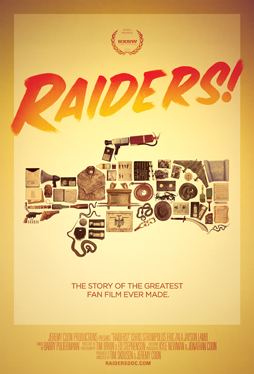 On Wednesday, July 22, I saw three movies at the Fantasia Festival — which made it an average day, to the extent I had an average day at Fantasia. It began at 1 PM, with a documentary called Raiders!: The Story of the Greatest Fan Film Ever Made. After that was a Japanese comedy-drama called 100 Yen Love. Then I made a difficult decision to pass on both the New Zealand horror-suspense film Observance and the American science-fiction film Synchronicity in favour of the Korean historical epic The Royal Tailor. I figured I could watch a later showing of Synchronicity, while Observance was available in the screening room. But this looked like my only chance to catch Tailor on the big screen, and I had an idea it was the sort of film that would take full advantage of the Hall Theatre’s scale.
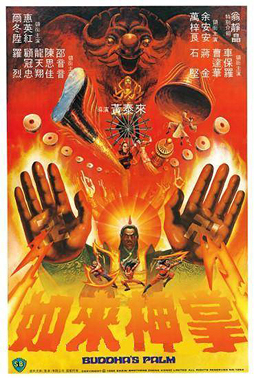 I was at Concordia’s De Sève Theatre early on Tuesday, July 21, for a showing of a 35mm print of the Shaw Brothers’ wuxia fantasy Buddha’s Palm. After that, I had a decision to make. At 5:30 the Nigerian zombie movie Ojuju played directly against a re-release of the British-Canadian horror-suspense movie The Reflecting Skin. Which would I see? And then after that, the first live-action film by director Mamoru Oshii, Nowhere Girl, was directly opposite a quirky romantic fantasy comedy, Haruko’s Paranormal Laboratory. Again: which to see?
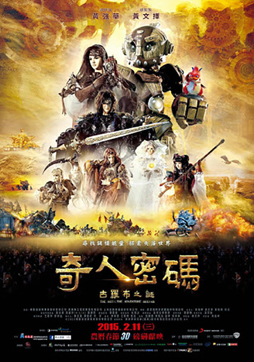 Some days at the Fantasia Festival I find a common theme among the movies I see. And some days I don’t. Sometimes the day’s movies are simply a wonderfully strange mix of things each wonderfully strange in themselves. Bearing that in mind, let’s jump into what I saw on Sunday, July 19.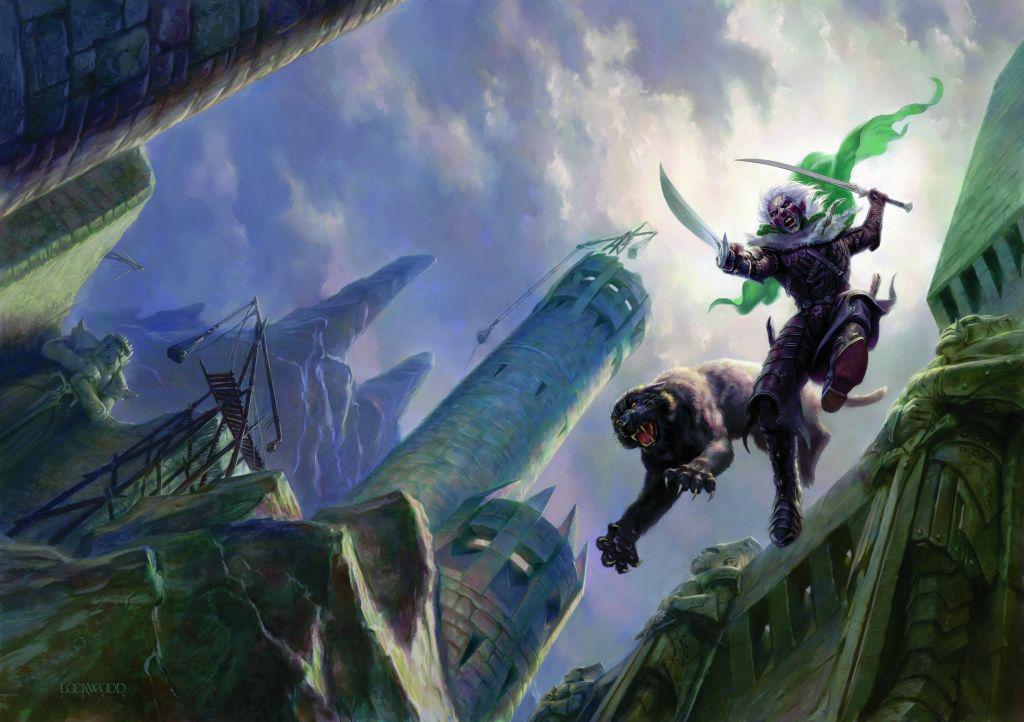
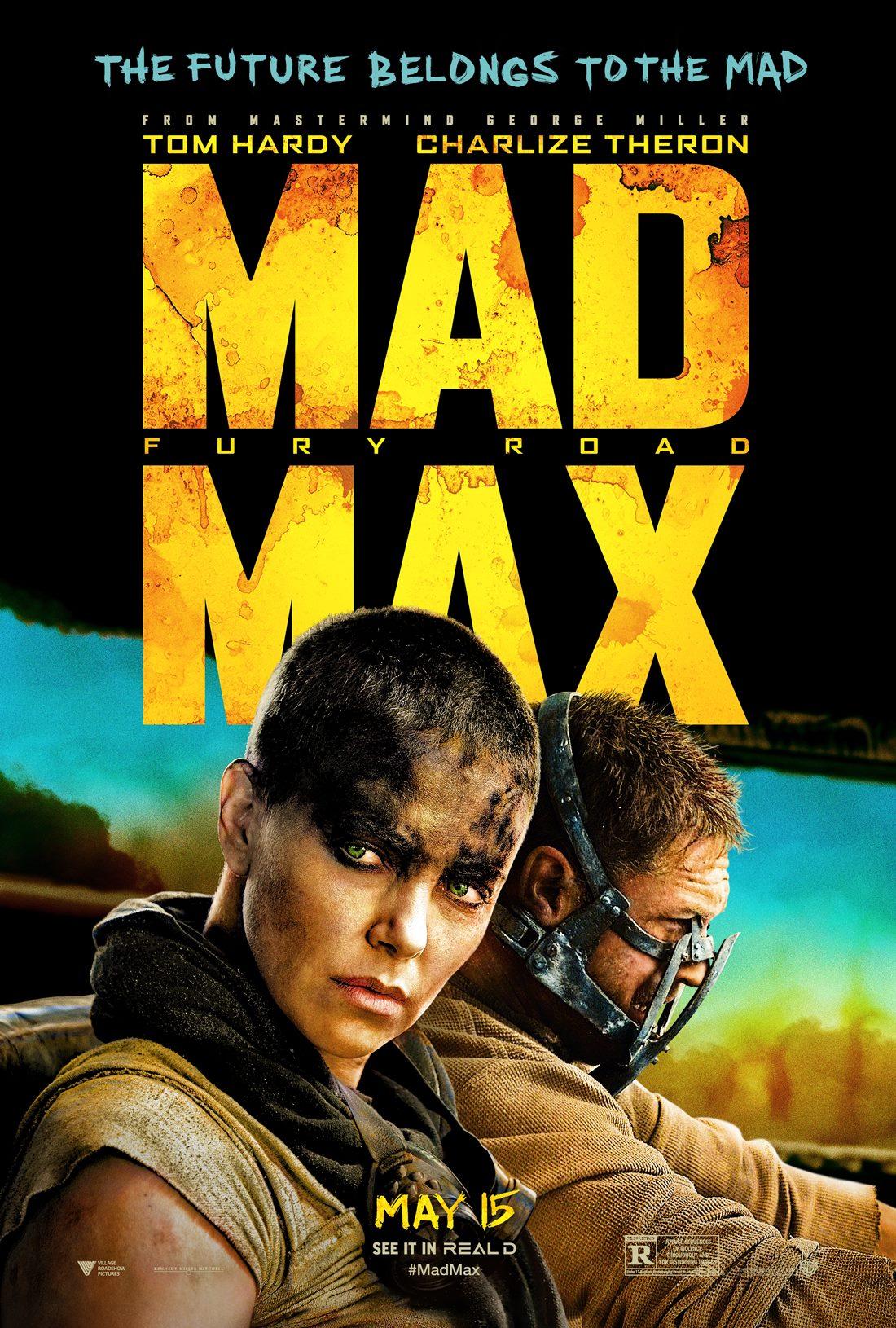
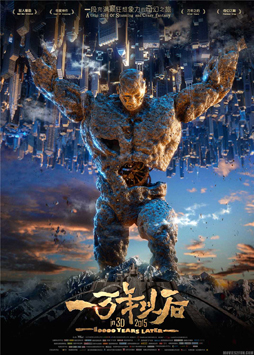 One of the things people don’t tell you about getting older is that the more books you read and movies you see, the more likely you are to see those stories echoed in other stories. The new books and movies you come across remind to you of the older books and movies you already know. Sometimes there’s good reason for that, as artists try to engage in a dialogue with their forebears. Sometimes you’re just seeing things.