Goth Chick News: Leonardo DiCaprio as Unrepentant Serial Killer… Finally
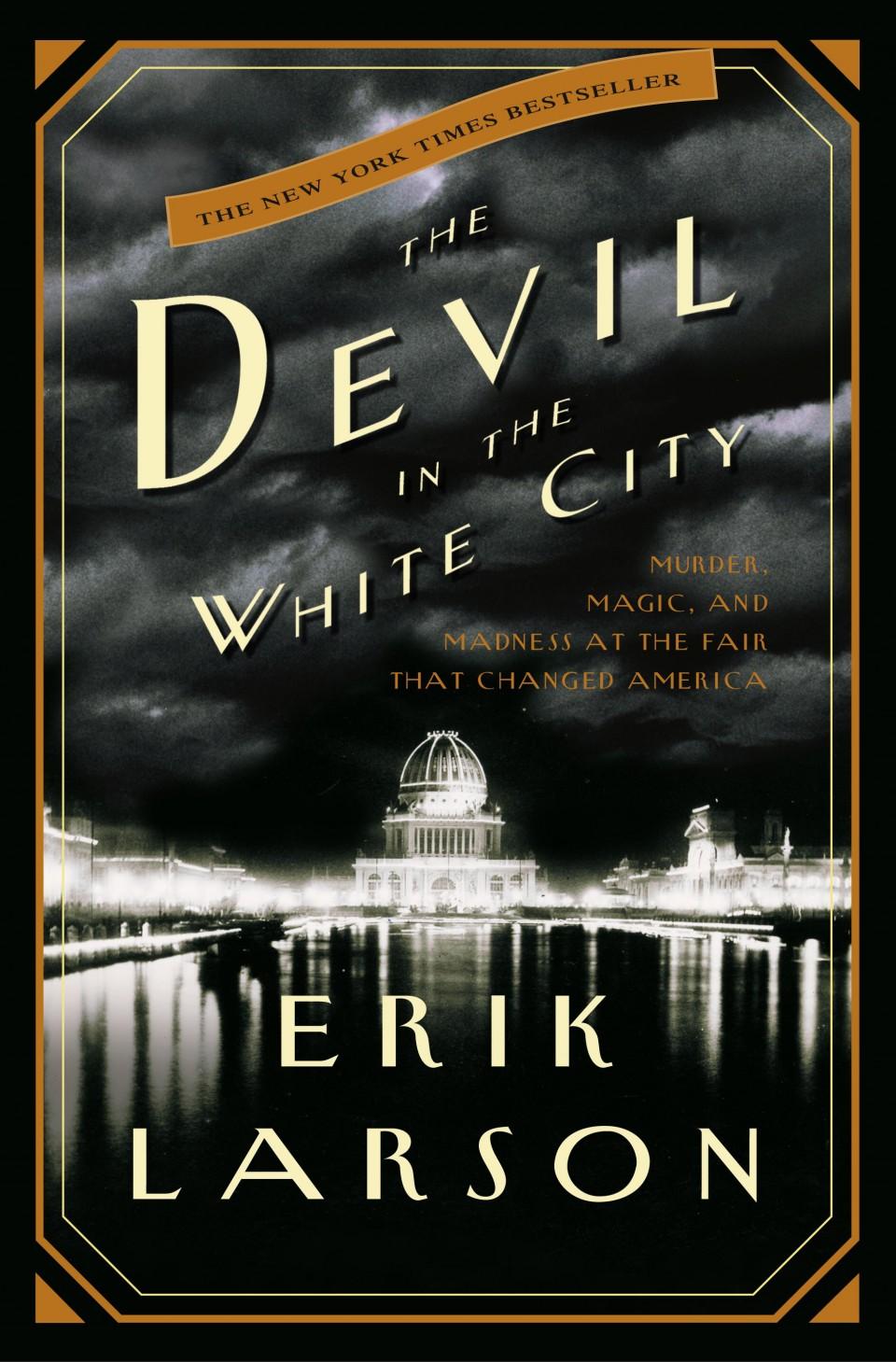 Nearly two years have passed since I first reported Warner Bros. continued to slog through script development on a movie version of Erik Larson’s tale of murder in the 1893 Chicago World’s Fair, The Devil in the White City.
Larson’s book, which tells the twin narratives of serial killer H.H. Holmes and Daniel H. Burnham the architect behind the World Fair, was first put in development by Tom Cruise’s production company, but the option lapsed in 2004.
What then ensued was a series of various studio options, all which lapsed before the movie could get out of development hell. White City finally came to rest with Warner Bros. where it has languished for the last several years until their option also expired, resulting in an aggressive bidding war which was ultimately won this summer by Paramount.
Leonardo DiCaprio has been attached to the White City project for nearly ten years, doggedly pursuing the film since shortly after Cruise’s company lost out. DiCaprio is specifically keen to play Holmes rather than the far more likable character of Burnham, because DiCaprio wants to portray an entirely unsympathetic “bad guy.”
Holmes most certainly fits the bill.
H.H. Holmes murdered between 27 and 200 people, mostly single young women, against the backdrop of the Chicago World’s Fair. The reason the spread on the quantity of victims is so large is, due to his insidious corpse disposal methods, the exact body count was impossible to pin down. Even Holmes himself couldn’t recall the precise number, when he was finally caught, tried, and hung in 1896.
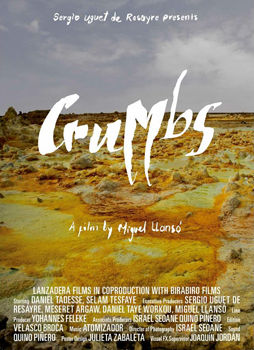 Fantasia was beginning to wind down. After seeing five movies on Sunday, August 2, I only saw four on Monday the 3rd: an Ethiopian post-apocalypse quest called Crumbs; a Spanish crime movie called Marshland; an American suspense movie called The Invitation; and a French science fiction comedy called Cosmodrama. I’d heard good things about each of these movies, and I had cautiously high hopes. Which were mostly fulfilled.
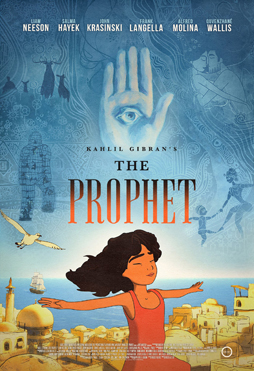 Sunday, August 2, was a day I’d been waiting for and slightly dreading. I was planning to see five films, one after the other. All of them at the large Hall Theatre, except for the second, a presentation of short animated films at the De Sève. It would kick off at 12:30 with Kahlil Gibran’s The Prophet, a cartoon adaptation of the classic book. The Outer Limits of Animation 2015 showcase would follow. Then Experimenter, a biopic about controversial psychologist Stanley Milgram, he of the notorious fake electroshock experiments. Then Ninja the Monster — as its title suggests, a film about a confrontation between a ninja and a monster. Finally would come Strayer’s Chronicle, a novel adaptation about a group of alienated teenagers with strange powers fighting to protect a world that hates and fears them. I was fairly sure it was possible to make a good movie out of that sort of material. But I had a lot of film to watch before I’d get to see it.
 Saturday, August 1, would start early for me at Fantasia. At 12:30 I was seeing a Chinese fantasy adventure called Snow Girl and the Dark Crystal. Then I’d head over to the screening room, where I planned to watch a documentary about the Turkish film industry, Remix, Remake, Ripoff: About Copy Culture and Turkish Pop Cinema. Then I’d go to the De Sève Theatre for a pair of films, the post-apocalypse art-house movie Orion and then the Korean drama Socialphobia. Once again, a nice varied day.
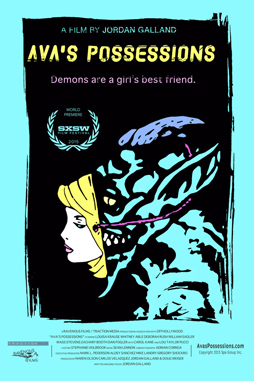 Friday, July 31, started late for me at Fantasia. My first movie, a horror-comedy called Ava’s Possessions, screened at the Hall Theatre at 5:15. After that I decided to watch the Indonesian wuxia movie The Golden Cane Warrior. Then I’d go across to the De Sève Theatre to catch the surreal science-fictional American-Argentinian movie H. before returning to the Hall for the Friday midnight movie, a Quebec-made tribute to 80s post-apocalypse action movies called Turbo Kid. That would carry me through to something like 2 AM. So if things started late, at least it looked like I had a lot on the agenda.
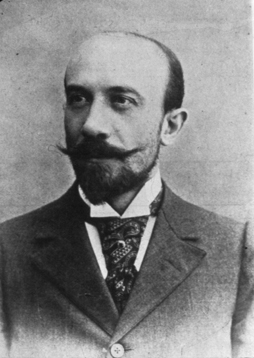 Thursday, July 30, looked like one of the odder days I had lined up at the Fantasia Festival. I’d head down to the De Sève Theatre early on to catch a new American science-fiction film called Synchronicity, then go to the screening room to watch a dialogue-free horror film called The Dark Below. After that, I’d go back to the De Sève to catch the Irish black comedy Traders, and finally wrap up with an event called Méliès et magie, an event presenting some of the classic short films by the first master of fantasy cinema. It looked like a varied day, though in the end it was less so than I’d expected.
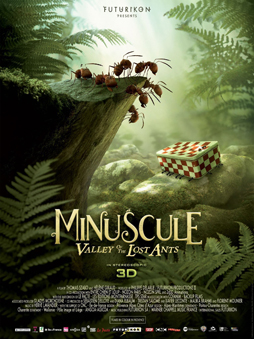 I took a day off from Fantasia on Tuesday, July 28, to run some errands and buy some groceries, then returned on Wednesday to begin a kind of mini-marathon that would carry me through to the end of the festival. I saw four movies Thursday, starting at the De Sève with a wordless 3D animated French film called Minuscule, about a ladybug who falls in with a group of ants who’ve liberated a box of sugar from an abandoned picnic. After that I went to the screening room to see an Australian horror-suspense movie called Observance. Then I went back to the De Sève for the semi-science-fictional German action movie Boy 7. After getting out of that one, I made a snap decision to run across the street to the Hall Theatre to watch the Korean action-comedy Big Match. Which turned out to be one of the better calls I made all festival.
  No-one’s a perfect critic, and I’ll readily confess to being less perfect than most. At any rate, sometimes a film’s best appreciated with a certain level of knowledge. Maybe you know too much about the film’s subject, and you see nothing new. Or you know too little, and you find yourself lost. In the latter case, at least, you can wonder whether your lack of knowledge is representative of a general audience, if not of whatever audience the artist has in mind. No critic’s going to be able to hit the sweet spot of knowing just enough, not every time out. Nobody’s perfect.
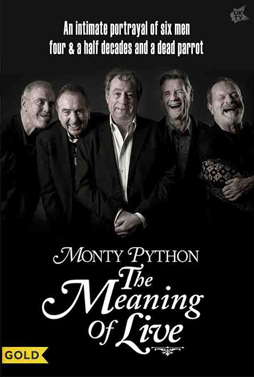 There’s what you expect from a movie, and then there’s what you get. Sometimes a good movie can be a little disappointing, because it gives you only more-or-less what you’d been expecting. And sometimes a movie can surprise you with just how good it is. So if I say that on Sunday, July 26, I had a good day at the Fantasia Festival, it actually means I had two very different experiences in the big Hall Theatre. First was a documentary, Monty Python: The Meaning of Live. And then a supernatural thriller starring Henry Rollins, He Never Died. Both were good. The second was surprisingly good.