Jerome Bixby was born on January 11, 1923 and died on April 28, 1998. His story “It’s a Good Life” was adapted into an episode of The Twilight Zone and The Twilight Zone Movie. He wrote scripts for four episodes of Star Trek, including “Mirror, Mirror,” and co-wrote a story with Otto Klement which became the basis for the film Fantastic Voyage. He served as the editor of Planet Stories from mid 1950 through July 1951 and went on to serve as Horace L. Gold’s assistant at Galaxy.
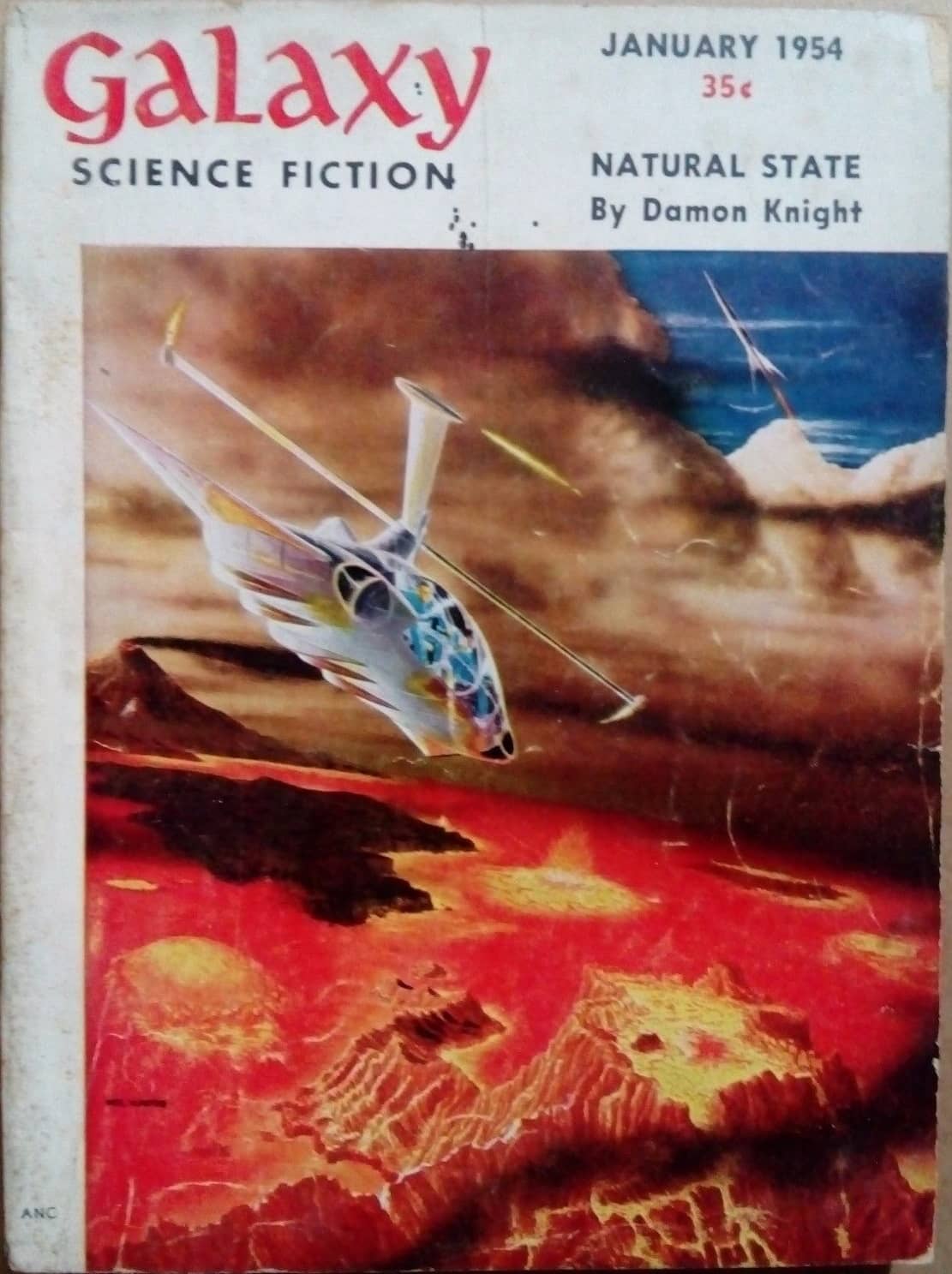
When he first envisioned the story that became “The Holes Around Mars,” he was planning on what is now known as flash fiction ending with a joke. He discussed it with Gold, who convinced him to stretch it out and in the writing, he extended it again until it took its present form. It was first published in Galaxy in the January, 1954 issue, edited by Horace L. Gold. The story has been reprinted numerous times and translated into French, German, and Italian.
Algis Budrys was born on January 9, 1931. He died on June 9, 2008. In addition to his career as a writer, Budrys edited and published the magazine Tomorrow, first in print and later on-line. He was also active in promoting the Writers of the Future contest and wrote a long-running and very influential book review column in Galaxy Magazine entitled Benchmarks, many of which were collected into book form in 1986. He was a Guest of Honor at LoneStarCon 2, the 1997 Worldcon in San Antonio. Budrys was inducted into the First Fandom Hall of Fame in 2007 and received the Pilgrim Award for lifetime contribution to SF and fantasy scholarship from the Science Fiction Research Association the same year. In 2009, he received one of the inaugural Solstice Awards from the SFWA.
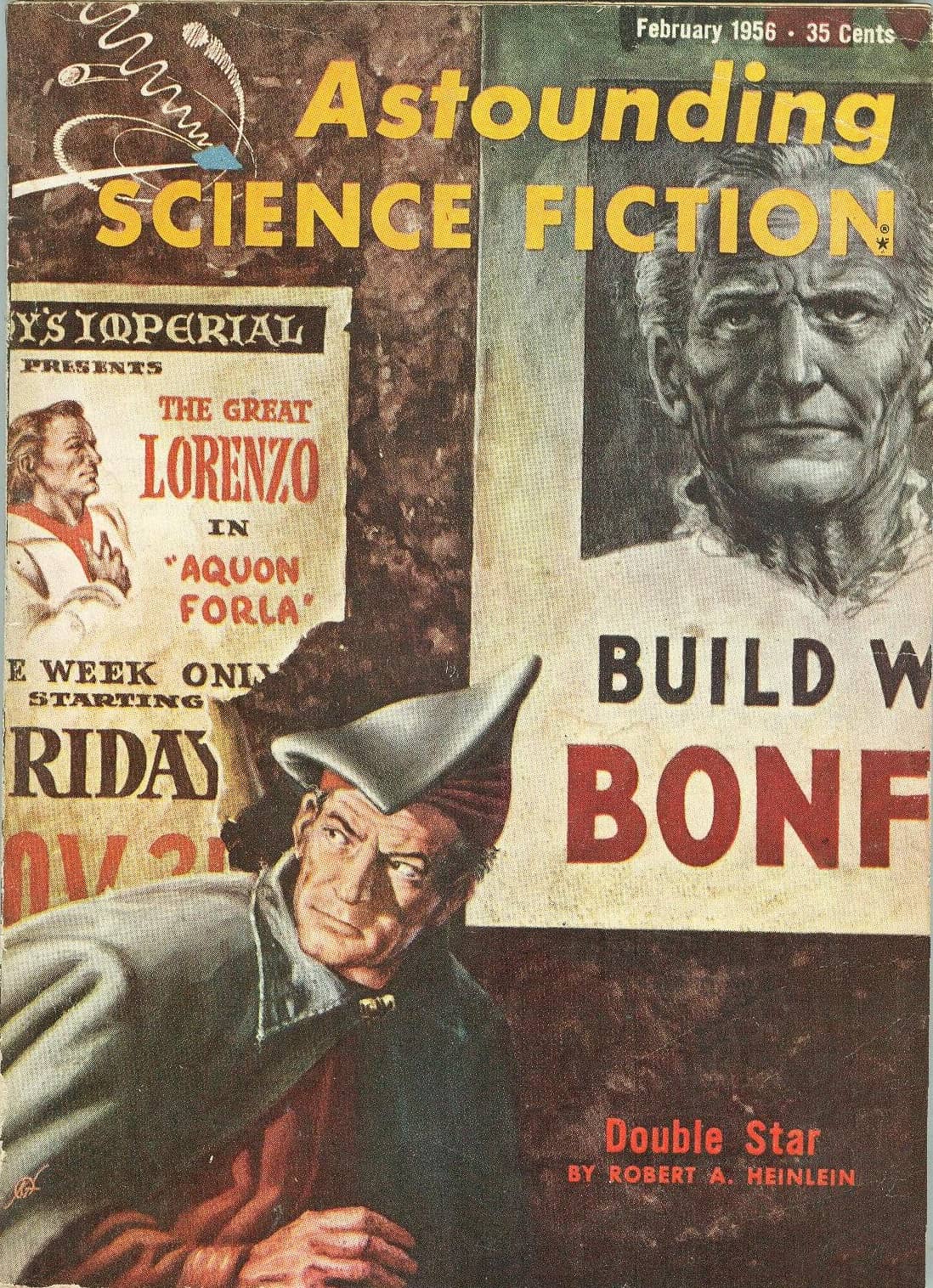
“Silent Brother” was first published under the pseudonym Paul Janvier in the February 1956 issue of Astounding Science Fiction, edited by John W. Campbell, Jr. and was reprinted five months later in the British edition of the magazine. When Judith Merril included it in SF: The Year’s Greatest Science-Fiction and Fantasy Second Annual Volume the next year, it was attributed to Budrys. Budrys included it in his collections Budrys’ Inferno,The Furious Future, and Entertainment. Isaac Asimov and Martin H. Greenberg included it in The Great SF Stories #18. The story has been translated into German and French.
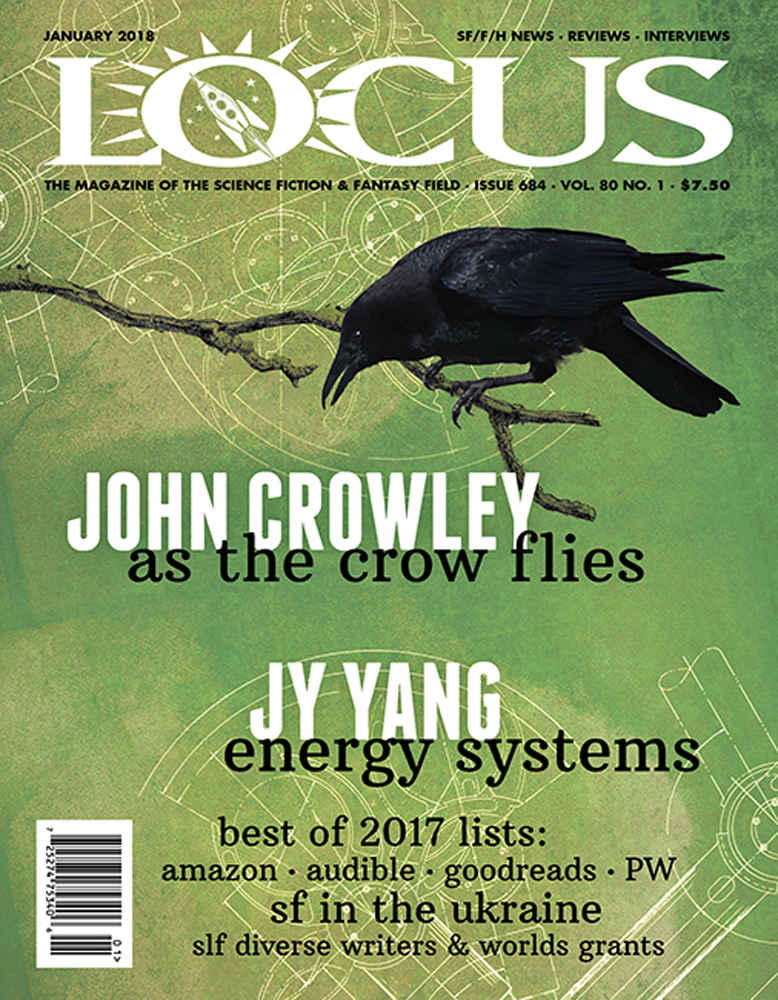
There’s a great quote in JY Yang’s interview in the January 2018 Locus that I want to share with you. Here it is.
I don’t know how to write poetry. I was on the Writing Excuses cruise recently, and one of the instructors was Jeffrey Ford, and he gave a lecture that was about the last five percent — how you can get your prose to pop. You can write perfectly decent prose, but he was talking about ways you can get your mind to come up with interesting prose…. He gave some examples — one of them was a joke off the internet about how if you’re standing behind someone at the ATM at night, to show them you’re not a threat, you can give them a gentle kiss on the neck. He asked what part of that makes the text sparkle? It’s the word ‘gentle,’ because [it] exaggerates the entire sentiment of the joke. He suggests doing wordplay on a daily basis, and coming up with new terms. That’s something I do. I don’t say I bathe the dog, I say I wash her. I say we prune her instead of cutting her hair and things like that. I try to say or do things in interesting ways, and that comes up in my fiction. I like fiction that has interesting but effective imagery. I don’t like things that are overdone, tortured metaphors or similes, purple prose. A lot of the writers whose prose I admire, like William Gibson and David Mitchell, they express things in interesting ways, but it’s very simple. One interesting adjective in the sentence makes it sparkle. That’s what I try to achieve in my writing.
I think that’s neat. And, speaking as an editor who read through countless thousand submissions in the decade plus we were buying fiction for Black Gate, I think it also contains an essential truth. Before you put that tortured sentence to paper to prove the poetic power of your prose, remember that the core of really effective writing is simplicity. Yang is the author of The Tensorate Series from Tor.com; we covered the first two volumes here. The third, The Red Threads of Fortune, is due in July.
There’s lots of other great stuff in the January Locus, including a feature interview with John Crowley, a column by Cory Doctorow, Best of 2017 lists from Amazon, Audible, Goodreads, and Publishers Weekly, and reviews of short fiction and books by Rich Horton, Gardner Dozois, Gary K. Wolfe, Russell Letson, John Langan, Stefan Dziemianowicz, Paula Guran, Liz Bourke, and lots more.
Last week, I posted a few fanzines that I’d picked up in a SF collection a few weekends ago. These originated from the estate of a Chicago area fan who appears to have been pretty active in the 1960’s and 1970’s, even publishing his own fanzine. He apparently attended a number of SF conventions, including many Worldcons, during that period. Among the material are several program books and other ephemera from cons during that time, including the 1960 Worldcon, known as Pittcon. One of the more interesting items I picked up which has a convention tie-in is a copy of the Fantasy Press edition of E.E. “Doc” Smith’s The Vortex Blaster, which is inscribed by Doc to him, reading, “At the Pittcon 1960. Ain’t we having fun? With very best regards, Edward E. Smith, PhD.”
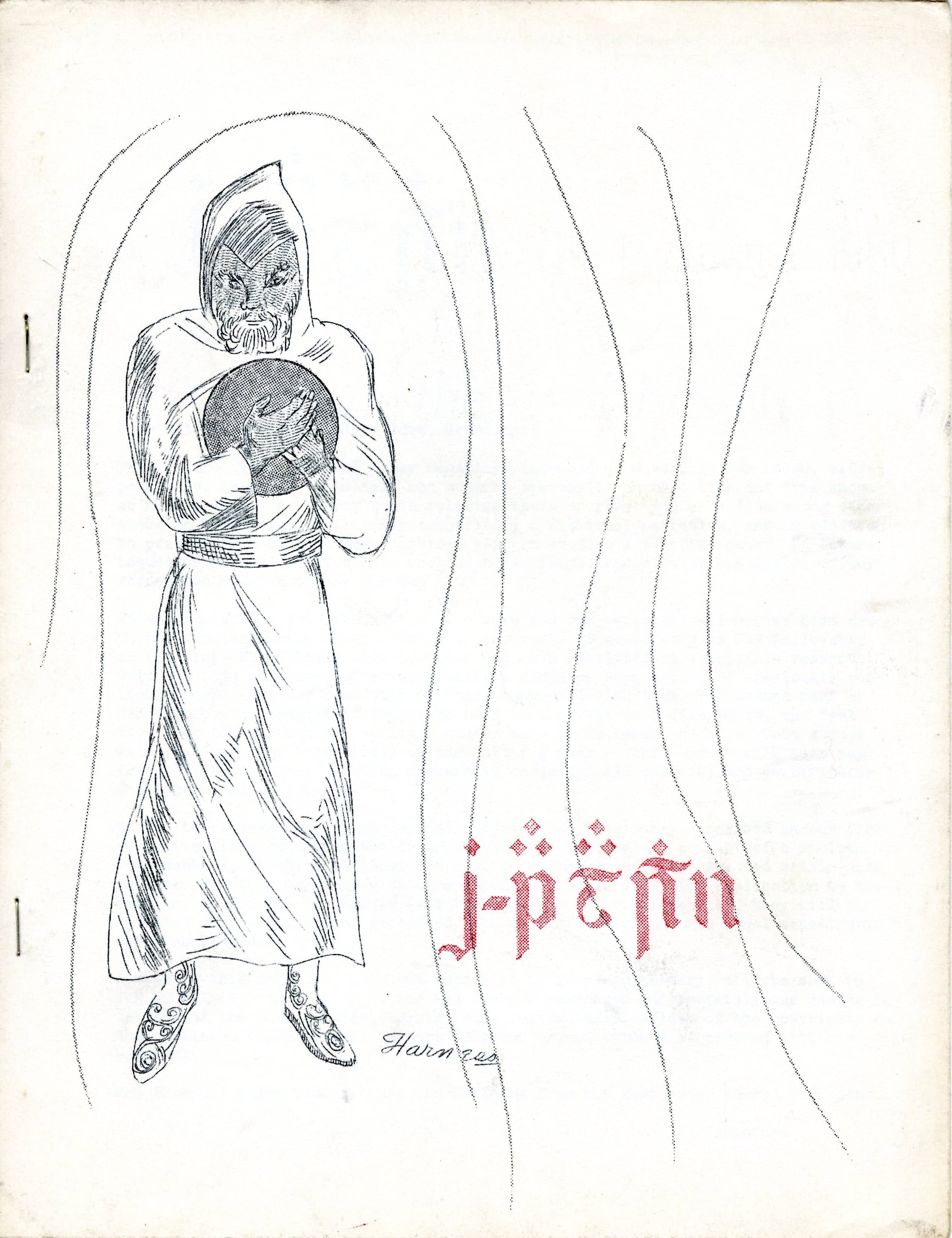
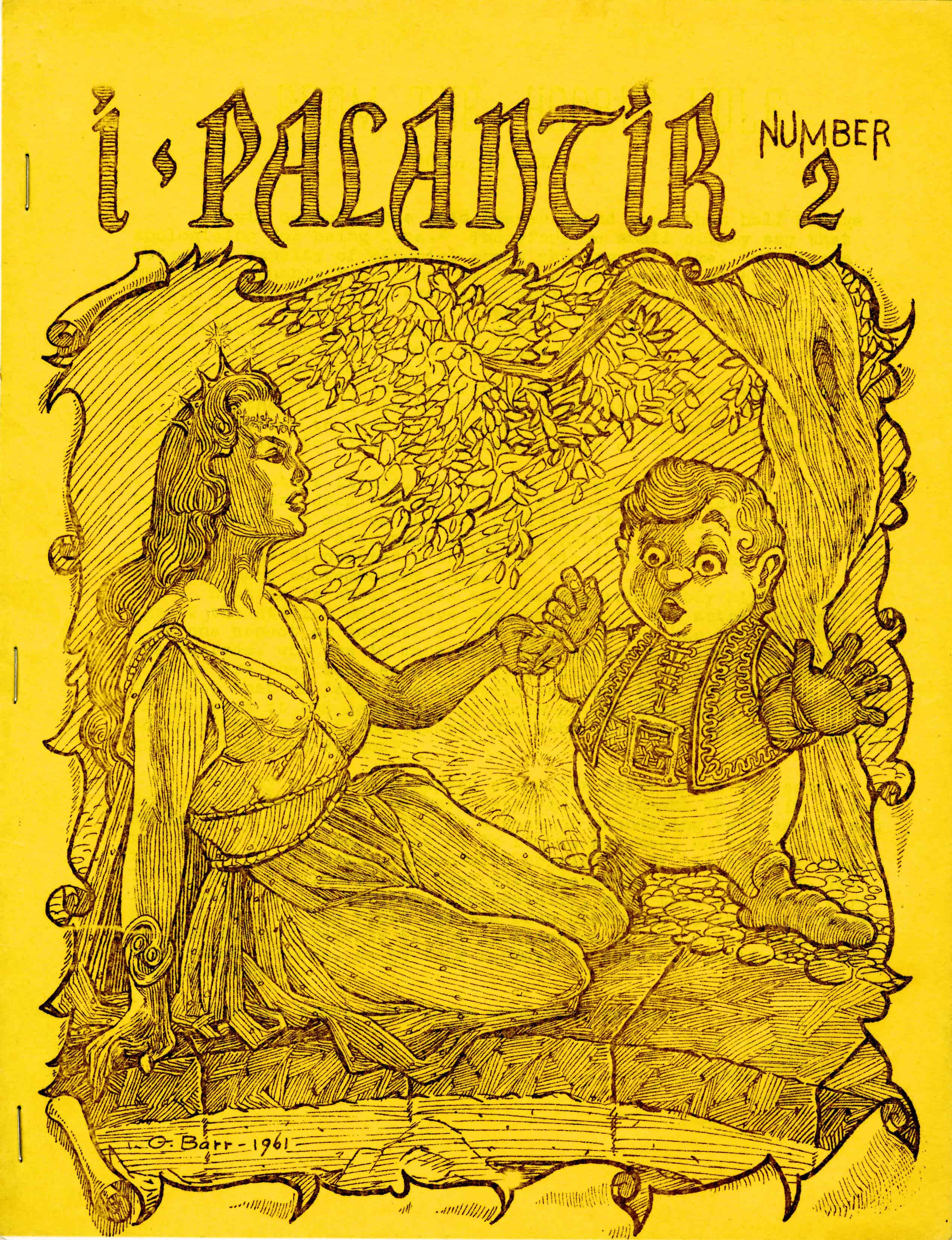
Among the events at that Pittcon was the organizational meeting of the first organized group of J.R.R. Tolkien fans, The Fellowship of the Ring. The FotR went on to publish the first Tolkien fanzine, I Palantir (the first issue of which contained the first piece of Tolkien fan fiction), edited by Ted Johnstone and Bruce Pelz. Among other contributors was Marion Zimmer Bradley, who had pieces in issues 2 and 3 (the latter under the name Elfride Rivers). I Palantir lasted four issues, from 1960 through 1966, before folding.
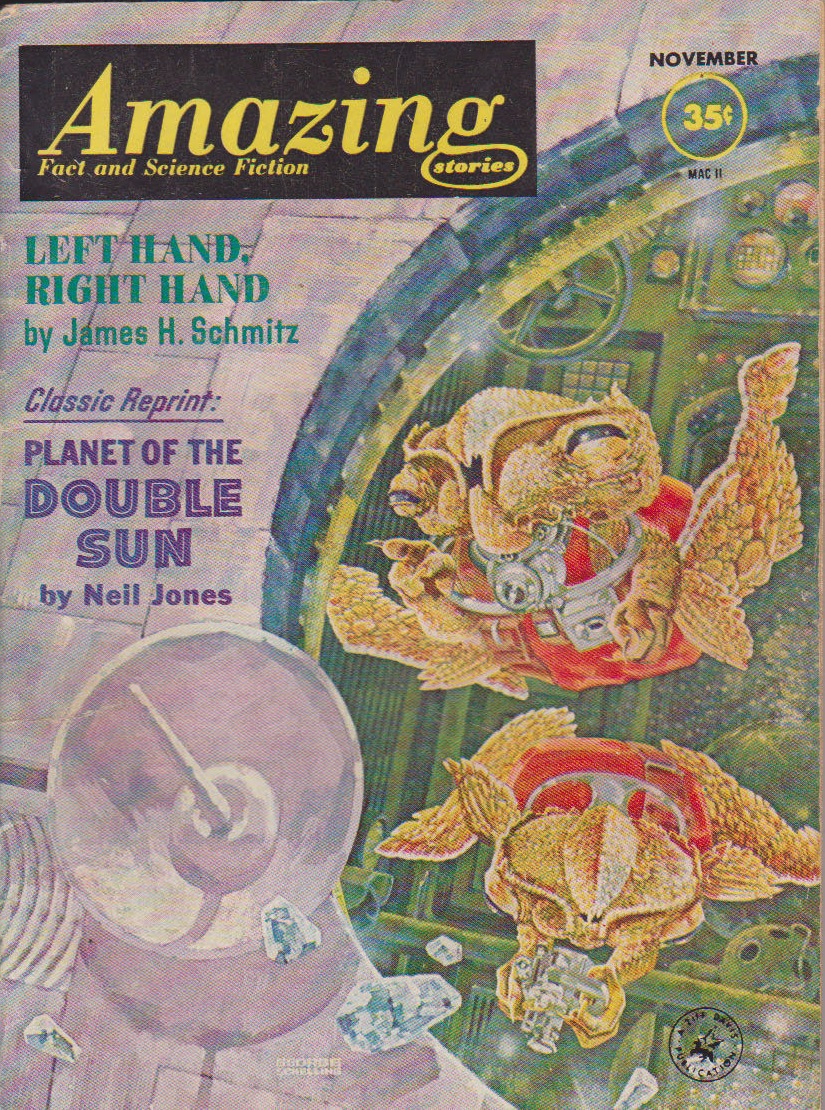
The cover to this issue is by George Schelling. Interiors are by Schelling, Virgil Finlay, Jack Gaughan, Leo Morey, and Leo Summer. The editorial is about using computers to determine national policy.
S. E. Cotts’ book review column, the Spectroscope, reviews three anthologies: The Sixth Galaxy Reader, The Best from F&SF, 11th Series, and Groff Conklin’s Worlds of When. Cotts is disappointed in the two magazine-based collections, suggesting that in neither case was there enough first rate material for a book. She is happier with Conklin’s anthology, reserving the highest praise for Fritz Leiber’s “Bullet With His Name.”
I think Cotts was pretty much correct about the Galaxy Reader, which is weak, but dead wrong about the F&SF book — in particular, she failed to note the brilliance of Avram Davidson’s “The Sources of the Nile,” one of the greatest SF stories of all time. She also reviews Robert Silverberg’s The Seed of Earth, and is fairly well pleased with it (noting that it features a cliched setup) — and I pretty much agree with her judgment there.
The science article is the fourth in Ben Bova’s series about extraterrestrial life, this time dealing with the possibility of life around fairly nearby stars. Dr. Bova recently sent me a note crediting Isaac Asimov for his chance to write this series — it seems Goldsmith had asked Isaac to do a series about extraterrestrial life, but he demurred and suggested Bova as an alternative.
The letters are from Charles Dixon (complaining about Edgar Rice Burroughs), J. J. Tilton (responding in an annoyed fashion to S. E. Cotts, who had criticized him for criticizing her for disliking Heinlein’s Stranger in a Strange Land), and Larry Shellum, also mad at Cotts, this time for a recent review of a Damon Knight anthology.
The stories are:
Novelets
“Left Hand, Right Hand,” by James H. Schmitz (12,200 words)
“The Planet of the Double Sun,” by Neil R. Jones (15,300 words)
Most days in 2018, I’ll be selecting an author whose birthday is celebrated on that date and reviewing a speculative fiction story written by that author.
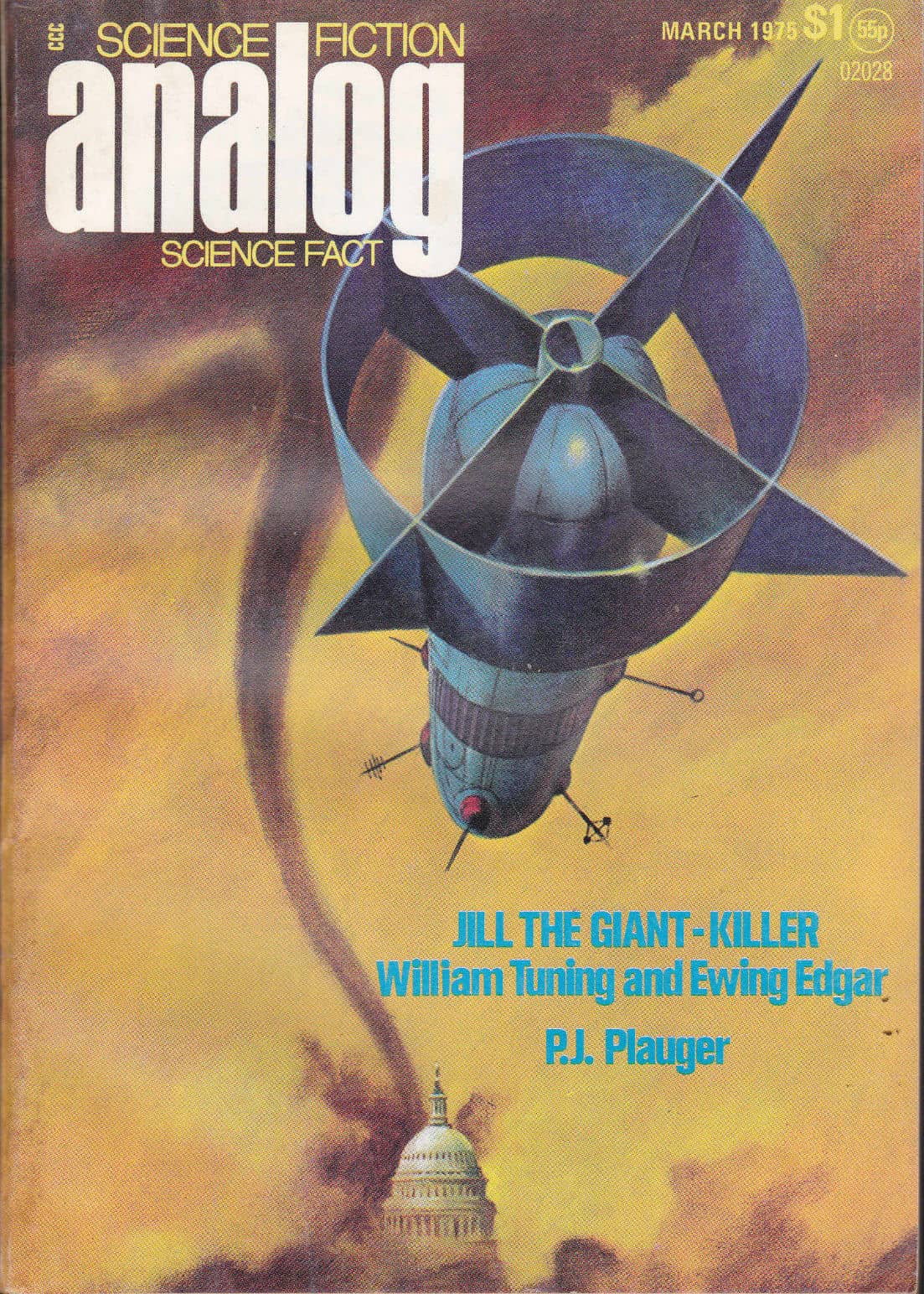
Hayford Peirce was born on January 7, 1942. He began publishing short fiction in 1974 with the story “Unlimited Warfare.” He published his first novel, Napoleon Disentimed in 1987. “Mail Supremacy” was first published in Analog in March, 1975 and grew out of a joke letter that Peirce sent to editor Ben Bova, who encouraged him to develop the letter into a story.
The oddly named protagonist is an anagram for Peirce’s own name. The story has been reprinted in Lester del Rey’s Best Science Fiction Stories of the Year: Fifth Annual Collection, 100 Great Science Fiction Short Short Stories, edited by Joseph Olander, Martin H. Greenberg, and Isaac Asimov, Analog’s Lighter Side, edited by Stanley Schmidt, Imperial Stars 1: The Stars at War, edited by Jerry Pournelle and John F. Carr, 100 Astounding Little Alien Stories, edited by Robert Weinberg, Stefan Dziemianowic, and Martin H. Greenberg. In 2001, Peirce collected the story, along with five other stories featuring Chap Foey Rider into the collection Chap Foey Rider: Capitalist to the Stars, published by Wildside Press. In 1979, the story was translated into Dutch and Italian.
Hayford Peirce’s “Mail Supremacy” is a short, light-hearted story in which Chap Foey Rider begins to wonder about the mail system and how it works. Rider, who runs an import company in New York, laments the loss of multiple deliveries a day and further notes that it seems that something mailed from a shorter distance takes longer to reach its destination than something mailed from a longer distance. He is more likely to receive a letter from his office in Los Angeles first than a letter mailed from nearby Boston.
He begins to test this by having his office managers mail letters and tracking their time in transit. Once he is sure that letters mailed far distances are being delivered quickly, he takes it to the illogical extreme and tries to mail letters to Alpha Centauri. “Mail Supremacy” doesn’t take itself seriously at all and in some ways is a satire on the idea of a Galactic Federation, even as it served Peirce as a starting point for his own series of stories about a Galactic Federation.
Most days in 2018, I’ll be selecting an author whose birthday is celebrated on that date and reviewing a speculative fiction story written by that author.
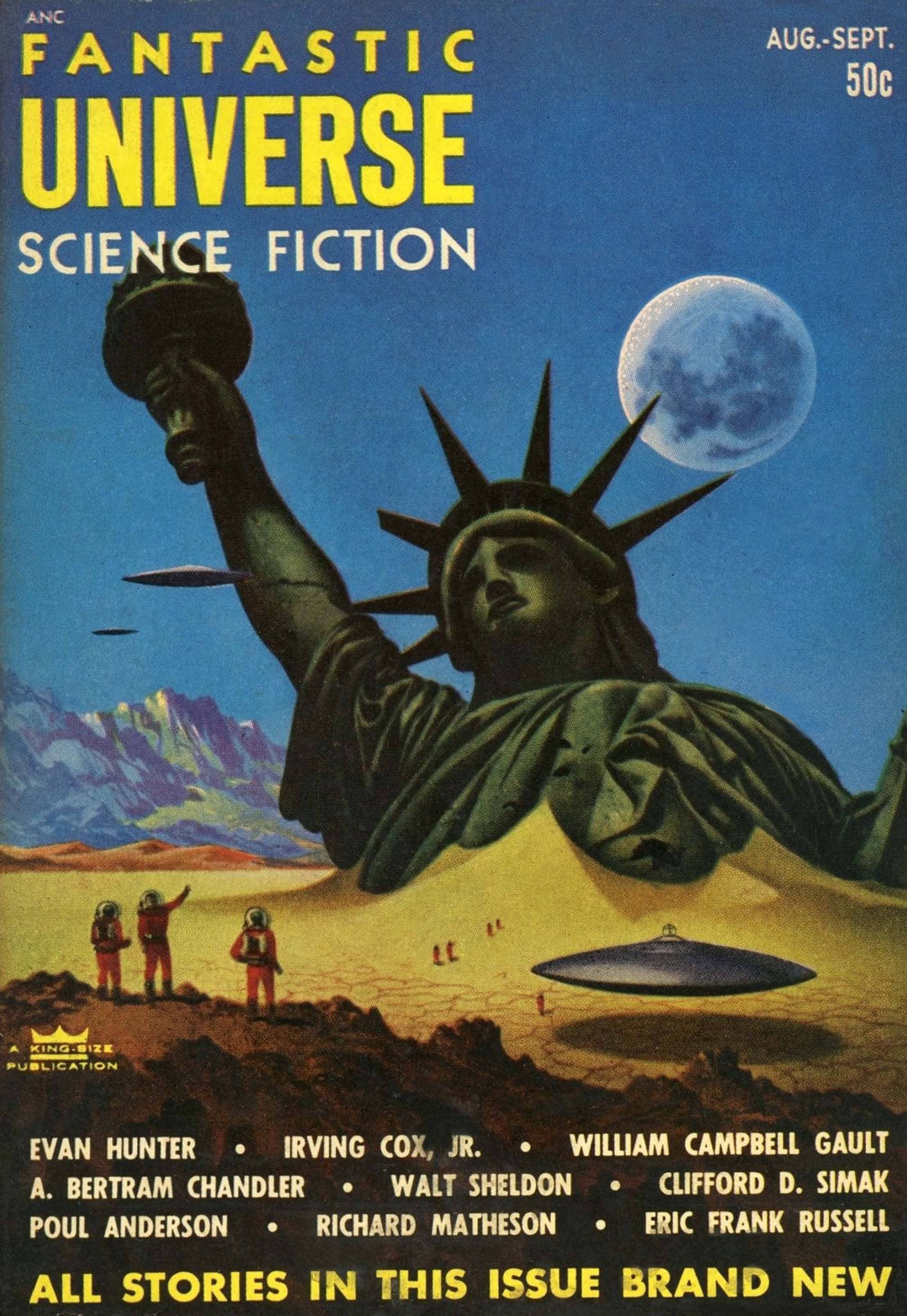
Cover by Alex Schomberg
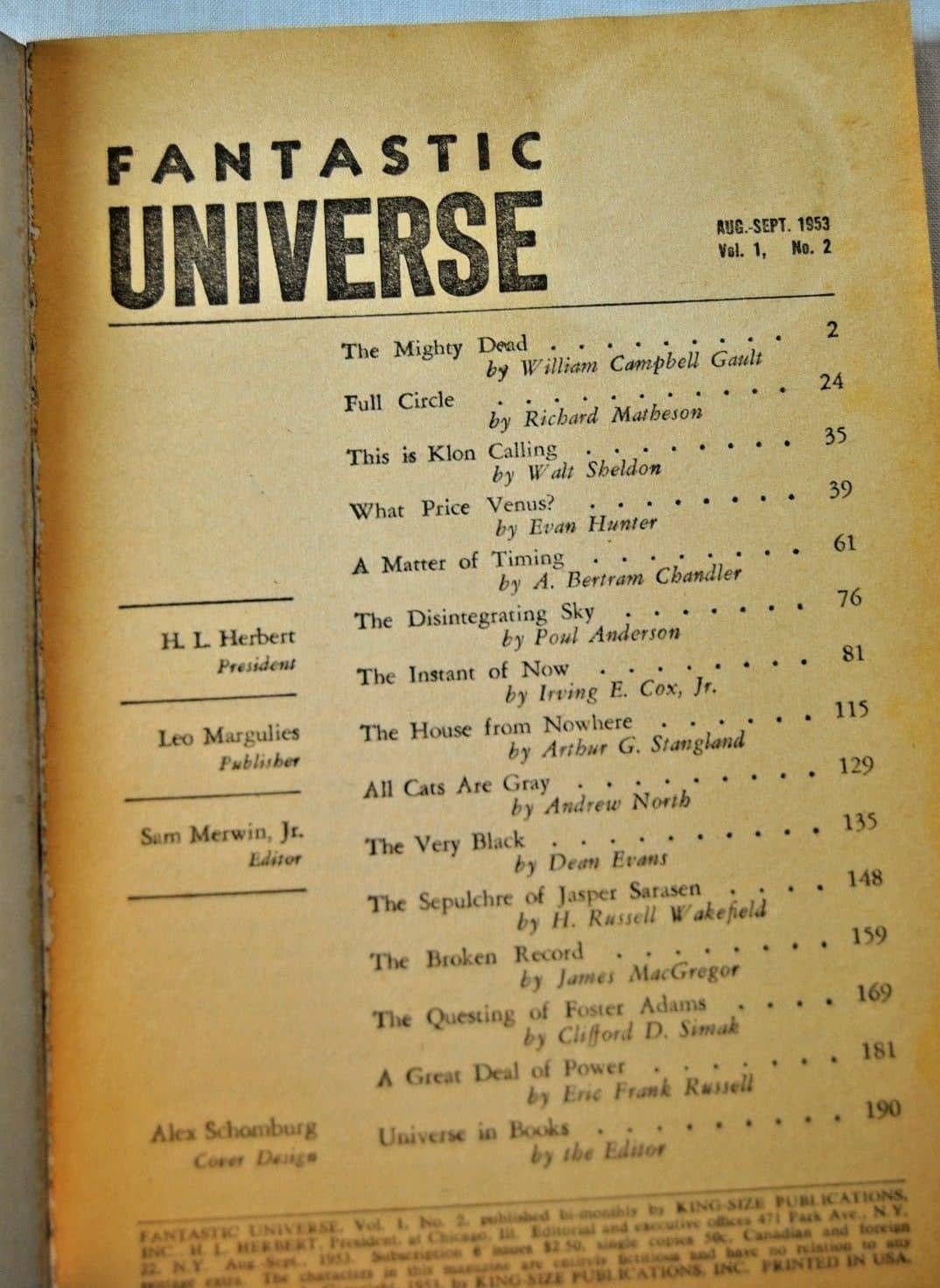
Eric Frank Russell was born on January 6, 1905 and died on February 28, 1978. His story “Allamagoosa” was awarded the second Hugo Award for Short Story and in 2000, he was inducted into the Science Fiction Hall of Fame. His story “A Great Deal of Power” was originally published in Fantastic Universe in August/September, 1953, edited by Sam Merwin, Jr. It has been reprinted several times, occasionally under the title “Boomerang.”
Russell sets “A Great Deal of Power” in a twenty-first century in which Germany is governed by a Sixth Reich, three scientists have determined that the way to avoid bloody wars is to create a way of causing the death of powerful men who refuse to give up power. They have successfully done so, building their technique, which they don’t actually understand, into a humanoid robot named William Smith. They dispatch Smith to kill a short list of powerful men by simply asking them to give up power. If the men refuse, Smith’s mystical ability will automatically cause the men to die, apparently from natural causes, in a short time.
Most days in 2018, I’ll be selecting an author whose birthday is celebrated on that date and reviewing a speculative fiction story written by that author.
Patricia Anthony was born on January 3, 1947 and died on August 2, 2013. Her debut novel, Cold Allies, won the 1994 Locus Award for Best First Novel. Booksellers often tell stories about customers who come in looking for a book with a basic description like “It’s blue.” When I was working for a bookstore in the mid-1990s, I had a customer come in looking for “A science fiction book with a blue cover and red print.” Based on that, I was able to correctly identify the book as the paperback edition of Cold Allies.
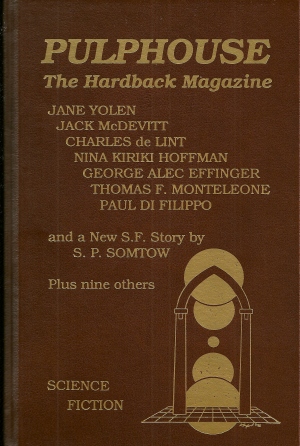
Her story “Lunch with Daddy” was originally published in Pulphouse Hardcover Magazine issue 8 in Summer 1990, edited by Kristine Kathryn Rusch. It was reprinted in Anthony’s collection Eating Memories in 1997.
“Lunch with Daddy” tells the story of a woman who is visiting her abusive father five years after the last time she has seen him. During that time, she has managed to come to terms with her hatred of both her father and her mother, although she has put it aside rather than confronting either of her parents. Her father has summoned her to his mansion to give her a gift just before he is set to take a four year posting to Geneva, Switzerland at the request of the new President.
At first, he merely seems distant and oblivious to any harm he caused his daughter when she was younger, however, as the story unfolds it becomes clear that the technology which is preserving his life and making him an asset for the government has also impacted his ability to have emotions or relate to those around him. His former inability to feel empathy has been technologically augmented, making him even more monstrous than the wife and child beater he was.
An attempt to make amends to his estranged daughter take the monster that he is and adds a pitiable veneer to him. The story is well written and draws the reader into its world in a short space, leaving a more emotional impact than either of the characters is able to show.
Most days in 2018, I’ll be selecting an author whose birthday is celebrated on that date and reviewing a speculative fiction story written by that author. Continuing the series, let’s wish a happy 98th birthday to a Grand Master of the field, Isaac Asimov.
Isaac Asimov was born on January 2, 1920 in Petrovichi, Russia and died on April 6, 1992. His received a special Hugo Award in 1963 for his science articles in The Magazine of Fantasy and Science Fiction. In 1966, he won the Hugo for Best All-Time Series for the Foundationseries. He later won the Nebula Award for novel The Gods Themselves and the novelette “The Bicentennial Man,” which also won a Hugo. He received additional Hugos for the novel Foundation’s Edge, his novelette “Gold,” and his posthumous memoir I. Asimov. In 1987, he was named a Grand Master by the Science Fiction Writers of America. In 1997, he was inducted into the Science Fiction Hall of Fame.
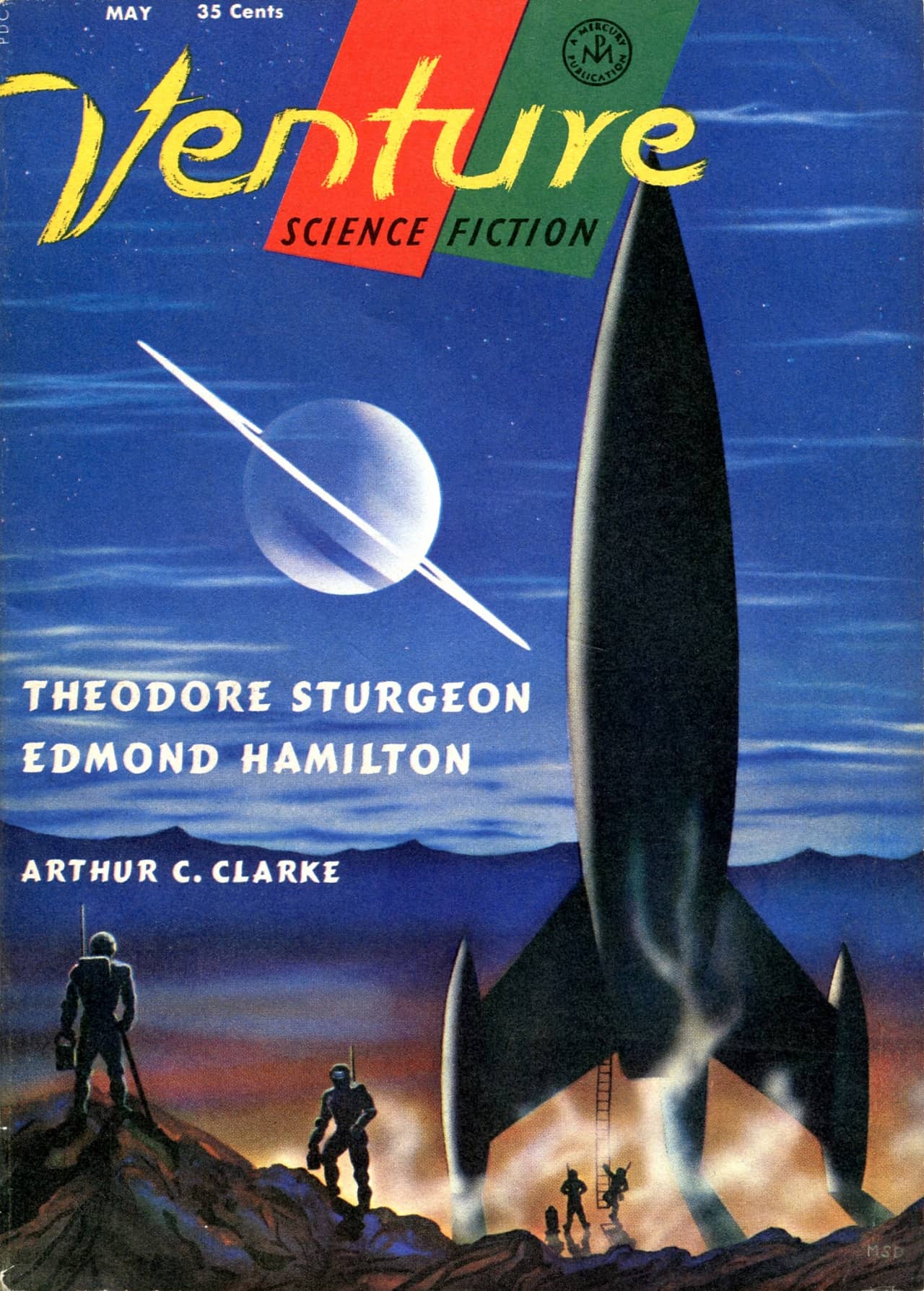
While the Foundationseries is known for its lack of aliens, Asimov did write about aliens in other novels and short stories, including “Buy Jupiter.” “Buy Jupiter” was originally published in Venture Science Fiction Magazine in May, 1958, edited by Robert P. Mills. It has been reprinted several times, including as the title story of Asimov’s 1975 collection Buy Jupiter and Other Stories. While Asimov was known for shaggy dog stories, and the title “Buy Jupiter” would imply exactly that, in this case the the punning title doesn’t carry over into the tale itself, although it is descriptive.
Although Asimov’s famous Foundationseries does not include aliens (with the exception of the story “Blind Alley”), in “Buy Jupiter,” he focuses on negotiations between a representative of Earth and the alien Mizzarett, with a second alien race, the Lamberj, mentioned by name and other alien races implied. The Mizzarett are negotiating with the humans over the purchase of Jupiter, explaining that they could take it by force, but they would prefer to negotiate a fair deal. The human negotiator is concerned that selling or leasing the planet to the Mizzarett will either stymie human plans for expansion to the Jovian moons or be seen by the Lamberj as taking sides in a potential war between the alien races, a war which the Mizzarett ambassador swears doesn’t exist.
The Mizzarett eventually convinces the human Secretary of Science of its race’s intentions, but the explanation occurs off stage, only to be revealed when the Secretary of Science presents the explanation to the President. The explanation is simple, and allows the humans to come out ahead in the negotiation, although it does raise the question of the Mizzarett’s truthfulness and the naïveté of the humans who believed the aliens and agreed to their conditions.
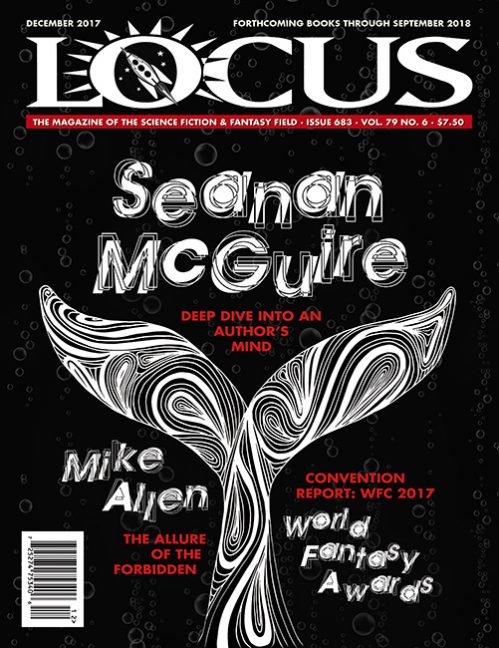
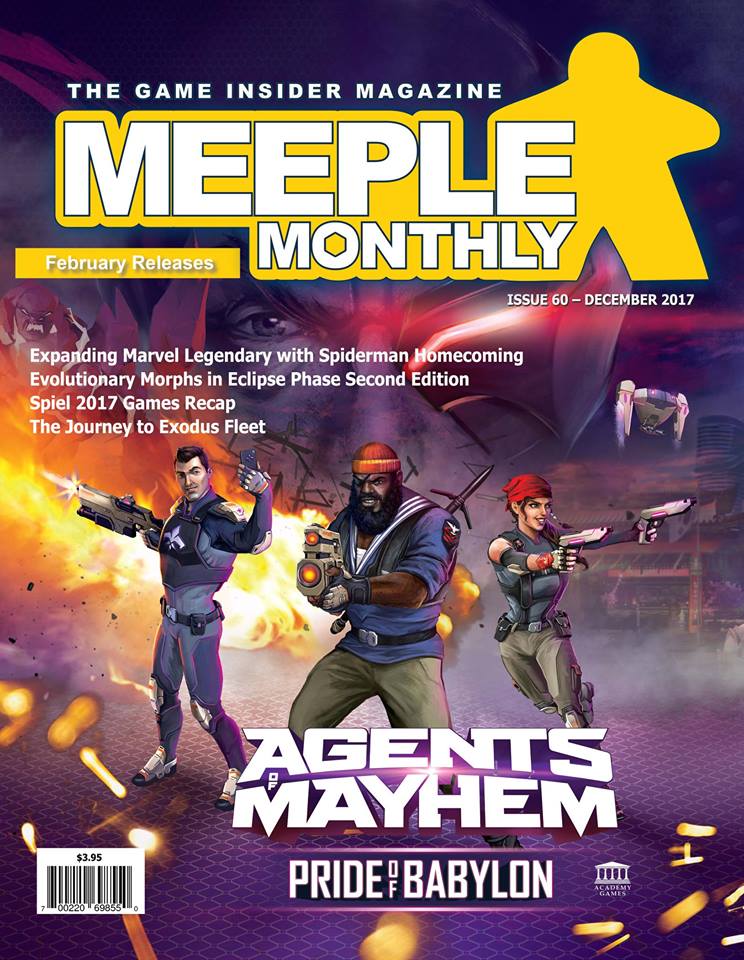
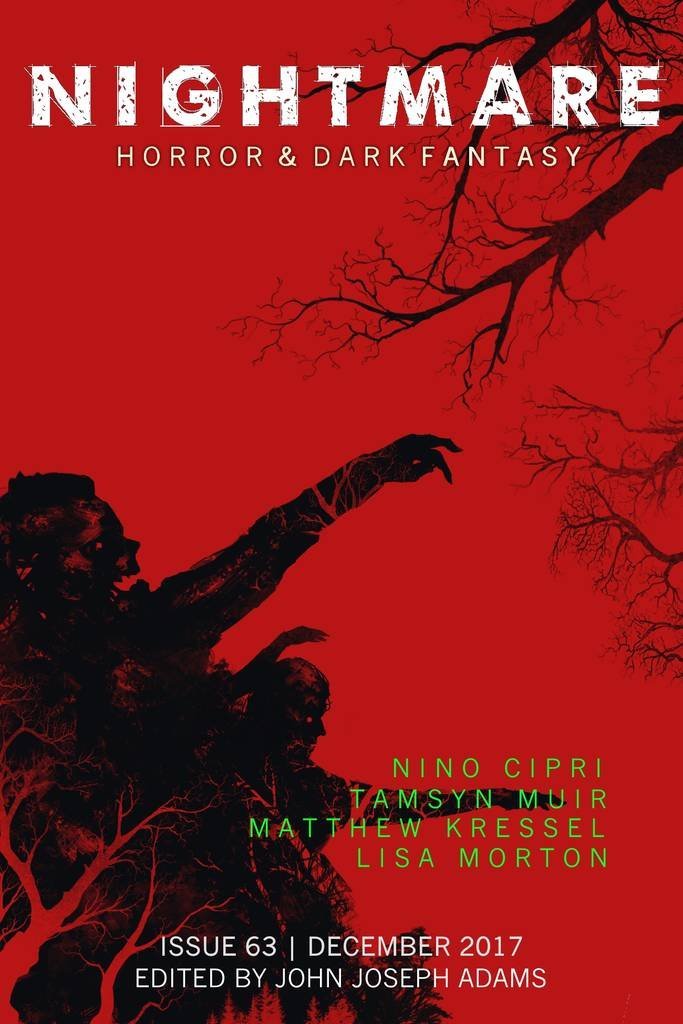
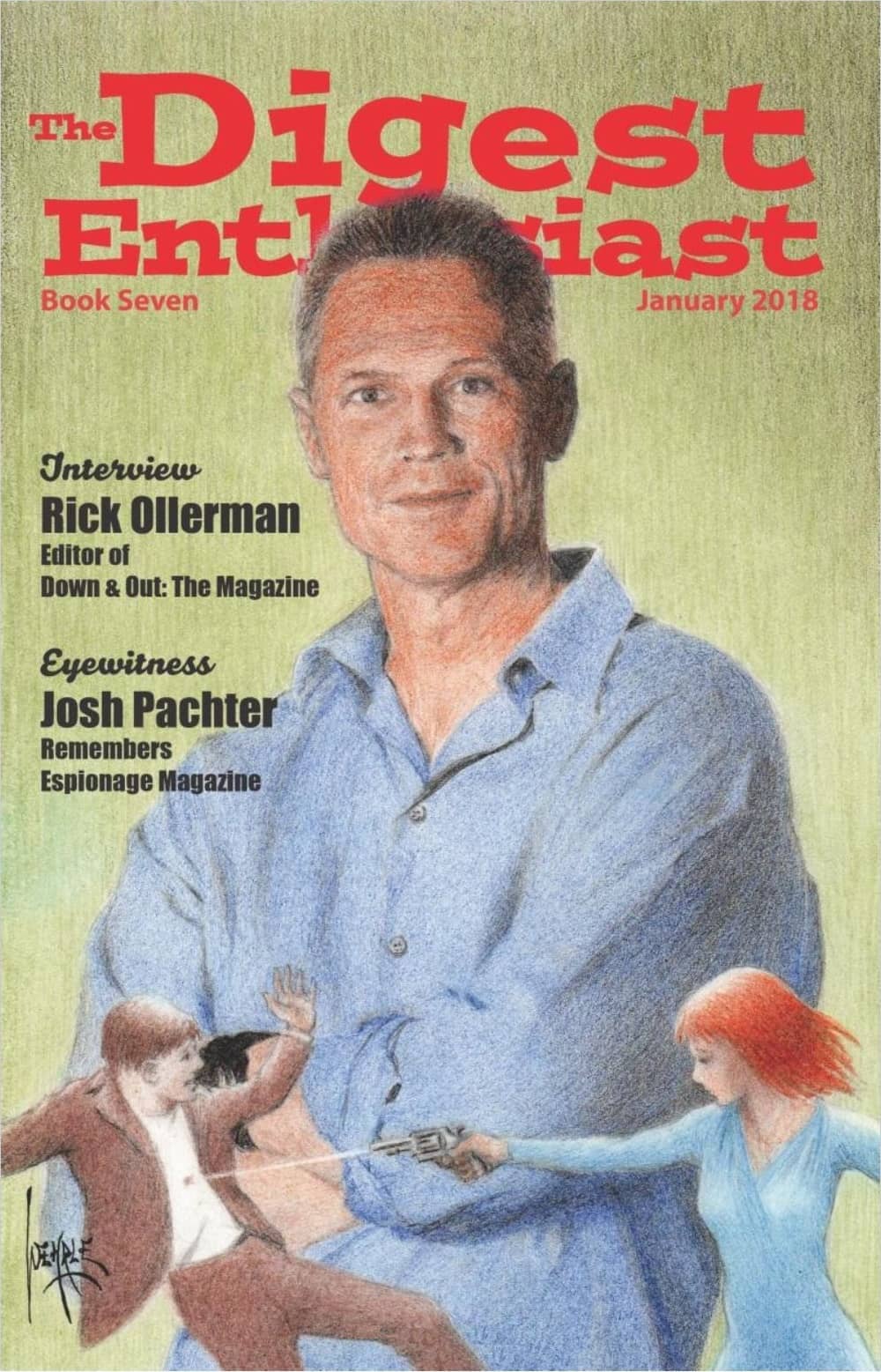
2017 closes out with a splendid crop of new magazines, featuring fiction from Mary Robinette Kowal, Matthew Hughes, John Hornor Jacobs, Matthew Kressel, Gardner Dozois, Robert Reed, Octavia Cade, and a feature on one-shot vintage magazine digests by BG blogger Steve Carper. Here’s the complete list of magazines that won my attention in late December (links will bring you to magazine websites).
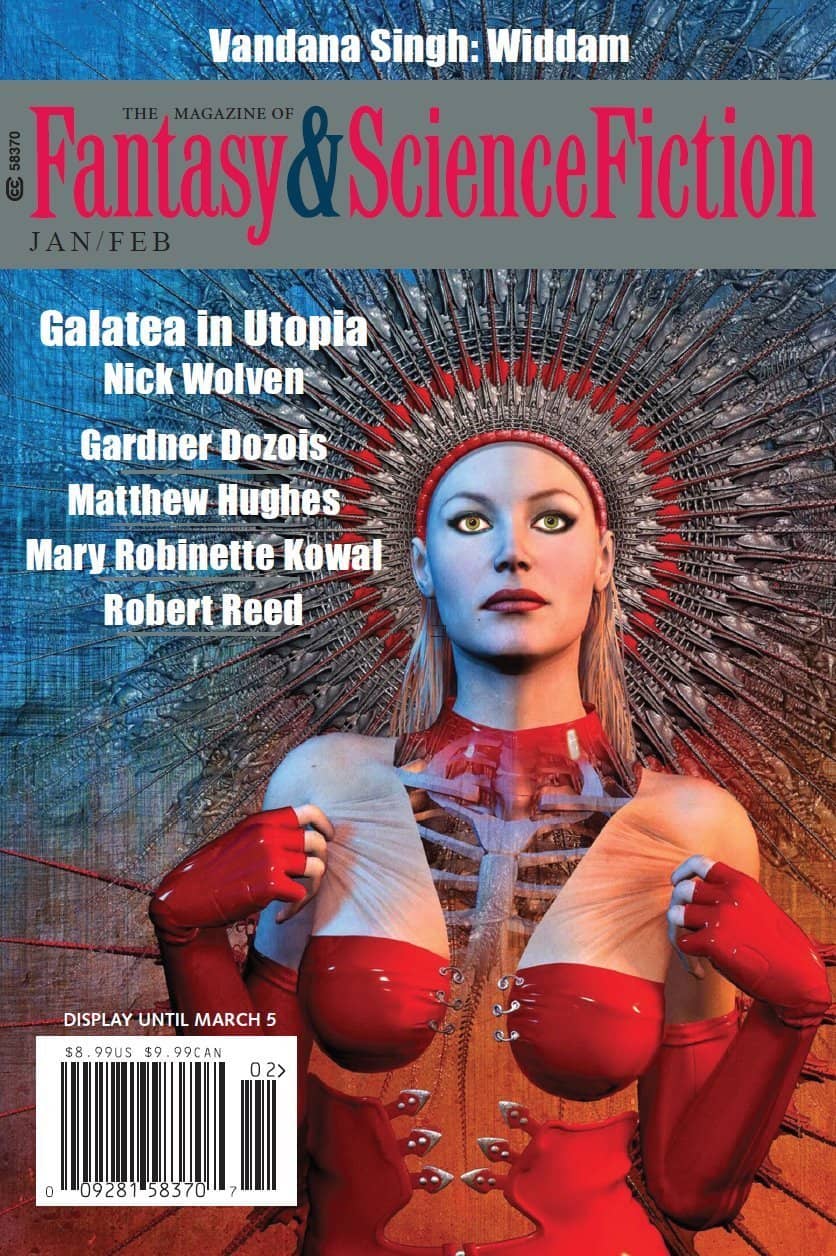
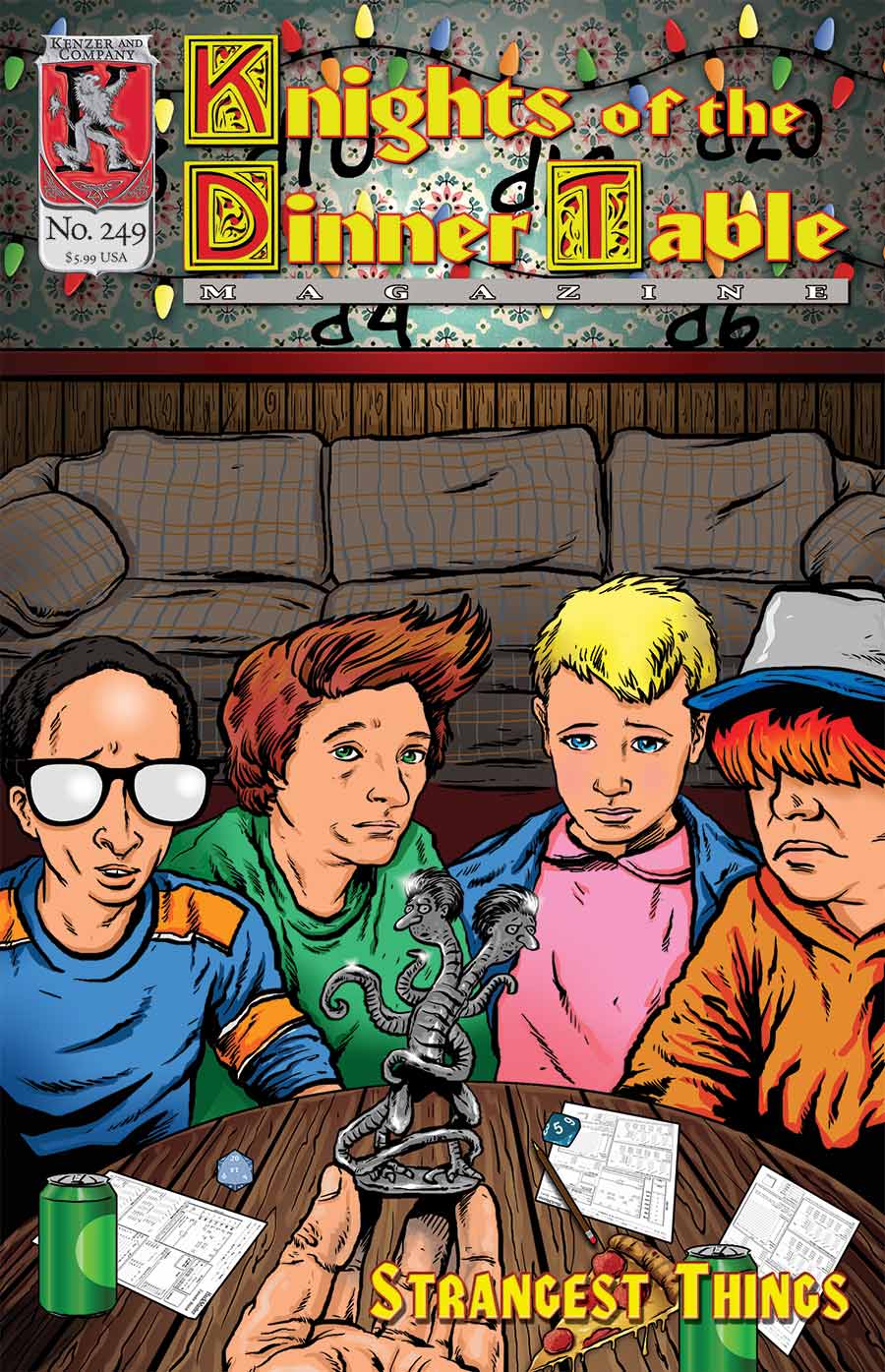
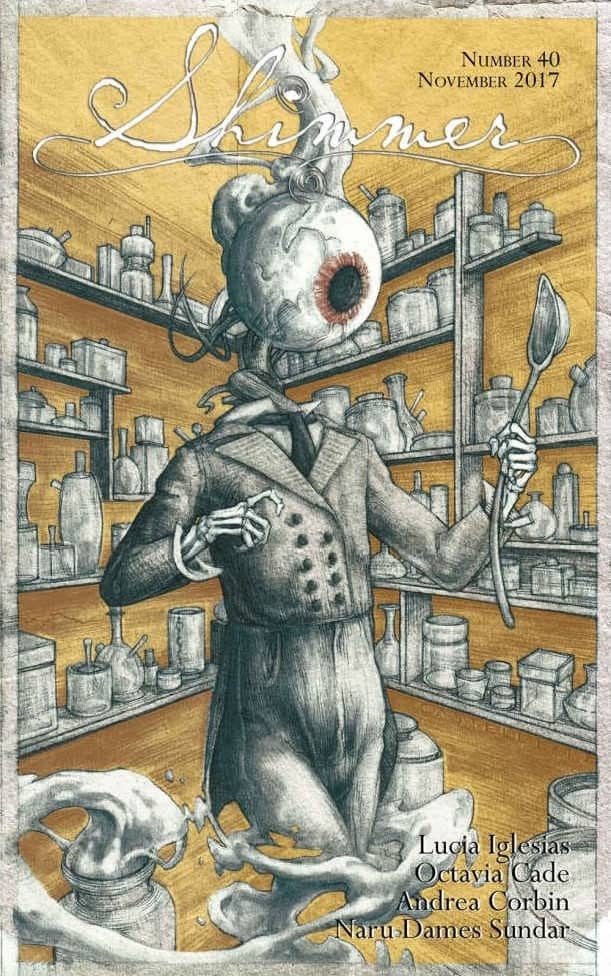
Cemetery Dance — the brand new December issue has an interview with Stephen King and Richard Chizmar, plus fiction by John Hornor Jacobs, Ray Garton, Jeremy C. Shipp, Aaron Worth, and many others Fantasy & Science Fiction — the big Jan/Feb double issue has new fiction from Matthew Hughes, Mary Robinette Kowal, Gardner Dozois, Robert Reed, Nick Wolven, Vandana Singh, and much more Knights of the Dinner Table — issue #249 of the long-running gaming comic features a Stranger Things tribute cover by Rick Hershey, plus strips by Jolly Blackburn, a horror-themed Solo Adventure by Mark Dowson, “Adventures Should Always Begin in Pubs,” by Shane Cubis, plus regular columns, reviews and cartoons Locus — interviews with Seanan McGuire and Mike Allen, reports from World Fantasy Convention and ICon, a feature on Borderlands Books 20th Anniversary, and reviews by Gardner Dozois, Rich Horton, Gary K. Wolfe, Faren Miller, Russell Letson, Adrienne Martini, and lots more Meeple Monthly — all the details on board games releases from Academy Games, Posthuman Studios, Tasty Minstrel Games, and Upper Deck Nightmare — original fiction from Nino Cipri and Matthew Kressel, plus reprints by Tamsyn Muir and Lisa Morton, and a movie review from Adam-Troy Castro The Digest Enthusiast — issue #7 of the magazine dedicated to vintage digest mags includes Joe Wehrle, Jr on James H. Schmitz’s Telzey Amberdon tales and Steve Carper on one-shot magazine digests, plus articles on Espionage Magazine, Manhunt, The Occult Digest, Future Publications, and reviews of Pulp Literature #15, F&SF Jul/Aug 2017, and lots more — including over 100 cover images Shimmer — issue #40 contains fiction by Naru Dames Sundar, Andrea Corbin, Octavia Cade, Lucia Iglesias, and more
Click any of the thumbnail images above for bigger images. Our early December Fantasy Magazine Rack is here.