Blogging Arak Son of Thunder 11: Valda Dances Right Out of Her Armor
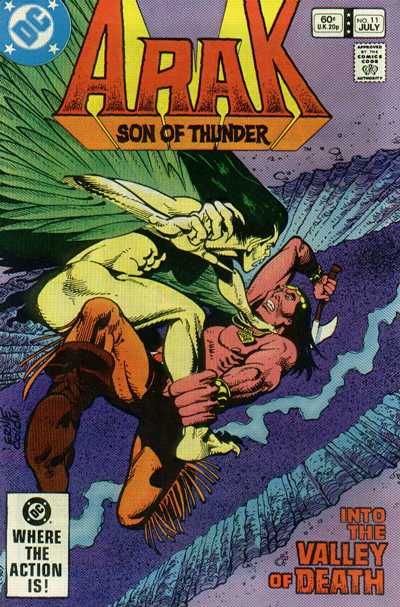 As I mentioned before, Arak Son of Thunder issue 11 (July 1982) was the first Arak comic I ever bought from a newsstand (or, more likely, off one of those revolving racks loaded with comics that convenience stores used to have). To my surprise, though, checking the publication date, I now realize that I have been incorrect about a particular autobiographical detail. I have usually characterized myself as having been ten or eleven years old when I was reading these comics. However, I didn’t turn ten until July 1982, and since the dating on comics and other periodicals is usually a month or two ahead of the actual date, I was only nine when I first read this one.
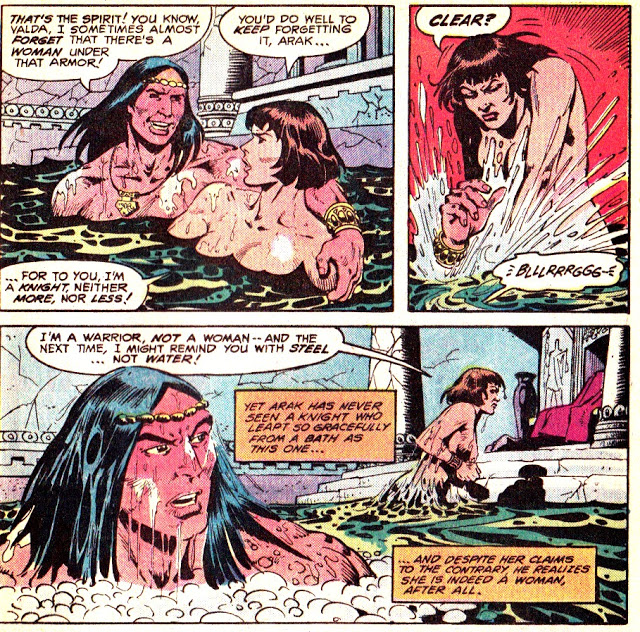
If you remember last week’s post, you’ll see that it makes a bit more sense, given my age at the time, that I found some of the illustrations (reproduced later in this post after the “Read More” jump-break) so shocking. But that’s a topic I covered last week (if you missed it, you can read it here). Today, I want to dive right in to summarizing the issue that made me an Arak fan.
This one is hands-down the best issue to date. The illustrations by Ernie Colón and Alfredo Alcala have never looked better; the plot points Roy Thomas has been setting up over the preceding year start to come together to create deepening mystery, suspense, and action against an epic, ever-expanding mythical background. Especially action. The plot is forwarded with new revelations (and new questions) while delivering nearly non-stop action from first page to last.


 A little while ago,