Browsed by
Category: Comics

Feverish Dreams of Years Past: The 1980 Comics Annual

Feverish Dreams of Years Past: The 1980 Comics Annual

The 1980 Comics Annual(I’ve decided to again delay my ongoing series of essays about C.S. Lewis, for a number of reasons. As it happens, though, there’s another piece I’ve been meaning to write for a while. So here it is.)

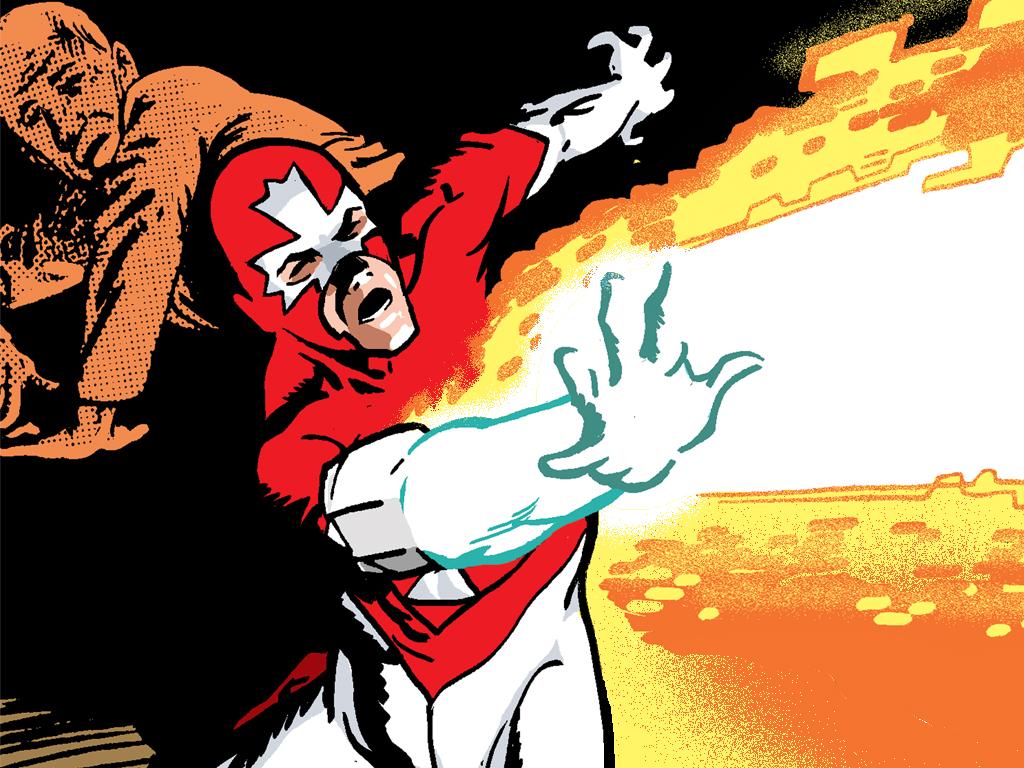
When I was very young I used to have a copy of an early example of a North American comics trade paperback: Potlatch Publication’s The 1980 Comics Annual. It’s an anthology of work from then-new Canadian comics creators. I remember being fascinated by the weird mix of stories in it, humour and science fiction and horror and fantasy and action. I lost that copy (as children do lose things), and for years afterward the stories lived in my mind as feverish dreams, images of panels I could not contextualise. At some point I found a copy in a back-issue bin and was able to read the thing again. Thanks to the internet, I’ve learned a bit about the background of the book and some of its contributors. But it’s still strange to me, a mixed bag of rough talent and accomplished stories. I’m going to describe the book and what I’ve found out about it, and I’d love to find out more from anyone else who can chip in.

Potlatch Publications was and is a small Canadian company under the editorship of Robert F. Nielsen. From 1975 to 1985 Potlatch put out a yearly series of books, the Canadian Children’s Annuals, based on English Boy’s Own and Girl’s Own books. I remember some of the CCA volumes; the cover of the 1980 volume in particular is burned into my mind. The Annuals mixed short articles, fiction, and comics. And in 1980, an editor named Ian Carr put together an annual for Potlatch entirely filled with comics, 128 pages, 64 of which were in colour. Some of the contributors came from the CCA books, and some (I think) from elsewhere.

Read More Read More

A Positive View on the Accelerating Reboots in Comics

A Positive View on the Accelerating Reboots in Comics

uncanny-inhumans-640The Marvel and DC reboots seem to happen quicker and quicker. Every 2-3 years, the big two stop production of many lines and then re-origin or rework a bunch of characters and teams. On one hand, I get it.

A #1 issue sells better than a #5 or a #25. Also, some characters or storylines get long in the tooth and a refresh isn’t bad. And often, this is a place to sneak in (or boldly proclaim) new diversity to appeal to a broader range of fans. On the other hand, some consumers, myself included, like our continuity and the idea of collecting all the issues and knowing that what I bought five years ago is still cannon.

But I’ve got to say that the quality of the reboots is winning me over. There is so little pure continuity left that the emotional cost of a reboot for me is lower and lower.

For example, in 2012, Marvel launched the NOW! branding of their line. A bunch of new #1 issues came out and many were kicking serious ass (Ms. Marvel, Captain Marvel, Guardians of the Galaxy, Hawkeye, Black Widow, Magneto, etc). In 2015, Marvel destroyed the Marvel Universe (surprise!) to make Secret Wars.

As a personal aside, hearing that they were redoing Secret Wars had me a little anxious. I’m old enough that I bought the first Secret Wars series over twelve months in corner stores. I thought a redo would be crappy. However, Marvel made this one much, much bigger in scope, and included most of the current characters in the MU.

Read More Read More

Entertainment Weekly Gives Us Our First Look at Benedict Cumberbatch as Dr Strange

Entertainment Weekly Gives Us Our First Look at Benedict Cumberbatch as Dr Strange

Entertainment Weekly Dr Strange-smallThe new issue of Entertainment Weekly, on sale tomorrow, offers us our first peek at Benedict Cumberbatch as sorcerer supreme Dr. Strange — and they’ve really nailed the look. As James Whitbrook at io9 puts it:

I am genuinely shocked at how close this adheres to Strange’s classic costume from the comics — it’s all there, the color scheme, the cloak, the eye of Agamotto dangling from his neck, It’s all there — right down to Strange’s greying hair. It really has leapt off the page of a Doctor Strange comic into real life, and it looks great.

Click the image at right for a bigger version.

Doctor Strange is one of two films in the Marvel Cinematic Universe scheduled to be released next year; the other is Captain America: Civil War (May 6). Principal photography on Dr Strange began last month, and it is scheduled to be released November 4. It also stars Tilda Swinton, Rachel McAdams, Chiwetel Ejiofor, and Mads Mikkelsen, and is directed by Scott Derrickson (The Messengers, Sinister).

The article reportedly will reveal the roles played by Cumberbatch’s co-stars for the first time. Read more details at the EW website, or read the complete article in the print issue. We last covered Entertainment Weekly with the February 2013 issue, which coincidentally featured Benedict Cumberbatch as Khan in Star Trek Into Darkness.

The Great Savage Sword Re-Read: Vol 3

The Great Savage Sword Re-Read: Vol 3

This series explores the Savage Sword of Conan collections from Dark Horse reprinting Marvel Comics’ premiere black-and-white fantasy mag from the 1970s. Click to read previous installments: Volume 1 / Volume 2

Vol3The third collected volume of Savage Sword of Conan includes issues #25 – 36 but begins with a short Barry Windsor-Smith piece that first ran in Savage Tales #2 a few years earlier. BWS adapts a Robert E. Howard poem called “Cimmeria” in a gorgeous 5-page feature. His black-and-white work is every bit as lush as his color work on the Conan the Barbarian comic (for which he is most well-known). The artists who did the black-and-white comic magazines of the 60s and 70s knew that drawing for a colorless publication demanded more from both pencilers and inkers. Especially inkers.

Savage Sword #25 was the last issue of 1977, hitting the stands while the original Star Wars movie mania was reaching its peak, and spiking sales of the Marvel Comics Star Wars title brought the company a new influx of capital. Roy Thomas had built an excellent Sword and Sorcery magazine during the turblent mid-70s, when publishers had to cut the number of pages in their comics and constantly raise their prices. This issue is another super job by Thomas, who faithfully adapts Howard’s “The Jewels of Gwahlur.” DC legend Dick Giordano steps in to illustrate this issue — seemingly from out of nowhere — and it’s obvious that Giordano is reaching for a Neal Adams-style Conan tale.

Adams had drawn a couple of landmark Conan tales by this time (in Savage Tales #4 and Savage Sword #14), and he left his unique imprint behind as usual — setting standards for other artists to follow. Giordano does a solid job on SS#25, but unless you’re an old-school fan of his work it comes off as Neal-Adams-Lite: a stiffer, less consistent version of the Neal Adams Conan from “Shadows in Zamboula.” Maybe if Giordano had stuck around he would have time to find his mojo on this book, but this feels like a filler issue. It has moments of greatness — certain panels and effects — but the consistency that marks John Buscema’s ongoing Savage Sword work is noticeably absent. The next issue solved this problem and started a new era of Conan greatness, thanks to the arrival of inker extraordinaire Tony DeZuniga.

Read More Read More

Thinking About What Makes The Shining and The Exorcist Work

Thinking About What Makes The Shining and The Exorcist Work

Linda-Blair-in-The-Exorcist-1973
Aw, man. This just ain’t right.

Sometimes in the course of growing as a writer, you fluke into a success before you grow the skills to consistently hit that success. My second-ever fiction sale was to Asimov’s Science Fiction in 2008 and over the following two-and-a-half years, I collected nothing but rejections from them.

My 2008 story had accidentally included enough good elements that it made it into the magazine, but I didn’t understand what those science fictional elements were or how to use them properly until about 2011.

I think the same thing happened to me with a story called “Dog’s Paw.” I thought I’d been writing a lit story when in fact, I had included horror elements that eventually got it published in a horror anthology, Ellen Datlow’s Best Horror of the Year, and a superb audio version at Pseudopod.org (British people make everything sound extra-good). After my experience with my 2008 Asimov’s story, I was under no illusions that I was a competent horror writer, just a lucky one.

This spring, I decided to try to write a horror story. Knowing my weakness, I deliberately tried to figure out what goes into a good horror story. And when I want to analyze story structure, I go first to movies, because I find it easier to see the moving parts.

Read More Read More

Check out the First Trailer for Captain America: Civil War

Check out the First Trailer for Captain America: Civil War

Civil War was one of the biggest events in Marvel Comics roughly a decade ago, pitting Spider-Man, Iron Man and a host of other heroes against a tiny contingent led by Captain America. Marvel Studios has made a major effort to replicate the crossover impact of that event in the upcoming movie, which features a bevy of guest stars… see how many you can spot in the trailer above (hint: it’s a LOT.) Captain America: Civil War will be released on May 6, 2016.

The Great Savage Sword Re-Read: Vol. 2

The Great Savage Sword Re-Read: Vol. 2

In the first installment, I explored Volume 1 of the Savage Sword of Conan Dark Horse reprints of the classic Marvel Comics black-and-white magazine.

2577548-savage_sword_of_conan_015_01Volume 2 begins with Savage Sword of Conan #11 from 1976. A terrific issue written by Roy Thomas — who wrote most of the stories in the magazine its first few years — with art from John Buscema and Yong Montano. Buscema/Montano paring is an interesting one, and the results are every bit as lush and detailed as Alfredo Alcala’s inks in Volume One.

It’s too bad Montano only did this one issue of SS because he brought Buscema’s superb pencils to life as well as Alcala, yet with a decidedly different style that was no less immersive. This adaptation of Howard’s “The Abode of the Damned” isn’t your typical tale of the Cimmerian, as Conan is either off-screen or in disguise as “Shirkuh” for half the issue. It’s a brutal excursion into the violent lives of desert tribesmen, as seen through the eyes of the intrepid maiden Mellani. Seeking vengeance for her slain brother leads her right into captivity where Cimmerian-in-disguise is her only hope of surviving. Yong Montano didn’t turn into a regular Buscema inker like Alcala and later DeZuniga and Chan did, but on SS #11 he did a bang-up job creating that Buscema/Alcala level of artistic detail, while offering a fresh texture in his mastery of light and shadow.

In Savage Sword #12, reigning artistic champions John Buscema and Alfredo Alcala return to help Roy Thomas adapt Howard’s “The Slave Princess” into a Conan tale called “The Haunters of Castle Crimson.” The lush black ink work is the high standard of the magazine’s early years. Alcala’s hyper-detailed panels took Buscema’s masterful pencils to a whole new level of artistic integrity. Following their bravura performances in SS #2, 4, and 7, Buscema/Alcala bring more lighting-in-bottle greatness to these pages — and it’s their high-end work that highlights this entire second volume, beginning with SS #12.

Read More Read More

Dr. Strange, Part II: Becoming Sorcerer Supreme and Dying in the Englehart Era

Dr. Strange, Part II: Becoming Sorcerer Supreme and Dying in the Englehart Era

Marvel_Premiere_Vol_1_9In a blog post of some weeks ago, looked at the one of my favorite Dr. Strange periods, when they’d established his overall mythos. The early 1970s was another kick-ass period for Dr. Strange, when the Master of the Mystic Arts became the Sorcerer Supreme.

In 1971, after the end of the series Strange Tales, Marvel’s Master of the Mystic Arts found a home in Marvel Premiere with issue #3. Marvel was just beginning an eerie period that mirrored the monster movie craze of the 1970s.

This period brought into prominence Marvel’s werewolves, zombies, Morbius the Living Vampire, Ghost Rider, Son-of-Satan, Dracula, Satana, Blade, and even ended up turning one of the X-Men into a furry monster. This tone seeped into Dr. Strange too.

Read More Read More

Monstress: An Interview with Marjorie Liu

Monstress: An Interview with Marjorie Liu

Marj-Monstress-Issue-1-Cover-smallOn November 4th, Image launched a new comic series called Monstress by Marjorie Liu and Sana Takeda. Liu is already well known as a New York Times Bestselling novelist, and from her work on Marvel titles such as Wolverine, X-23, Dark Wolverine, and Astonishing X-Men. I had a chance to interview Marjorie about Monstress.

Derek Kunsken: I read Monstress, and I have to say I was absolutely floored by how beautiful it is. I’ve seen Sana Takeda’s work with you on X-23, but it seems like all the stops were pulled out here. Not only that, the setting is original and the theme of inhumanity reminds me of Scott Snyder’s Wytches.

Marjorie Liu: You’re so kind. I’ve also been floored by Sana’s work on this book. I had a vision, I knew what I wanted Monstress to look like — but Sana took those ideas and just made them explode on the page. Her character designs, too, totally altered the story. I had one idea of what the book was going to be about — and then I saw what the monster looked like — and everything changed in that moment. For the better.

The revelations in the world of Monstress feel both fast and slow, drinking from the firehose, but piling up the questions on the side. Maika seems to be neither fully human nor Arcanic. Can you talk about Maika as an outcast character?

Read More Read More

The Great Savage Sword Re-Read: Vol. 1

The Great Savage Sword Re-Read: Vol. 1

SSvol1
The Savage Sword of Conan Vol. 1. Cover art by Boris Vallejo.

The Savage Sword of Conan is arguably the single greatest publication the Sword and Sorcery genre has ever seen. Spawned by the massive popularity of Marvel’s Conan the Barbarian color comic which launched in 1970, Savage Sword was a black-and-white Marvel Magazine whose first issue appeared in 1974.

The new format freed creators from the restrictions of the Comics Code Authority, which constrained Conan’s full-color adventures to all-ages entertainment. The violence, gore, and lurid themes of Robert E. Howard’s original Conan tales would no longer be censored by enforced comic-book morality. Now readers of the Cimmerian’s adventures would get to know the real Conan and the real Hyborian Age — in all their blood-spattered, head-lopping, breast-heaving glory.

I was 8 years old when I bought my first issue.

It was early 1978 and my family had just moved from Fort Knox to Elizabethtown, Kentucky. Moving to that neighborhood changed my life for many reasons, but one of the most significant was the presence of the Blue Bird Foodmart at the bottom of the hill. For the first 7 years of my life I was a small-town kid who only got exposed to comics when my parents/grandparents took me to a store somewhere. Now I could walk down the hill to a store that sold comics, magazines, and novels. The problem was that as an 8-year-old comics fan I had barely any money to spend on all those great books.

On that day in ’78, I could have chosen the latest issue of Creepy, Eerie, Heavy Metal, or any number of Marvel or DC comics. But it was Savage Sword of Conan #28 that caught my eye. Comics went for 35 cents apiece in those days, but here was an extra-thick “comic” with an amazing Earl Norem painted cover. For one whole dollar, it offered four times as many pages and featured the most realistic sword-fights and battles I had ever seen, complete with beheadings, guttings, and stabs in the back. The interior art was by John Buscema and Alfredo Alcala, a legendary penciller-inker team, and I had never seen anything like it.

Needless to say, it blew my little mind and left me hungry for more tales of Conan…

Read More Read More