Gill Alderman and The Memory Palace
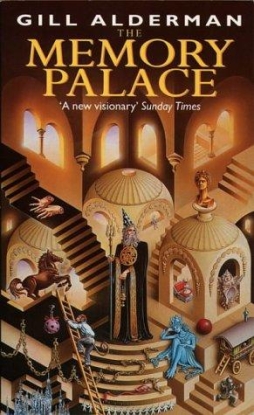 Sometimes, you need to grow as a reader to be able to appreciate a certain book. In 1996, I bought a paperback fantasy novel called The Memory Palace, by Gill Alderman. It was a whim, I suppose; maybe something about the cover appealed to me, or more likely something in the synopsis on the back, promising a story about a fantasy writer who gets lost in his fictions and confronts an archmage of his own making. Whatever the reason, I started in on it, swiftly lost interest, set it aside, and only came back to it sixteen years later.
I was 22 or 23 when I first tried to read The Memory Palace. I can see now why I didn’t respond to it — to start with, the main character’s middle-aged, with a middle-aged man’s fears and desires, and I suspect that was difficult for me as a younger man to parse, never mind relate to. The novel has a low-key opening, as well, which may not have helped; but the tone and emotional terrain I think has to do with a certain maturity, a certain perspective that comes with age. By no means do I think it’s impossible for younger readers to enjoy or appreciate the book, but I have to admit I’m not surprised it didn’t make an impact on me personally at 22. At any rate, the other week I came across it again and decided to give it another try. I’m very glad I did.
This book isn’t just good, it’s brilliant. I genuinely wonder why it didn’t win major awards in and out of the fantasy field. (I note that it was nominated for the 1996 BSFA Award for Best Novel, and made the long list for the 1996 James Tiptree, Jr. Award.)




 The Lost Gate