Plot, Plain and Simple
 I may have mentioned this before, but now that I’ve started talking about problems associated with plot, I’ll mention it again: There’s a lot of talk out there about plot-driven narratives versus character-driven narratives, where the former is “bad” and the latter is “good.”
Here’s the skinny: these are terms useful to the book reviewer or critic. They’re not useful to the writer and here’s why: There is no plot without character and there is no character without plot. Specifically, there’s no action without a character to perform it, and no characters without actions to define them. Nothing happens unless someone decides to do it, and unless someone does something, there’s no plot. In fact, there’s no story. This is true for every novel, every short story, every film, every TV show, and an awful lot of poetry. Regardless of genre.
There are things like allegories and satires, in which this might be debatable. Of course, the primary purpose of these is not to tell a story, but to get a particular point across, so screwing with the narrative is okay and even expected. But the best of these will at the very least pretend to include character and plot.
Last week, I talked about how badly-used plot devices often arise out of the writer ignoring character and “making” something happen, often to manipulate the reactions of readers and viewers. You can avoid this by asking yourself some simple questions right at the start. Many of us start writing with character in mind, so we ask ourselves, “Given this type of person, what kind of interesting things can happen to her?” Even if you start somewhere else, however, one of the first questions you’ll have to ask yourself is “Whose story is it?”
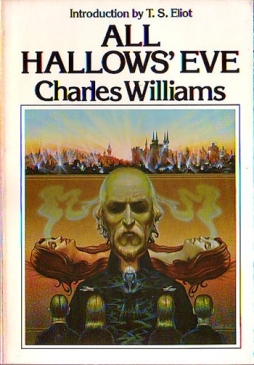 I observed the other day that the end of October’s a good time for reading classic weird fiction. This morning, as young ghosts and goblins of all sorts are preparing their evening’s depredations, I’m writing about a subject I’ve wanted to deal with for a while: the novels of Charles Williams. Williams was born in 1886, and died in 1945; a scholar, poet, editor, and theologian as well as a novelist, he’s probably the third-best-known of the informal group of Oxford Christians called the Inklings, behind C.S. Lewis and J.R.R. Tolkien. A Christian fascinated with the occult, his novels are tales of the supernatural and the numinous at play in the ‘real’ world. He wrote of ghosts, magi, and the Holy Grail, among other things, and his stories, laboured and profound, are some of the strangest fantasies I know.
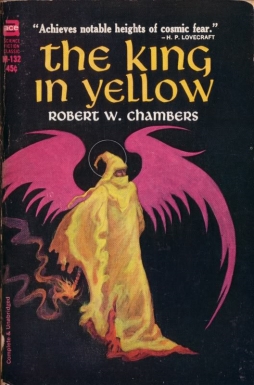 October draws to a close and so it’s time to turn to horror and the supernatural, to the weird tale and the things that cannot be known. Today, I want to look at one of the founding classics of the weird, Robert W. Chambers’s collection of linked short stories, The King in Yellow. Published in 1895, it was celebrated by H.P. Lovecraft, who used some of the book’s ideas in his Cthulhu mythos; in fact, the book’s inspired a mythos of its own, complete with