Browsed by
Category: Books

We All Live in Lovecraft Country
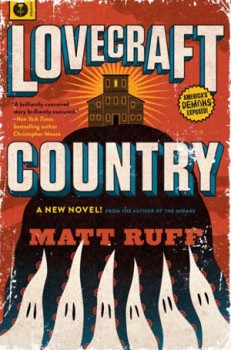
We All Live in Lovecraft Country

lovecraftcountryLovecraft Country
by Matt Ruff
Harper (384 pages, $26.99 hardback, $7.99 digital, February 2016)

Pam Noles grew up the daughter of a mother who was very active in the NAACP and a father who, because of his color, had to sue their city after being turned down eight times for a firefighting job. Noles also grew up loving all things science fiction — books and B movies — even though nobody on those book covers or in those movies resembled her family.

On Saturday nights Noles watched schlocky movies hosted by an Elvira knockoff called The Ghoul, backed by a cast of weirdos (every big market had something similar — in Philly we had Saturday Night Dead, hosted by Stella “The Maneater From Manayunk”). During breaks in the movie they performed skits.

Usually it would be just me in the basement sprawled on the floor surrounded by snacks, Legos and books to read during the commercials. If he was off shift, sometimes Dad would come down and join me in his leather recliner by the stairs. Every once in a while Mom called down from the kitchen Are you letting her watch those weird things? And we’d lie in unison, No. If she came down to check for herself, Dad would get in trouble.

Dad had his own names for the movies.

What’s this? ‘Escape to a White Planet?’

It’s called ‘When Worlds Collide.’ I’m sure I sounded indignant.

‘Mars Kills the White People.’ I love this one.

Daaaaad. It says it right there. ‘War of the Worlds’. I know I sighed heavily, but was careful to turn back to the tv before rolling my eyes.

Once he asked me which was more real, the movie or the skits between. I didn’t get it, and told him that they were both stories, so they were both fake. He didn’t bring it up again until a skit came on. I can’t remember if it was a ‘Soulman’ skit or one of the caveman gags (the cavemen were multicultural — basic white, Polish, Italian, and black). But I remember Dad saying, how come you never see anybody like that in the stories you like? And I remember answering, maybe they didn’t have black people back then. He said there’s always been black people. I said but black people can’t be wizards and space people and they can’t fight evil, so they can’t be in the story. When he didn’t say anything back I turned around. He was in full recline mode in his chair and he was very still, looking at me. He didn’t say anything else.
Read More Read More

The Public Life of Sherlock Holmes: Holmes for Halloween

The Public Life of Sherlock Holmes: Holmes for Halloween

halloween_arcanumI don’t really do horror. Now, I am a huge Robert R. McCammon fan and of F. Paul Wilson’s Repairman Jack. Of course, I’ve read a fair amount of H.P. Lovecraft’s Cthulhu stuff (man, that creeps me out). And bits here and there from Robert E. Howard, Les Daniels, Anne Rice and a few others. But overall, I don’t really enjoy the genre, so it’s not an area I have a lot of experience with.

However, I have come across several examples of Holmes in the genre. And it being Halloween, let’s take a quick look at few titles that involve horror or the supernatural. Those two things aren’t always the same, you know.

The Unopened Casebook of Sherlock Holmes (John Taylor) There was a time when Holmes pastiches were relatively uncommon and, pre-Amazon, you grabbed what you could when you saw them on the shelves. I still remember being excited to buy books from Richard Boyer, L.B. Greenwood and Frank Thomas. Another was a short story collection by John Sherwood, a writer for the BBC. “The Wandering Corpse,” “The Battersea Worm,” “The Paddington Witch,” “The Phantom Organ,” “The Devil’s Tunnel” and “The Horror of Hanging Wood” are all supernatural-tinged stories. The last one remains a favorite of mine and something I wish I’d thought up.  Taylor wrote four more Holmes adventures, which were read aloud by Benedict Cumberbatch. I’ve not heard them, but every couple of years, around this time, I read a few stories from his book.

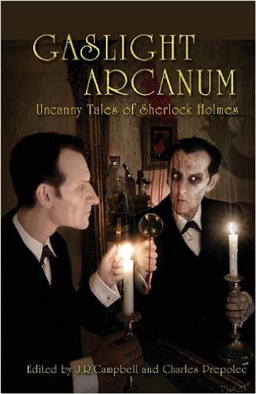
Gaslight Anthologies (edited by J.R. Campbell & Charles Prepolec) In 2008, Canadians Campbell and Prepolec put out Gaslight Grimoire, a collection of eleven creepy Holmes tales. It was followed by thirteen more in Gaslight Grotesque, and finished up with another dozen in Gaslight Arcanum. That’s 36 stories of horror and weirdness. You can certainly tell what you’re getting from the covers of the last two books. If you’re a Holmes fan and really like the horror genre, these three anthologies are just what you’re looking for.

Read More Read More

Space Colonies, Interstellar Fleets, and The Martian in the Attic: The Best of Frederik Pohl

Space Colonies, Interstellar Fleets, and The Martian in the Attic: The Best of Frederik Pohl

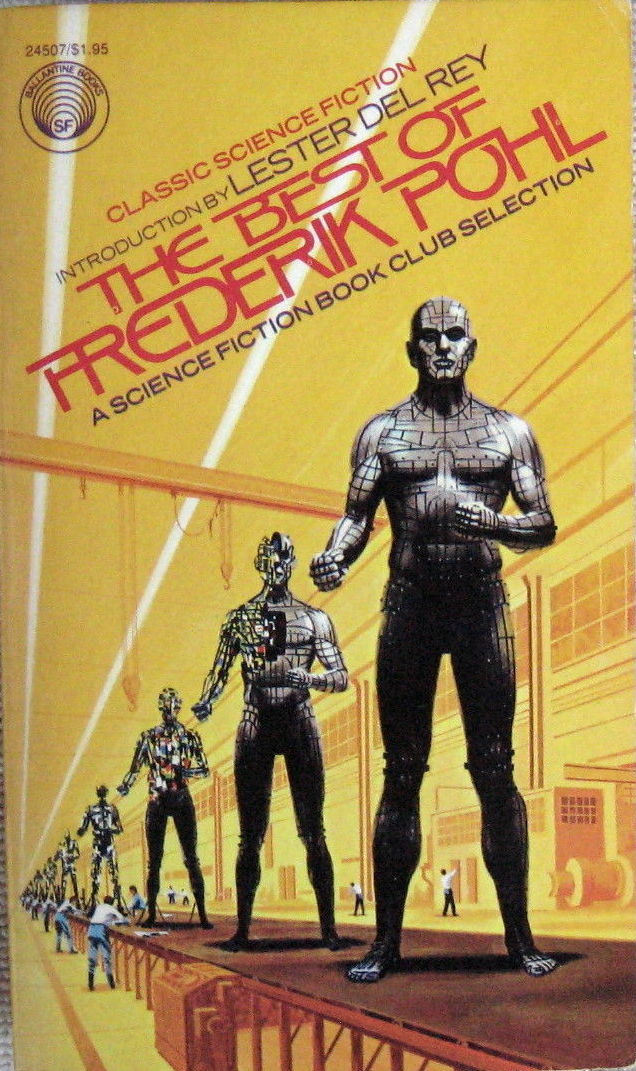
The Best of Frederik Pohl-smallIn my continuing posts of Del Rey’s Classic Science Fiction Series, we now come to the third volume in the series, The Best of Frederik Pohl (1975). The introduction was done by none other than the writer and editor Lester del Rey himself (1915-1993). As with The Best of Stanley Weinbaum and The Best of Fritz Leiber, the cover art for Pohl’s volume was done by Dean Ellis (1920-2009). And as with Leiber’s volume, the author himself, Frederik Pohl (1919-2013), gives an afterword as well commenting on several of the stories within.

To call Pohl a giant of science fiction is a cliched understatement. Pohl wrote and edited science fiction for over seventy years. He won numerous awards and was editor for many years of Galaxy and If magazines. His mark on science fiction is absolutely indelible.

But, I have to admit, I had actually never read any of Pohl’s stories before this volume. So I came to The Best of Frederik Pohl with fairly neutral eyes, though expecting to read some great classic science fiction. What did I find? Let me comment on a few the stories in this volume that really struck me and then I’ll give some final overall thoughts on Pohl’s work.

The story “Happy Birthday, Dear Jesus” was a fairly on-the-nose satire against Christmas commercialism — a pretty easy target. But, surprisingly, this satire was set within the context of a love story about a department store manager seeking to marry the daughter of a very conservative missionary. Not what I was expecting. What was even more surprising was that this turned out to be a very heart-stirring little romantic tale, very unexpected given the cynical bite of the story’s overall point.

Interestingly, in retrospect, the sci-fi elements of this story seem fairly tangential now. In fact, I don’t remember exactly what the sci-fi elements in this story were. And this wasn’t the only story like this. I often found myself trying to remember exactly what made Pohl’s stories examples of science fiction. I’ll return to this point.

Read More Read More

Something Nasty, Something With Claws

Something Nasty, Something With Claws

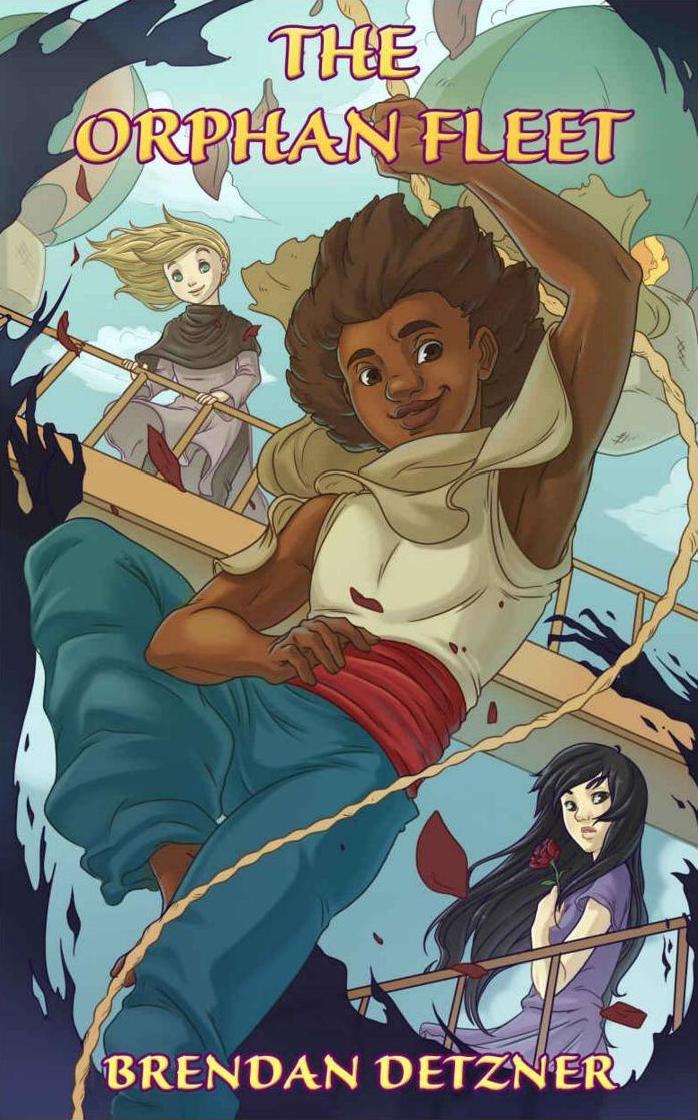
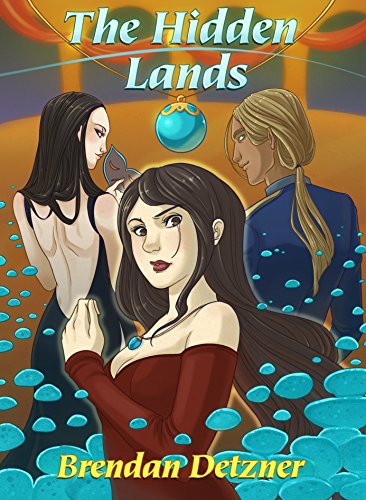
brendan-detzner-the-orphan-fleet-small brendan-detzner-the-hidden-lands

Whenever I have an idea for a story, it usually came from at least six different places, three or four or which I’ll have forgotten by the time the story is done. Let’s see how well I do this time:

I grew up in a house where bookshelves were the most important pieces of furniture, and I was happy to take advantage, but in a hidden corner of the basement was a particularly important shelf, the one where my dad kept his old 70’s science-fiction and fantasy paperbacks. Roger Zelazny, Harlan Ellison, Michael Moorcock, Gene Wolfe. Not a bad haul. In one of those books, a short story collection from Gene Wolfe, was a story called “The Island of Doctor Death and Other Stories,” which is about a child reading a story featuring a villain who he later imagines (or maybe not, it’s a Gene Wolfe story) breaking the fourth wall and discussing his role as a bad guy. He talks about how he and the hero seem to hate each other, but that backstage they actually get along and understood their interdependence.

Read More Read More

Future Treasures: What the #@&% Is That? edited by John Joseph Adams and Douglas Cohen

Future Treasures: What the #@&% Is That? edited by John Joseph Adams and Douglas Cohen

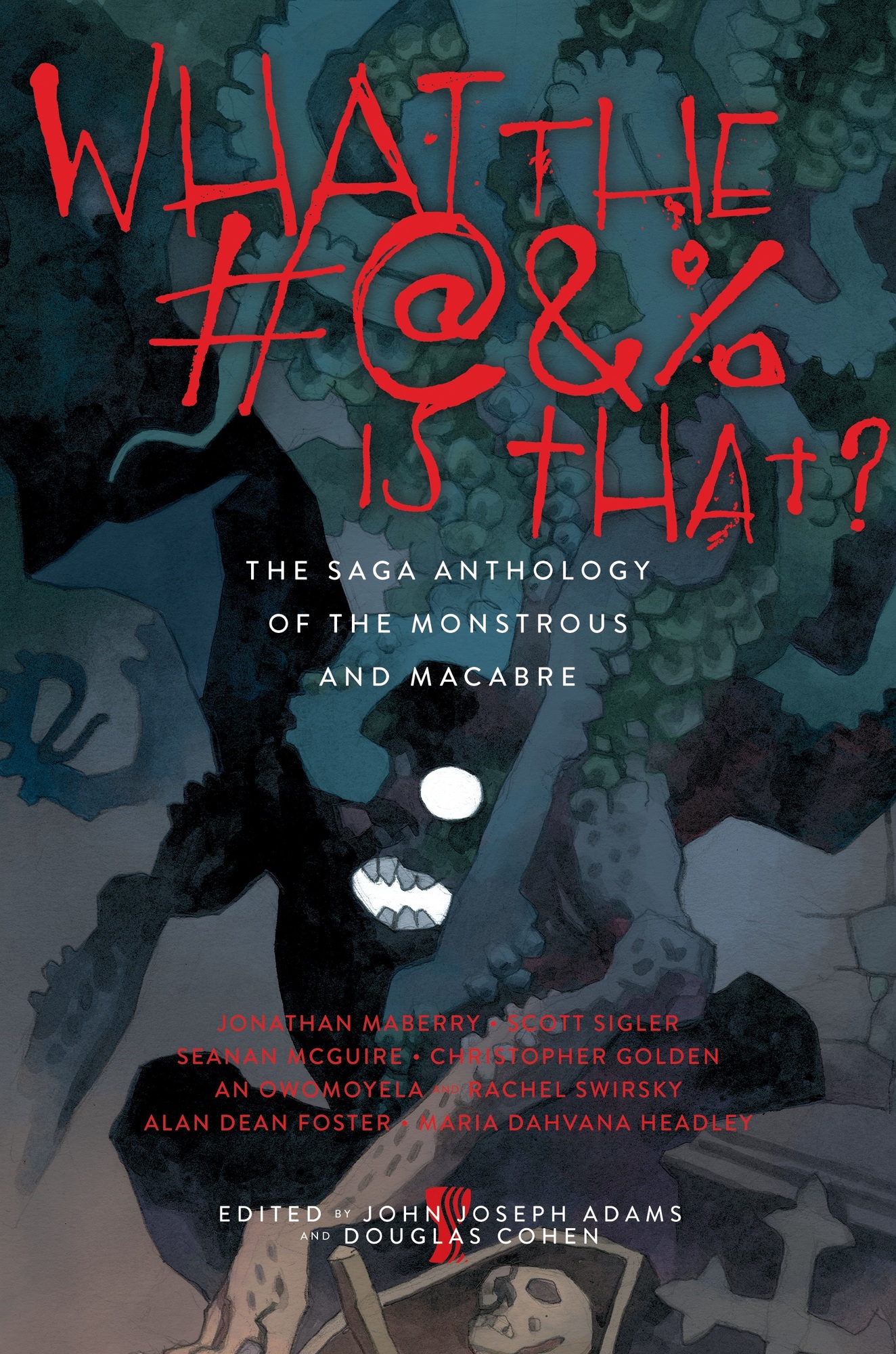
what-the-is-that-smallWhat’s the deal with all these fabulous Saga anthologies? Where are they all coming from?

First there’s The Starlit Wood: New Fairy Tales, edited by Dominik Parisien and Navah Wolfe, which arrived just last week. If you love fairy tales (and who doesn’t?), it’s the most important and high profile anthology in years.

But as much as I love fairy tales, my heart truly belongs to monster movies, and tales of strange and nasty creatures. John Joseph Adams and Douglas Cohen understand that, and their gift to readers like me is What the #@&% Is That?, a glorious collection of brand new monster tales by some of the top writers in the field. It arrives in trade paper from Saga Press next week.

Fear of the unknown — it is the essence of the best horror stories, the need to know what monstrous vision you’re beholding and the underlying terror that you just might find out. Now, twenty authors have gathered to ask — and maybe answer — a question worthy of almost any horror tale: “What the #@&% is that?”Join these masters of suspense as they take you to where the shadows grow long, and that which lurks at the corner of your vision is all too real.

Includes stories by Laird Barron, Amanda Downum, Scott Sigler, Simon R. Green, Desirina Boskovich, Isabel Yap, Maria Dahvana Headley, Christopher Golden, John Langan, D. Thomas Minton, Seanan McGuire, Grady Hendrix, Jonathan Maberry, Gemma Files, Nancy Holder, Adam-Troy Castro, Terence Taylor, Tim Pratt, An Owomoyela & Rachel Swirsky, and Alan Dean Foster.

What the #@&% Is That? will be published by Saga Press on November 1, 2016. It is 368 pages, priced at $16.99 in trade paperback and $7.99 in the digital edition.

Cover Reveal: Damnation by Peter McLean

Cover Reveal: Damnation by Peter McLean

peter-mclean-burned-man-novels-small

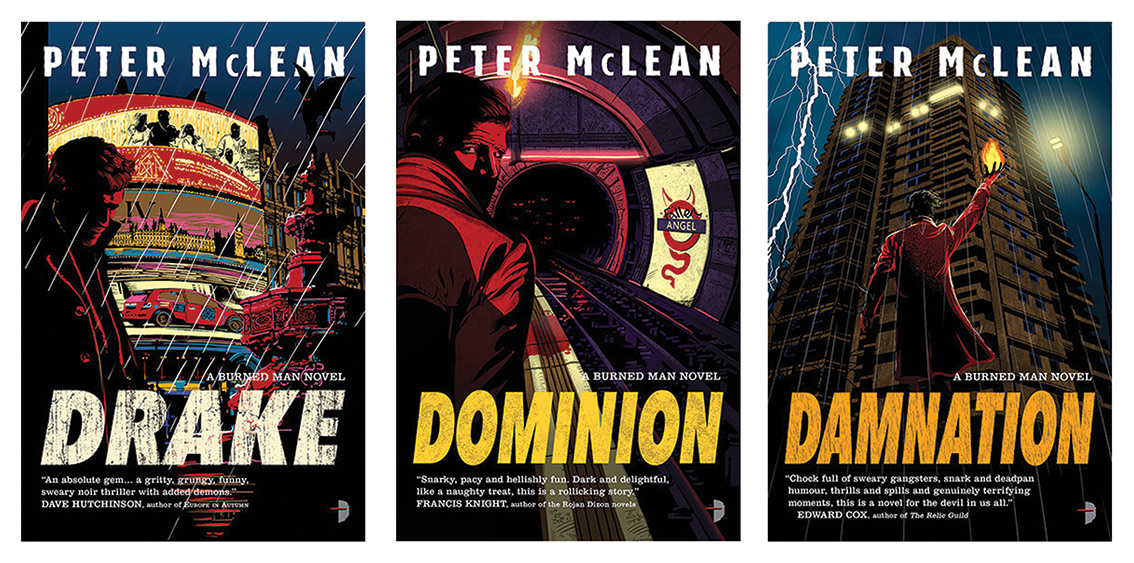
Drake, the first novel in Peter McLean’s new series, was published in January. The highly-anticipated second novel, Dominion, will be released on November 2nd in the US, and November 4 in the UK and the rest of the world. Here’s what I said about Drake late last year.

Peter McLean’s first novel will be released in paperback by Angry Robot in early January, and it sounds pretty darn good.

Don’t believe me? Drake features a hitman who owes a gambling debt to a demon, his faithful magical accomplice The Burned Man (an imprisoned archdemon), the Furies of Greek myth, an (almost) fallen angel named Trixie, and oh, yeah. Lucifer. Dave Hutchinson calls it “a gritty, grungy, funny, sweary noir thriller with added demons. Don Drake is a wonderful creation.” I told you it sounded good. Drake is the opening installment in a new series titled The Burned Man.

Black Gate is very proud to present an exclusive cover reveal for the third novel, Damnation, scheduled to appear on May 2 of next year. See below for additional details of the book, and a high-res pic of the cover.

Read More Read More

My Top Ten Novel-to-Movie Adaptations

My Top Ten Novel-to-Movie Adaptations

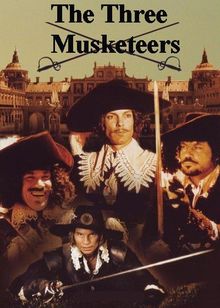
3-musketeers-posterLast time I was having a look at William Goldman, both his screen and novel writing. You can see the whole post here, but for my review of my top ten movie adaptations, I’d like to repeat what Goldman says about writing screenplays:
Here is one of the main rules of adaptation: you cannot be literally faithful to the source material.

Here’s another that critics never get: you should not be literally faithful to the source material. It is in a different form, a form that does not have the camera.

Here is the most important rule of adaptation: you must be totally faithful to the intention of the source material.

— from Which Lie Did I Tell?

In another spot, and I’m paraphrasing here, because now I can’t find the quotation, he tells us how a book has maybe 400 pages, and a screenplay has around 135 pages, and not full pages at that, so what do you think happens between one version and the other?

Read More Read More

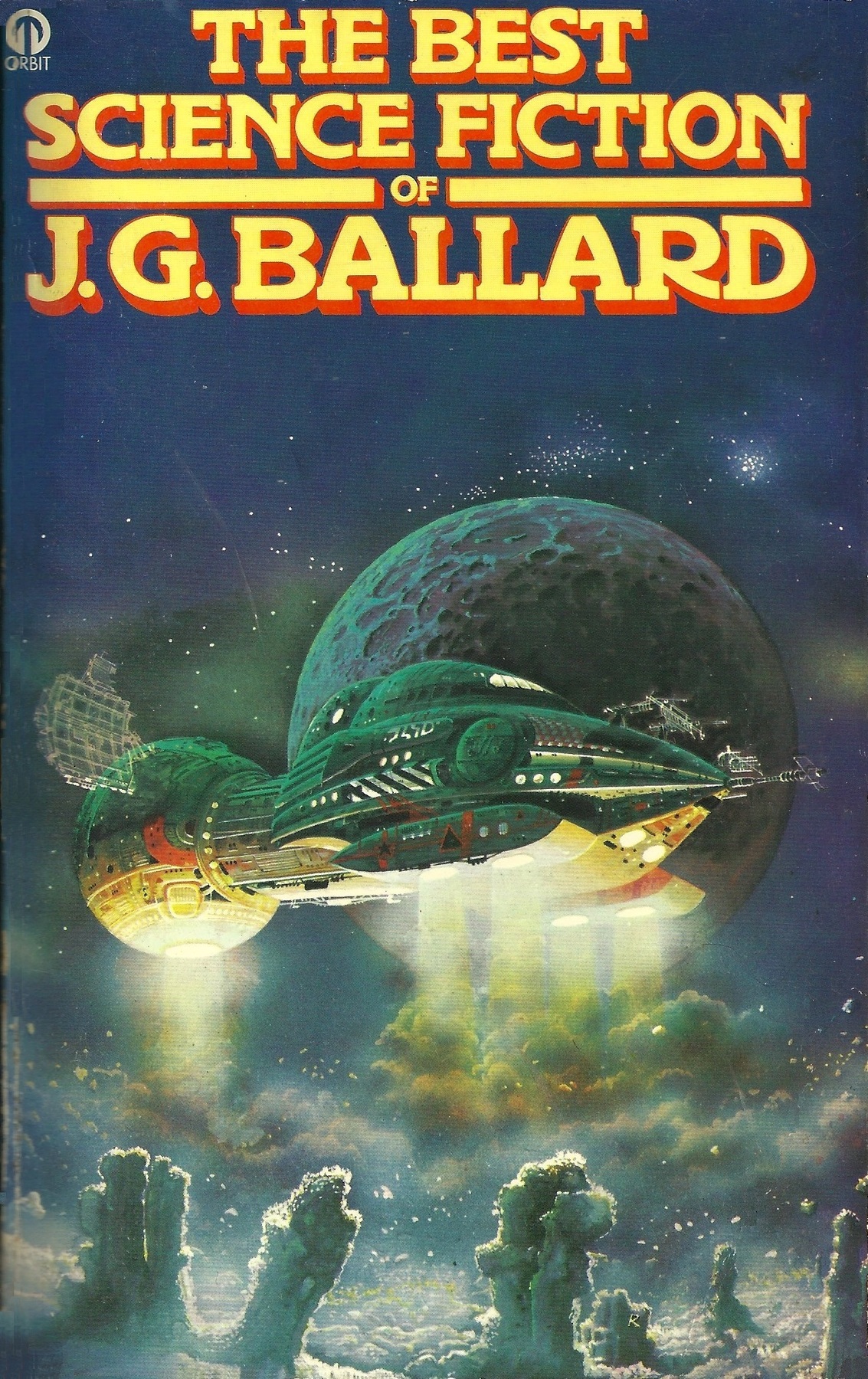
Vintage Treasures: The Best Science Fiction of JG Ballard

Vintage Treasures: The Best Science Fiction of JG Ballard

the-best-science-fiction-of-jg-ballard-small the-best-science-fiction-of-jg-ballard-back-small

On September 3rd of this year, I attended the 2016 Chicagoland Pulpfest. It’s a friendly gathering of Chicago area pulp fans and science fiction readers, held ever year at Doug Ellis’ house in Barrington Hills. I’d been hoping for an excuse to get out to Doug’s house for the last four years, ever since he invited me to dig through the massive — and I do mean massive — collection of paperbacks in his garage, originally belonging to famous editor Martin H. Greenberg.

Doug and Bob Weinberg had acquired the collection from Marty’s family shortly after his death, and Doug was looking for a buyer for the paperbacks. I wrote about my first encounter with Marty’s incredible collection (and acquiring a small portion of it) at the 2012 Windy City Pulp & Paper show. The sheer scale of the collection defeated me then, but I was spoiling for a re-match, and Doug’s invitation to dig into it during the party was just too tempting to resist.

Well, I tried to be social (honestly I did), but the lure of thousands of vintage paperbacks in the garage was just too strong. After a few hours I wandered away from the party and soon found myself elbow deep in boxes, happily sorting through an incredible selection of books — including some I’d been searching for for decades. Virtually all were in fabulous, like-new condition, and it wasn’t long before other book enthusiasts joined me.  Soon enough it seemed like the party had moved into the garage, as one after another most of the boxes were opened and we collectively cooed over the contents.

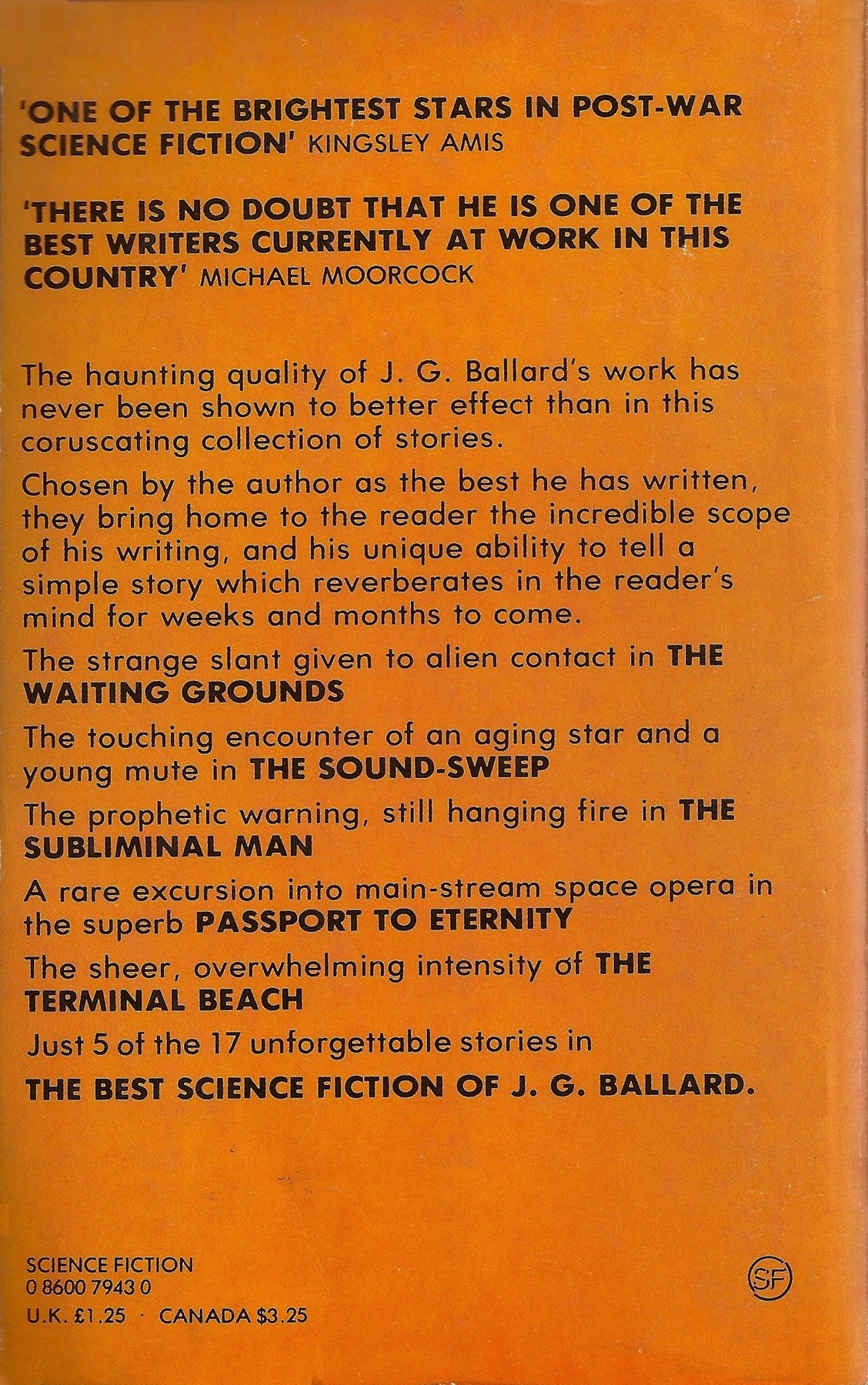
I walked away with nearly 300 paperbacks (which I bought from Doug for a criminally bargain price), including numerous treasures. Of course, I wasn’t the only one to make fabulous finds. I saw copies of The Best of Clifford Simak, a complete set of Wild Card volumes, and numerous vintage Lovecraft collections dug out of boxes and gleefully set aside by my fellow book prospectors. But for me the big regret of the evening, the one that got away, was The Best Science Fiction of JG Ballard, a 1977 Futura paperback that I didn’t even know existed until I saw it pulled out of a box in Doug’s garage.

Read More Read More

New Treasures: Swift to Chase by Laird Barron

New Treasures: Swift to Chase by Laird Barron

swift-to-chase-laird-barron-small swift-to-chase-laird-barron-back-small

In his review of the 2014 Laird Barron tribute volume The Children of Old Leech, James McGlothlin wrote:

If you’re not familiar with Laird Barron, you really should be. He’s a multiple Shirley Jackson Award winner and currently on the 2014 World Fantasy Award ballot. I’ve raved about him several times on Black Gate, including here and here and here. Barron’s writing is often called Lovecraftian; but not in a pastiche sort of way.  Rather, Barron is really good at capturing a cosmic-horror-feel in his stories that many believe Lovecraft perfected.

In addition, Barron is also like Lovecraft in that in his stories have recurring regions, locations, characters, and even a recurring evil book… [Barron is] one of the true masters of the weird that we currently have.

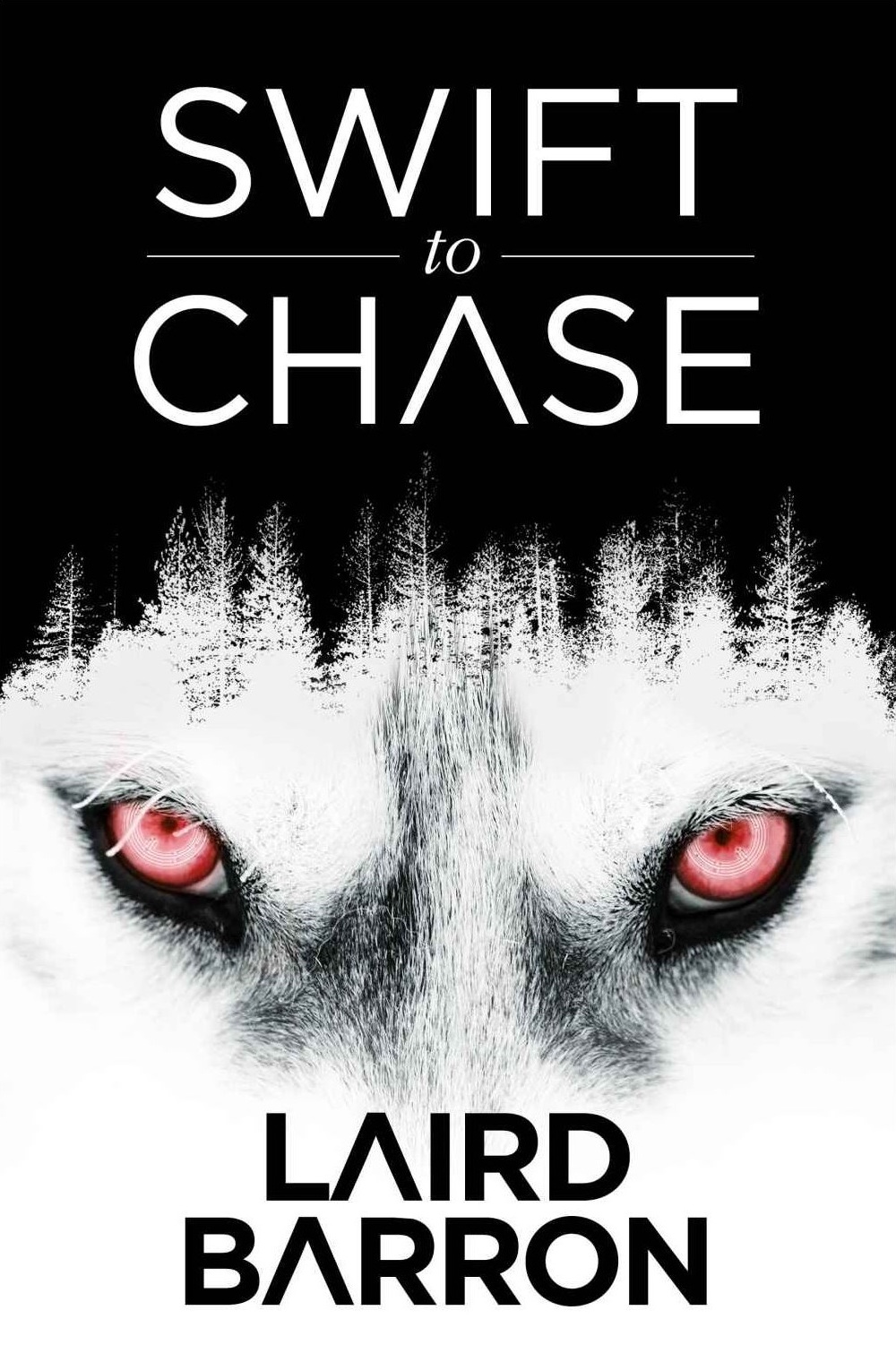
Barron is not resting on his laurels, however. In the last 12 months he’s released two novellas, Man With No Name and X’s For Eyes, and his highly anticipated fourth collection Swift to Chase arrived in hardcover, trade paperback and digital format earlier this month. Click on the images above to read the complete back cover copy.

Swift to Chase was published by JournalStone on October 7, 2016. It is 294 pages, priced at $29.95 in hardcover, $18.95 in trade paperback and $7.95 for the digital edition. See all our recent Laird Barron coverage here.

One Last Time into the Primal Land: Sorcery in Shad by Brian Lumley

One Last Time into the Primal Land: Sorcery in Shad by Brian Lumley

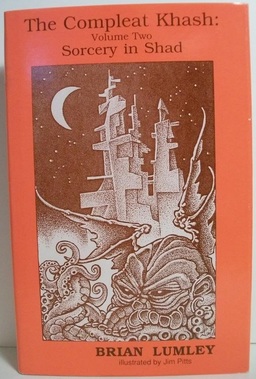
oie_242034314rvenvucAll good things must come to an end. I get that, and as I’ve gotten older I appreciate that more than ever. However, they do not all have to end badly. Sometimes, though, as with Brian Lumley’s Primal Lands stories, they do. Despite some rough-hewn edges and some too-purple prose, I completely enjoyed the first two collections in the series, The House of Cthulhu and Tarra Khash: Hrossak! (follow the links to my Black Gate reviews). I looked forward to the culmination of these tales in the final volume, Sorcery in Shad (1991). Unfortunately, it’s a bit of a flop. Only Lumley’s easy-going style, colorful world-building, and a clear love for his characters kept its reading from being drudge work.

Lumley is a controversial figure in the world of Lovecraft Mythos fiction. By inclination, he is a writer of action and adventure. What he brought to Mythos stories were heroes who fought back, unwilling to acquiesce in the face of existential dread (and monsters), which didn’t always work very well.

It served him splendidly here, though, in his stories set on Theem’hdra, the continent-sized remnant of a gigantic volcano, in the earliest days of Man on Earth. House of Cthulhu introduced the setting and several recurring characters, most notably the sorcerer, Teh Atht, through a series of mostly independent short stories. Tarra Khash, through several linked stories, told the escapades of its titular good-hearted barbarian wanderer. By the end, Tarra Khash and his friends had saved the world from demonic domination and he had decided to head back home.

Read More Read More