Browsed by
Category: Books

Ghost Stories: Classic Tales of Horror and Suspense edited by Lisa Morton and Leslie S. Klinger
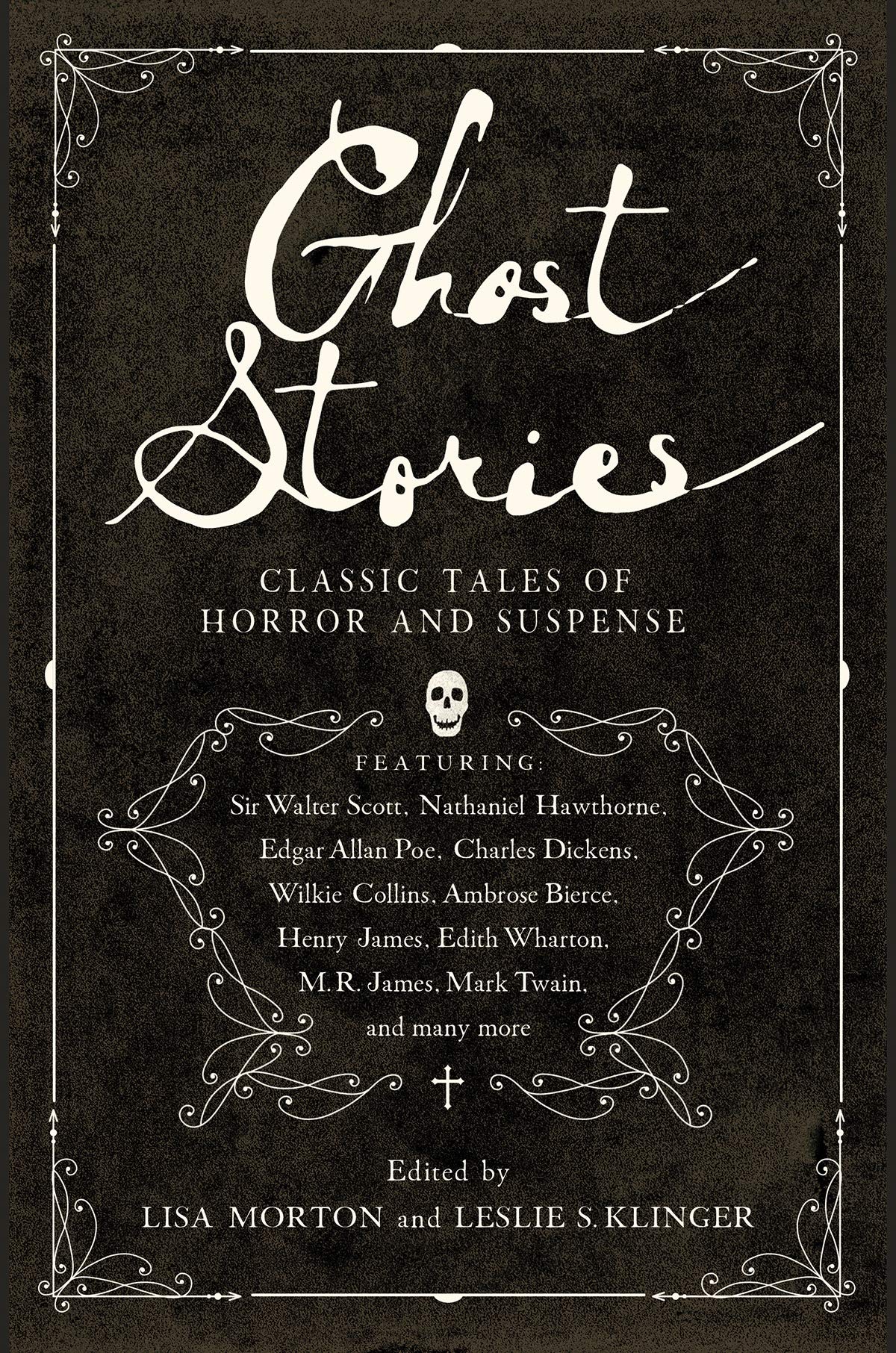
Ghost Stories: Classic Tales of Horror and Suspense edited by Lisa Morton and Leslie S. Klinger

Ghost Stories Classic Tales of Horror and Suspense-smallI know it’s nowhere near Halloween — what Goth Chick joyously calls “The Season” — but that doesn’t mean I don’t delight in a brand new ghost story anthology.

Master anthologists Lisa Morton and Leslie S. Klinger deliver a terrific new volume of neglected spooky tales from Pegasus Books: Ghost Stories: Classic Tales of Horror and Suspense. It arrives in a handsome hardcover edition next week. Here’s the description.

A masterful collection of ghost stories that have been overlooked by contemporary readers ― including tales by celebrated authors such as Charles Dickens, Sir Walter Scott, Mark Twain, and Edith Wharton ― presented with insightful annotations by acclaimed horror anthologists Leslie S. Klinger and Lisa Morton.

The ghost story has long been a staple of world literature, but many of the genre’s greatest tales have been forgotten, overshadowed in many cases by their authors’ bestselling work in other genres. In this spine-tingling anthology, little known stories from literary titans like Charles Dickens and Edith Wharton are collected alongside overlooked works from masters of horror fiction like Edgar Allan Poe and M. R. James.

Acclaimed anthologists Leslie S. Klinger (The New Annotated Sherlock Holmes) and Lisa Morton (Ghosts: A Haunted History) set these stories in historical context and trace the literary significance of ghosts in fiction over almost two hundred years ― from a traditional English ballad first printed in 1724 through the Christmas-themed ghost stories of the Victorian era and up to the science fiction–tinged tales of the early twentieth century.

In bringing these masterful tales back from the dead, Ghost Stories will enlighten and frighten both longtime fans and new readers of the genre.

Including stories by: Ambrose Bierce, Wilkie Collins, Charles Dickens, Olivia Howard Dunbar, Nathaniel Hawthorne, Henry James, M. R. James, Arthur Machen, Georgia Wood Pangborn, Mrs. J. H. Riddell, Elizabeth Stuart Phelps, Edgar Allan Poe, Sir Walter Scott, Frank Stockton, Mark Twain, and Edith Wharton.

Ghost Stories has an impressive list of contents. I tried to find a copy of the Table of Contents, but all I found was this weird Google widget that allows you to browse the first 40 pages of the book (including the TOC). Here it is.

Read More Read More

J. Barton Mitchell Reads from The Razor with Audience Q&A

J. Barton Mitchell Reads from The Razor with Audience Q&A

jbm21J. Barton MitchellIMG_1627-199x300 (the J. stands for “Jack”) is the author of the science fiction YA novel series Conquered Earth (published by St. Martin’s Press), and The Razor (published by Tor Books). He has also sold screenplays to Warner Bros. and 21st Century Fox, and created the comic book series POE for ‘Boom! Studios’.

I had the privilege of interviewing him (see the video below), and in preparation for that interview, read The Razor, and let me just say: Wow. It is excellent.

Here’s the back cover copy:

J. Barton Mitchell’s The Razor is a riveting science fiction thriller about a man struggling to survive the chaos on a prison planet.

Brilliant engineer Marcus Flynn has been sentenced to 11-H37 alongside the galaxy’s most dangerous criminals. A hard labor prison planet better known as the Razor, where life expectancy is short and all roads are dead ends.

At least until the Lost Prophet goes active…

In a few hours, prison guards and staff are evacuated, the prisoners are left to die, and dark mysteries begin to surface.

Only Flynn has the skills and knowledge to unravel them, but he will have to rely on the most unlikely of allies — killers, assassins, pirates and smugglers. If they can survive each other they just might survive the Razor… and claim it for their own.

Black Gate covered the release of The Razor last October.

Read More Read More

New Treasures: Splintered Suns by Michael Cobley

New Treasures: Splintered Suns by Michael Cobley

Splintered Suns-small Splintered Suns-back-small

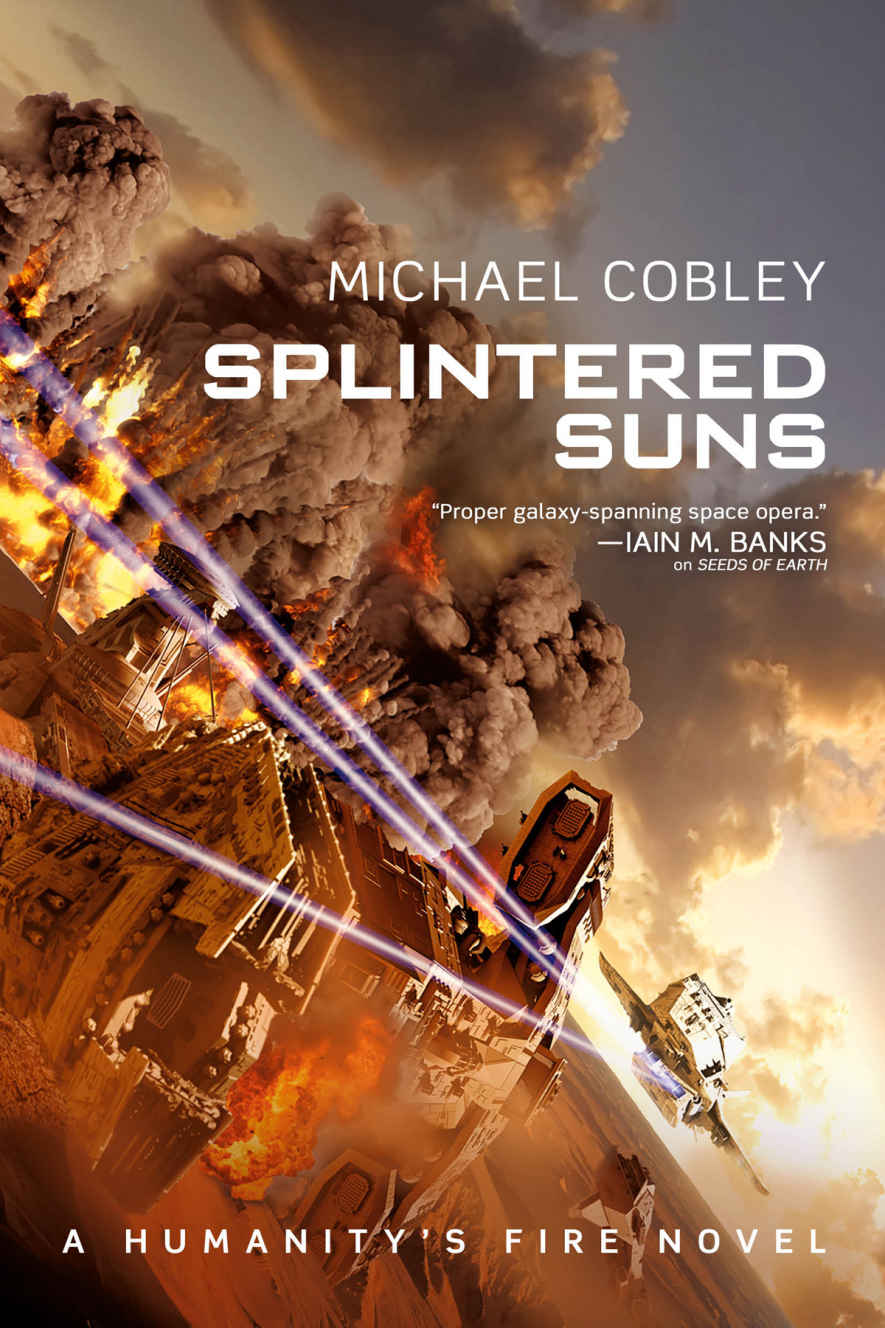
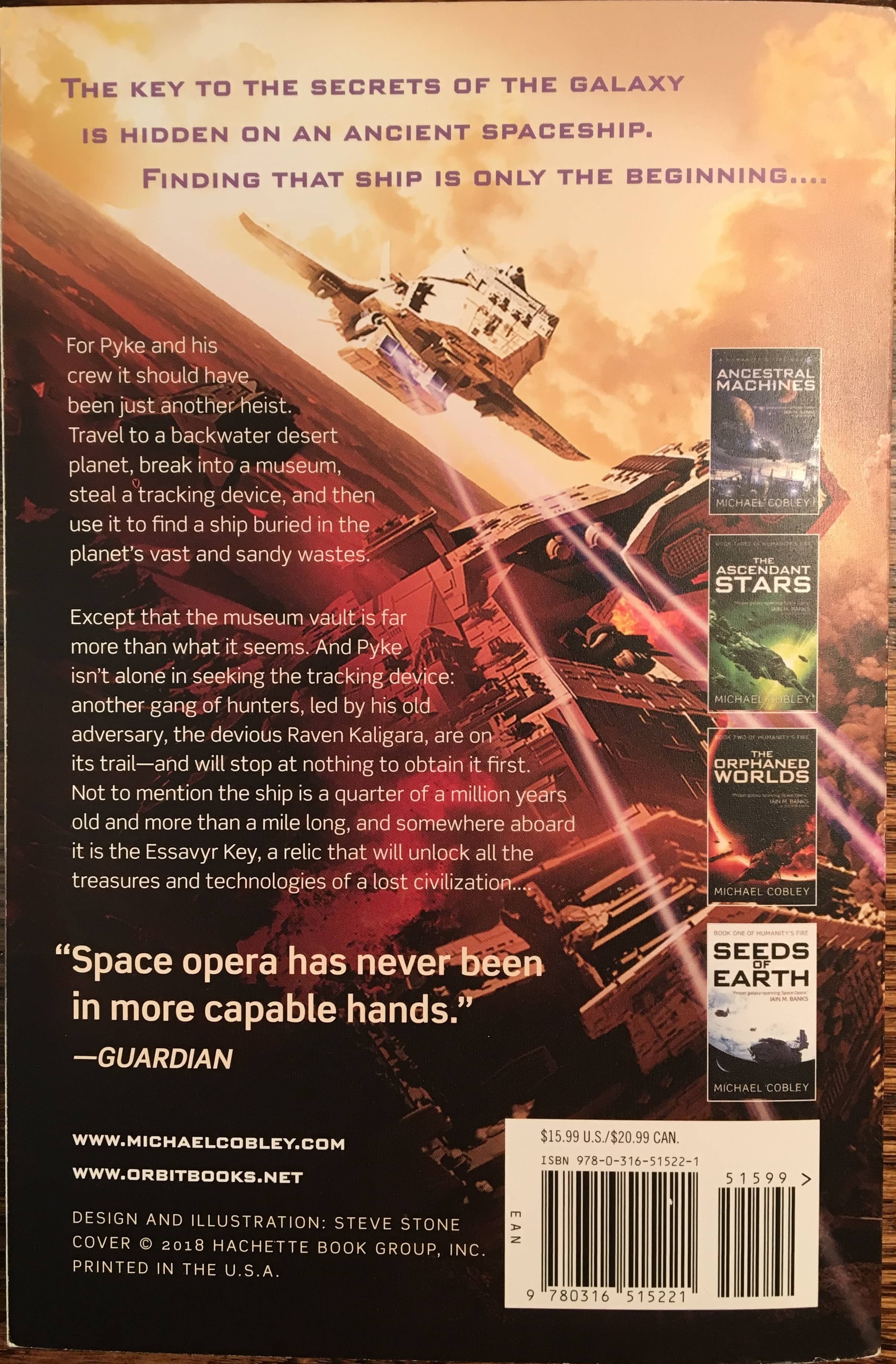
I’ve spent much of 2019 in a lengthy tour of modern space opera, and it’s been very eye-opening. I’m getting ready to wrap up and turn my attention to another subgenre (YA thriller? Weird Western? SF noir? So many to choose from!), but I can squeeze in one more, I think. And that’s likely to be Michael Cobley’s Splintered Suns, since the reviews I’ve read certainly make it sound like it’s got the goods. Namely lost artifacts, narrow escapes, ancient mysteries, and — especially! — giant space monsters. Here’s a sample from the January review at The Tattooed Book Geek.

Captain Brannan Pyke of the Ship, Scarabus and his riff-raff and ragtag crew… are contracted by their employer Van Graes to steal a tracking device, the Angular Eye from the City of Cawl-Vesh on the desert planet Ong. Van Graes is a collector of ancient alien artefacts and he hopes that The Angular Eye can be used to locate the wreck of an ancient ship and the wealth of knowledge and treasure that it holds. Millennia ago, the ship, the Mighty Defender of the Arraveyne Empire was the only ship to escape the collapse of the Arraveyne Imperium. However, during the escape, the ship caught the attention of the Damaugra (a mythical sentient metal monster made of coils and tentacles). The Damaugra relentlessly chased the ship through space, damaging it beyond repair and causing it to crash on the planet Ong. Where its wreckage has remained buried and hidden in the vast desert ever since.

I’m pretending that I’m interested because of the rich backstory and powerful mythic overtones, but really I was sold the moment I read mythical sentient metal monster and tentacles. Read into that what you will.

If you’re looking for a more balanced (i.e. tentacle-free) review, here’s Eric Brown in his December wrap-up of the best new SF at The Guardian.

Read More Read More

The Golden Age of Science Fiction: The 1973 Locus Award for Best Publisher: Ballantine Books

The Golden Age of Science Fiction: The 1973 Locus Award for Best Publisher: Ballantine Books

Ballantine Lary Niven-small

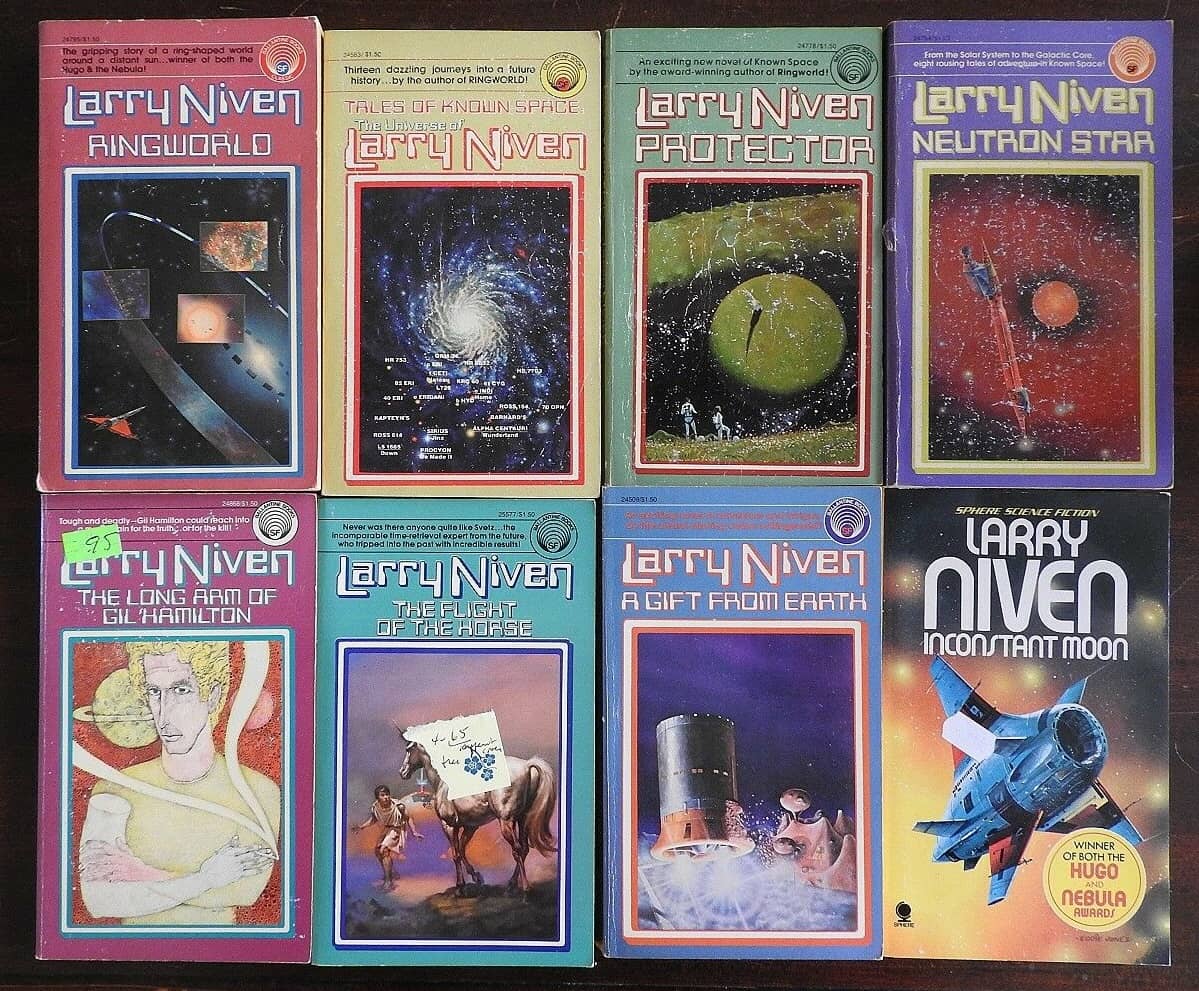
Larry Niven Ballantine Books (and Inconstant Moon from Sphere)

Steven Silver has been doing a series covering the award winners from his age 12 year, and Steven has credited me for (indirectly) suggesting this, when I quoted Peter Graham’s statement “The Golden Age of Science Fiction” is 12, in the “comment section” to the entry on 1973 in Jo Walton’s wonderful book An Informal History of the Hugos. You see, I was 12 in 1972, so the awards for 1973 were the awards for my personal Golden Age. And Steven suggested that much as he is covering awards for 1980, I might cover awards for 1973 here in Black Gate.

The Locus Awards, given by a poll of the readers of Locus Magazine (full disclosure: for which I write a regular column), and lately including an online component open to anyone (with non-subscriber votes counting half), have been given since 1971. One of the inspired categories is for Best Publisher (this category began in 1972.) In 1973, the award for Best Publisher went to Ballantine Books. In fact, Ballantine won every year but two between 1972 and 1987. Every year since then, the award has gone to Tor. (Note: the Ballantine awards were often to Ballantine/Del Rey, and the Tor awards were often to Tor/St. Martin’s.) In fact, only four entities have ever won the Locus Best Publisher award: Ballantine/Del Rey, Tor/St. Martin’s, the Science Fiction Book Club, and Pocket/Timescape. So – I still think the award is a good idea, but perhaps the winner doesn’t tell us much beyond the obvious.

Certainly when I was first buying books – beginning in 1974, I think – it was obvious that Ballantine (and, soon Del Rey) was the leading paperback imprint. (And, of course, at that age I bought only paperback and SFBC editions.) Sure, Ace published some good stuff. And so did DAW, and Signet, and Berkley, etc. But Ballantine was king – they published the most good stuff, and had the better packaging – they were the clear leaders. My main association, at that time, was with Larry Niven’s books – Niven was a favorite of mine, and in the mid-70s Ballantine issued a near-uniform edition of Niven’s works to that date. Ballantine also published, under Lin Carter’s editorship, the groundbreaking Ballantine Adult Fantasy series – paperback reprints of really wonderful early fantasy books. This was made possible from a marketing point of view by the popularity of J. R. R. Tolkien’s The Lord of the Rings – and, of course, Ballantine published the first authorized U. S. paperback editions of those books.

Read More Read More

Eighties Fantasy Classics: Six of Swords and Exiles of the Rynth by Carole Nelson Douglas

Eighties Fantasy Classics: Six of Swords and Exiles of the Rynth by Carole Nelson Douglas

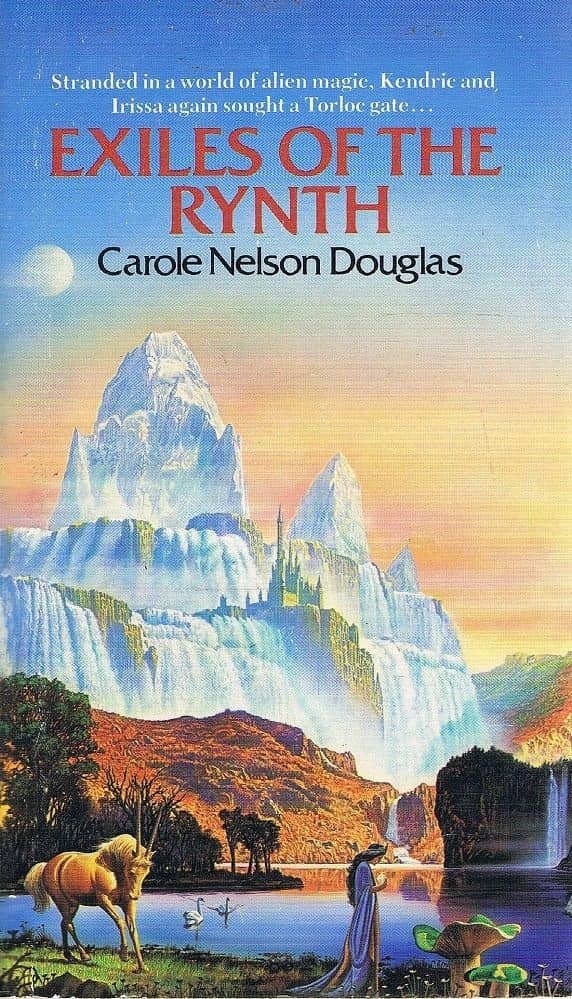
Six of Swords Corgi-small Exiles of the Rynth-small

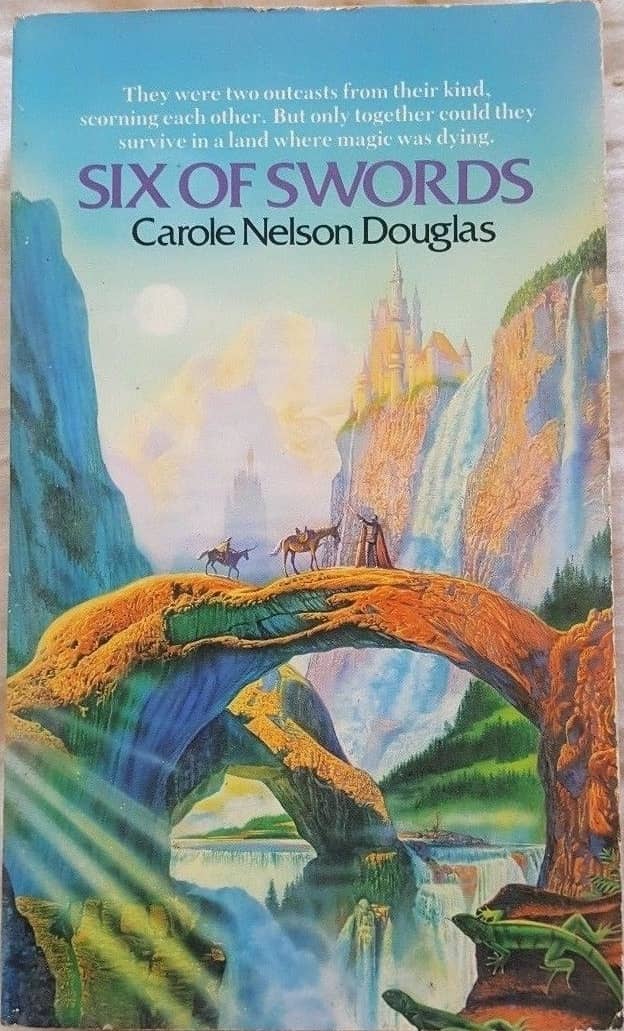
Corgi editions of Six of Swords (1985) and Exiles of the Rynth (1986); art by Steve Crisp

I started reading fantasy as a teenager during the second half of the 1980s. A friend recommended Anne McCafferey’s Pern books, readily available at the public library. Another friend whom I had recently started playing D&D with was very much taken with David Eddings’ Belgeriad and advised me to give them a bash. I have since grown out of Eddings, but at the time I thought The Belgariad was the best thing since sliced bread.

I began to mince about the fantasy and science fiction shelves in local bookshops. The main chain store bookseller of the day predominantly stocked British publishers; mainly Corgi, Grafton and Orbit. Corgi was the most accessible, being moderately cheaper than Grafton. They also had a habit of including advertisements in back pages. One came up consistently; Six of Swords by Carole Nelson Douglas. It looked interesting , and I picked it up in a clearance sale and read it sometime in the mid 1990s. I eventually discovered the sequel, Exiles of the Rynth, and a follow on series, the Sword and Circlet trilogy. I thought I would concentrate on the first two here, and post about the others in due course.

I will not go too much into the development of 1980s fantasy. Matthew David Surridge explored how the decade in many ways was a proving ground for the Big Fat Fantasy that followed in his review of Lyndon Hardy’s Master of the Five Magics series, and touched on the topic several times in his book Once Only Imagined: Collected Reviews, Vol II. What I can say is that my fantasy baptism mostly occurred in the 80s, notwithstanding my dabbling with Jane Gaskell. As such I was unencumbered with other expectations. I only got around to Robert E Howard and JRR Tolkien right at the end of the decade.

Read More Read More

From Beneath the Review Pile: We Need More New Suns

From Beneath the Review Pile: We Need More New Suns

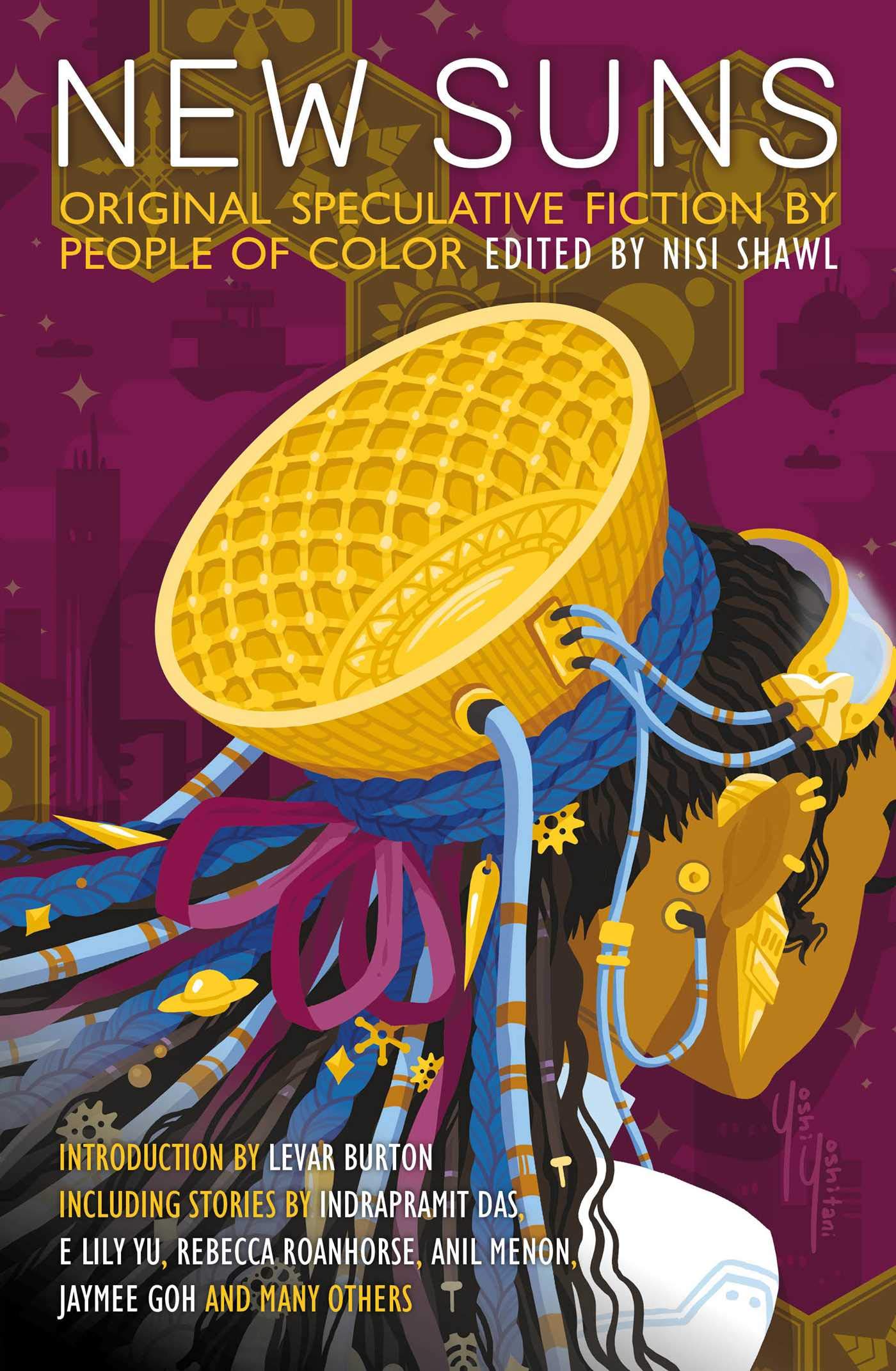
New-Suns-Original-Speculative-Fiction-by-People-of-Color-smallerHere’s a not very shocking statement: we still need to focus on diversity in sci-fi and fantasy.

My hope is that many of you will read that and think, Yeah, tell me something I don’t know. But I imagine many of you would also agree with me that it needs to be said, given how many people still openly disagree with the push to see more works published by creators from marginalized groups, whether that marginalization is based on race, age, sexual orientation, etc.

Take an anthology like New Suns: Original Speculation Fiction by People of Color. The title openly proclaims the editor and publisher’s intent: to highlight PoC authors who are doing phenomenal work in SFF, in the same vein as the Disabled People Destroy series. The outpouring of support for these anthologies is awe-inspiring, especially considering the apparent risk, I suppose, in alienating some readers – often those who don’t acknowledge the need for these anthologies, and the smart business sense in producing them.

Some people, apparently, aren’t paying attention to trends in speculative fiction, or maybe not understanding why these trends exist. Collecting and producing works by authors from diverse groups is a response not just to a need, but to a burning desire for these works. The success of Black Panther and Captain Marvel are obvious examples of this, but we see it in prose fiction, comics, video games, and more. Uncanny Magazine raised almost $60,000 for Disabled People Destroy Science Fiction on Kickstarter last year, virtually tripling their funding goal. Why? People are tired of watching or reading stories about the same kinds of characters, in settings based on the same (dare I say it) Eurocentric framework.

Not everyone – there’s still a market for a rehashing of Tolkien or Brooks or Vance, if that’s your thing – but enough people to make this sort of thing viable. And authors like Rebecca Roanhorse, Fran Wilde, Nnedi, Okorafor, Saladin Ahmed, Bogi Takács and more aren’t just generating buzz because of their identities – it’s because they’re amazing creators, producing work that’s well-written AND fresh.

Read More Read More

Future Treasures: The Last by Hanna Jameson

Future Treasures: The Last by Hanna Jameson

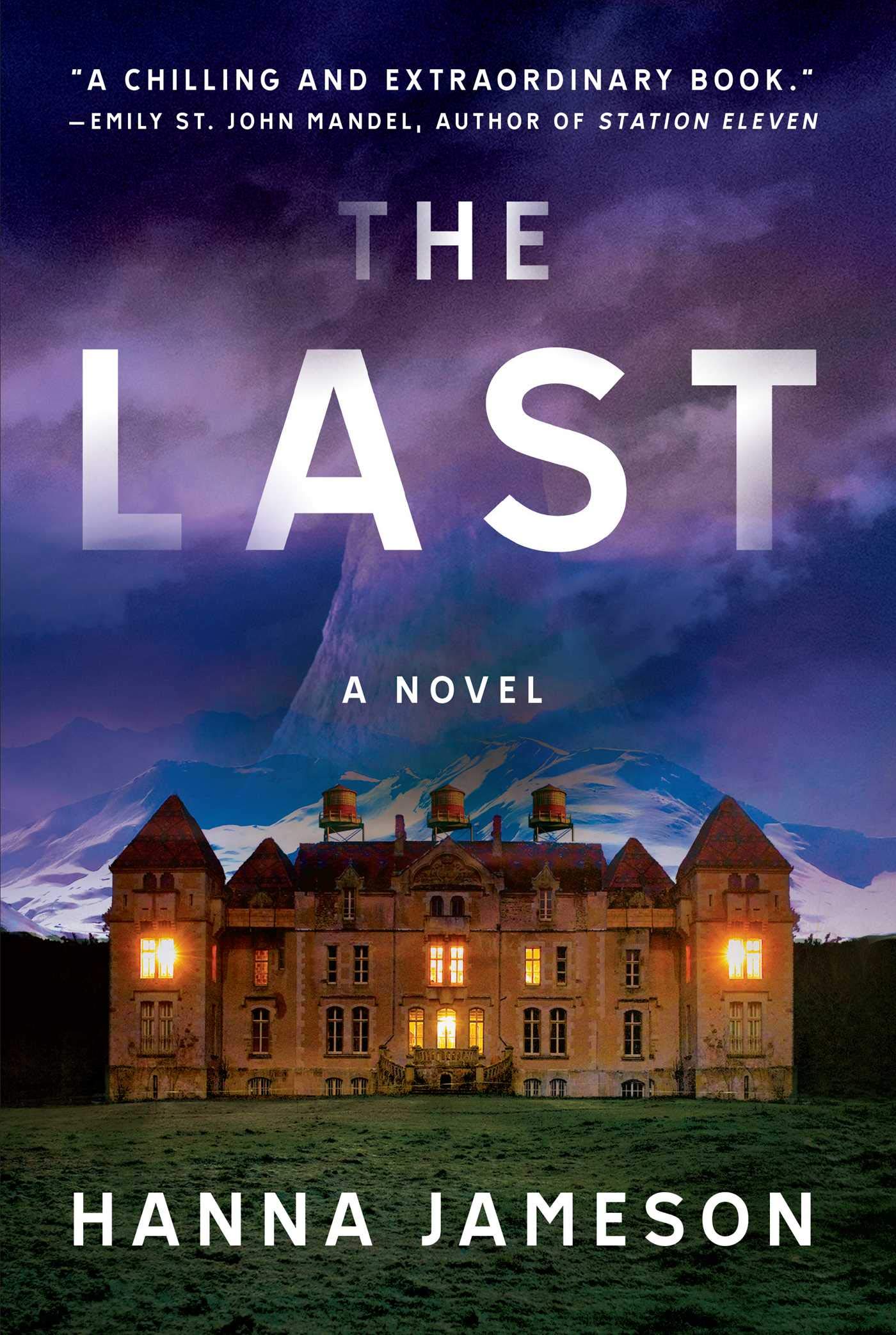
The Last Hanna Jameson-small The Last Hanna Jameson-back-small

If you keep tabs on upcoming titles like I do, you get used to the relentless hype and the breathless blurbs. After a while it takes something really special to get your attention.

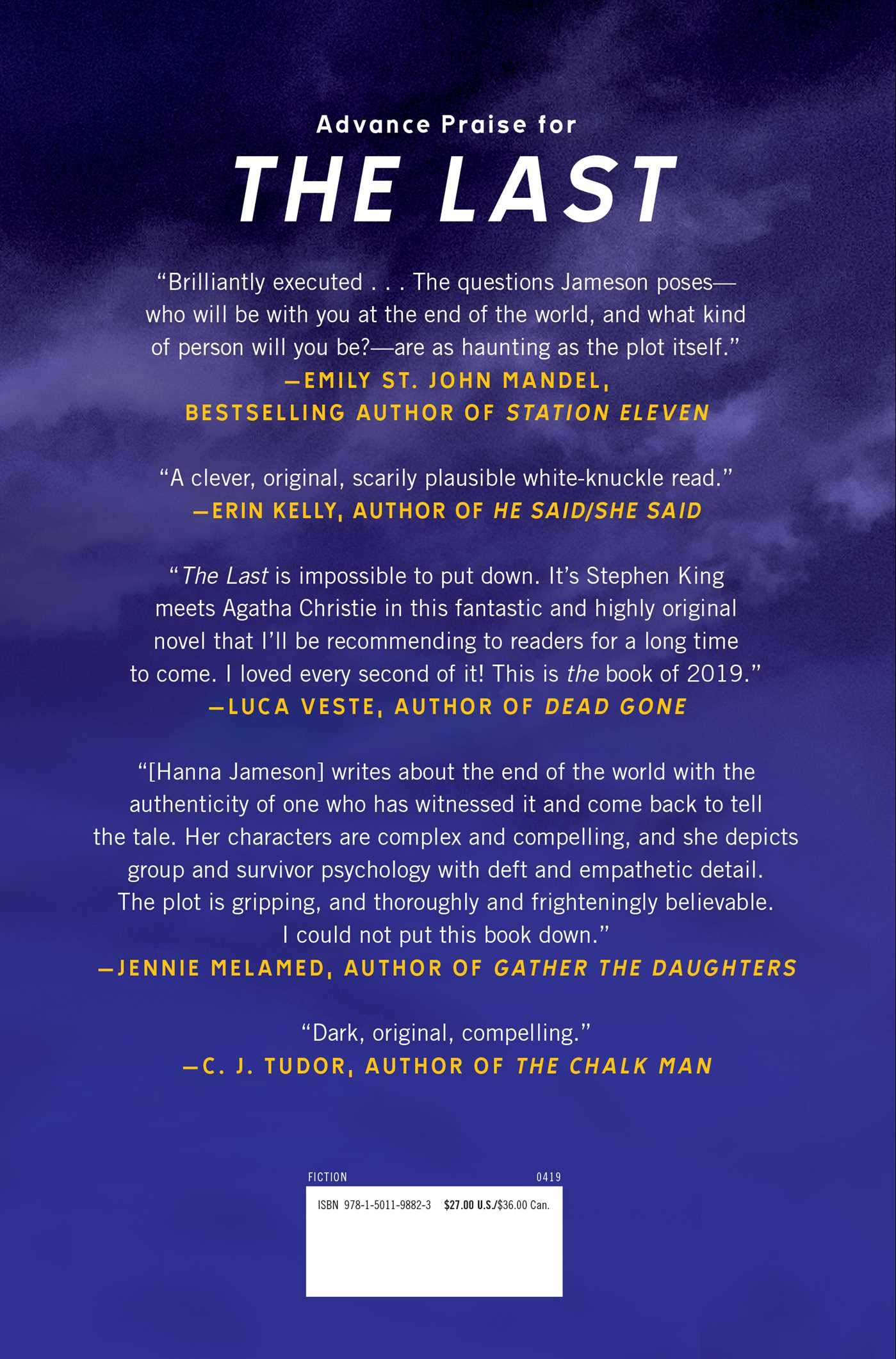
The blurbs for Hanna Jameson’s The Last, arriving in hardcover in two weeks, got my attention. Kirkus Reviews says it’s “”Reminiscent of The Shining… an eerie and unsettling tale,” and Luca Vesta (Dead Gone) says it’s “Nuclear apocalypse meets murder mystery… It’s Stephen King meets Agatha Christie. This is *the* book of 2019.” And Publishers Weekly calls it “An engrossing post-apocalyptic psychological thriller… equal parts drama and locked-room murder mystery.” Here’s the description.

Jon thought he had all the time in the world to respond to his wife’s text message: I miss you so much. I feel bad about how we left it. Love you. But as he’s waiting in the lobby of the L’Hotel Sixieme in Switzerland after an academic conference, still mulling over how to respond to his wife, he receives a string of horrifying push notifications. Washington, DC has been hit with a nuclear bomb, then New York, then London, and finally Berlin. That’s all he knows before news outlets and social media goes black—and before the clouds on the horizon turn orange.

Now, two months later, there are twenty survivors holed up at the hotel, a place already tainted by its strange history of suicides and murders. Those who can’t bear to stay commit suicide or wander off into the woods. Jon and the others try to maintain some semblance of civilization. But when the water pressure disappears, and Jon and a crew of survivors investigate the hotel’s water tanks, they are shocked to discover the body of a young girl.

As supplies dwindle and tensions rise, Jon becomes obsessed with investigating the death of the little girl as a way to cling to his own humanity. Yet the real question remains: can he afford to lose his mind in this hotel, or should he take his chances in the outside world?

The Last will be published by Atria Books on April 9, 2019. It is 352 pages, priced at $27 in hardcover and $12.99 for digital editions.

The Fortress World and the Eye of Terror: Warhammer 40K: The Cadian Novels by Justin D. Hill

The Fortress World and the Eye of Terror: Warhammer 40K: The Cadian Novels by Justin D. Hill

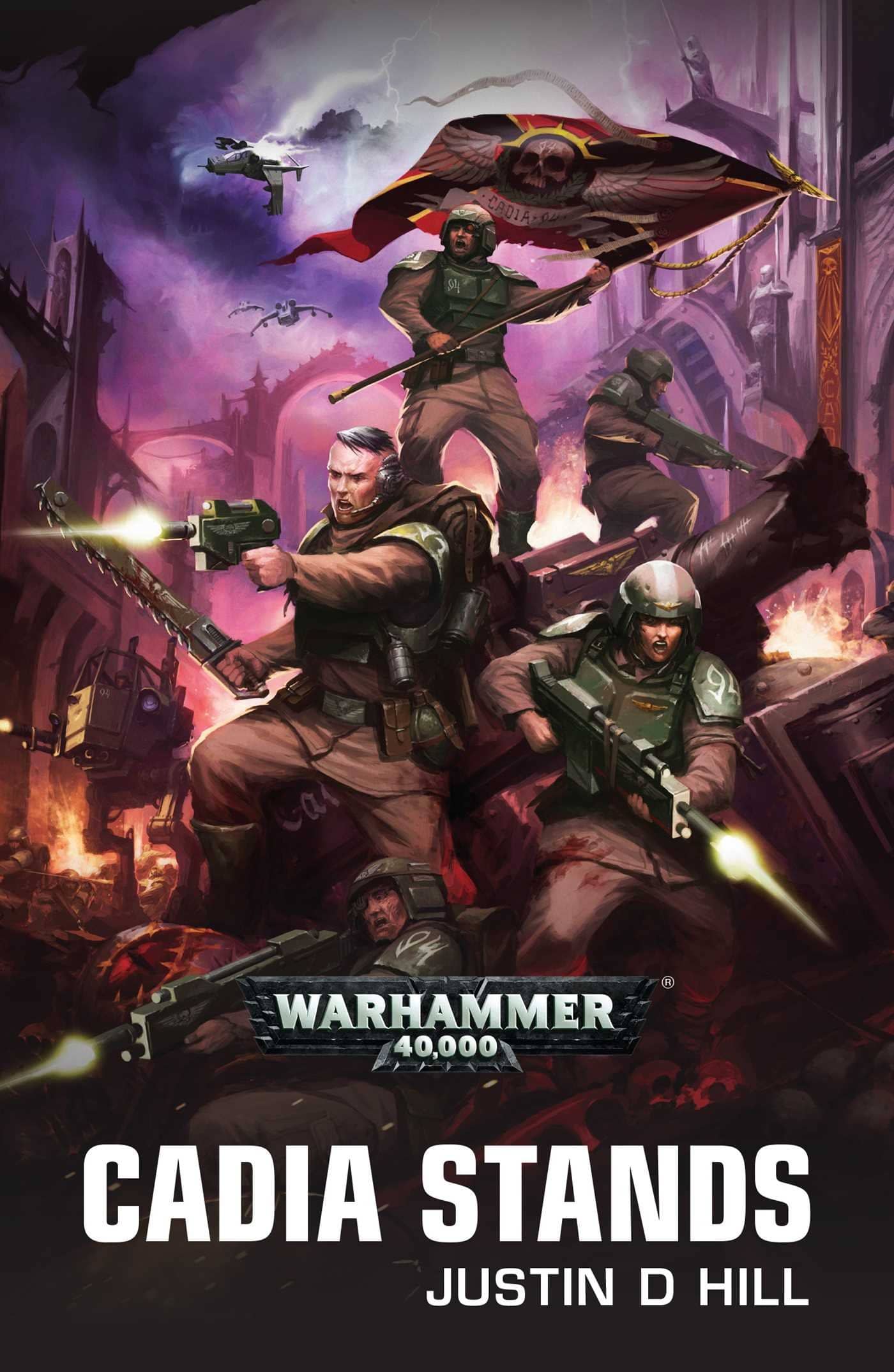
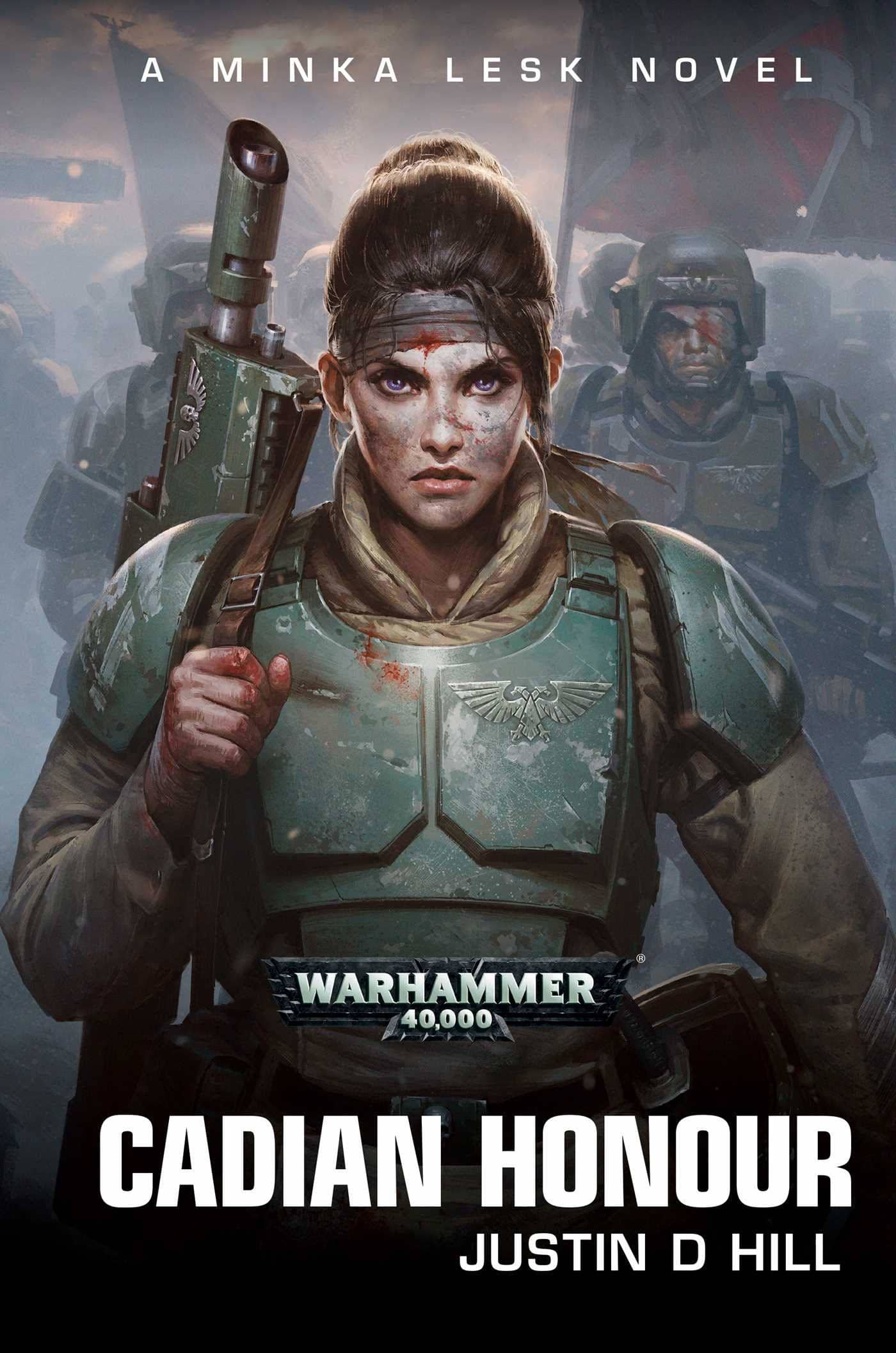
Cadia Stands-small Cadian Honour-small

When I made the 90-minute commute to Glenview every morning (and the 90-minute drive home every evening), I got addicted to Warhammer 40K audio dramas. They made the long drive bearable. When I left that job four years ago I fell out of the habit, and haven’t kept up on the unfolding drama in my favorite dark space opera. I did hear rumors of a Thirteenth Black Crusade, the unexpected return of the loyal primarch Roboute Guilliman (in Guy Haley’s Dark Imperium series), and the catastrophic fall of the fortress world of Cadia, the last line of defense against the daemonic tide spilling out of the Eye of Terror. Man, you take your eye off the ball for a minute, and everything goes to hell.

Justin D. Hill’s new Cadia series seem like the perfect place to jump back into the saga. The first novel, Cadia Stands, was published in March 2018, and the sequel Cadian Honour is scheduled for September of this year (and is already available in digital format). Here’s the description for the first volume.

The brutal war for Cadia is decided, as Lord Castellan Ursarkar Creed and the armies of the Imperium fight to halt the Thirteenth Black Crusade and prevent a calamity on a galactic scale.

Under almost constant besiegement by the daemonic hosts pouring from the Eye of Terror, Cadia stands as a bulwark against tyranny and death. Its fortresses and armies have held back the hordes of Chaos for centuries, but that grim defiance is about to reach its end. As Abaddon’s Thirteenth Black Crusade batters Cadia’s defences and the armies of the Imperium flock to reinforce this crucial world, a terrible ritual long in the making comes to fruition, and the delicate balance of this brutal war shifts… From the darkness, a hero rises to lead the beleaguered defenders, Lord Castellan Ursarkar Creed, but even with the armoured might of the Astra Militarum and the strength of the Adeptus Astartes at his side, it may not be enough to avert disaster and prevent the fall of Cadia. While Creed lives, there is hope. While there is breath in the body of a single defender, Cadia Stands… but for how much longer?

And here’s the description for Cadian Honour.

Read More Read More

That Horrid Question

That Horrid Question

INT. SMALL CONVENTION ROOM – EARLY EVENING

A young AUTHOR, new to pitching, steps cautiously into the room clutching a binder full of papers to their chest. An EDITOR for a well-regarded publisher sits at a table with an empty chair opposite. The EDITOR smiles at the AUTHOR and beckons them to the chair. So nervous they’re shaking, the AUTHOR sits down.

AUTHOR

Thanks so much for seeing me. I really appreciate it.

EDITOR

My pleasure.  So what have you got for me today.

AUTHOR

Well, it’s a [insert genre of choice].  The audience is quite adult.  I think.  I’m not sure.  The young adult/adult distinction is not something I’m all that familiar with.

EDITOR

All right.  So, what’s it about?

AUTHOR

Well, uh, it follows [character] and their team of [insert any kind of unit you like, knights? Rangers? Robot Space Marines?] and they —

EDITOR
(interrupting)

No, that’s what happens.  That’s the plot.  I want to know what the book is about.  What is the theme?

AUTHOR

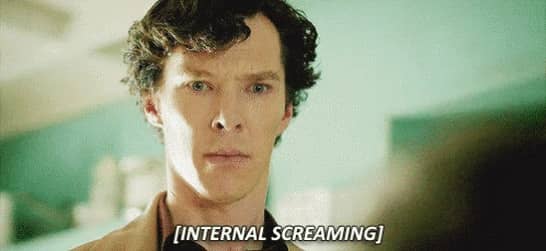
Internal Screaming

Read More Read More

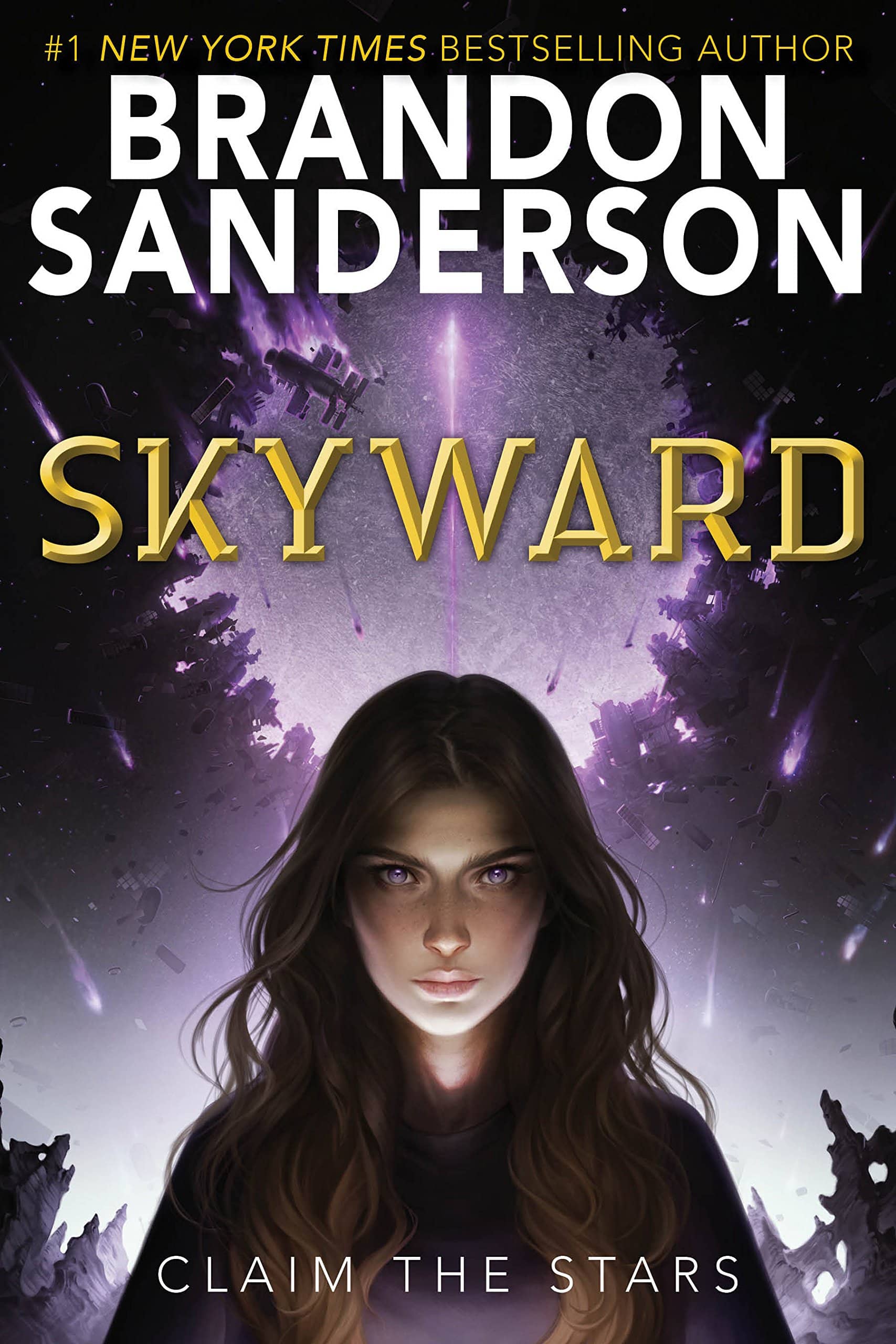
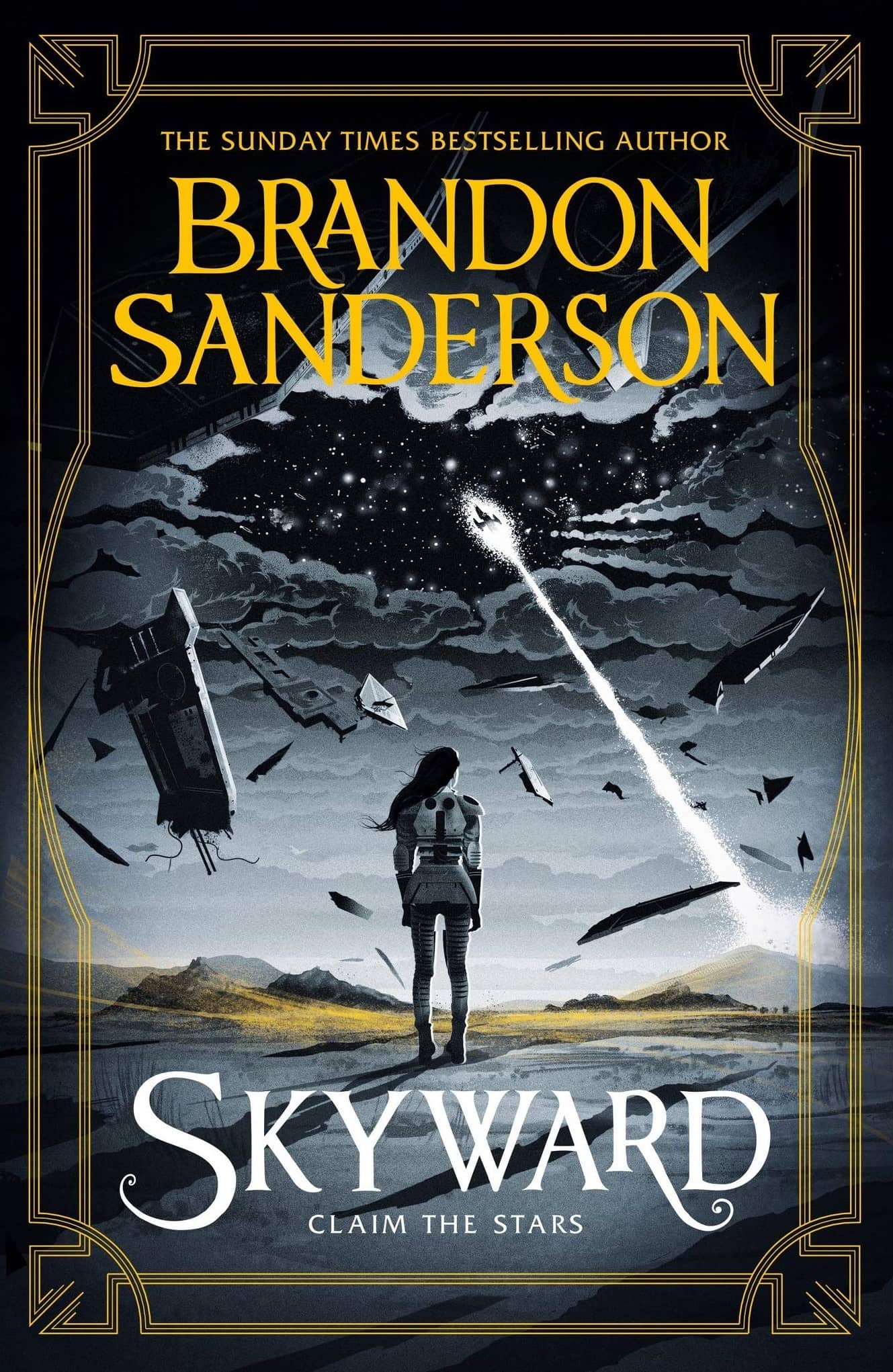
Top Gun for YA Sci Fi Buffs: Skyward by Brandon Sanderson

Top Gun for YA Sci Fi Buffs: Skyward by Brandon Sanderson

Skyward Brandon Sanderson-small Skyward Brandon Sanderson UK-small

If even one of the aliens’ bombers gets through and releases its payload, Spensa Nightshade and her family will die, along with the remnants of humanity. It’s up to her father and his fellow fighter pilots to take to the skies and drive the invaders away.

Spensa doesn’t just admire her father – she’s determined to follow in his footsteps and become a pilot herself. In her militant society, which is named Defiant after the flagship that crashed on this planet, there’s no higher calling.

Spensa lives in a cave deep underground, since the planet’s surface is dangerous. Space debris frequently falls from the sky in flaming chunks, destroying everything in its path before hitting the ground. It comes from the ruins of a prior civilization that rings the planet – massive hunks of metal and electronics that used to be shipyards and ancient fortifications.

Despite the danger, Spensa has always wanted to see the sky. When her father agrees to take her up to ground level, she leaps at the chance.

It’s a hard climb through the caves until they reach a crack from which the sky shines. Gazing up in awe, Spensa sees the layers of space junk shifting overhead like enormous ice floes.

Read More Read More