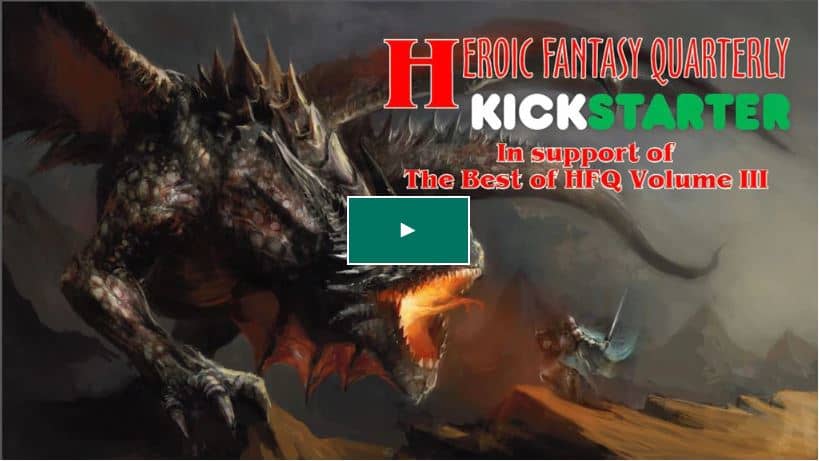
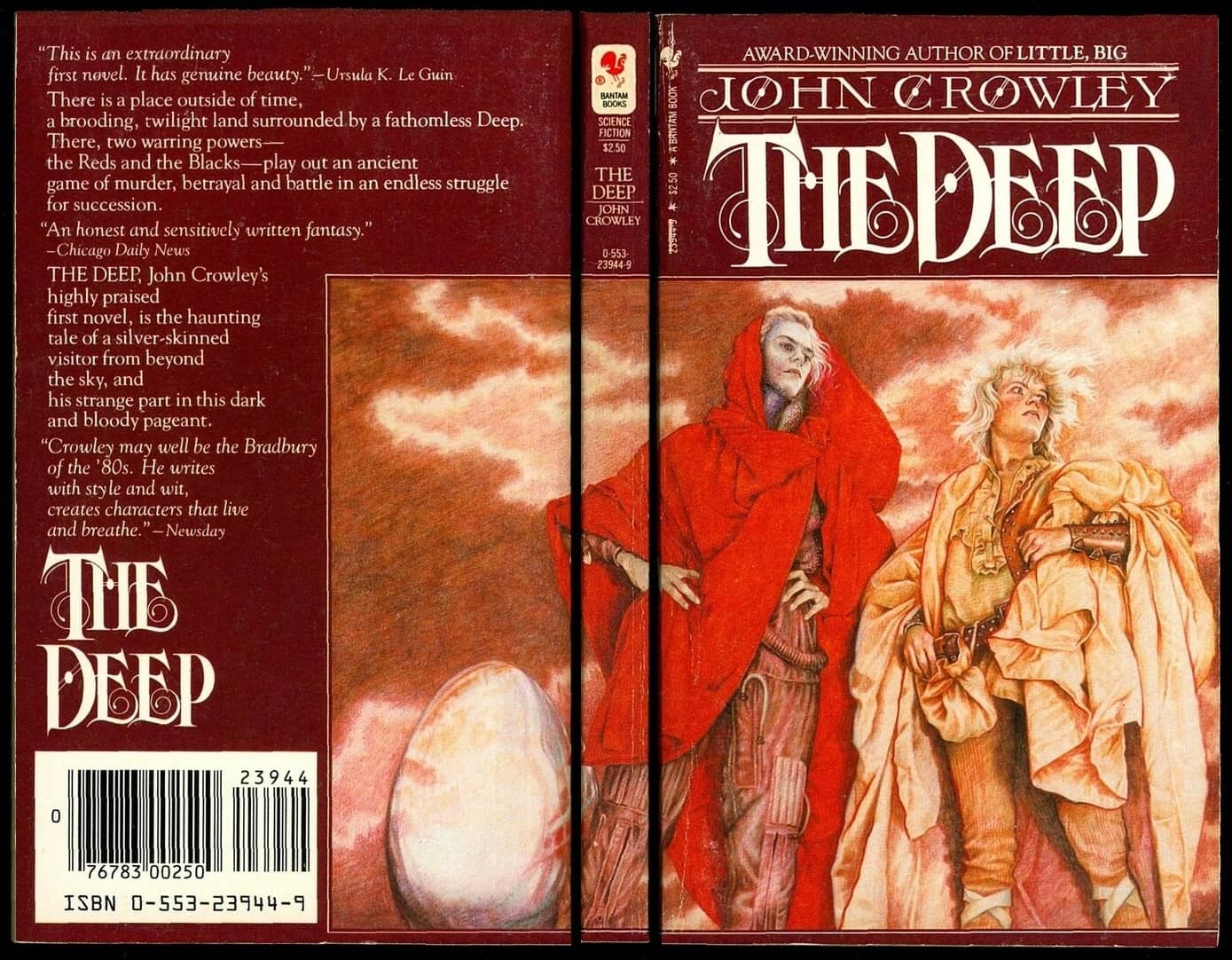
Where can you find original short stories by John Crowley, Sofia Samatar, Sarena Ulibarri, Tina Connolly, Mary Ruefle, Elizabeth Hand, Paul Park, Jim and Karen Shepard, Paul Di Filippo, Akiko Busch, Safia Elhillo, Jeffrey Ford, Kij Johnson, Kirsten Imani Kasai, Renee Simms, and others all in one place? Now this is a Kickstarter campaign worth backing — one of the rewards is a special edition of this book.
Laura Christensen is a visual artist who has developed a technique for painting on found vintage photographs. Her seamlessly altered photographs are like stills from dreams: surreal, but real-seeming. By the time she finds a photograph, its chains of personal connections have broken. Subjects are freed to become characters cast and costumed, players in other stories. As an extension of this practice, she has invited 30 award-winning authors to write stories and poems in response to her art.
THEN AGAIN: Vintage Photography Reimagined by One Artist and Thirty Writers, is the singular anthology that assembles these richly imagined stories and poems with the captivating images that inspired them.
For twenty-nine years editor Stephen Jones has been selecting the best horror stories of the year. Usually the anthology appears around October; the latest volume, Best New Horror #29, is actually a bit late, being published in February 2019 but showcasing the best of 2017.
As customary the book also includes a comprehensive overview of the books and movies that appearedduring the year, and the changes in the horror publishing world (including pertinent obituaries).
The current volume assembles twenty-one stories penned by some of the most acclaimed horror writers in the genre, addressing a variety of themes. One always wonders if the tales are really the best, and comparisons are often made with the choices of other anthologists compiling the year’s best horror stories.
I have long concluded that those are useless questions. With a few exceptions of outstanding quality, on which anyone can agree, at the end of the daypersonal taste is what really counts. Therefore, following that same way of thinking, I’ll mention here the stories that I found the best in this particular anthology.
I met author Cerece Rennie Murphy at an East Coast science fiction and fantasy convention called Boskone a few years ago. She was sitting at table, selling books, and shouted out to me as I passed that I looked beautiful.
Naturally, I paid attention.
As soon as I turned and looked at her, I realized she was beautiful too — beaming out with right good will, all bright colors and a megawatt smile. She was friendly, and extremely interesting, and right there on the spot, my husband and I bought her book, The Order of the Seers, which I promptly went home to read.
Since then, Cerece and I have become friends — on social media, yes, but in real life too — penpals when our schedules permit, pizza-buddies when she’s in town. I am so pleased and excited to bring all you Black Gate readers this interview.
You know what the world needs today? It needs more Leigh Brackett.
Brackett has had her 21st Century champions, including Eric Mona at Paizo Publishing, who reprinted five Brackett novels as part of his superb Planet Stories line, and Stephen Haffner of Haffner Press, who’s produced four gorgeous archival quality hardcovers collecting her short fiction. But it’s been over a decade since those books appeared, an eternity in publishing terms, and virtually all of them are now out of print. So I was delighted to hear that Cirsova Publishing, the masterminds behind Cirsova magazine, are reprinting some of Brackett’s most famous work in new illustrated editions. Here’s an excerpt from the press release.
Cirsova Publishing has teamed up with StarTwo to create an all-new, fully illustrated 70th Anniversary Edition of Leigh Brackett’s original Eric John Stark Trilogy. Cirsova Publishing aims to bring the action, adventure and romance of Leigh Brackett to a new generation of readers.
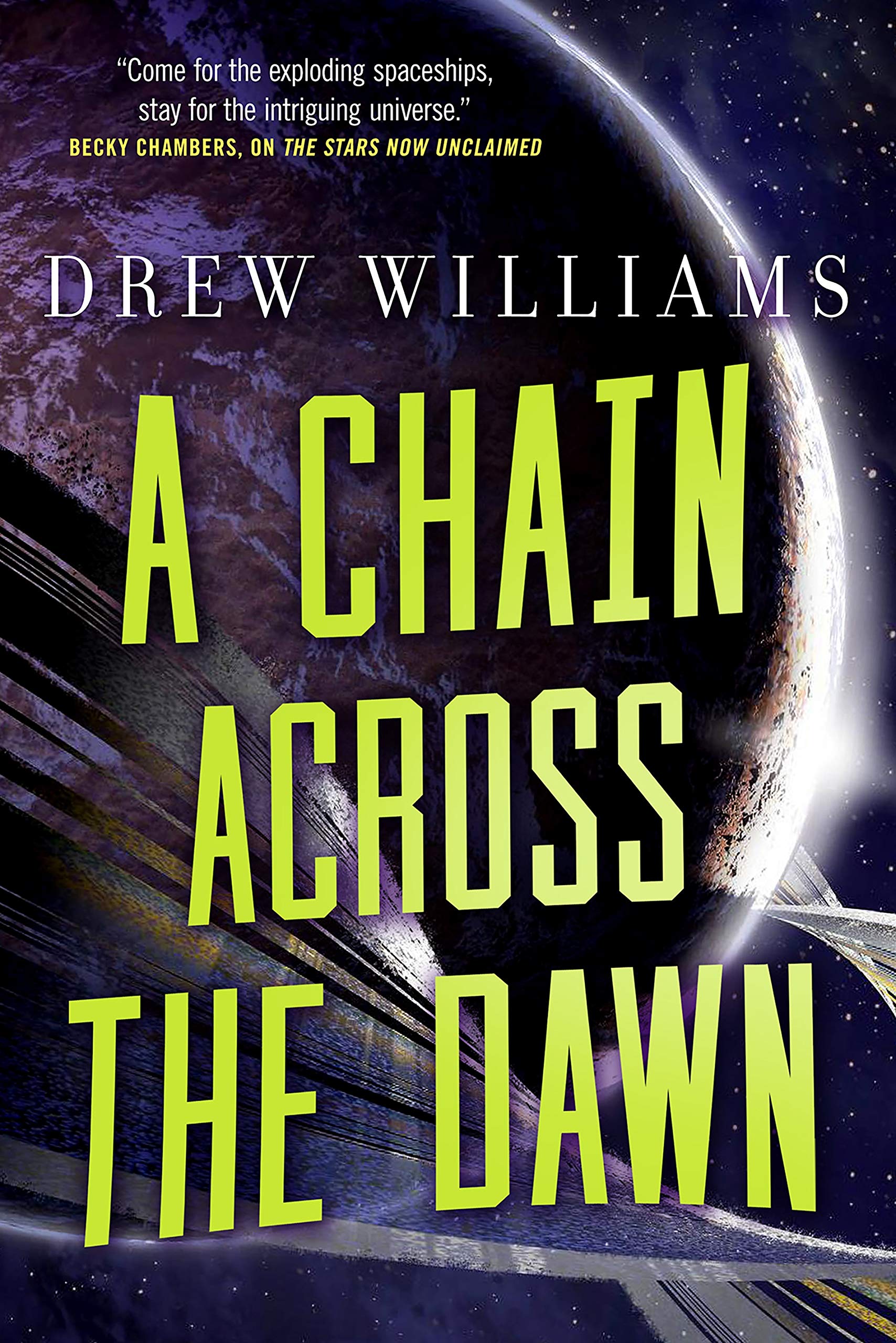
First published in the Summer of 1949, Queen of the Martian Catacombs introduced the world to Eric John Stark, the black mercenary swordsman. Stark’s adventures continued on Venus in 1949’s The Enchantress of Venus, and the swordsman returned to the Red Planet in 1951’s Black Amazon of Mars. While Brackett would revisit the character in 1970s with the Skaith trilogy, the original novellas are significant as one of the last iconic Sword & Planet cycles of the pulp era.
The Cirsova covers are homages to the original Planet Stories pulp covers (see below), though I’m pleased to see that (like the Paizo editions before them), they correctly depict Eric John Stark as black skinned.
Many BG readers are unaware that Elizabeth is also a talented and successful fiction writer. Her first novel Silent Meridian, which James A. Moore (Seven Forges, Tides of War) called “fun, entertaining and delightfully different… a rollercoaster ride with a side of the sublime,” was published to wide acclaim in 2016. This summer A Pocketful of Lodestones, the second volume in The Time Traveler Professor, arrives from Atomic Alchemist Productions, and expectations are high among Crowens’ many fans.
The Time Traveler Professor is a game-changer of a series. Jonathan Maberry calls it “a delightful genre-twisting romp through time and possibilities,” and A Pocketful of Lodestones significantly ups the ante. This installment is fast-paced and exciting, and jumps into the action immediately. It introduces ghosts, a series of supernatural murders, and a strange and fascinating form of magic. Crowens expertly juggles a complex and engaging plot involving Sir Arthur Conan Doyle, the outbreak of World World I, an enigmatic time traveler, and the mysterious red book that tantalized readers in the first volume, The Thief of Tales.
Over at Splice Today, Matthew Surridge reviews a book a novel I overlooked back in January, but I wish I hadn’t: Golden State by Ben Winters. Matthew says it’s “in the vein of Philip K. Dick mixing detective stories and science-fiction dystopias. It’s a story about truth, the pursuit of truth, and whether truth is knowable.” Here’s the part of his review that grabbed me.
I take it on faith that California exists. Various sources I trust tell me it’s a real place, despite its presence in movies, and I believe most of those sources even though I’ve never been to the so-called Golden State. Much of life is like that: one patches together an idea of the world based on a sense of what information can be trusted and what can’t.
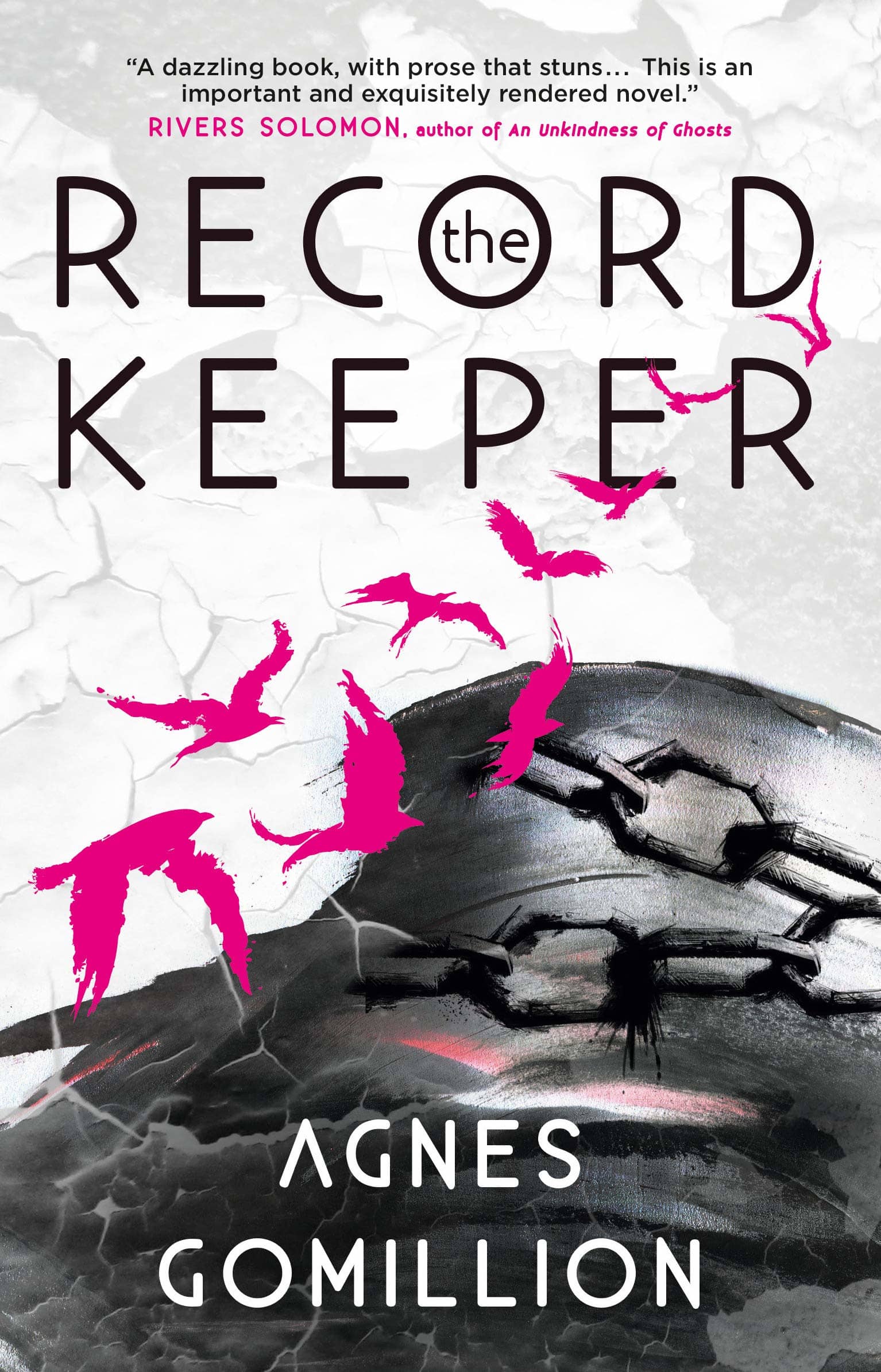
Ben H. Winters’ novel Golden State imagines a world in which that’s no longer the case, or at least imagines a strange version of California where the residents believe in the knowability of what is Objectively So. Cameras record everything that happens, everywhere. Citizens keep a record of their daily lives in Day Books, meticulously filing every note and receipt. Some keep a record of their dreams and other nocturnal activities in a Night Book. Fiction as we know it is unheard of. Lying is utterly forbidden by law on pain of exile to the desert beyond the State’s borders. And a force of secret police, Speculators, keep residents in line with a psychic ability to detect falsehood in their vicinity. Or, at least, what they believe is a psychic ability…
Golden State evokes the great science-fictional dystopias of the 20th century… [it] is a meditation on truth wrapped up in a science-fictional detective story.
Ben Winters is also the author of The Last Policeman trilogy, which we covered back in 2013.
Read Matthew’s complete review of Golden State at Splice Today.
Golden State was published by Mulholland Books on January 22, 2019. It is 336 pages, priced at $28 in hardcover and $14.99 in digital formats. See all our recent coverage of the best new fantasy and science fiction here.
The Golden Age of Science Fiction: Titan, by John Varley
The Locus Awards were established in 1972 and presented by Locus Magazine based on a poll of its readers. In more recent years, the poll has been opened up to on-line readers, although subscribers’ votes have been given extra weight. At various times the award has been presented at Westercon and, more recently, at a weekend sponsored by Locus at the Science Fiction Museum (now MoPop) in Seattle. The Best Book Publisher Award dates back to 1972, although in 1975 and 1976 the Publisher Award was split into paperback and hardcover categories. Ballantine Books won the award each year from its inception through 1977 (winning the paperback for the two experimental years with the Science Fiction Book Club winning the hardcover award). In 1978, when Del Rey was established as an imprint of Ballantine, Ballantine/Del Rey began winning the award. The award was not presented in 1979 for works published in 1978, but when it was reinstituted in 1980, Ballantine/Del Rey picked up its winning streak. In 1980. The Locus Poll received 854 responses.
Titan belongs to the subgenre of science fiction that Roz Kaveny described as “Big Dumb Objects,” or BDO, in her 1981 essay “Science Fiction in the 1970s.” As such, the novel is reminiscent of some of the earlier examples of that genre, such as Larry Niven’s Ringworld or Arthur C. Clarke’s Rendezvous with Rama. As with those earlier novels, a group of explorers, in this case human astronauts, find themselves exploring a massive artifact in space, often traveling into the interior of the world, as if they were space-faring European explorers delving into nineteenth century Africa.
In Titan, the BDO is referred to initially as Themis, and later as Gaea. The explorers are a band of human astronauts assigned to the Ringmaster: Captain Cirocco “Rocky” Jones and her group of six, split evenly between men and women. On a trip to explore Saturn’s moons and rings, they discover a strange object and immediately change their mission profile to explore it. As they close in on the object, their ship is grasped and pulled in. The crew awakens, widely separated with various levels of amnesia. Although Rocky manages to reconnect with four members of her crew, two of them, August, whose twin sister April is missing, and Calvin, who has managed to acquire a magical understanding of the world and creatures in it, go off to make their own way while Rocky, Bill, and Gaby begin their own exploration with only the knowledge imparted to them by the now absent Calvin to guide them.
In his enthusiastic review of Nathan Ballingrud’s first collection, James McGlothlin wrote:
Ballingrud’s fiction is an amalgamation of some of the best elements of current dark fiction. The stories of North American Lake Monsters are poetic and literary (think Kelly Link or Caitlin Kiernan), forbidding and nihilistic (think John Langan), very real and raw (think Nic Pizzolatto), while also scaring the bejesus out of you (think Laird Barron).
Ballingrud’s 2015 novella The Visible Filth was filmed as Wounds, directed by Babak Anvari and originally scheduled for release March 29; it does not currently have a release date. Next month Saga Press is releasing a brand new hardcover collection of Ballingrud’s horror stories, Wounds: Six Stories from the Border of Hell, which includes The Visible Filth, the acclaimed “Skullpocket” (which James called “an absolutely amazing story. It offers humor, sadness, and sheer creepiness throughout” in his review of Nightmare Carnival, 2014), a brand new novella, and three other stories. Here’s the description.
A gripping collection of six stories of terror — including the novella The Visible Filth, the basis for the upcoming major motion picture — by Shirley Jackson Award–winning author Nathan Ballingrud, hailed as a major new voice by Jeff VanderMeer, Paul Tremblay, and Carmen Maria Machado — “one of the most heavyweight horror authors out there” (The Verge).
In his first collection, North American Lake Monsters, Nathan Ballingrud carved out a distinctly singular place in American fiction with his “piercing and merciless” (Toronto Globe and Mail) portrayals of the monsters that haunt our lives — both real and imagined: “What Nathan Ballingrud does in North American Lake Monsters is to reinvigorate the horror tradition” (Los Angeles Review of Books).
Now, in Wounds, Ballingrud follows up with an even more confounding, strange, and utterly entrancing collection of six stories, including one new novella. From the eerie dread descending upon a New Orleans dive bartender after a cell phone is left behind in a rollicking bar fight in The Visible Filth to the search for the map of hell in “The Butcher’s Table,” Ballingrud’s beautifully crafted stories are riveting in their quietly terrifying depictions of the murky line between the known and the unknown.
Wounds: Six Stories from the Border of Hell will be released by Saga Press on April 9. It is 275 pages, priced at $26.99 in hardcover, $15.99 in trade paperback, and $7.99 in digital formats. See all our recent coverage of the best in upcoming fantasy here.
The Golden Age of Science Fiction: The 1973 Locus Award for Best Original Anthology: Again, Dangerous Visions, edited by Harlan Ellison (Also, a 1972 Special Award for Excellence in Anthologizing)
Steven Silver has been doing a series covering the award winners from his age 12 year, and Steven has credited me for (indirectly) suggesting this, when I quoted Peter Graham’s statement “The Golden Age of Science Fiction” is 12, in the “comment section” to the entry on 1973 in Jo Walton’s wonderful book An Informal History of the Hugos. You see, I was 12 in 1972, so the awards for 1973 were the awards for my personal Golden Age. And Steven suggested that much as he is covering awards for 1980, I might cover awards for 1973 here in Black Gate.
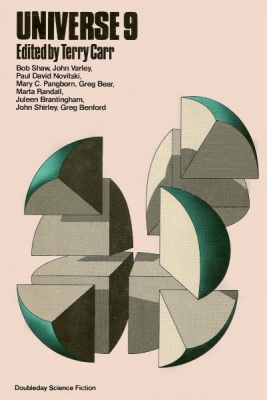
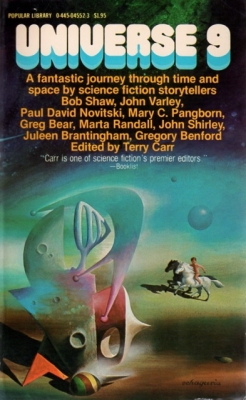
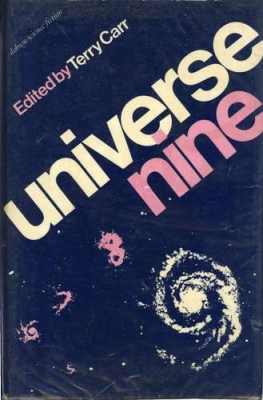
1973 was the second year of the Locus “Original Anthology” award – in 1971, the first year of the Locus Awards, there was an award for Best Anthology/Collection (won by Robert Silverberg for The Science Fiction Hall of Fame Volume I), and in 1972 original anthologies got a separate category (won that year by Terry Carr’s Universe 1.) By 1972 the original anthology boom of the 1970s, fueled by Roger Elwood, was beginning to spike, and there were a lot of candidates, including Carr’s Universe 2, Silverberg’s New Dimensions II, two issues (10 and 11) of Damon Knight’s Orbit, entries from Robert Hoskins’ Infinity series, Harry Harrison’s Nova, Ted Carnell’s New Writings in SF, Michael Moorcock’s New Worlds Quarterly, and, indeed, Roger Elwood, with And Walk Now Gently Through the Fire. And many more. But I don’t think there was any doubt which anthology would win, for this was the year of Harlan Ellison’s Again, Dangerous Visions, the follow-on to the spectacularly successful 1967 book Dangerous Visions. (I should add that Ellison was also awarded a Worldcon Special Committee Award for “Excellence in Anthologizing” for this book, but that was, curiously, at the Worldcon the previous year, 1972, when A,DV had just appeared).)
I know it’s nowhere near Halloween — what Goth Chick joyously calls “The Season” — but that doesn’t mean I don’t delight in a brand new ghost story anthology.
Master anthologists Lisa Morton and Leslie S. Klinger deliver a terrific new volume of neglected spooky tales from Pegasus Books: Ghost Stories: Classic Tales of Horror and Suspense. It arrives in a handsome hardcover edition next week. Here’s the description.
A masterful collection of ghost stories that have been overlooked by contemporary readers ― including tales by celebrated authors such as Charles Dickens, Sir Walter Scott, Mark Twain, and Edith Wharton ― presented with insightful annotations by acclaimed horror anthologists Leslie S. Klinger and Lisa Morton.
The ghost story has long been a staple of world literature, but many of the genre’s greatest tales have been forgotten, overshadowed in many cases by their authors’ bestselling work in other genres. In this spine-tingling anthology, little known stories from literary titans like Charles Dickens and Edith Wharton are collected alongside overlooked works from masters of horror fiction like Edgar Allan Poe and M. R. James.
Acclaimed anthologists Leslie S. Klinger (The New Annotated Sherlock Holmes) and Lisa Morton (Ghosts: A Haunted History) set these stories in historical context and trace the literary significance of ghosts in fiction over almost two hundred years ― from a traditional English ballad first printed in 1724 through the Christmas-themed ghost stories of the Victorian era and up to the science fiction–tinged tales of the early twentieth century.
In bringing these masterful tales back from the dead, Ghost Stories will enlighten and frighten both longtime fans and new readers of the genre.
Including stories by: Ambrose Bierce, Wilkie Collins, Charles Dickens, Olivia Howard Dunbar, Nathaniel Hawthorne, Henry James, M. R. James, Arthur Machen, Georgia Wood Pangborn, Mrs. J. H. Riddell, Elizabeth Stuart Phelps, Edgar Allan Poe, Sir Walter Scott, Frank Stockton, Mark Twain, and Edith Wharton.
Ghost Stories has an impressive list of contents. I tried to find a copy of the Table of Contents, but all I found was this weird Google widget that allows you to browse the first 40 pages of the book (including the TOC). Here it is.