Browsed by
Category: Books

Life, Death, and Different Kinds of Men: Algis Budrys’ Rogue Moon
Life, Death, and Different Kinds of Men: Algis Budrys’ Rogue Moon

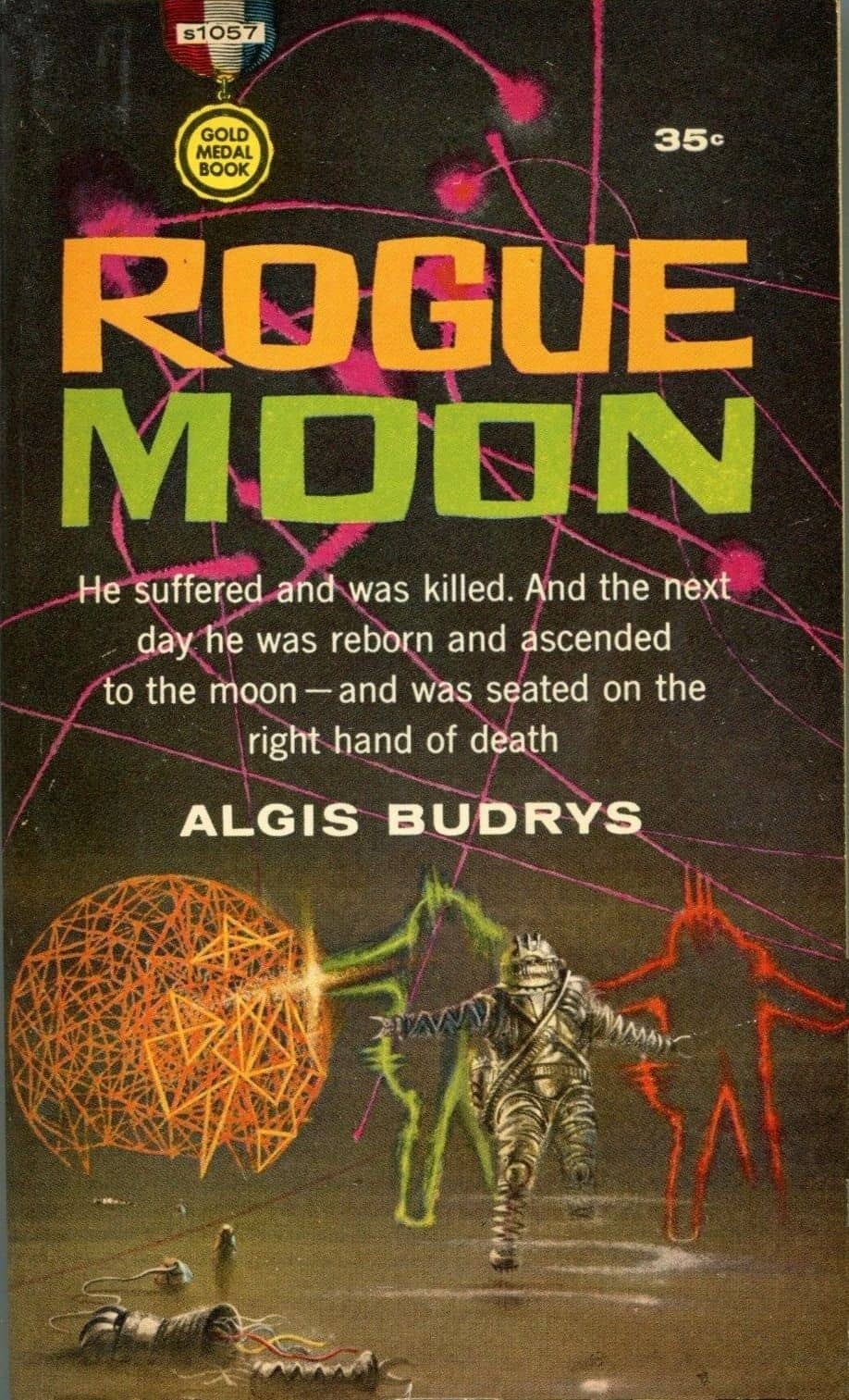
Rogue Moon Gold Medal-small Rogue Moon Gold Medal-back-small

Rogue Moon by Algis Budrys; First Edition: Fawcett Gold Medal, 1960.
Cover art Richard Powers. (Click to enlarge)

Rogue Moon
by Algis Budrys
Fawcett Gold Medal (176 pages, $0.35 paperback, 1960)
Cover art Richard Powers

Algis Budry’s 1960 novel Rogue Moon is an unusual book. It’s relatively short, even for SF novels of its era. It’s heavily character focused. And while it deals with a fascinating mystery concerning an alien artifact, on the Moon, it’s also about the bureaucracy behind the scientists and engineers, and as much about how different kinds of men react differently to the challenges of life and the inevitability of death. The story also features two women, who use analogous means to get what they want.

There are two central science fictional premises. First, humans deal with a kind of alien strangeness that cannot be comprehended, and which in this case is usually deadly. Second is the consideration of the implications of a matter transmission device, an idea treated casually in most SF (especially in Star Trek), but that raises profound concerns about matters of the “soul” or, setting that notion aside, the consequences of simple duplication. (James Blish, to his credit as transcriber of Star Trek episodes, took on this question in his one original Trek novel, Spock Must Die! (1970).)
…

Read More Read More

Stellar Empires and Space Pirates: Blackwood & Virtue by Bennett R. Coles

Stellar Empires and Space Pirates: Blackwood & Virtue by Bennett R. Coles

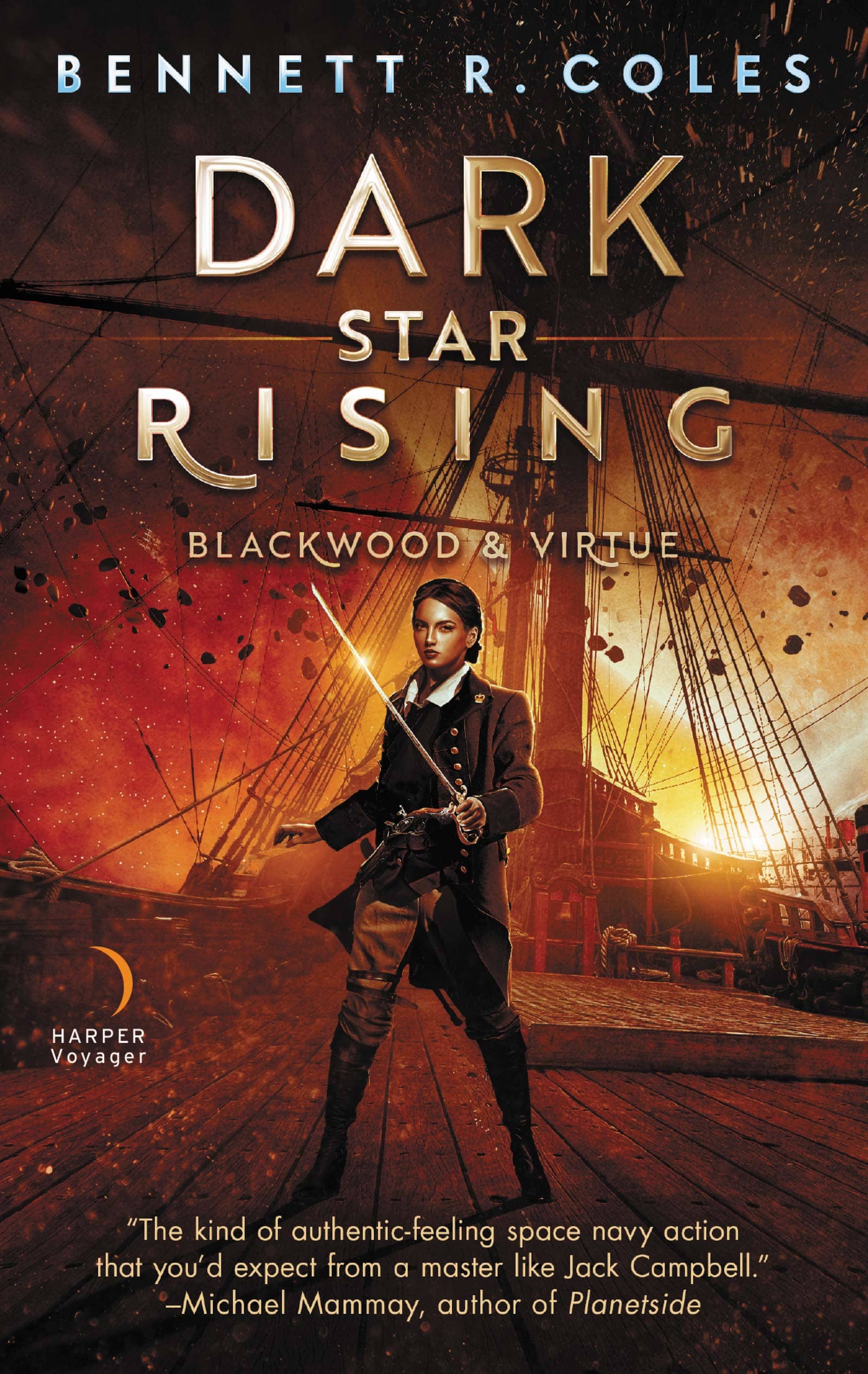
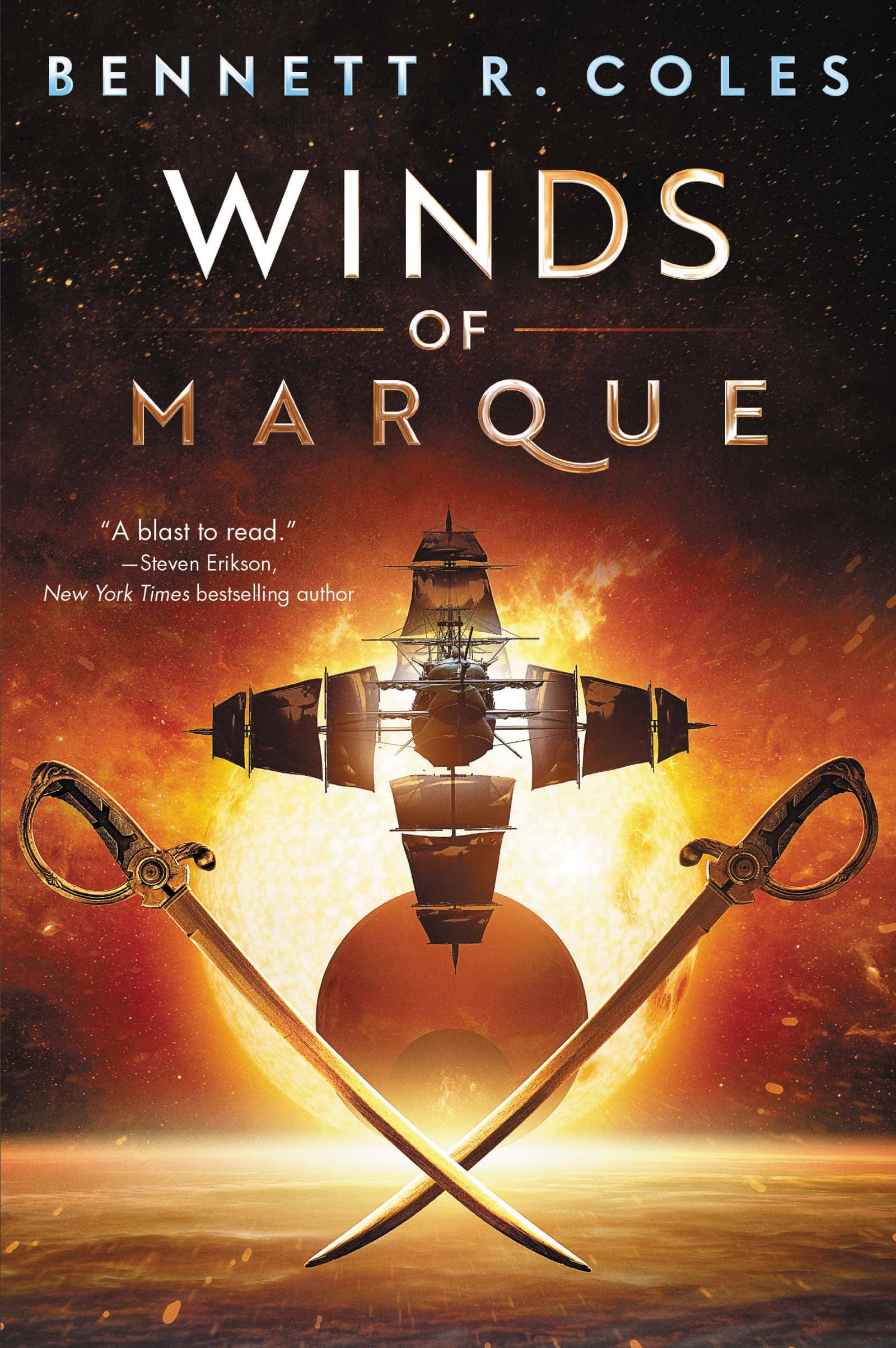
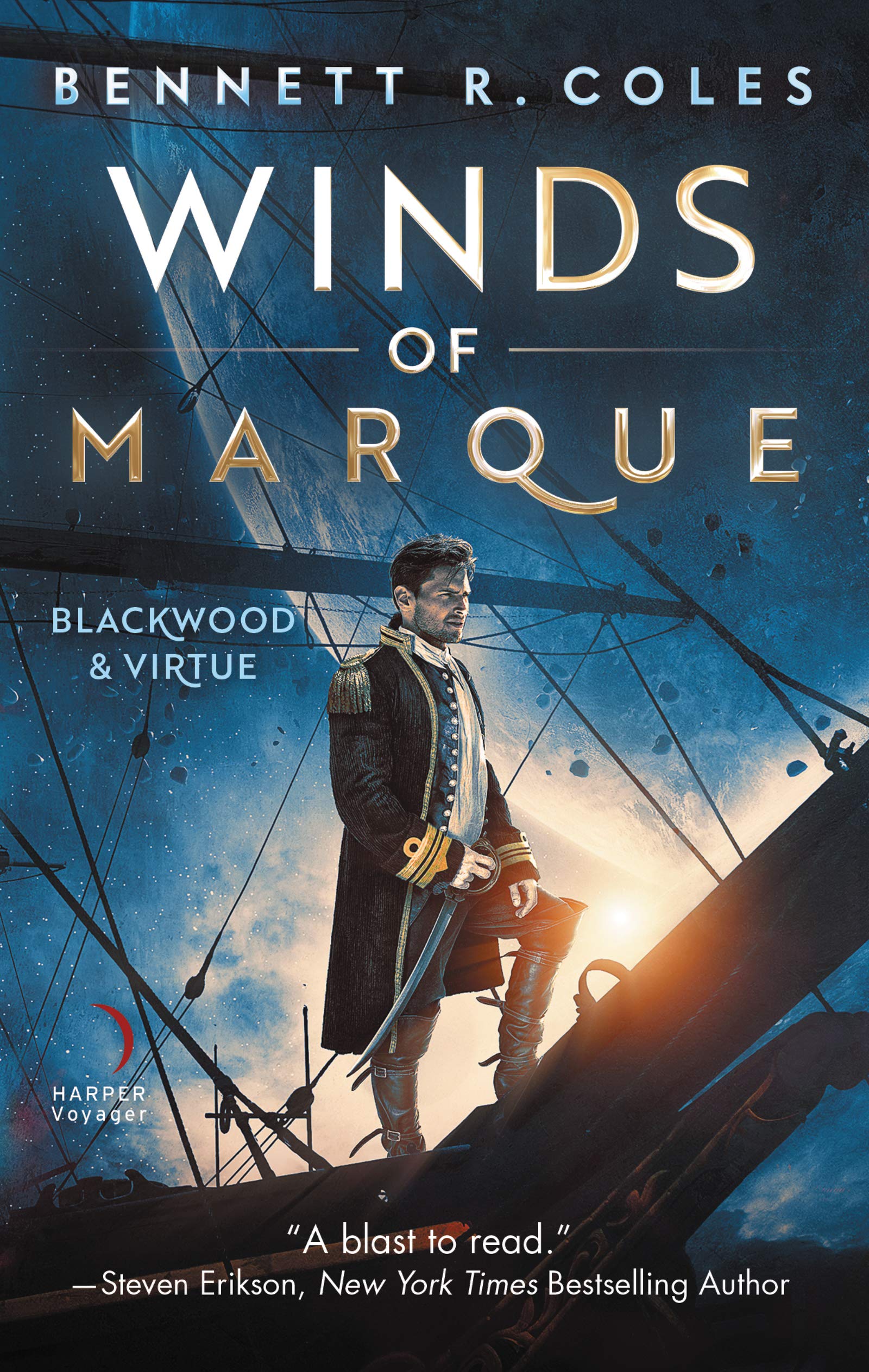
Winds-of-Marque-smaller Winds of Marque Blackwood & Virtue-small Dark Star Rising Blackwood & Virtue-small

Winds of Marque 2019 first edition (left, cover by Damonza) and 2020 re-release (middle, artist uncredited),
and the sequel Dark Star Rising (2020, uncredited). Published by Harper Voyager

Winds of Marque, the first volume in Bennett R. Coles’ Blackwood & Virtue space fantasy series, got my attention last year. Maybe it was the dynamite cover by Damonza, with the gorgeous orbital imagery — the four-masted deep space schooner and crossed swords — but I don’t know. I think I just have a soft spot for space pirate tales.

The book got fine notices. Publishers Weekly called it a “mix of retro and future naval adventures… Science fiction fans of the Hornblower or Aubrey/Maturin sailing sagas will likely thrill,” and Kirkus raved:

With solar sails hoisted and war with the Sectoids imminent, Imperial Navy Subcmdr. Liam Blackwood, enigmatic quartermaster Amelia Virtue, and the crew of the HMSS Daring must stop space pirates from disrupting human supply lines in the outer sectors in the first book in a new series…. the jaunty pace is unwavering and enjoyable… Traditional science fiction lovers may get distracted looking for more space tech, but lovers of classic high-seas adventures and those who enjoy genre-bending SF will find this swashbuckling space adventure a worthy read.

But a funny thing happened before the arrival of the second volume. Harper Voyager jettisoned the original cover for the June mass market reissue of Winds of Marque, replacing it with a much more staid portrait of second-in-command Liam Blackwood, looking pensive and square-jawed on deck. Dark Star Rising, when it arrived in September, featured a matching rendition of plucky quartermaster Amelia Virtue (the second half of “Blackwood & Virtue”) in an action pose. Now the books look a lot more like seafaring romances, and not space opera adventures.

Well, perhaps that’s the intention. I’m still deciding if I’ll pick up the second volume. Let me know what you think in the comments.

Zig Zag Claybourne’s Exclusive Interview with A Sinister Quartet Authors

Zig Zag Claybourne’s Exclusive Interview with A Sinister Quartet Authors

Screen Shot 2020-10-11 at 3.40.28 PMAh, Horror in the time of Covid! It seems almost superfluous, like a feather boa on an ostrich.

However, we the authors of A Sinister Quartet (Mythic Delirium 2020), have pranced fancily forward on that ostrich! Ostriches piled on ostriches! Feather boas galore! Which feather boas, I might add, sport an unnerving number of teeth and eyeballs.

(Editor and author Mike Allen likes to say of our book: “It’s the fun horror, the kind you consume for imaginative shocks and chills, not the kind that weighs on you like the stones that killed Giles Corey in The Crucible as you helplessly doomscroll through social media.”)

In the spirit of fun then, we approached the rollickingly magnificent Zig Zag Claybourne, who probably has the most fun-on-page of any writer I know–and I live with Carlos Hernandez! (Okay, I confess; it’s a toss-up).

Zig Zag, who’d already read A Sinister Quartet and given it an enthusiastic and incisive review, when asked if he might interview us for Black Gate, generously agreed! His questions were every bit as nuanced, as delicious, as sharp-edged, as playful, as hopeful as his own prose. And so, without any more ado…

ZIG ZAG CLAYBOURNE: When I finished the Advance Readers’ copy of A Sinister Quartet, my thoughts ran this way:

There’s a theme in this book, likely unintended, grown organically out of the times, of not giving up, regardless of fatigue, pain, unfairness or a sense that you are small and meaner forces are grotesquely big.

…

Read More Read More

Halloween Horror E-Book Sale at Mythic Delirium Books

Halloween Horror E-Book Sale at Mythic Delirium Books

Mythic Delirium Halloween Horror Sale

Graphic by Brett Massé, brettmasseworks.com

Halloween Horror Sale!

 
My Mythic Delirium Books micropress and I went all in on horror for 2020, and I want to emphasize that it’s the fun horror, the kind you consume for imaginative shocks and chills, not the kind that weighs on you like the stones that killed Giles Corey in The Crucible as you helplessly doomscroll through social media.

There’s lots going on this October, to say the least, but October is the month to celebrate specters, haints and Elder Things, and we at Mythic Delirium are determined to do our part. That’s why we’ve dropped the price of our three spookiest e-books down to 99 cents. And anyone who follows the directions can get a fourth e-book free. (More about how that works below.)

Let me tell you a little bit about each book.

…

Read More Read More

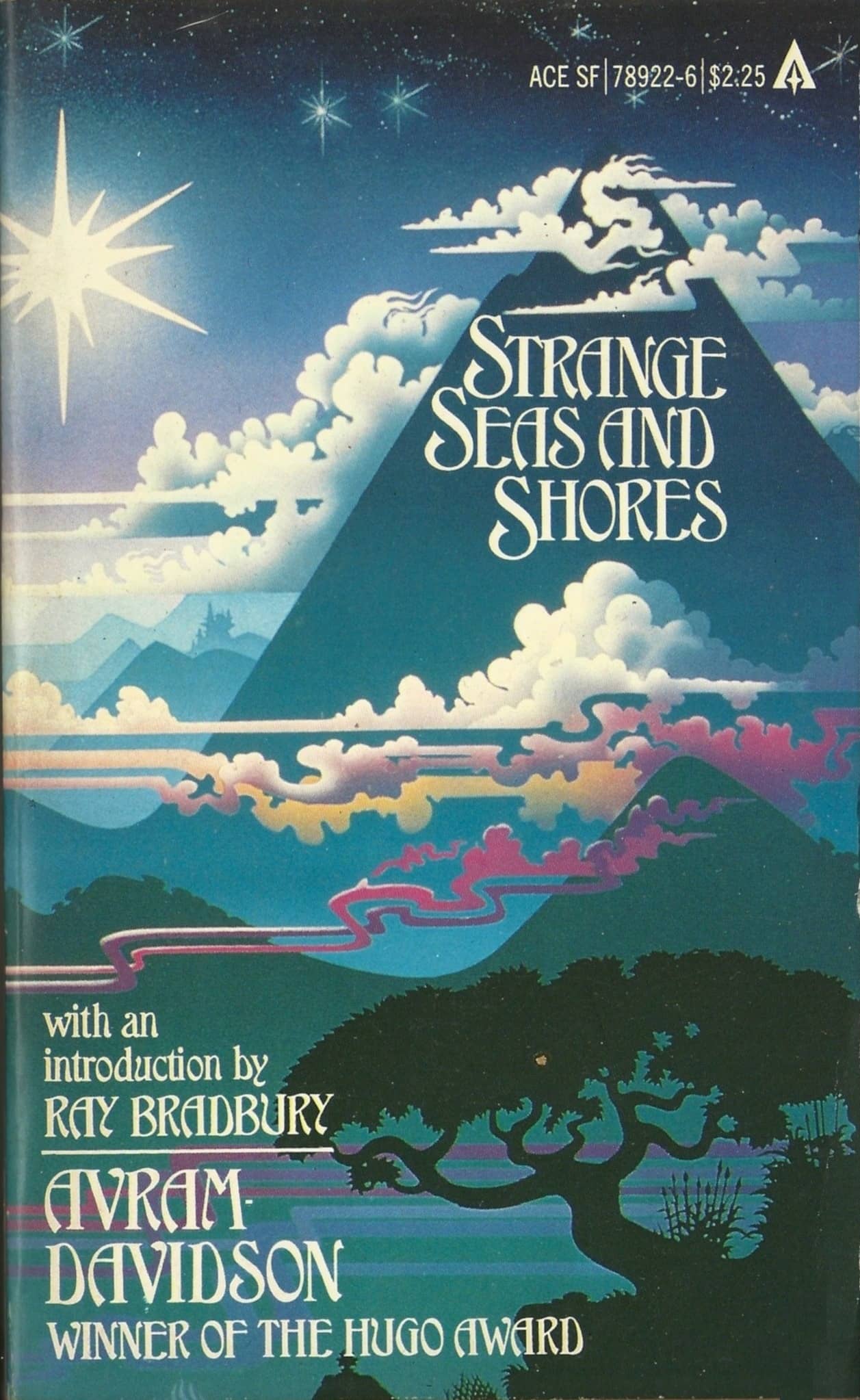
Vintage Treasures: Strange Seas and Shores by Avram Davidson

Vintage Treasures: Strange Seas and Shores by Avram Davidson

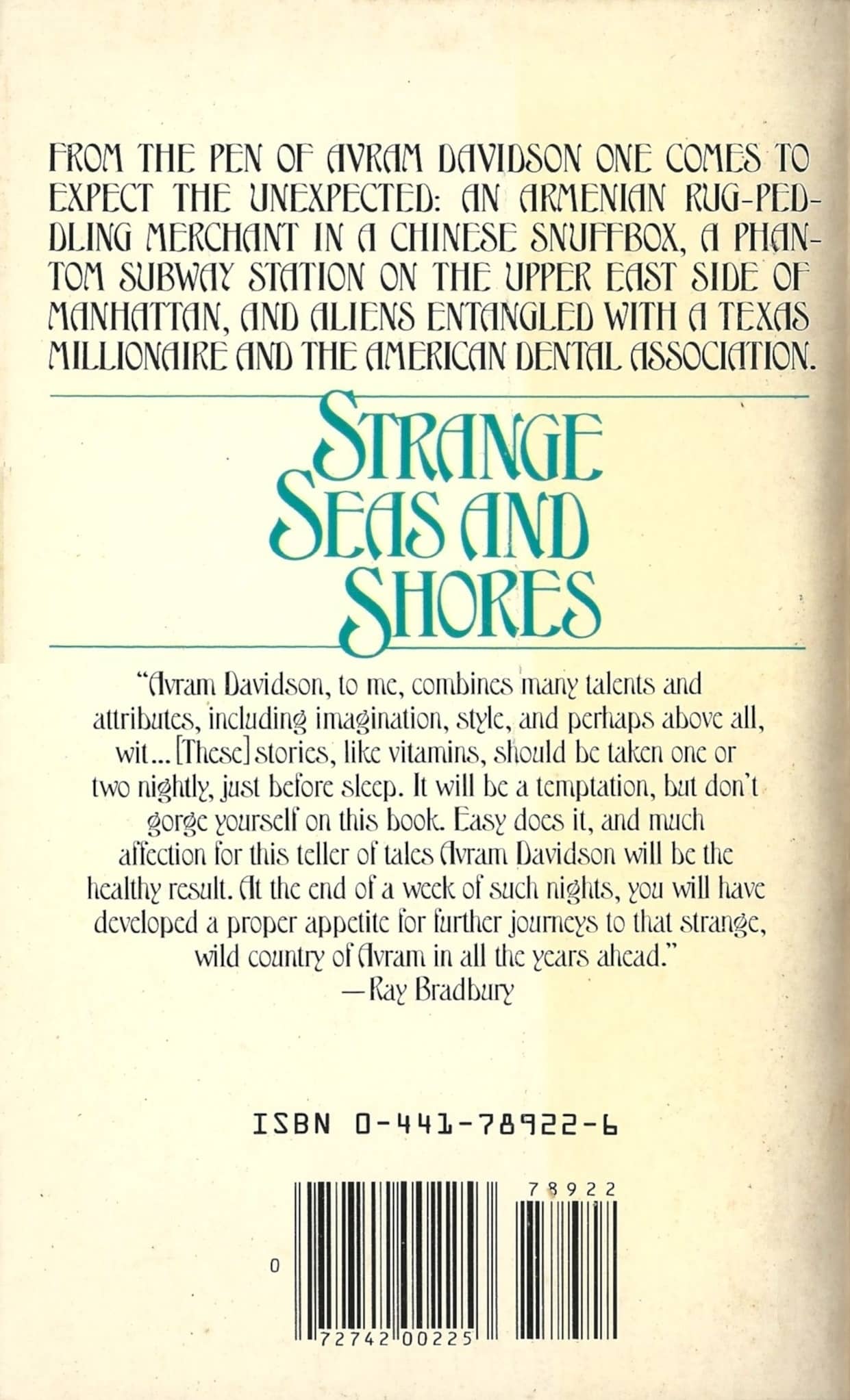
Strange Seas and Shores Avram Davidson-small Strange Seas and Shores Avram Davidson-back-small

Strange Seas and Shores by Avram Davidson (Ace Books, 1981). Cover uncredited.

Avram Davidson was one of the most respected fantasy short stories authors in America during my formative years as a reader. He was nominated for the Nebula Award ten times, the World Fantasy Award nine times, and won a Hugo for his classic story “Or All the Seas with Oysters.” That’s some serious street cred right there.

He’s not well remembered today, though. Criminally, we haven’t paid much attention to him at Black Gate either (aside from a Birthday Review by Steven Silver), and that’s a serious oversight. I found his third collection, Strange Seas and Shores buried in a collection I purchased recently, and want to settle in with it this weekend. I also found this compact review at the PorPor Books Blog; here’s a taste.

In his Introduction to Strange, Ray Bradbury notes that Davidson (1923 – 1993) crafted his short stories in the mode of the renowned Saki, O. Henry, and Chesterton. That is to say, Davidson employed surprise or trick endings in his short fiction, preferring to withhold the background detail of his plots at the outset, letting these details unfold along with the narrative, with the revelation / punch line coming in the last paragraph or sentence.

Many of the entries in Strange Seas and Shores are five or fewer pages in length, so providing synopses of these tales is essentially the same thing as disclosing spoilers… Some tales use quirky or satiric humor for their revelations… Others take a grimmer tone… Some of these stories have a ‘New York City’ sensibility to them, Davidson’s home throughout most of his life. In this manner they represent a sort of alternate approach to John Cheever’s examinations of NYC life in the postwar period.

It’s interesting to observe that Davidson steadfastly adhered to the classical, or traditionalist, format for his short fiction, even as the New Wave movement overtook sf publishing. His writing is clear and unambiguous, devoid of stylish affectations, although this being Davidson, readers will need to prepare for an expanded vocabulary: ‘circumambulation’, ‘nostra’, and ‘ratiocination’, among others…. Strange Seas and Shores is dedicated reading for Davidson aficionados; those others, who appreciate short stories in the ‘classical’ mode, may also want to seek it out.

Want to know another thing I discovered about Strange Seas and Shores this weekend? It is not the same book as his 1965 collection, What Strange Stars and Skies. For the last 40 years I’ve gotten these two titles confused. Glad to get that cleared up.

…

Read More Read More

Palace Intrigue, Ruins, and Ancient Libraries: The Sun Eater Series by Christopher Ruocchio

Palace Intrigue, Ruins, and Ancient Libraries: The Sun Eater Series by Christopher Ruocchio

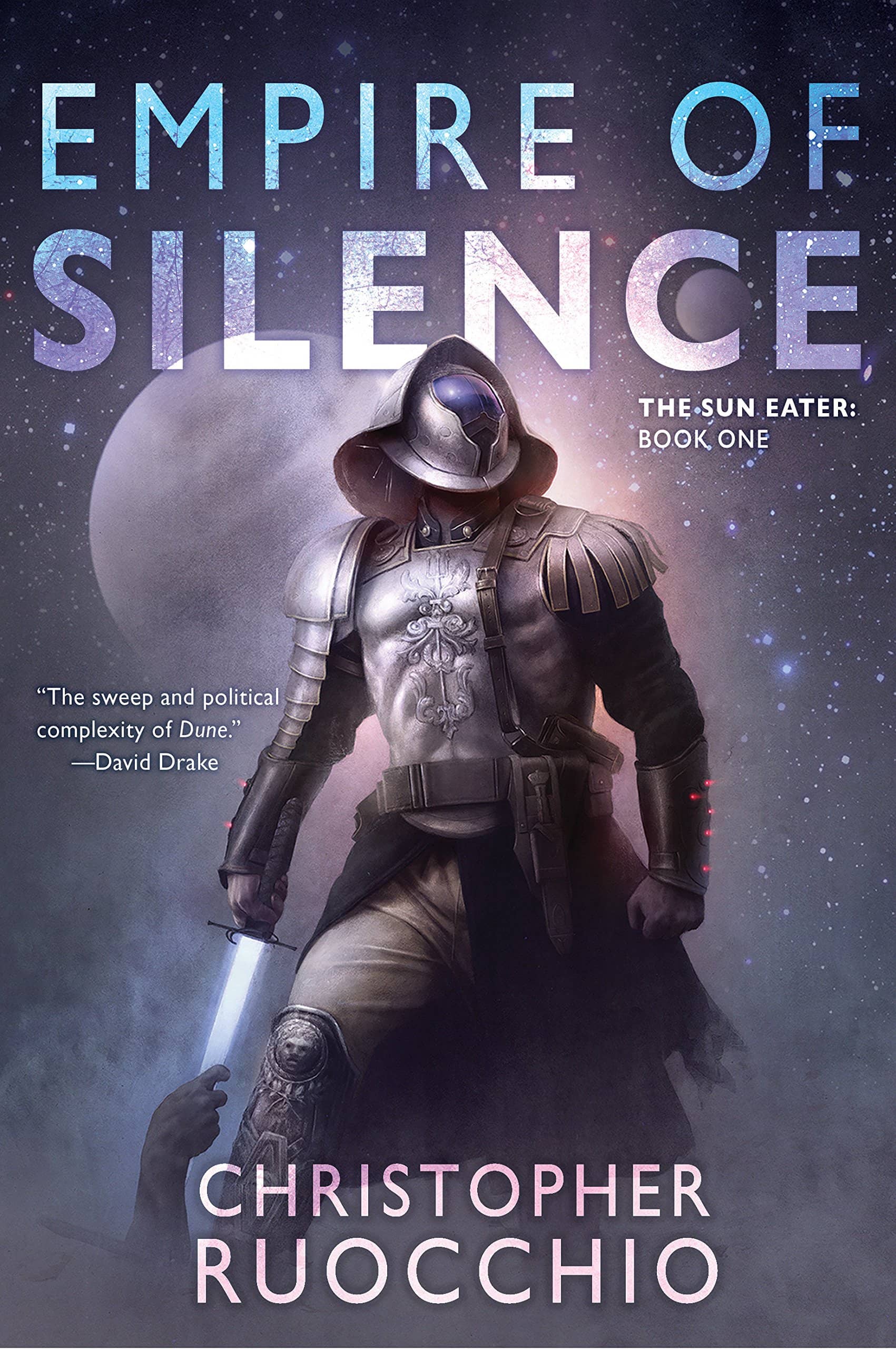
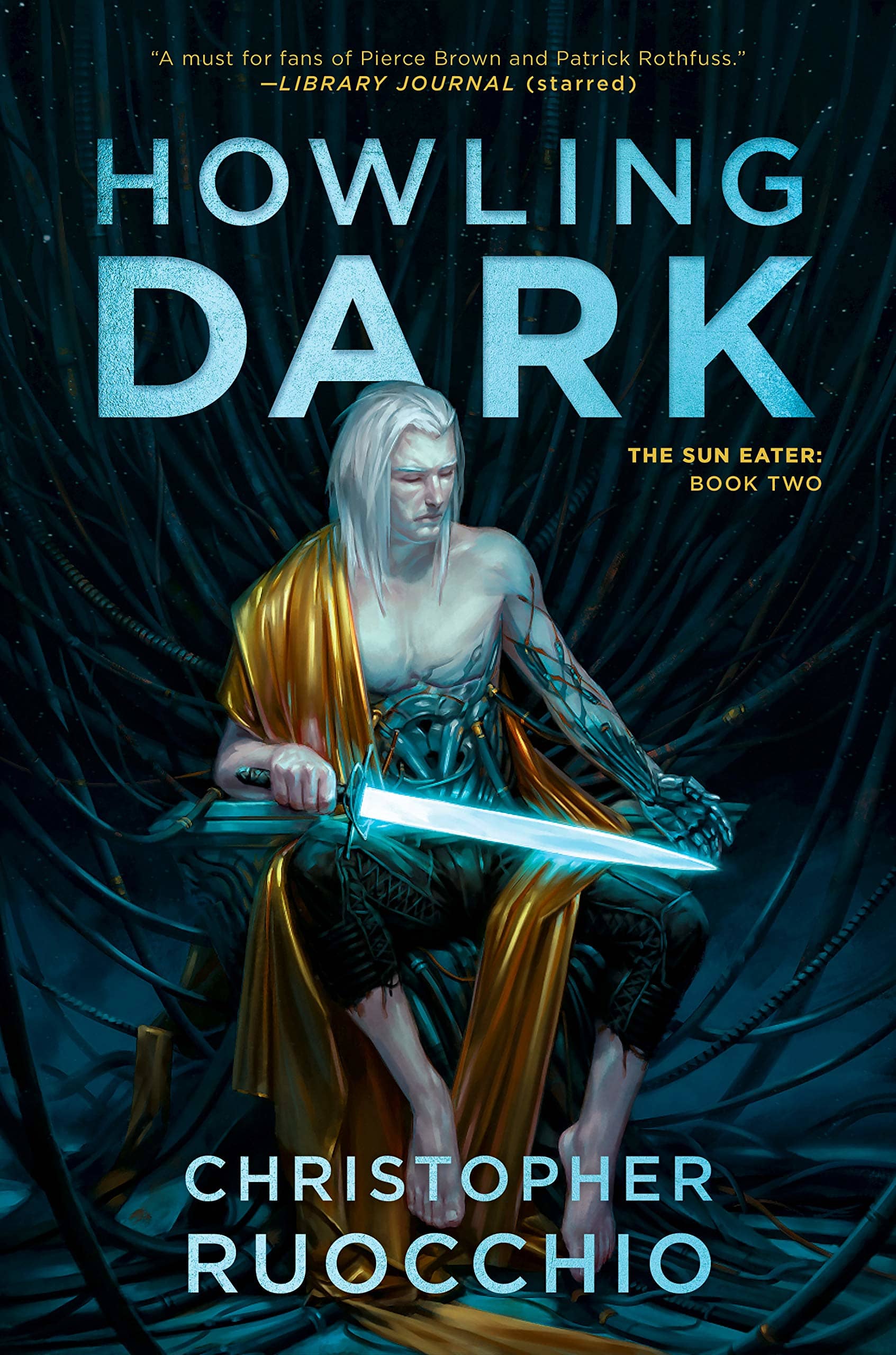
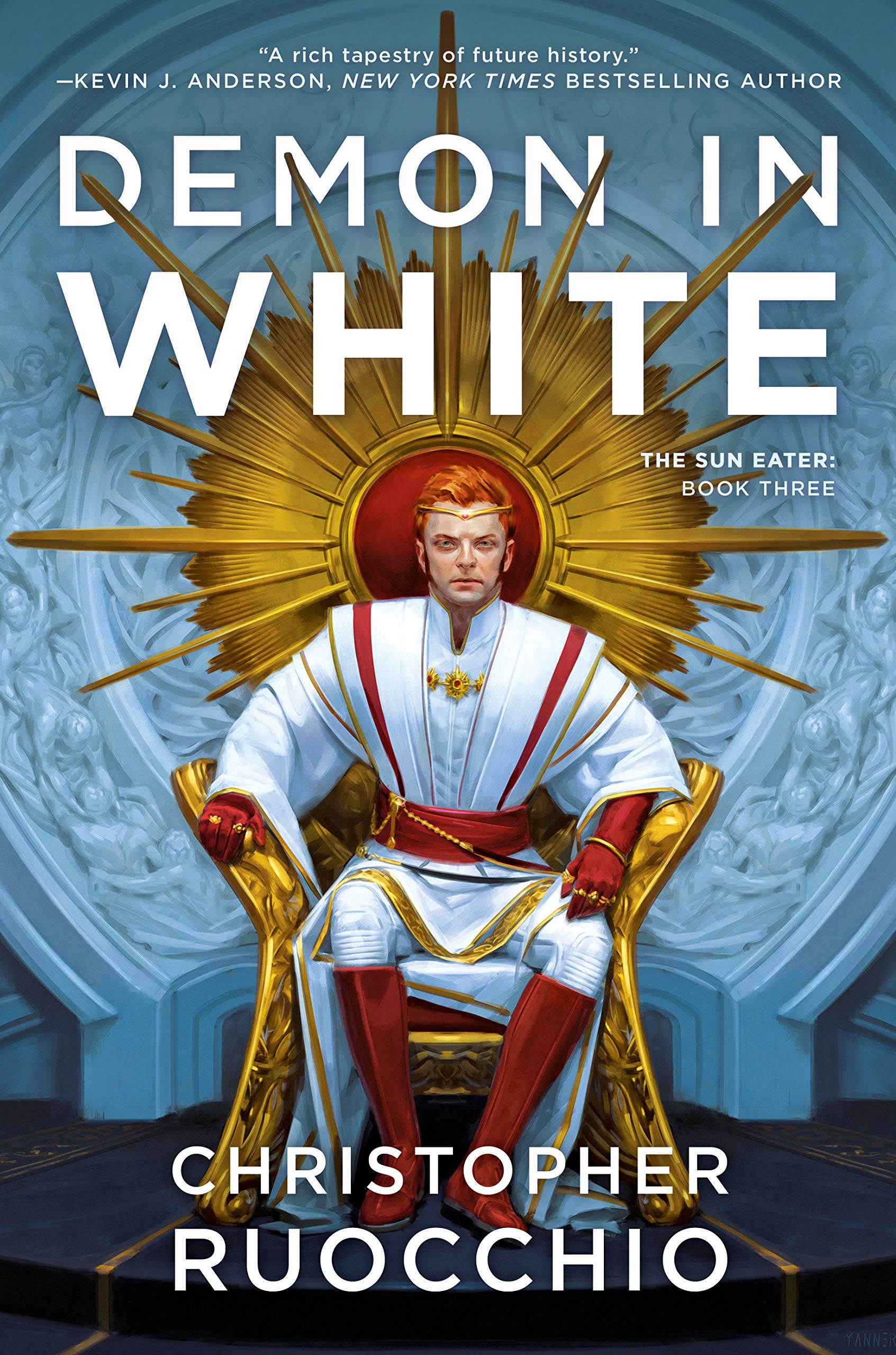
Empire-of-Silence-Ruocchio-smaller Howling-Dark-smaller Demon in White-small

Covers by Sam Weber (Empire of Silence) and Kieran Yanner (Howling Dark and Demon in White)

Christopher Ruocchio’s debut novel Empire of Silence (DAW 2018) was the opening volume in the epic Sun Eater space opera. Library Journal called it a “wow book… stretched across a vast array of planets,” and my buddy Eric Flint labeled it “epic-scale space opera in the tradition of Iain M. Banks and Frank Herbert’s Dune.” Howling Dark, the second in the series, was published last July, and won Ruocchio an even wider audience.

The third novel, Demon in White, was easily one of the most anticipated novels of the summer. It was published in July and, with some 300 reviews at Goodreads, boasts an amazing 4.70 ranking — a rare accomplishment. Here’s an excerpt from my favorite Amazon review, from Dave Wilde.

The third novel in this science fiction series begins with palace intrigue so deadly and dangerous that even Hadrian the Half-Mortal thinks he might just be safer in the heat of battle.

Much of the story has Hadrian and Valka and the rest of Red Company digging through ruins or ensconced in study in an ancient library. Nevertheless, for those looking for breathtaking ferocious battle, it’s all here, nastier, dirtier, bloodier, and more terrifying. On the way, the legend of Hadrian grows as the royals fear he is on his way to becoming so powerful that even the throne will fall to him.

Balanced against fierce battles against mankind’s greatest enemies — the kind that views humans as cattle to be slaughtered for dinner — are mystical questions about fate and coincidence and free will and what forces are out there beyond history. Whose tool is Hadrian and who does he serve? And whose tools are the enemies? The fate of the universe just may hang in balance.

Demon in White was published by DAW Books on July 28, 2020. It is 784 pages, priced at $27 in hardcover and $14.99 in digital formats. The cover is by Kieran Yanner. See all our recent coverage of the best in new SF & Fantasy series here.

DMR Books: Swords, Sorcery, and Science Fantasy!

DMR Books: Swords, Sorcery, and Science Fantasy!

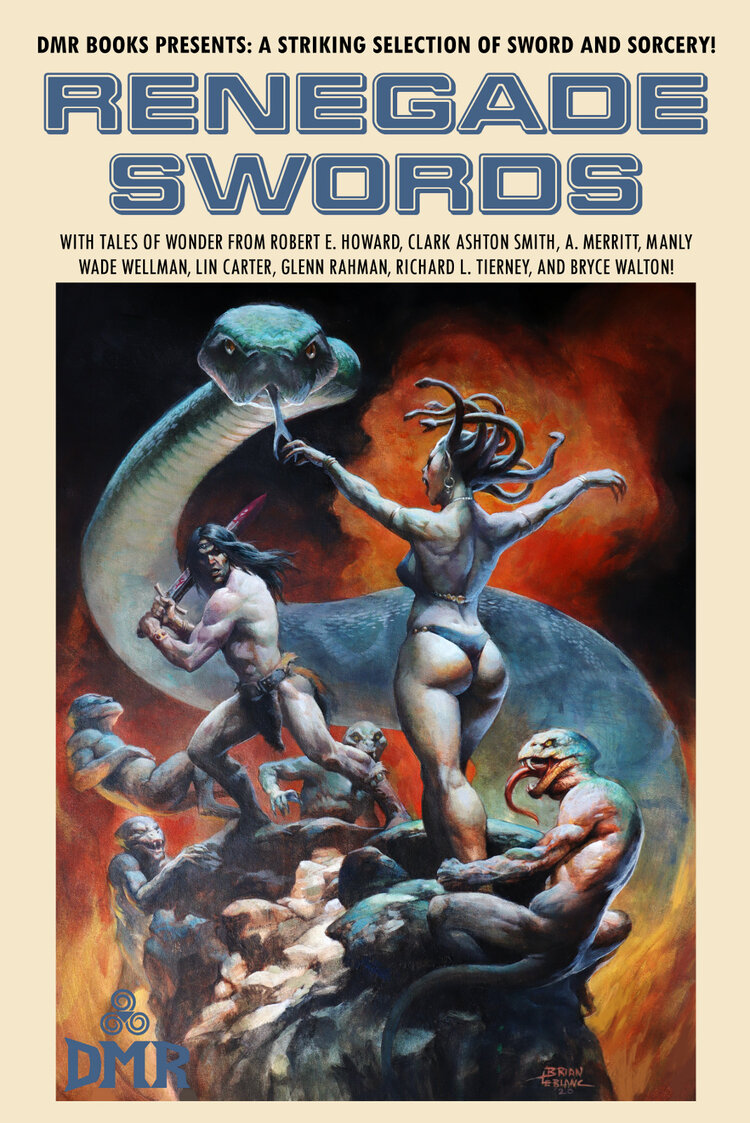
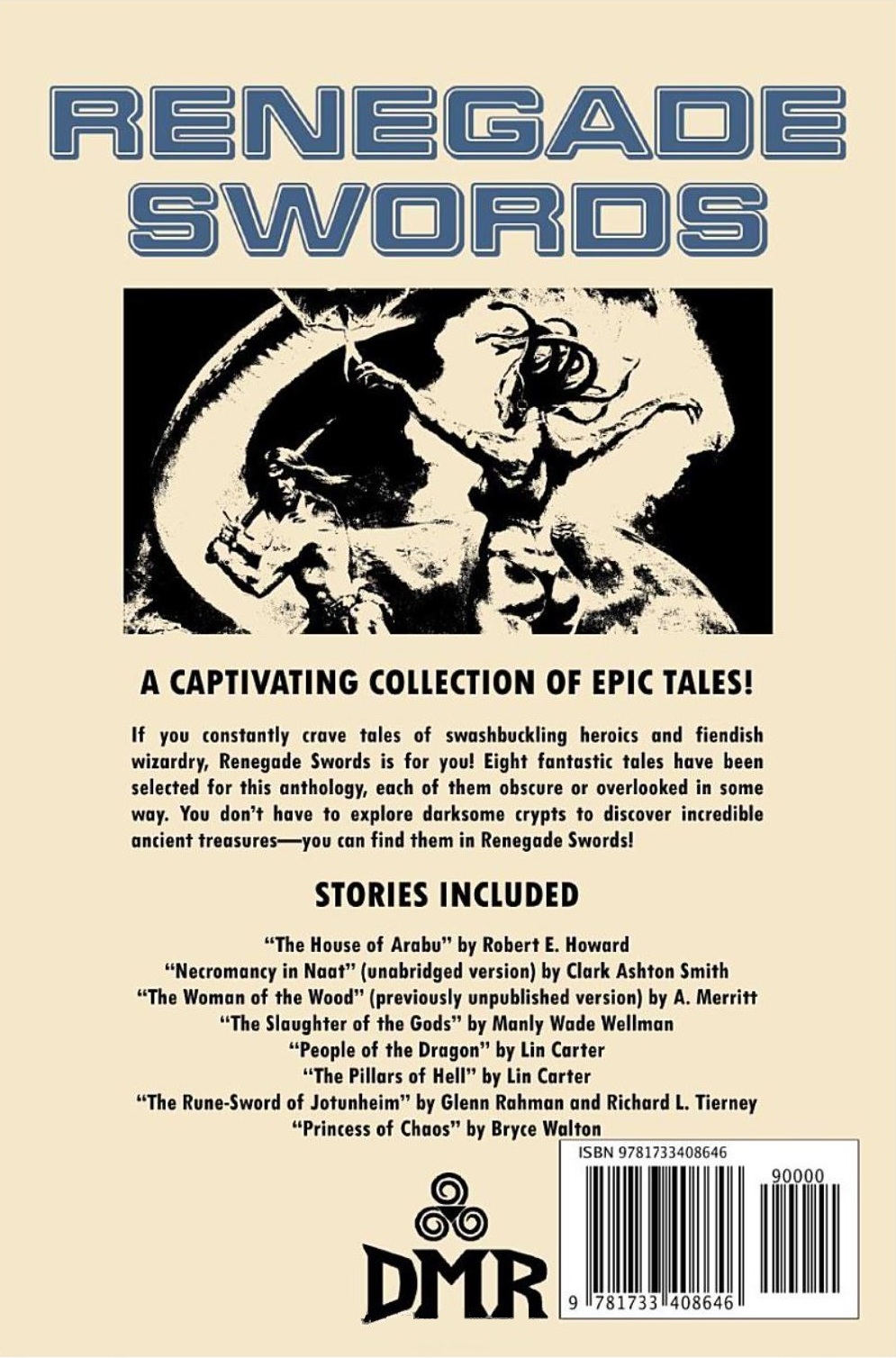
RenegadeSwords-medium Renegade Swords-back-small

Cover by Brian LeBlanc

I’m going to go out on a limb and say that most people aren’t very happy with how 2020 has turned out. However, there have been some bright spots. For one, fans of quality Sword and Sorcery have plenty of new reading material, as I’ve released six titles so far this year through DMR Books.

Things kicked off in grand fashion with the reprint anthology Renegade Swords, which collected stories that were rare or overlooked in some way. The lead story is “The House of Arabu” by Robert E. Howard, a historical fantasy set in ancient Mesopotamia. It’s not especially well-known, as it features no recurring characters, but I think it’s one of Howard’s best. (I included it in my article “The Ten Greatest Sword and Sorcery Stories by Robert E. Howard.”) Other highlights include the unabridged, rarely reprinted version of “Necromancy in Naat” by my favorite author, Clark Ashton Smith, and a previously unpublished version of A. Merritt’s classic “The Woman of the Wood.”

Let me tell you about that…

…

Read More Read More

New Treasures: Auxiliary: London 2039 by Jon Richter

New Treasures: Auxiliary: London 2039 by Jon Richter

Auxiliary- London 2039-small Auxiliary- London 2039-back-small

Auxiliary: London 2039 by Jon Richter (TCK Publishing, May 1, 2020). Cover uncredited

Jon Richter’s new novel Auxiliary: London 2039 has been described as “a cyberpunk thriller featuring a noir detective” (by the Caffeinated Reviewer). But it was the heading on the back cover (“A good detective is never obsolete”) that really piqued my interest. Here’s an excerpt from the feature review by Roger Hyttinen at Roger Reviews.

It’s a dark combination of the detective noir, cyberpunk, and sci-fi genres. Our main character, Carl Dremmler, is the kind of detective you’d find in a 1940s noir story: he drinks too much, has a painful past, is a bit crass, and picks up strangers for sex (though he often has sex with his personal humanoid robot). I thought the author did a fantastic job of meshing the different genres, and they all worked seamlessly…

The setting for this dystopian thriller is more than a bit disconcerting and grim, taking place in the near future where machines pretty much run the world… Detective Dremmler is called to the scene of a grisly crime. A young man has allegedly murdered his girlfriend by crushing her skull with his cybernetically-controlled prosthetic arm… However, the distraught man protests that the arm, whose chip is controlled by TIM, acted on its own accord and that the man couldn’t stop it… As Dremmler and his partner begin investigating deeper, he soon begins to suspect that there’s a lot more going on here than what he first thought and the case then morphs into something else entirely….

The story was fascinating though certainly dark, creepy, and profoundly unsettling. This book captivated me from beginning to end as the twists started to pile up. I thought this was a blood-chilling roller-coaster ride of a novel that’s both provocative and shocking. Compelling, dark, and intense, this story of technology gone wrong kept me guessing until the end and took me places I very much didn’t expect.

Jon Richter is the author of two horror collections and two crime novels, Deadly Burial and Never Rest. Auxiliary: London 2039 is his science fiction debut. It was published by TCK Publishing on May 1, 2020. It is 223 pages, priced at $14.99 in trade paperback and $2.99 in digital formats.

Read all our coverage of the best new SF and fantasy here.

Why I Read Old Science Fiction Stories? (Spoiler: For Entertainment)

Why I Read Old Science Fiction Stories? (Spoiler: For Entertainment)

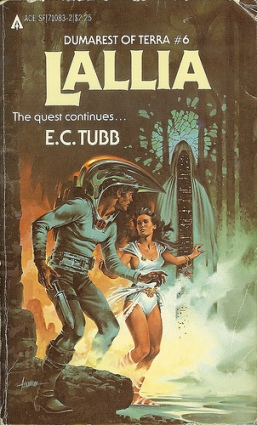
dumarest-6
“Written by authors who mostly died before we were born”

What is wrong with us?

A gazillion SF&F books get published every month, and here we are reading books written by people who mostly died before we were born. And this is Science Fiction we’re talking about! Surely that’s the genre that riffs off the present to paint a plausible future, or at least an illuminating one? Why are we still reading the old stuff?

Is it because we’re wedded to some idea of “canon”? Probably not.

Sure, it’s interesting to visit the roots of a genre, but most of us want to be also entertained in our scarce leisure time. It’s why people who like theatre come back to Shakespeare for pleasure, but mostly approach Jonson and Marlow out of intellectual interest, and why I still dip into Malory’s pulpy Le Morte De Arthur, but not the ploddy Vulgate Cycle by some Medieval French guy(s?) I forget.

Similarly, aspiring authors are well-advised to see how their predecessors managed the… choreography of certain kinds of story: there’s no point in reinventing the wheel when past generations have left so many tried and tested examples just lying around. However, that presupposes that those wheels were proven in action, that they carried along stories that were entertaining.

And, yes, given how wide the field is, we’re more likely to find common ground talking about CL Moore than China Mieville: the best place to catch your mates is outside the pub, not in its murky depths. Even so, we want to be able to rant about books we loved and why… books that we found entertaining.

And there’s that word again: entertaining.

What does the old stuff have that the new doesn’t? After all, modern SF comes in meaty tomes of 100K words, generally has plausible extrapolation, and often takes us out of our comfort zone. How can 30K of often lightly characterized and emotionally distant narrative with not much contemporary significance compete with that?

Except, that’s the point,  I think.

…

Read More Read More

A Delicious Mixed Bag of Dark Fiction: Apostles of the Weird, edited by ST Joshi

A Delicious Mixed Bag of Dark Fiction: Apostles of the Weird, edited by ST Joshi

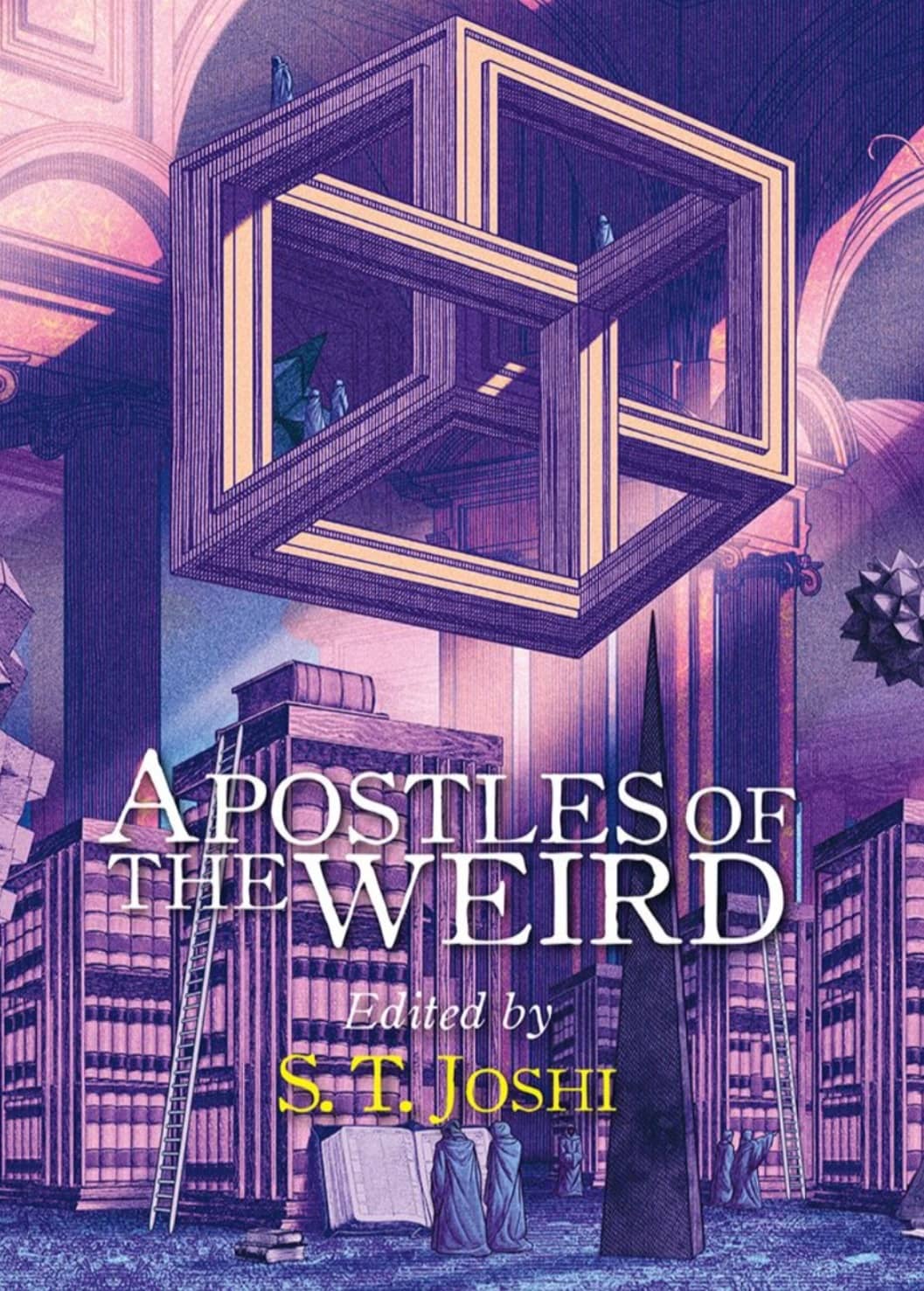
Apostles of the Weird-smallApostles of the Weird
PS Publishing (337 pages, £25/$33 in hardcover, March 1, 2020)
Cover by John Coulthart

Weird fiction is an umbrella term that applies to a number of literary genres such as horror, fantasy, science fiction and so on. Editor ST Joshi has assembled a new anthology of weird fiction keeping in mind the various shades which constitute the “weird,” and leaving the contributors free to develop plots and outcomes as they please.

The result is a collection of tales of uneven quality and eclectic content, apt to satisfy the different tastes of dark fiction lovers. I expect that different readers (and reviewers) requested to pick favorite stories would express extremely different opinions.

Although one could argue that good fiction is good fiction, regardless of subgenres and personal inclinations, the truth is that personal taste always matters. Having said that, allow me to single out the stories that I found more interesting and accomplished.

“Sebillia” by John Shirley is a dark drama of sin and misery with a strong paranormal undercurrent, while “Axolotl House” by Cody Goodfellow is a quite horrific tale set in a Mexican “retirement home” where ancient, malevolent gods still survive.

WH Pugmire contributes “The Zanies of Sorrow,” an excellent atmospheric piece with a distinct supernatural texture and a surprising twist in the tale, and Stephen Woodworth pens “ Cave Canem,” an effective tale of sheer horror.

“This Hollow Thing” by Lynda E Rucker is an outstanding, spellbinding, atypical ghost story with a superb characterization of a group of former classmates reunited for a peculiar Christmas party.

…

Read More Read More