Browsed by
Category: Blog Entry

Goth Chick News: Fed Says No Zombie Apocalypse; But Bullets Available Just In Case

Goth Chick News: Fed Says No Zombie Apocalypse; But Bullets Available Just In Case

image0061When we here at Goth Chick News predicted that “zombies were the new vampire,” we meant it as an entertainment trend, not a doomsday prophesy. But lately all of us here in the underground bunker are a just a tad bit grateful that our offices are in the bowels of Black Gate headquarters where we could conceivably hole up for several weeks, sustained by a stash of Pop Tarts and Patrone.

Because the reanimated dead are in mainstream news a little more often than we’re comfortable with lately.

Beginning with the horrific face-eating arrest in Miami, followed by several other seemingly subhuman acts, there’s been a flesh-munching wave of terror. We’re not the only ones wondering what’s behind it.

A bona fide zombie apocalypse, however, is not what we should be worried about, at least according to the federal government.

Wow… feeling better already.

Read More Read More

The Retro Pulp Art of Tim Anderson

The Retro Pulp Art of Tim Anderson

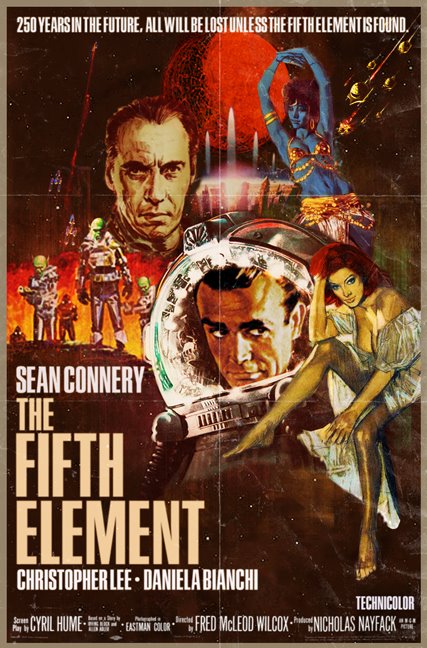
blade-runner-pulpWe love pulp fiction. And we love classic SF & fantasy movies.

So what’s not to love about Tim Anderson’s re-imaginings of classic SF films as pulp paperbacks?

Anderson is a concept designer for Electronic Arts in Salt Lake City. He’s also worked as a concept designer for Paramount Licensing, Inc., Radical Comics, and various independent filmmakers.

He’s started working on a personal side project that he hoped would motivate him “into thinking more graphically,” a series of highly detailed period paperback covers for some of the most famous SF films of the 20th Century.

Here’s what he says about his Blade Runner piece at right (click for a bigger version):

If you haven’t guessed by now, I’m a huge sci-fi fan, and a huge fan of Ridley Scott. Here’s a pulp cover I have had in the works off and on for a while now. I was inspired by the detective pulp covers of Robert McGinnis. If ever there was a sci-fi movie that lent itself well to a detective pulp cover, it’s Blade Runner.

Anyone who’s a fan of the great Robert McGinnis is okay by us.

Check out Tim Anderson’s versions of Alien, The Matrix and others here.

Art of the Genre: The Usual Suspects

Art of the Genre: The Usual Suspects

You want Larry Elmore, I've got Larry Elmore!

You all know I’m a total art geek, right? I mean, that should be plainly obvious simply by the titles of the blogs I write. To me, the nature of art is tied into my DNA, and although I don’t practice it myself, I certainly find untold joy in the viewing.

I’ve written before about my early years and the influence fantasy art had on me during those times. Without book covers, I’d simply have never begun reading, and therefore my choice of profession would have changed from writer to ornamental iron retailer. Certainly selling, installing, and designing ornamental iron isn’t a bad profession, and there is money in it if the markets are right, but I can’t help but feel a sadness when I consider the joyless toll such a career would have taken on me.

So, instead of being financially secure and responsible, I’ve somehow found myself in L.A. as a writer, editor, and jack-of-all-traders literary amalgamation. All this, because of art, and more particularly the art of old school TSR’s Advanced Dungeons & Dragons.

If the above is the keystone to my existence, then I fervently hold to it as all that is meaningful in my professional life. That said, I find the 1980s, in particular, an untold inspirational period, no matter how silly our clothing choice may have been during that decade.

Read More Read More

The Burnham Society

The Burnham Society

the-burnham-society-logoThe premise of this podcast series is that tourists came from as far as the Faerie Kingdom and Hell to visit the 1893 Chicago World’s Fair and, once it was over, decided to stay. These sub-cultures continued to co-exist with every other immigrant community in Chicago, integrating just enough to go unnoticed by most people. The Burnham Society was established to intervene in those situations where the sub-cultures don’t peacefully co-exist. The organization is perpetually trying to maintain its lofty goals while dealing with petty day-to-day politics (much like its namesake, architect Daniel Burnham).

The posts (which normally run between seven and eight minutes) are smart, funny and surprisingly touching. We learn why you should never clap for Tinkerbelle, how demons get their restaurant licenses, all the reasons you shouldn’t seek immortality and various other tidbits of secret history and magical advice. Rowan Bristol, the narrator and reluctant book-seller, presents himself as a surly and impatient guide through supernatural Chicago; but there is an undercurrent of optimism in every post. My favorite so far may be episode four (You Are Not the Chosen One), which begins as a snarky deconstruction of the Harry Potter series, but becomes something subtly beautiful and, in many ways more empowering than JK Rowling’s amazing series (brief aside: Does anyone else get the impression that Rowling originally intended Hermione Granger to be the main hero of the books?) The most recent post (Molly and the Dragon by Steven Fluet) is a wonderful short story about how anyone can find magic.

You can find all of the podcasts on the Burnham Society home page or iTunes. You can also learn more about the Burnham Society on its Facebook page. Hopefully, some of you will be inspired to follow Daniel Burnham’s advice and make no small plans.

Drinking Atlantis, No Chaser: Conan the Barbarian (2011) Blow-by-Blow & Play-by-Play

Drinking Atlantis, No Chaser: Conan the Barbarian (2011) Blow-by-Blow & Play-by-Play

conan-poster-1I have a week-long break between summer movie reviews, the gap between Prometheus and Brave, so I have chosen to return to Ghosts of Summer Pasts. Not long past. Just last year. Ladies and gentlemen, Hyborians and Hyrkanians, the 2011 Conan the Barbarian! [Insert tepid Monty Python and the Holy Grail “yeah!” here.]

Many movie websites do play-by-play reviews, essentially a one-post blog-thru of a film, providing comments along with time stamps. I’ve wanted to try my hand at this for years, and this short summer break opened up the opportunity to exercise this review format on an awful film that sword-and-sorcery fans don’t want to talk about. But if I can find a way to wrench some entertainment from the Blu-ray of this movie (yes, I bought it — but used at a bargain price), then let it be so.

It was August of ’11 that saw the release and immediate flop of the Marcus Nispel-directed Conan the Barbarian. Critics savaged the movie, but most fans of Robert E. Howard saw the dire writing in the ancient language of Acheron on the wall long before the release. I gave up hope for the movie when I heard that Nispel was attached to it. Nothing I had seen of the man’s previous work indicated he had any notion of theme or subtlety — or even how to stitch together a comprehensible action scene. The guy came across as a refugee from an awful ’80s metal band who decided to get into directing so he could show “awesome!” stuff on screen. In other words, he was picked for the job because of a superficial resemblance to sword-and-sorcery, not because the man has any affinity for filmmaking or Robert E. Howard.

The casting of Jason Momoa met skepticism when first announced, but among all else that went awry with Conan the Barbarian, Momoa was one thing that went right. More about that on the play-by-play.

I enjoyed the movie more this second time viewing it, but that isn’t because I found any new appreciation for it. Conan ’11 works simply better on home video, where its limited scope and poor VFX feel more appropriate. Also, watching at home meant I could take breaks to go get a drink or read Shakespeare or call my sister in Munich. I could live my life around the film, and the film benefits from my ability to ignore it whenever I want to. The only downside to home video is that the 3D in the theater, terrible as it was, did hide some of visual flaws and clunky special effects.

Okay, queue up your disc or streaming or whatever, and let’s drink Atlantis….

Read More Read More

The Best of Modern Arabian Fantasy, Part V: Saladin Ahmed and Throne of the Crescent Moon

The Best of Modern Arabian Fantasy, Part V: Saladin Ahmed and Throne of the Crescent Moon

imagesSaladin Ahmed‘s been very, very busy as his career takes off after the success of Throne of the Crescent Moon, the first novel in an exciting new Arabian fantasy series that received starred reviews from Kirkus, Publishers Weekly, and Library Journal, so I was lucky that he was able to take the time for an interview.

I always try to fake up some confidence in an interview and not think of how famous or talented my subject is, so imagine my horror when I got the answers back and found I’d mistyped the title for his book in the questions. I’d planned them carefully and had his book open as I wrote them, but used an abbreviation of the title from my notes.

I can only speculate about the fingernails on a chalkboard feeling Saladin had while answering questions from some random woman who sounded like she barely knew what she was talking about, but he was gracious. At least I didn’t misspell his name.

Read on for some tantalising hints about his next two books.

Read More Read More

Thank You, Martin H. Greenberg (and Doug Ellis)

Thank You, Martin H. Greenberg (and Doug Ellis)

martin-h-greenberg-paperback-lot-small

That’s a pic of one of the boxes I unloaded in my library this morning. It contained 103 paperbacks from the vast collection of the great Martin H. Greenberg, one of the most prolific and talented anthologists our field has ever seen (click for a more legible version). Greenberg died almost exactly a year ago, on June 25, 2011. He left behind some 2,500 anthologies and other books he created — including over 120 co-edited with his friend Isaac Asimov — and his company Tekno Books, a book packager which produced nearly 150 books a year. I wrote about six of them just last week in my article TSR’s Amazing Science Fiction Anthologies.

He also left behind a massive collection in his home in Green Bay, which was purchased by Chicago collectors Doug Ellis and Bob Weinberg. They’ve been gradually selling the high value stuff — autographed vintage hardcovers, things like that. Doug runs the Windy City Pulp and Paper show every year, and he brought some of it to the show.

I’m usually a pretty social guy. Put me in a room with fellow collectors and I’ll happily spend my hours chatting. But as I passed Doug’s booth, I saw countless boxes of what looked like beautiful, unread vintage paperbacks stacked in neat rows, all priced at a buck. I started to browse, then select a few books, and finally obsessively dig through every single box, much to the annoyance of the always patient Jason Waltz and my other companions.

Read More Read More

Losing My Way to Ray

Losing My Way to Ray

100Revisiting the stories of Ray Bradbury has been a lot like sitting down to revisit Twilight Zone episodes. I don’t just mean the twist ending, though there is that. I mean the other things – the misanthropic critic/hero/rebel who talks for a long while, perhaps too long, about the troubles of society, of humanity. The mirror held up to show us ourselves as we once were when all men wore hats and all women wore dresses. The sad realization that while there are cool and brilliant bits, our sense of pacing has changed, and that having experienced enough of these stories, we get the sense of how an unfamiliar one will end.

I loved Ray Bradbury’s stories as a child. I remember the thrill of picking up one of his short story collections because you’d never know what you’d get, story to story, and the titles rarely told you. Would it be a horror story, something from ancient China? A space adventure? Would the ending be dark, or light? In grade school, it was always a profound relief to find a Ray Bradbury tale in the school literature readers, for you knew you’d be transported to some interesting place.

Fired by nostalgia, wanting to celebrate my first favorite author, I read The Martian Chronicles for the first time in 30 years, and then I began to work my way through The Stories of Ray Bradbury, which collects 100 tales, many of which I’d never read.

And I discovered that I couldn’t go home again. I keep setting the book aside, then coming back to try just one more, to see if I could recapture the old thrill.

It’s not Bradbury who changed – the words are still threaded together with that same poetic skill. The messages are still poignant or powerful, depending upon the tale. Yet I can’t lose myself in them anymore. I want to – God, how I want to – but I just can’t fall through the words and get lost in the wonder. I must have found him at just the right age. And now, I think, I must have gotten old. Morosely, I have set the book aside, and I am not sure I will return.


Howard Andrew Jones is the author of the historical fantasy novels The Desert of Souls, and the forthcoming The Bones of the Old Ones, as well as the related short story collection The Waters of Eternity, and the Paizo Pathfinder novel Plague of Shadows. You can keep up with him at his website, www.howardandrewjones.com, and keep up with him on Twitter or follow his occasional meanderings on Facebook.

Chicks Kick Butt

Chicks Kick Butt

ckI recently reviewed Chicks Kick Butt over at The SF Site. My reaction was a little less than enthusiastic, certainly less so than fellow Black Gater Alana Joli Abbott’s review.  Here’s probably why:

…an anthology called Chicks Kick Butt sounded like something that would appeal to me, even if I’d never read anything by the female authors collected here, nor the editors. But, half the fun of picking up a story collection is discovering the work of people you’ve never heard of, or have heard of but never read.

In this case, however, that’s part of the problem. Some of these stories will no doubt resonate with their fan base. Not being part of them, I’m left to wonder what the fascination is. In part, that’s because I don’t get the whole vampire deal. Though I understand the charismatic kink of the guy (or girl) who drinks your blood and consumes your soul, maybe the first time someone thought of putting a cell phone in the hands of the attractive undead to use their curse for good instead of evil, or at least have highly charged sex, but still have problems just like the rest of us whose throats are unblemished, it was kind of fun. But an entire genre with multiple sub-genres of this stuff, really?

Christopher Paul Carey on Philip José Farmer’s World of Khokarsa

Christopher Paul Carey on Philip José Farmer’s World of Khokarsa

gods-of-opar2With the publication of Gods of Opar: Tales of Lost Khokarsa, I thought I’d take the opportunity to give Black Gate readers a taste of the world of Khokarsa, which serves as the setting for Philip José Farmer’s epic series of adventure and historical fantasy. It’s a world I’ve been immersed in for the past several years as I worked to complete The Song of Kwasin, the concluding book in the Khokarsa trilogy, as well as other related projects set in Farmer’s prehistoric empire.

Farmer’s achievement in the first two Khokarsa novels — written and first published in the 1970s, and now available in the Gods of Opar omnibus — is impressive. And part of the reason these thirty-some-year-old books hold up so well is the lengths to which the author went to carefully construct a believable world for his prehistoric heroes, heroines, and villains.

The rich level of cultural and descriptive detail in both Hadon of Ancient Opar and its sequel Flight to Opar make them prime examples of fantastic world building. Set twelve thousand years ago in ancient Africa against the backdrop of a civil war between the priestesses and the priests in the empire of Khokarsa, the books unveil a complex pantheon of gods and goddesses.

First and foremost is Kho, known also as the Mother Goddess, the White Goddess, and the Mother of All. She is the central deity of the Khokarsan people. Carefully balanced against Kho is her son Resu, god of the sun, rain, and war. While Resu has been declared the equal of his mother, most Khokarsans still regard Resu as secondary to Kho.

At the time Hadon of Ancient Opar begins, the priests of Resu have been locked in a delicate struggle for supremacy with the priestesses of Kho for over eight hundred years.

Read More Read More