Browsed by
Category: Blog Entry

Leigh Brackett: American Writer

Leigh Brackett: American Writer

shannach
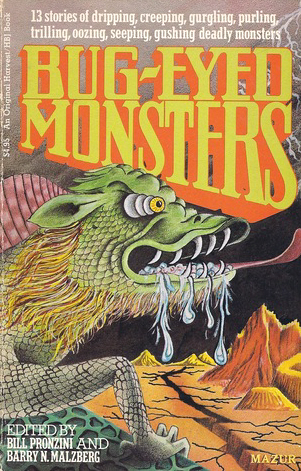
The 4th and final Leigh Brackett hardback from Haffner Press, a set collecting all her short fiction.

This 4th of July I thought I’d take a look at one of my very favorite writers, the late, great Leigh Brackett, queen of planetary adventure.

Only a few generations ago planetary adventure fiction had a few givens. First, it usually took place in our own solar system.  Second, our own solar system was stuffed with inhabitable planets. Everyone knew that Mercury baked on one side and froze on the other, but a narrow twilight band existed between the two extremes where life might thrive. Venus was hot and swampy, like prehistoric Earth had been, and Mars was a faded and dying world kept alive by the extensive canals that brought water down from the ice caps.

To enjoy Brackett, you have to get over the fact that none of this is real — which really shouldn’t be hard if you enjoy reading about vampires, telepaths, and dragons, but hey, there you go. Yeah, Mars doesn’t have a breathable atmosphere, or canals, or ancient races. If you don’t read her because you can’t get past that, you’re a fuddy duddy and probably don’t like ice cream.

A few of Brackett’s finest stories were set on Venus, but it was Mars that she made her own, with vivid, crackling prose.

Here. Try this, the opening of one of her best, “The Last Days of Shandakor.” You can find it in two of the three books featured as illustrations in this article, Shannach — the Last: Farwell to Mars, and Sea-Kings of Mars and Otherworldly Stories.

Anyway. On to Brackett.

He came alone into the wineshop, wrapped in a dark red cloak, with the cowl drawn over his head. He stood for a moment by the doorway and one of the slim dark predatory women who live in those places went to him, with a silvery chiming from the little bells that were almost all she wore.

Read More Read More

Art of the Genre: The Art of an inspired Fake…

Art of the Genre: The Art of an inspired Fake…

418510_207020362733063_100002753026293_274477_1896356296_nHave you ever heard the phrase, ‘This is going to be the next INSERT ICONIC FRANCHISE HERE’? I’m pretty sure we all have, but the one that sticks out most starkly in my memory was from 1997.

I’d recently moved to Maryland and I well remember seeing the trailers for the Bruce Willis science fiction vehicle The Fifth Element. The billing indicated it to be, ‘The next Star Wars’. I was so excited, I dragged my then twenty-five year old wife to the theater in hopes the billing might have some kind of thread of truth.

I well remember her reaction to the film, and most appreciably the movie’s use of the word ‘perfect’. It was truly a painful experience, one that is as fresh today as it was then, and yet over the next couple of years I not only forgave The Fifth Element for not being the next Star Wars, but learned to appreciate it on a level I never thought possible.

I mean, when you get down to it, the next Star Wars wasn’t even ‘The next Star Wars’, Phantom Menace was a complete debacle that somehow manages to look like a Academy Award winner next to The Attack of the Clones and Revenge of the Sith.

Fifth Element isn’t Star Wars, it’s anything but, and yet if you don’t make that connection and simply try to view the movie as a solo performance it’s truly a fun piece of science fiction. Willis renders a great Die Hard-like role, and Milla Jovovich is indeed ‘perfect’, much to my wife’s volcanic fury at the assessment.

Read More Read More

Confessions of a Guilty Reviewer

Confessions of a Guilty Reviewer

Howard Andrew Jones with his Review Rooster.

I used to write occasional reviews for Tangent Online, and once I wrote one that I still regret. I’ve rarely found a slice-of-life story or flash fiction that I enjoyed, so I probably had no business evaluating a piece of short fiction that was both. Yet I read it, and I slammed it. Not because it was bad flash fiction, or because it was a bad slice-of-life story (I had no kind of qualifications for adequately judging either) but because I didn’t like flash fiction or slice-of-life stories. It was the epitome of ill-informed reviewing, where the writer is arrogant enough to know better than fans of an entire genre. Or two.

I didn’t understand my mistake for a while, and when I met the author of the story at a convention years later he was kind enough not to mention my idiocy, or, more likely, hadn’t remembered the name of the idiot who’d written the review.

You’d think that my epiphany about having written such a bad review would have arrived when I started to get my own fiction published more regularly, but it actually hit me faster, probably because it took a loooong time for my fiction to get published regularly.

I began to evaluate game products for Black Gate and it finally dawned on me that I had to consider both a work’s intended function and its intended audience. For instance, if I was looking at a role-playing product, I couldn’t evaluate a retro dungeon crawl by the same standards I looked at a modern story-based adventure with plot arcs.

Read More Read More

Edgar Rice Burroughs’s Mars, Part 6: The Master Mind of Mars

Edgar Rice Burroughs’s Mars, Part 6: The Master Mind of Mars

master-mind-of-mars-1st-editionI maxed out on Barsoom back in March. After reviewing the first five Martian novels over a span of two and a half months, I switched over to writing about the movie John Carter of Mars. (That is what I’m calling it, dammit, because that’s what the end title card says.) I love the movie, but the box-office and the box-office pundits did not, and although I struggled to keep a positive view, I realized after all of this that I needed a break from Edgar Rice Burroughs’s red planet.

But during a brief pause between my summer movie reviews, the opportunity to zap my Earthly body back to Mars offered itself. So my overview of ERB’s Martian epic resumes at Book #6, with a new Earthman hero, a return to first-person, and the Barsoomian equivalent of The Island of Dr. Moreau.

Our Saga: The adventures of Earthman John Carter, his progeny, and sundry other natives and visitors, on the planet Mars, known to its inhabitants as Barsoom. A dry and slowly dying world, Barsoom contains four different human civilizations, one non-human one, a scattering of science among swashbuckling, and a plethora of religions, mystery cities, and strange beasts. The series spans 1912 to 1964 with nine novels, one volume of linked novellas, and two unrelated novellas.

Today’s Installment: The Master Mind of Mars (1927)

Previous Installments: A Princess of Mars (1912), The Gods of Mars (1913), The Warlord of Mars (1913-14), Thuvia, Maid of Mars (1916), The Chessmen of Mars (1922)

The Backstory

Burroughs wrote The Master Mind of Mars (originally under the less thrilling titles “A Weird Adventure on Mars” and “Vad Varo of Barsoom”) in mid-1925, but his usual markets didn’t pick it up. (Wikipedia, in a [citation needed] moment, speculates this may have something to do with “its satirical treatment of religious fundamentalists.” That seems unlikely, as the book is light on the religious criticism compared to the instant-selling The Gods of Mars, where searing attacks on religion are the center of the plot.) ERB finally sold the book to Hugo Gernsback, inventor of the term “science fiction,” pioneer of magazine SF, and notorious cheapskate, who paid $1,250 for the novel — much less than what the author got from his usual markets. Gernsback made Burroughs’s newest Martian adventure the lead story for his Amazing Stories Annual, an extension of what was at the time the only science-fiction pulp. Burroughs made sense as a circulation-booster, since he helped create magazine SF fourteen years before the first pulp dedicated to it appeared on the stands.

Read More Read More

Dungeon Crawl Classics – Growing Fresh from Old Roots

Dungeon Crawl Classics – Growing Fresh from Old Roots

dcc1Dungeon Crawl Classics Role Playing Game
Joseph Goodman
Goodman Games (480 pp, $39.99, Hardback; $24.99, Download)
Reviewed by Howard Andrew Jones

I’m afraid that the Dungeon Crawl Classics role-playing game will hit the modern game audience the way a hard rocking band with great guitar hooks hits teenagers who think greatness is held by those auto-tuned voices and dancing lip-syncers. It might be that they’ll have the sense to understand something good, done right, even if it is artistically out of style, but I can’t help thinking they’ll be too hypnotized by flash and swagger to see the beauty.

Well, I use the term beauty loosely, because the plethora of art in DCC is old-school, in your face, evocative, bloody, and dynamic. It has some of the same aesthetics as counter-culture comics from the 60s, but it’s waaay cooler. Where else can you randomly flip through pages and come first to a wizard riding through a harbor on a giant marauding tentacled thing while being assaulted by an elf riding a hawk? Another quick flip takes you to an armored warrior pointing the way to a sinister cavern carved like the open maw of a monster, and a charismatic spell-caster launching a spray of firebolts.

But the book isn’t just the art – though the art sure aids in suggesting the atmosphere of the game itself. This isn’t your brother’s role-playing game. For that matter, it isn’t your dad’s AD&D, either. Primary creator Joseph Goodman is on record as saying that it’s the first game based on a thorough reading of Appendix N from the original Dungeon Master’s Guide. If you’re not in the know, Appendix N was a list of recommended reading featuring the likes of Robert E. Howard, Michael Moorcock, Fritz Leiber, and all kinds of other creators of literary fantasy goodies, most of which my local library didn’t have back when I was in junior high, or I would have been swept away into some realms of adventure a lot earlier.

Read More Read More

Black Gate’s Closet: Crisiswear

Black Gate’s Closet: Crisiswear

What the heck does one wear at the end of the world? Sure, yes, most people would answer, whatever you can find, but…why not be prepared, and why wait till disaster strikes? Don’t you want to look like a post-apocalyptic hardass? I mean, come on, who doesn’t want to get their Mad Max and Alice on? Nobody wants to be the tarp-toga guy who ties guns to his belt with bootlaces. It’s unwieldy.

Enter, Crisiswear.

Crisiswear is a Chicago-based clothing company. They specialize in future-forward fashion with industrial elements. All of their clothing is custom made, double stitched and built to last. This is survival gear that you can blow up evil, mutant villains in and then dance around their charred lairs.

Stock up on versatile, hedonistic, cyberpunk apparel at their website, or check out Crisiswear on Etsy.

MedTech Dress by CrisisWear
MedTech Dress by Crisiswear
Kensen by Crisiswear
Vigilante vest by Crisiswear
Solo Leg Holster by Crisiswear
Blogging Dell Comics’ Hercules and Hercules Unchained

Blogging Dell Comics’ Hercules and Hercules Unchained

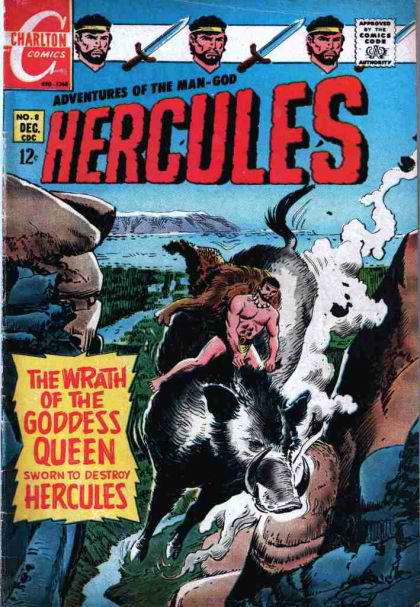
hercules-dellhercules-unchained-dell1When bodybuilder turned actor Arnold Schwarzenegger brought Robert E. Howard’s Conan the Barbarian to the big screen in a pair of stylish costume dramas in the early 1980s, it ushered in a Sword and Sorcery craze with scores of imitators on the big and small screen eager to recapture the first film’s runaway success. For many, it was as if history was repeating itself for in the 1950s, bodybuilder turned actor Steve Reeves had starred in a pair of Sand and Sandal epics, Hercules and Hercules Unchained that created a similar sensation. The Italian sword and sandal craze (or peplum, to use their proper title) dominated the European box office in the late 1950s until the advent of the so-called Spaghetti western in 1964. The film that started it all was Pietro Francisi’s The Labors of Hercules (1957) which was dubbed in English by Joseph Levine’s fledgling Embassy Pictures and released as Hercules by Warner Bros. in the US in 1958. Its success led to a Dell Comics adaptation by the legendary John Buscema in 1959.

The plot of this first film was a reworking of the Greek myth of Jason and the Golden Fleece with Heracles (going by his Roman name, Hercules) promoted from a supporting player to the lead role. Of course within a few years, Charles Schneer and Ray Harryhausen would cover much of the same territory with Jason and the Argonauts (1963) creating a lasting classic which would quickly supplant the movie that started it all. The latter film’s longevity is largely due to Harryhausen’s superb stop motion effects work which continues to influence film-makers after half a century.

Read More Read More

Goth Chick News: The Woman In Black is Coming for You… Again (and Again)

Goth Chick News: The Woman In Black is Coming for You… Again (and Again)

image0062Apparently The Woman in Black truly is a supernatural, immortal being.

When we first told you about it, the seriously creepy novel by Susan Hill was a long-running play in London’s West End, a made-for-TV movie in the UK, and barely a rumor from Hammer Films about a theatrical remake starring Daniel Radcliffe (Harry Potter); which turned out to be true after all.

Thankfully that bit about it potentially being shot in 3D never materialized…

At least not yet.

Hammer Films, which grossed $112 million globally on a $17 million investment has already made the no-brainer announcement that it’s moving forward with a sequel and perhaps more.

The Woman in Black: Angels of Death is currently in development with Jon Crocker once again writing the script based on a story by Susan Hill.

But don’t look for this one at your local bookseller, at least until after the movie is released sometime in 2014. Ms. Hill got busy on the follow up at the behest of Hammer Films.

The first film saw Radcliffe as lawyer Arthur Kipps who travels to Eel Marsh House on an assignment, only to discover the house belonging to his client is haunted by the ghost of a woman who is determined to find someone and something she lost.

The Woman in Black: Angels of Death will take place during World War II, forty years after the events in the original. Daniel Radcliffe will likely not be involved though there have been some recent rumblings that a cameo isn’t out of the question for continuity reasons.

Read More Read More

Reimagining Star Wars as West Wars

Reimagining Star Wars as West Wars

west-wars-vaderI usually ignore the endless stream of Star Wars fan creativity here on the blog — Lego remakes, the Silent Star Wars, and numerous others. Black Gate is all about shining a light on neglected fantasy… if you think Star Wars is neglected, it’s because you’re blind and deaf and you live on Easter Island.

But every once in a while a simple idea comes along that reduces me to a 12-year old Star Wars fanboy again. That’s what happened yesterday when I discovered Sillof.com, the brainchild of Indianapolis, IN, sculptor Sillof, who specializes in making custom action figures and also makes props for films.

Sillof has created a line of action figures called West Wars, featuring a brilliantly realized cast: Luke S. Walker, a young man living on the outer borderlands with his poor aunt and uncle, Leah Orango, daughter of one of the most prominent ranch families in the territory, “Old” Bennet Kennelly, one-time sheriff who was driven into hiding when his former deputy turned on him, and the villainous Sheriff Akan “Death” Vardas, enforcer for the corrupt robber barons and railroad tycoons.

The entire cast is instantly recognizable, even though they’re all in period garb. Sillof has done the same with other periods, giving names and faces to the cast of Samurai Wars, World Wars, Noir Wars, Serial Wards, and others.

Besides making me daydream of someday watching a version of Star Wars set in a western town — sort of like watching MacBeth set during the US Civil War, or Romeo & Juliet in 1950s Brooklyn, both of which I have done — Sillof’s creations remind us just how universal the themes of Star Wars are. And in fact, just how fluid story is… how easy it can be to move the props of narrative to a different stage to make it fresh spin.

Not to mention that they vindicate a decades-long fascination with action figures. Thanks, Sillof!  You the man.

Courtney Crumrin and the Night Things by Ted Naifeh

Courtney Crumrin and the Night Things by Ted Naifeh

courtney-crumrin-1Be honest.  If you had magical powers when you were a teenager, what would you have done?  How long would you have walked the path of righteousness before cursing the school bullies?  Before casting a spell to make yourself popular?  Before just flat-out killing bad people?  Would you have made friends with elves … or goblins?

Ted Naifeh’s series of fantasy comics for young people (the back label says it’s appropriate for children ages 7 and up), introduces us to Courtney Crumrin on the day her vapid parents move in with her grand-uncle, Aloysius.  After a few restless nights, she discovers that her grand-uncle is more than simply a curmudgeonly hermit.  He’s also a wizard, more feared than respected by his fellow magicians, occasionally called upon to handle those supernatural problems that others don’t want to handle.  Going through his collection of grimoires, she begins her own self-guided education in the magical arts.  In the first volume, she traps a child-eating goblin, enchants herself to become the most popular girl in school, travels to the faerie kingdom to swap out a changeling for a human infant, and gets replaced by a doppelganger who turns out to be nicer than her.

Courtney is an intelligent young woman who’s just naturally drawn to the darker parts of this world, a cynical yet moral protagonist.  These early stories tend to rely a bit much on the “and then her uncle saved her and put everything right” solution; but they effectively convey a child going through those early learning stages, both of magic and of the harsh truths about life.  I’m glad that, after years out of print, the original volumes are being reprinted, even as a new series of adventures begins.