Browsed by
Category: Blog Entry

The Series Series: Tales from Rugosa Coven by, Um, Me
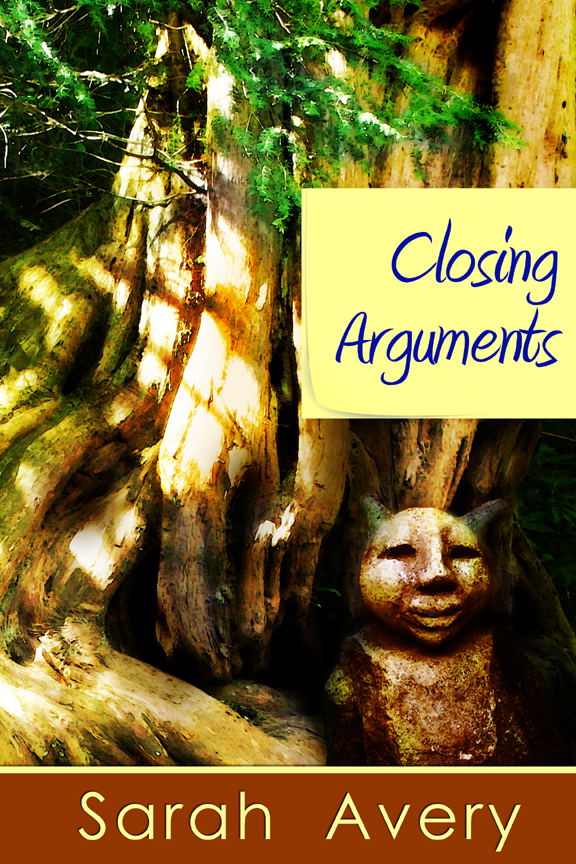
The Series Series: Tales from Rugosa Coven by, Um, Me

While we wait for my current publisher to send me the new cover art, here’s my last publisher’s art for a novella in the Rugosa Coven Series.

A tight deadline for turning around my galley proofs meant I had to choose: either skip my regular blogging gig here, or blog about the only book I’ve had time to look at for the past two weeks: my own. I can’t very well review a book I wrote–not just because of the temptation to brag about it, but also because the nitpicky galley proof process is forcing me to second-guess every word of it, at a point in the production process in which only a few of those words can be changed. Should you buy my book? If anyone had asked me last night while I was doing battle for the last time with a paragraph that has been driving me crazy for the past seven years, I honestly don’t know what I’d have said. John O’Neill assures me that Black Gate‘s readers will be interested in my own experience writing a fantasy series and preparing it for publication, so here goes.

Once upon a time, there was a call for short story submissions from a horror magazine. The editors were looking for very short works of psychological horror on the theme of “the life interrupted.” I tend to write long, and I’d never written horror before (and since the story that came to me grew up to be a comedy, I still haven’t), so I thought I’d challenge myself by trying to write something for the call. I wanted to start with a character whose life, pre-interruption, was already unusual. My protagonist arrived in my head by way of this personal ad on the fictitious dating website PaganSingles.com:

Divorced Wiccan female, 32, seeks realistic rebound guy. Petite and trim brunette. Enjoys the ocean, 19th century novels, long Sunday mornings with the New York Times. Atlantis cranks need not apply.

What would be the most horrifying interruption possible in the life of a skeptical post-modern Neo-Pagan who prides herself on not being a New Ager? Discovering that the New Agers were right about something, anything, and why not Atlantis?
Read More Read More

New Treasures: The Tilting House by Tom Llewellyn

New Treasures: The Tilting House by Tom Llewellyn

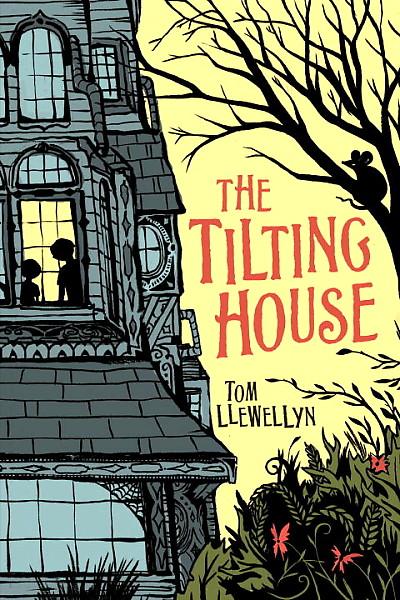
The Tilting House-smallI love kid’s books. It was kid’s books like Alfred Hitchcock and the Three Investigators and The Case of the Marble Monster that first taught me to love reading, and I’ve never really lost my appreciation for straight-up adventure tales, or a good spooky mystery.

So I still buy them from time to time. And overall, the same story elements appeal to me today that did in 1974, when I was 10 years old:  treasure maps, strange inventions, haunted houses, and rats with hidden agendas. All the building blocks of drama, really.

Which explains why Tom Llewellyn’s The Tilting House appealed to me the moment I laid eyes on it, and left me unable to put it down until I had purchased it:

Talking rats. Growth potions. Buried treasure.

Brothers Josh and Aaron Peshik are about to discover that their new home with the tilting floors hides many mysteries. When the boys and their neighbor Lola discover the hidden diary of F.T. Tilton, the brilliant but deranged inventor who built the house, they learn a dark secret that may mean disaster for the Peshik family. Can the kids solve the riddles of the tilting house before time runs out?

Mad science, mischief, and mishaps combine in the suspenseful and imaginative tale of The Tilting House.

The Tilting House was Tom Llewellyn’s first novel; he followed it with A Matter of Life and Seth: Life is a battle. High School is Murder in 2013.

The Tilting House was published by Trigygle Press, a division of Random House, in April 2011. It is 152 pages, priced at $15.99 in hardcover and $10.99 for the digital edition. It is illustrated by Sarah Watts, who also did the colorful cover.

Nobody Gets Out Alive: Writing Advice from the Cheap Seats

Nobody Gets Out Alive: Writing Advice from the Cheap Seats

WritingBefore I was published, I read a lot of articles and books about writing, hoping to improve my craft. As I progressed, it became more difficult to find sage advice, because so much was slanted toward the novice writer just starting their first steps on the path. What I’d like to do today is pass along some tips for the intermediate writers out there — those who have been honing their work for a couple years with the goal of getting published.

One of the biggest hurdles I faced when coming up was in my head. When I first started, I wrote in my spare time. Just whenever I felt the urge, and not with any consistency. Even when I decided during my college years to switch my major to English with the goal of becoming a career novelist, I was still treating it like a hobby. I think I was more intrigued by the idea of being a writer than the reality, which sounded like a lot of work.

Taking that next step toward being a “professional” writer meant changing my habits, and my state of mind.

1. Write every day

Everyone has school or a job, family obligations, friendships that require nurturing, and so on. But putting your butt in the chair and writing for a specific amount of time every day builds a habit, and that habit will see you through some tough spots down the road. You won’t always feel like being creative, but you still need to put in the time. Think of it as an investment in your career. You have to put in the work, day after day, for months and years on end. Treat writing like a profession, and others will start to see you as a professional.

Read More Read More

Ancient Worlds: I Have Heard the Sirens Singing Each to Each…

Ancient Worlds: I Have Heard the Sirens Singing Each to Each…

"Just a little peril! I can handle it!" "No, sir, it's too perilous!"
“Just a little peril! I can handle it!”
“No, sir, it’s too perilous!”

So Odysseus is still trying to find his way home, and if it feels like we’ve been talking about this trip forever, imagine how he felt.

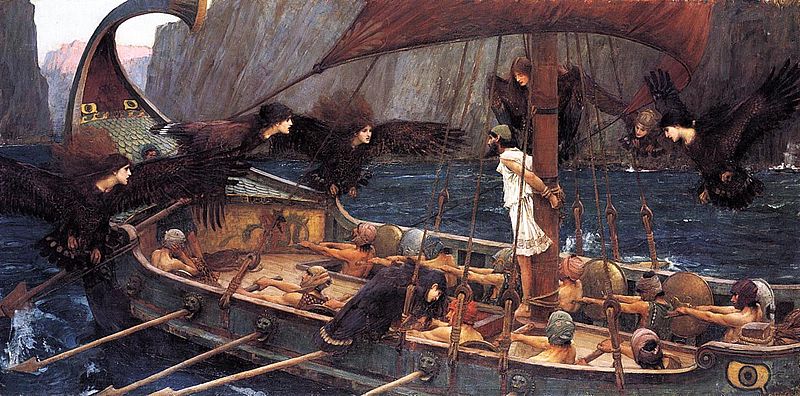
In order to get home, Circe tells Odysseus he will have to sail past the Sirens. Homer tells us these are beautiful sea goddesses who lure men to shipwreck on the rocks around their island. How? With their singing.

In order to make certain this doesn’t happen to his own men, Odysseus orders them to stuff their ears with wax so that they can’t hear the Sirens’ song. But he is unable to pass up the opportunity to hear them himself. Instead, he leaves his ears open but has his men lash him to the mast so that he cannot redirect the ship or jump overboard.

Modern interpretations of the Sirens have taken several different angles to explain their power, usually with two variations. Either their voices themselves have magic powers that lure people in, or the seduction is taken far more literally.

Read More Read More

Deepest, Darkest Eden edited by Cody Goodfellow

Deepest, Darkest Eden edited by Cody Goodfellow

oie_11233710dfgxIM2cClark Ashton Smith, one third of the Weird Tales triumvirate along with H. P. Lovecraft and Robert E. Howard, has been a favorite of mine ever since I bought a copy of the Lin Carter-edited collection Hyperborea. I was thirteen or fourteen and Smith’s archly told stories of the titular prehistoric land and its impending doom before an encroaching wall of ice, stunned me. I was long familiar with Lovecraft’s purple prose, yet nothing had really prepared me for Smith’s cynical, lush, and utterly weird writing. The stories were stunning and I was a fan.

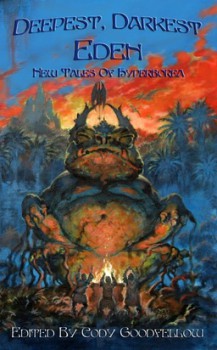
I was pretty excited when John R. Fultz announced that he had a story in soon-to-be-published Deepest, Darkest Eden,  a collection of new stories edited by Cody Goodfellow and set in Smith’s Hyperborea. As soon as I finished reading Fultz’ post (and letting my brain drink in the gloriously pulpy cover by Mark E. Rogers) I headed over to publisher Miskatonic River Press’ site and ordered my copy. I couldn’t wait to get the return to Clark Ashton Smith’s decadent, dying land into my hands.

For me, stories set in someone else’s created world, or using their characters, need to center on what makes the original special. They don’t need to replicate it exactly, and with Clark Ashton Smith’s idiosyncratic prose it would be a mistake to try, but they should aim for similar artistic goals. Ryan Harvey, in his long article about Smith’s Hyperborean Cycle, concluded that it’s an “unusual medley of elements, with Lovecraftian themes rubbing against satiric jabs, elevated mocking language, black jokes, and a sense of a slow, chilly annihilation that cannot be escaped”. That gives any author setting out to play in Smith’s imaginary Hyperborea a wide array of ideas to pursue.

Many of the stories in Deepest, Darkest, Eden — and there are eighteen plus two poems — are very successful at meeting my test for success. Several of the authors have clearly subsumed the alternately funny and despairing world view of Smith and mixed it with their own talents to create worthwhile additions to the Hyperborean Cycle.

Read More Read More

Neoclassical Adventure

Neoclassical Adventure

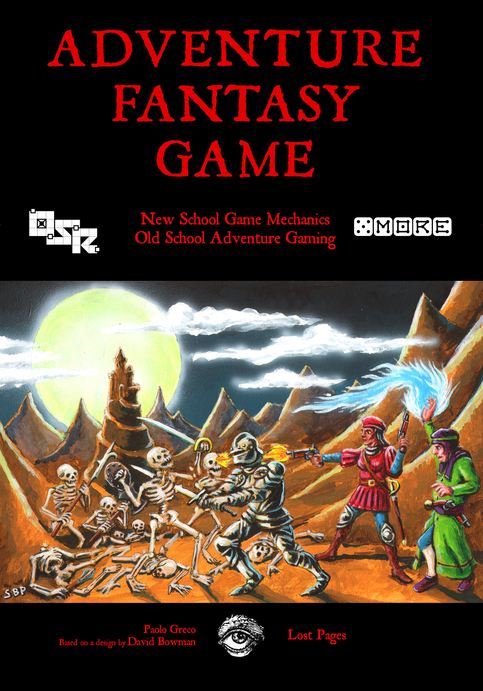
afgIf you’ve been following the online discussion of tabletop roleplaying games (especially fantasy roleplaying games) over the last few years, odds are good you’ve heard of the “Old School Renaissance.” For that matter, if you’ve been following the RPG coverage here at Black Gate, you’ve probably already noticed this term being used in numerous blog entries before this one. As folks online are wont to do, some will quibble and kvetch about the precise meaning of the OSR (as it’s come to be known; it even has a logo!), but, at its most basic, the Old School Renaissance is a renewed appreciation for the RPGs of the 1970s and ’80s, as well as a renewed interest in playing these classic games.

Gamers being what they are (and always have been), it wasn’t long after the OSR picked up steam that people wanted to start producing new material for their favorite RPGs, a desire facilitated by the Open Gaming License and System Reference Document that Wizards of the Coast released at the same time as the Third Edition of Dungeons & Dragons in 2000. Together, they made it possible to create and sell “clones” (or “retro-clones”) of popular roleplaying games from the past, games that are in many cases are long out of print or locked away in the IP vaults of a corporation. Want to write an adventure for your beloved 1981 edition of D&DLabyrinth Lord lets you do that. Want to publish a new campaign setting for AD&D? OSRIC gives you the tools for just that. There are also clones for games like RuneQuest, Gamma World, Chill, and many more, not to mention many older games that have come back into print as a result of the renewed interest the OSR has generated in them. Whatever your favorite game of the past, odds are good that you’ll be satisfied.

There’s another category of old school RPGs, however. They’re not clones, since they aren’t modern-day restatements of older rules sets, but they do take clear inspiration from their predecessors of yore. They are, for lack of a better term, neoclassical roleplaying games.

Read More Read More

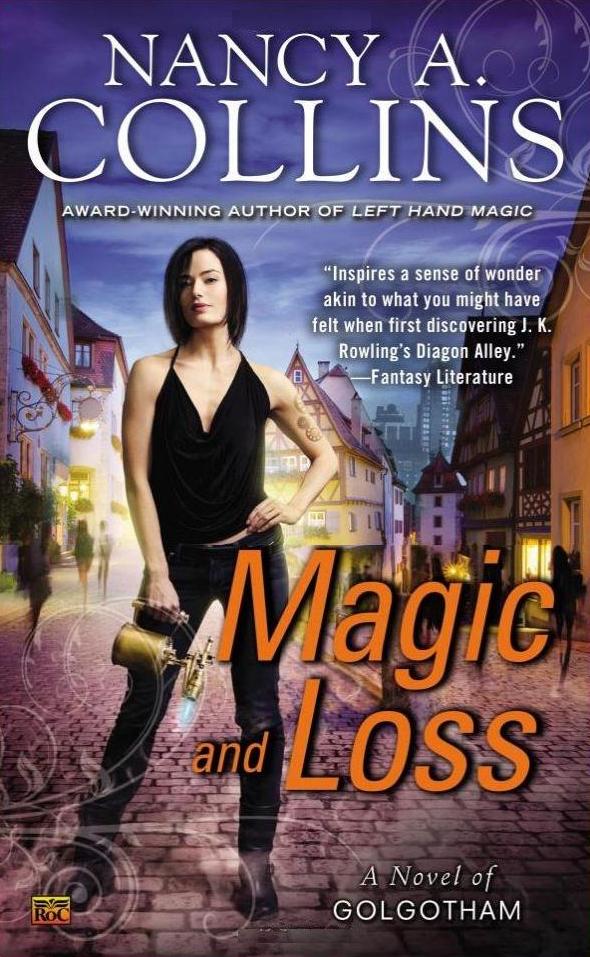
New Treasures: Magic and Loss by Nancy A. Collins

New Treasures: Magic and Loss by Nancy A. Collins

Magic and Loss-smallNancy A. Collins has had a long and distinguished career in dark fantasy. Her first novel, Sunglasses After Dark (1989), became an immediate classic of vampire fiction, and her character Sonja Blue went on to appear in two additional novels: In The Blood (1992), and Paint It Black (1995). Her three-volume Vamps series from HarperTeen began in 2008, and her brand new adult series Golgotham began in 2010 with Right Hand Magic, followed a year later by Left Hand Magic.

The third volume, Magic and Loss, arrived last week, and it continues the tale of Tate Eresby, an artist who moves to Golgotham, Manhattan’s centuries-old supernatural district. The neighborhood is populated by creatures from myth and legend, but its most prominent citizens are the Kymera, a race of witches who maintain an uneasy truce with New York’s human population.

It has been several months since Tate Eresby developed her new magical ability to bring whatever she creates to life, but she is still learning to control her power. Struggling to make a living as an artist, she and Hexe can barely make ends meet, but they are happy.

That is until Golgotham’s criminal overlord Boss Marz is released from prison, bent on revenge against the couple responsible for putting him there. Hexe’s right hand is destroyed, leaving him unable to conjure his benign magic. Attempts to repair the hand only succeed in plunging Hexe into a darkness that can’t be lifted — even by news that Tate is carrying his child.

Now, with her pregnancy seeming to progress at an astonishing rate, Tate realizes that carrying a possible heir to the Kymeran throne will attract danger from all corners, even beyond the grave…

Nancy Collins has been writing dark urban fantasy since before it existed as a sub-genre, and she still does it far better than most. Magic and Loss was published November 5th by Roc; it is 290 pages, priced at $7.99 for both paperback and digital versions.

See all of our recent New Treasures here.

Unlikely Story: BG Interviews the Editors

Unlikely Story: BG Interviews the Editors

Closed dooers slider2It’s been nearly three years since The Journal of Unlikely Entomology made its first appearance, and while this multi-legged publication focused initially on that fertile but narrow intersection of spec fic and bugs, the magazine has since branched out, changed its name, and adopted a rolling series of varied themes (the latest being the upcoming Journal of Unlikely Cryptography, now accepting submissions).

Unlikely Story pays pro rates for fiction, a rarity these days, and manages to make the stories they present look sharper than switchblades by moonlight.  Here’s my interview with editors A.C. Wise and Bernie Mojzes.


Unlikely Story has not only shortened its name, you’ve upped the pay rate. Nobody does both those things in one short span.  Have you gone quietly mad?

A.C.: That implies we weren’t mad to begin with… I mean, we started off publishing a magazine exclusively about bugs, how sane can we be?

Bernie: Indeed.

Read More Read More

Arak Interlude: Sexuality in Comics and Culture

Arak Interlude: Sexuality in Comics and Culture

ARAK7RLast week I promised that today’s post would touch on the topic of sexuality in comics and culture. The jumping-off point for that discussion is Arak, Son of Thunder issue #11, which I mislaid and still have not located. So, in lieu of a detailed plot synopsis of that issue (still forthcoming, as soon as I figure out where it absconded to), I will instead delve right into the broader memories that this comic brings back, demonstrating how different my preadolescent experience was in the 1980s from the media culture of youth today.

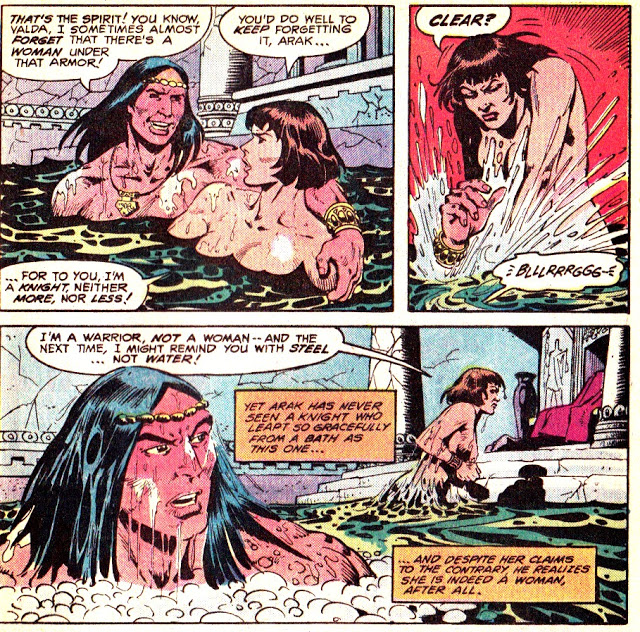
I can remember opening the pages of Arak, Son of Thunder issue #11 — the first issue of Arak I ever bought — and being shocked (and thrilled) by the scene in which Valda, the Iron Maiden sheds her armor. She has been moved by the pipes of the satyr to embrace her femininity, her freedom, and to dance. Somehow, though, she realizes what the satyr is up to; the spell is broken, and her carefree visage turns to rage. Then she’s standing there, fists clenched, looking like she’s about to rip a certain satyr’s horns off, but still naked. This was a comic approved by the “Comic Code Authority,” so she’s mostly bathed in shadow. Still, standing there in silhouette, she was naked!

When I saw that comic again, thirty years later, I couldn’t help but smile at the innocence and naiveté of that ten-year-old boy, straining his eyes to see if he could make out anything more through that shadow of black ink. I mean, Ernie Colon draws Valda beautifully, but for all the impression it made on me then, there’s not much on the actual page to titillate — far more is concealed than revealed.

No doubt it is nearly universal that when one’s age reaches the double digits, a new curiosity begins to dawn about the opposite sex, about the physical differences, and what those physical differences signify (you know, just what do adults do when they get alone together and take their clothes off? To put it bluntly). What varies greatly is how youth of different cultures and different generations manage to satisfy that inquisitive curiosity. And, of course, what might be titillating or even scandalous for one generation might not even warrant the batting of an eye for the next.

I want to steer clear of ranging too far on that last point: one could write a whole book about changing mores and stimuli, spanning from a Victorian era when a woman’s exposed ankle could cause heart palpitations, to contemporary times when a woman can turn up at nearly any beach in nothing but a G-string bikini without fear of getting arrested for indecent exposure. Indeed, whole books have been written on that subject. Instead, I’m going to narrow in on one preadolescent boy in the early ‘80s, and talk about how the culture was right then, in that little snapshot of pop-culture history.

Read More Read More

Watch the First Trailer for Winter’s Tale

Watch the First Trailer for Winter’s Tale

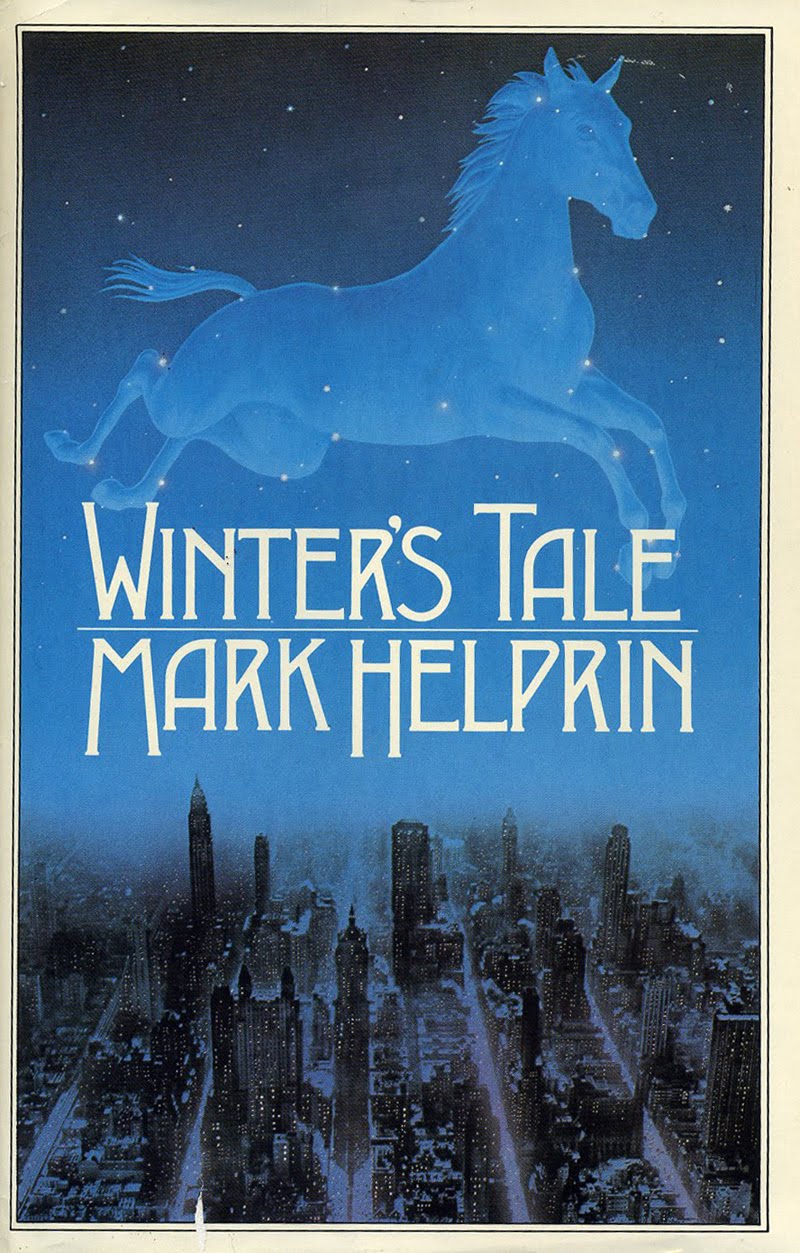
Winter's Tale Mark Halprin-smallMark Helprin’s 1983 novel Winter’s Tale was perhaps the prototype for modern urban fantasy. No, it didn’t have vampires or werewolves, but it was a star-crossed love story set in a mythic New York City, with a great villain — and a magical horse.

Mark Helprin isn’t really known as a fantasy writer; he’s chiefly known for his literary novels A Soldier of the Great War, Memoir From Antproof Case, and others. His three books for children — Swan Lake, A City in Winter, and The Veil of Snows — are certainly magical, and not just due to Chris Van Allsburg’s superb illustrations, but Winter’s Tale is his only adult work that crossed over into genre territory.

But Winter’s Tale was joyfully embraced by fantasy fans, and not simply because the main character is a thief. It is a epic tale of love, loss, and the mysteries of death.

The story opens in an imaginary 19th Century Manhattan, an industrial Edwardian-era metropolis that shares some characteristics with the city we know. It centers on Peter Lake, the son of two immigrants denied admission at Ellis Island.

Desperate, Peter’s parents set him adrift in a tiny ship in New York Harbor, where he is eventually found among the reeds and adopted by the rough-and-tumble Baymen of the Bayonne Marsh. Peter grows up to be a mechanic — and a skilled cat burglar. He who stakes out a fortresslike mansion in the Upper West Side and, when he’s certain it’s unoccupied, he breaks in.

But the home isn’t empty. Inside is Beverly  Penn, a shut-in heiress dying of consumption, and the most beautiful woman Peter has ever seen. What begins as a robbery becomes a love story — and a driving quest that spans nearly a century.

Winter’s Tale was adapted for the screen by Akiva Goldsman, who is also directing. It stars Colin Farrell, Jessica Brown Findlay, Russell Crowe, and Jennifer Connelly, and is scheduled for release on Valentine’s Day of next year. Warner Bros. has released the first trailer for the film, and it’s shaping up to be one of the most promising big-budget fantasies of 2014. Check it out below.

Read More Read More