Browsed by
Category: Blog Entry

Call For Submissions: Mysterion

Call For Submissions: Mysterion

A few months ago, I announced that the self-published book review column would be going on hiatus while I worked on a new project. It’s now time to talk about that project here.

Mysterion's cover art by Rob Joseph.
Mysterion’s cover art by Rob Joseph.

My wife and I have decided that we have too much time and money. The obvious way to rectify this situation is to publish a pro-paying speculative fiction anthology. And as you can tell by the beautiful cover art we acquired, we’ve already begun our personal wealth redistribution program of transferring money from us to other artists.

The anthology is called Mysterion: Rediscovering the Mysteries of the Christian Faith, and it is now open for submissions. As the name gives away, we’ll be publishing stories that engage with Christianity. While the phrase “Christian speculative fiction” occasionally appears on our website, our anthology is not what is often meant by “Christian fiction”: stories written by Christians and for Christians with nary a heresy nor a swear word to raise an eyebrow. We’re not looking for preachy stories, nor are we necessarily looking for unambiguously pro-Christian stories. There’s no need for the writer or the story to pass some theological standard for Mysterion. On the contrary, we’re hoping to be challenged.

Read More Read More

Legendary Pictures to Make Godzilla Vs. Kong

Legendary Pictures to Make Godzilla Vs. Kong

King Kong vs Godzilla

BG blogger emeritus (and part time Hollywood correspondent) Ryan Harvey has slipped us the word that Legendary Pictures, the makers of the 2014 blockbuster Godzilla, has green-lit a trio of sequels featuring the monster-hunting organization Monarch, including a re-make of that tender slice of celluloid heaven, King Kong Vs. Godzilla. Here’s part of yesterday’s  press release from Warner Bros:

All-powerful monsters become towering heroes for a new generation, revealing a mythology that brings together Godzilla and Legendary’s King Kong in an ecosystem of other giant super-species, both classic and new. Monarch, the human organization that uncovered Godzilla in the 2014 film, will expand their mission across multiple releases… The initial trio of films are 2017’s Kong: Skull Island; Godzilla 2 in 2018; and then Godzilla Vs Kong, arriving in theaters in 2020… Production on Kong: Skull Island begins October 19th.

The original King Kong Vs. Godzilla was released by Toho Studios in Japan in 1962, and became an instant monster-movie classic. Trust me, it was biblically awesome.

Read all the details at Deadline.

In the Trenches: Warhammer 40K: Gaunt’s Ghosts: Straight Silver

In the Trenches: Warhammer 40K: Gaunt’s Ghosts: Straight Silver

Straight Silver Dan Abnett-smallThe world of Aexe Cardinal has been largely separated from galactic civilization for several centuries. Their technology is roughly on the level of ours around the time of the First World War — which is significant, because for almost half a century, the dominant nations of the planet have been in a deadlock with the Chaos-tainted Republic of Shadik. Their war is fought between lines of trenches across an ancient, toxic no man’s land. In all the ways that matter, it is the First World War, amplified in scale, duration, and stakes.

And who better to break a deadlock than the Imperial Guard, spearheaded by the tough-as-nails bravos of the Tanith First-and-Only?

The title, Straight Silver, refers to the foot-long war-knives carried by all the Tanith. I typically imagine them looking something like the classic Swiss bayonet. It’s a fitting title, because the cramped spaces of trench networks offer plenty of opportunity for blade-work.

After the intense battles of Honor Guard and Guns of Tanith, though, Straight Silver feels like a quiet interlude. There’s still plenty of fighting, but the only encounter which really stood out to me was a last-ditch defense of an isolated manor occurring in the last 20-30 pages of the novel. There’s another lengthy sequence where Gaunt personally leads a team across no man’s land to take out a battery of massive bombardment weapons, and while it’s certainly solid, it doesn’t particularly stand out from the other, similar sequences in the series.

Part of the problem is that, in recreating the conditions of a World War One style deadlock, Abnett hasn’t really given the Shadik troopers any unique features to make them more than generic bad guys — not even funny hats. It’s also not specified exactly how Chaos has affected them. The Shadik Republic thus stands out among the Ghosts’ adversaries only for its blandness.

Read More Read More

Comedy in Fantasy: The Ebenezum Trilogy by Craig Shaw Gardner

Comedy in Fantasy: The Ebenezum Trilogy by Craig Shaw Gardner

A Malady of Magicks-smallThe late Terry Pratchett left a large gap in the Comedic Fantasy genre which, for many, may never be filled. Love him or hate him (I have found myself doing both over the years), he pretty much defined the field.

I first came across Craig Shaw Gardner not long after I read The Colour of Magic. Giving away my age here, but when I read The Colour of Magic I think only the third Discworld book, Equal Rights, has just been published. Needless to say, like anything new, different and — more precisely — successful, there was demand for more of the same. Enter Craig Shaw Gardner. While I doubt they were consciously trying to emulate Pratchett, it is possible that Gardner’s publisher may have drawn a parallel of sorts, and decided to try and brand his novels in a similar way.

Thus it was that I encountered A Malady of Magicks, which immediately caught my eye with its familiar cover style. The cover blurb:

In which a wizard with a nose for magic gets a very bad cold…

was intriguing. Add to that a Josh Kirby cover and one can start to see the parallels, intended or not. I didn’t buy the book, but made a mental note of it, and saw that in due course books two and three appeared: A Multitude of Monsters and A Night in the Netherhells respectively. Others followed.

I was of course looking at the British versions, published by Headline in 1988 and 1989 and as mentioned, all with Josh Kirby covers. The series was originally published in the US by Ace in 1986 and 1987, with the first book, A Malady of Magicks, reprinted three times in 1986.

Read More Read More

You Can’t Go Home Again: The Annotated Sword of Shannara: 35th Anniversary Edition by Terry Brooks

You Can’t Go Home Again: The Annotated Sword of Shannara: 35th Anniversary Edition by Terry Brooks

oie_1203939lEtutubTOnce upon a time, said the storyteller, a band of brave travelers set off into the wilderness in desperate hope of destroying a mighty dark lord. The only thing that could destroy the villain was a single magic talisman wielded by one specific young man. Along the way they were beset by enemies known and unknown and eventually became separated. Some continued on the original quest while others decided to warn their allies in a mighty walled city of impending attack.

In the end, the young hero, after confronting his own inner demons, defeated the villain. At the same time, the walled city staved off defeat long enough that it could be saved by the propitious arrival of an ally’s army. The world was set right.

“Stop! Stop!” cried some in the audience. “We already know this one!”

“Shut up!” yelled others. “We liked it before and we like it this time too!”

The storyteller said, “I know you’ve heard it before, but I’m telling it my own way and I think you’ll like it.” Much of the audience cheered.

In the back of the room, a man and a woman smiled and smelled success.

In 1977 when I was eleven, I, along with hundreds of thousands of others, was part of the group that yelled “Shut up!” For us it didn’t matter that chunks of Terry Brooks’ The Sword of Shannara read like he’d simply xeroxed The Lord of the Rings, sped it up, and stripped out the hard parts, songs, and poetry. So what if the Skullbearers bore an uncanny resemblance to the Ring Wraiths and the city of Tyrsis to the city of Minas Tirith? Did it matter that gnomes were suspiciously like orcs? That the whole point of the book was to get a single young man into the dark lord’s kingdom and bring him down with a certain magic item? Heck no! We loved the first iteration of those things and wanted them all over again. We were happy to read even a slavish imitation of LotR. I read the book in about three days. At over seven hundred pages it was the longest book I had read to date. One friend stayed in his room and read it in a day.

Read More Read More

The Top 50 Black Gate Posts in September

The Top 50 Black Gate Posts in September

The Book AwardsJay Maynard’s “A Proposal: An Award for SF Storytelling” was the most popular post on Black Gate last month. It’s been read over 30,000 times since September 10th, and garnered nearly 500 comments. If there’s a topic BG readers really care about, it’s clearly SF awards.

The #2 post on the list was our look at the breakout success of Cixin Liu’s novel The Three-Body Problem, the first Chinese-language novel to win the Hugo Award. #3 was Guy Windsor’s very first contribution to Black Gate, “Tips on Writing a Great Swordfight from a Professional Swordsman.”

Rounding out the Top Five for September were Scott Taylor’s Art of the Genre Kickstarter essay, “Why I Hate Stretch Goals and You Should Too,” and Jay Maynard’s report on game designer Ken Burnside’s experience as a Sad Puppy at the Hugo Award ceremony, “Ken Burnside Tells the Hugo Story from the Inside.”

Our Top Ten posts last month also included articles by M. Harold Page (“Conan is My Spirit Guide”), Neil Clarke on “The Sad Truth About Short Fiction Reviews,” William I. Lengeman III defending Children of Dune, Sarah Avery’s “How One Award-Winning Author Thinks About Awards,” and a detailed look at the classic Durdane Trilogy by Jack Vance.

The complete list of Top Articles for September follows. Below that, I’ve also broken out the most popular blog categories for the month.

Read More Read More

The Public Life of Sherlock Holmes: Frederic Dorr Steele

The Public Life of Sherlock Holmes: Frederic Dorr Steele

Colliers Black PeterBack in July, in a post on Sidney Paget, I wrote “Along with Frederic Dorr Steele, Paget is certainly one of the two most significant illustrators of the great detective.” Having covered Paget, now we look at Dorr Steele.

In 1893, Doyle, feeling that writing Holmes stories was holding him back from more important works, did the unthinkable: he killed the world’s most popular detective. In 1902, he revived Holmes for one adventure in his most famous story, The Hound of the Baskervilles, with good old Sidney Paget illustrating again. Doyle made it clear this was an earlier case of Holmes’ and that the great detective was, in fact, still dead.

The stories from The Adventures of Sherlock Holmes and The Memoirs of Sherlock Holmes had been illustrated by various artists in America, where they appeared in different magazines and newspapers. There was no sole source for the stories, as there was in England with The Strand. For the most part, the drawings were rather uninspired

Some of Paget’s were also used, but often just a few, not the full set for each story. Thus, a common image of Holmes had not evolved from the drawings. There was no Sidney Paget in the United States. But there was about to be!

Read More Read More

Things Your Writing Teacher Never Told You: Choosing Your Narrative Point of View, Part 2: Who is Your Point of View Character?

Things Your Writing Teacher Never Told You: Choosing Your Narrative Point of View, Part 2: Who is Your Point of View Character?

point-of-view

This is Part 2 in the Choosing Your Narrative POV Series.

Who is Your Point of View Character?

It Might Not Be Your Protagonist. The most common POV choice, particularly for short stories, is for the protagonist to be the POV character. Stories of this type can be written in 1st Person, or Tight Limited 3rd. (More on these terms later in this article.) In very rare cases, they can also be told disguised in 2nd Person.

Your protagonist is the one facing the problem and must be the one who takes the final action that solves the problem and saves the day.

It often makes sense for the protag to be the POV. But there are times when an author chooses to use a sidekick or an observer as the POV character, even when choosing to write the story in 1st Person.

Read More Read More

Discovering Robert E. Howard: Morgan Holmes on Armies of the Hyborian Age: The Cimmerians

Discovering Robert E. Howard: Morgan Holmes on Armies of the Hyborian Age: The Cimmerians

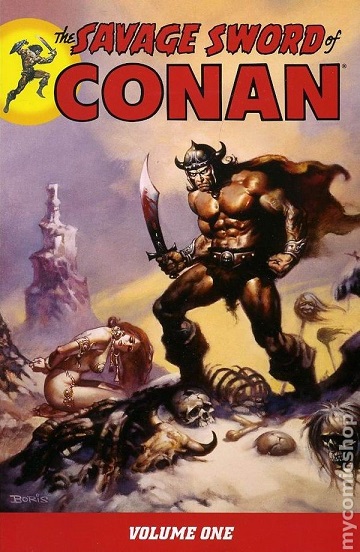
Morgan_AxBecause of REH’s broad diversity in writing, there are a multitude of areas to explore. And as you know from our ‘Discovering Robert Howard’ series, there are a lot of folks who write excellent stuff on so many different areas. Another example is today’s poster, Morgan Holmes. If you’re interested in what I think of as ‘military stuff and Conan,’ he’s writing what you want to read. Like this post!


The Cimmerians are one of the great barbarian peoples of the Hyborian Age. They are also off stage in the Conan stories, though they figure prominently in “The Hyborian Age” essay. Putting together an idea how the Cimmerians fought and perhaps how they looked is a bit of detective work and some supposition.

Robert E. Howard’s Cimmerians are descendents of refugees from Atlantis. From the Kull stories, the Atlanteans are a vigorous, warlike people. In a death grip with the Picts after the Cataclysm, they sink to apedom and then work their way back to barbarism from a sub-savage bestial existence. Tall, dark-haired, with blue or gray eyes, you can see the same type in Ireland today.

Cimmeria itself is described in the first version of “Phoenix on the Sword:” “It is all of hills, heavily wooded, and the trees are strangely dusky, so that even by day all the land looks dark and menacing.”

There is mention of cold winds and snow. Cimmeria is a hard land that breeds a hard people. Natural selection has produced a tough people inured to hardship. Names of Cimmerians given are all Gaelic. The Irish and Highland Scots are the pure blooded descendents of the Cimmerians thousands of years later according to “The Hyborian Age.”

Read More Read More

Hey! Let’s Not Get TOO Cozy

Hey! Let’s Not Get TOO Cozy

Tooth and Claw Jo Walton-smallLast time I wrote about cozy mysteries and whether we might have the equivalent subgenre in Fantasy or SF, and I got a couple of suggestions among the comments that intrigued me more than a little. Now obviously, our version of such a thing wouldn’t have the same conventions and elements as the cozy mystery – there likely wouldn’t be a murder, for one thing – and fellow BG blogger Sarah Avery reminded me of a cozy convention I’d forgotten, that the protagonist is never in any real danger. That doesn’t hold true for any subgenre of either Fantasy or SF, where every character is playing for keeps. As readers, we might feel sure that the main character(s) won’t die, but we often find that living has cost them a great deal.

So, are there Fantasy and SF equivalents to the cozy mystery?

One suggestion we batted around a little was the idea of the “intimate” Fantasy novel. This would be one in which the personal stakes might be very high, but in which the global stakes are minor, or don’t exist at all. This is less unusual for our genres then it used to be.

Just by chance the novel that reached the top of my to-be-read pile most recently was Jo Walton’s Tooth and Claw. I don’t know why it’s taken me so long to get to this one, but I’m now recommending it to anyone who holds still long enough – including you. Right from the start, as you can see from the cover art I’ve included, the novel has been compared to Jane Austen’s Pride and Prejudice, and in that manner, it’s certainly “intimate” in the sense that we’re talking about.

Read More Read More