Browsed by
Category: Blog Entry

GenCon 2017, Pt. 1: Fantasy Deck-Building Games
GenCon 2017, Pt. 1: Fantasy Deck-Building Games

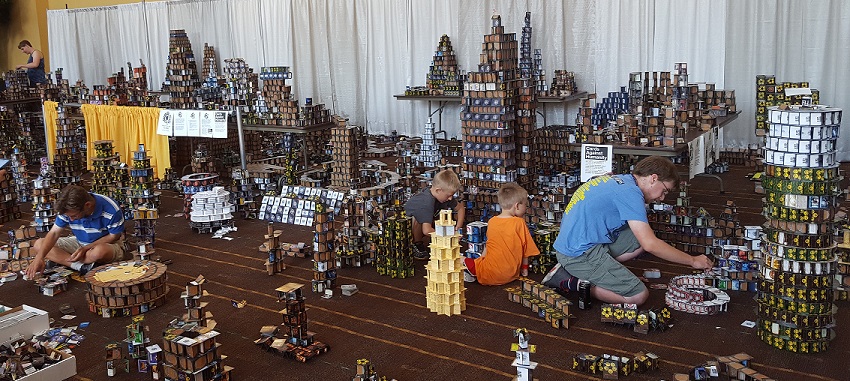
Cardhalla at GenCon is a fundraiser. Over the four day event, donated cards are used to build elaborate towers and other structures. On Sunday, convention goers hurl coins at the structures to topple them ... and the collected funds are donated,
Cardhalla at GenCon is a fundraiser. Over the four day event, donated cards are used to build elaborate towers and other structures. On Sunday, convention goers hurl coins at the structures to topple them … and the collected funds are donated,

This is the 50th year of GenCon, “The Best Four Days in Gaming” convention, since its humble beginnings as a small convention of gamers in Lake Geneva. In what I believe is a first ever in Indianapolis, the convention is completely sold out, without offering any at-the-door purchase of badges. Fortunately, mine was waiting for me in the press room.

Over the years, GenCon has expanded to fill every available space in downtown Indianapolis. In addition to using the entire Indianapolis Convention Center, Lucas Oil Stadium (where the Indiana Pacers play baketball) now house the True Dungeon living dungeon crawl, the game library, and the Mayfair Games play areas, while tendrils of GenCon spread out into the ballrooms and meeting rooms of several hotels on adjacent blocks.

And with the rise of Kickstarter, there are more small, independent game companies than ever vying for attention, promoting not only their existing lines of products but also their upcoming Kickstarter campaigns. Trying to make sense of all of the different games is easiest if I try to tackle them by theme and play style, and one type of game that seemed prevalent on the first day of the convention were deck-building games with a fantasy theme.
Read More Read More

What’s In A Name?

What’s In A Name?

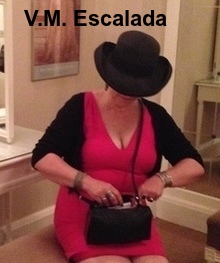
VME labeledSo I’m in my brother’s bookstore, and I’m looking for my latest book, and I’m not finding it. Just as I’m thinking oh really? it strikes me that I’m looking for the wrong name.
I’m not sure how much of a secret it is (none for the people who read the bio at the end of my posts) but besides being Violette Malan, I’m also V.M. Escalada. I have to admit that when my agent first suggested I use a penname, my immediate reaction was unfavourable. There are all kinds of reasons for such a suggestion, however, some of which I touched on in a previous post. Today, I’d like to talk about the actual, practical experience.

At first the idea flustered me more than a little – you know writers, we can always see a worst case scenario. I had plenty of questions, and no one – it seemed – to go to for answers. Don’t get me wrong, my agent, and my editor, had plenty of helpful suggestions, just not for these actual, practical, concerns.

Read More Read More

A Gathering of Ravens by Scott Oden

A Gathering of Ravens by Scott Oden

To you, I am orcneas. To the Dane, I am skraelingr. The blasted Irish would name me fomorach,” Grimnir said, then smote his breast with one black-nailed fist. “But I am kaunr! Do you understand now?”

Grimnir from A Gathering of Ravens


oie_155021fZFaLK07You know me: I’m the guy who reads mostly old swords & sorcery novels and short stories. Aside from a few by Milton Davis and P.C. Hodgell, I haven’t read many new S&S novels. My experience with contemporary fantasy novels has been mostly… disappointing.

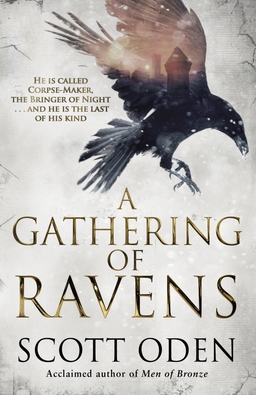
I’m also a guy who is on record as disliking the utilization of orcs in modern fantasy. In the works of their creator, J.R.R. Tolkien, orcs are perversions of elves created by Middle-earth’s satan figure, Melkor. In modern fantasy they’ve become little more than woefully misunderstood warriors — basically fantasy Klingons. So, when Scott Oden sent me a copy of his latest book, A Gathering of Ravens (2017),  and I learned its protagonist was an orc, my hopes weren’t high. Well, Oden’s novel knocked the heck out of any prejudices I had. New or old, this book kicks ass, and is one of the best swords & sorcery novels I’ve read in a while.

Grimnir, the last of his race, lives on the Danish island of Sjaelland, dreaming of revenge against Bjarki Half-Dane, the man who killed his brother, Hrungnir. His desire to cleave his enemy with his trusty seax (a old Germanic sword), leads him from Denmark to England, and finally to the field of Clontarf, in Ireland.

Etain is a young woman, disguised as a man, bound for Roskilde to evangelize the Danes. After a bloody run-in with Grimnir, she finds herself bound to him and forced to act as his guide across the British Isles in search of his prey. With no recourse but to stay by his side, she follows him into the mystic heart of Yggdrasil, the world tree, traveling through time and space. The mismatched pair, devout Christian woman and resoundingly pagan monster, face off against numerous supernatural and mundane foes before reaching the book’s rousing conclusion on a field outside of Dubhlinn. Their story lets up only a few times, but those calmer passages serve to allow magical creatures or armies the time to marshall their forces for the next burst of violence.

Read More Read More

Call for Backers! Solarpunk: Ecological and Fantastic Stories in a Sustainable World Campaign on Kickstarter, in Conjunction with a Video Interview with Sarena Ulibarri, Editor-in-Chief of World Weaver Press

Call for Backers! Solarpunk: Ecological and Fantastic Stories in a Sustainable World Campaign on Kickstarter, in Conjunction with a Video Interview with Sarena Ulibarri, Editor-in-Chief of World Weaver Press

The Kickstarter campaign for Solarpunk: Ecological and Fantastic Stories in a Sustainable World is now live!

What is this, you ask? Well, let me explain the history. Solarpunk is an emerging subgenre that focuses on sustainable energy, and many believe the rest of the world has a head start on the solarpunk movement. This anthology, being funded by the Kickstarter, was originally published in Brazil, in Portuguese, and is known internationally as one of the earliest examples of solarpunk. World Weaver Press wants to bring it to the northern hemisphere and the English language.

I sat down with Sarena Ulibarri, the editor in chief of World Weaver Press, for an interview that explores who she is, what World Weaver Press publishes, and a brief history of solarpunk and this anthology.

Read More Read More

How to Make Your Academic History Book Approachable to the Educated Lay Reader

How to Make Your Academic History Book Approachable to the Educated Lay Reader

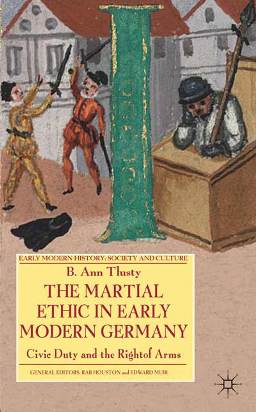
MartialEthic1
A good proportion of exponents of German longsword might have bought this.

Greetings academic editors, writers and publishers! I am an educated lay reader of academic history books.

I hear academic publishing is… differently profitable at the moment, so perhaps you want to have a think about how to engage more people like me.

Really there must be a lot of us — people who want to get at the detail, the evidence, the debate, and so find ourselves buying weighty academic tomes.

We’re military history buffs who want to get into not just of equipment and tactics, but logistics and administration and sooner or later get dragged into context.  You can’t, for example, be fascinated by Count Belisarius without wanting to know more about Byzantine History. Take a look at Osprey, an entire publisher devoted to satisfying that need !

We’re architectural history hobbyists — people who tick off castles and great houses the way twitchers do rare birds — who want to put flesh on the crumbling bones of some corners of history not covered by reliable mass market books. And we’re local historians trying to make sense of musty documents, mounds in fields, and half forgotten traditions.

We’re also Historical Reenactors looking for very specific information on how things were or might have been. We’re Historical European Martial Artists (yes, HEMA is a thing! Modern people do study Medieval Martial Arts!),  looking to contextualise the original martial arts manuals around which our lives revolve.

And we’re writers, looking for inspiration, or just building a storyworld for our characters to inhabit.

Many Black Gate readers must fall into at least one of these categories, and we sometimes get a million hits a month…

I am, of course, all of the above with the exception of “local historian” (since all of western history is my backyard). I’m also a former technical author — conveying technical information to novices used to be my trade — and an author who thinks about writing. So it might be worth your while — O mighty academic editor, writer or publisher! — to hear what I have to say.

Upfront, you don’t need to dumb down or jazz up. The whole point of academic books is that they are academic! Rather you need to stop shooting yourself in the collective feet. Working from the outside in, here’s how…

Read More Read More

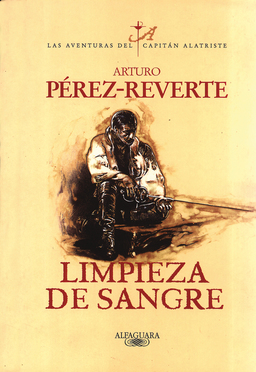
Purity of Blood by Arturo Pérez-Reverte

Purity of Blood by Arturo Pérez-Reverte

oie_822641406YLopEI closed out my review of Captain Alatriste last summer by stating I would be reading more of Arturo Pérez-Reverte’s series in “short order.” That did not happen. Only now, over a year later, have I plunged back into the grimy, deadly underside of Golden Age Madrid. Even more than its predecessor, Purity of Blood (1997) explores the darkest heart of imperial Spain as she, only 130 years after her emergence as the world’s leading power, is collapsing in on herself; collapsing due to endless war, unsustainable debt, corruption at all levels, and unyielding religious fanaticism. Still, Spain remains a mighty empire; if not feared, still respected in all corners, and her subjects proud:

But at the time of this tale, our monarch was still a young man, and Spain, although already corrupt, and with mortal ulcers eating her heart, maintained her appearance, all her dazzle and politesse. We were still a force to be reckoned with, and would continue to be for some time, until we bled the last soldier and last maravedi dry. Holland despised us; England feared us; the Turk was ever hovering ’round; the France of Richelieu was gritting its teeth; the Holy Father received our grave, black-clad ambassadors with caution; and all Europe trembled at the sight of our tercios — still the best infantry in the world — as if the rat-a-tat-tat of the drums came from the Devil’s own drumsticks. And I, who lived through those years, and those that came later, I swear to Your Mercies that in that century we were still what no country had ever been before.

Purity of Blood picks up shortly after Captain Alatriste, in the year 1623. Like that book, this one is narrated by Íñigo Balboa, the son of one of Alatriste’s slain comrades. Íñigo tells the story from late in life, but during its events he is thirteen.

Read More Read More

By Crom: The Tor Conan – Quality May Vary…

By Crom: The Tor Conan – Quality May Vary…

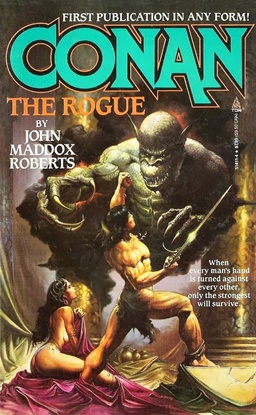
Conan_RogueEvery so often, I get the hankering to read a tale of Conan the Cimmerian (better known as ‘The Barbarian’ thanks to Ah-nuld Schwarzenmuscles).

I usually grab one of the three excellent Del Rey volumes (which Howard Andrew Jones and Bill Ward entertainingly went through – here’s the first installment) and get a quick fix. For a little more reading, I snag one of the Ace/Lancer series edited by L Sprague De Camp (with some help from Lin Carter). And less often, I find one of the Tor paperbacks that I haven’t gotten around to yet and try one of them.

As I mentioned in this post on what qualifies as Conan Canon (say that five times fast!) back in 2015:

‘From 1982 through 2003, eight authors (though primarily four) cranked out 43 new Conan novels for Tor. At two per year, the quality varied wildly, as you can imagine. John M. Roberts’ Conan the Rogue is an homage to Dashiell Hammett’s Red Harvest and one of my favorite Conan books. Steve Perry’s Conan the Indomitable is one of the worst fantasy books I’ve ever read (even though it is a direct sequel to Perry’s Conan the Defiant, which I liked).’

I have maybe two-thirds of the Tor books and have read two-thirds of those (What: I’m channeling Yogi Berra now?). Some of the Tor titles give you at least a bit of an idea what the story is about, such as John M. Roberts’ Conan and the Treasure of the Python and Leonard Carpenter’s Conan of the Red Brotherhood.

But the majority are all titled Conan the (insert vague word here). It’s a litany of titles like Conan the Valorous, Conan the Defiant, Conan the Great, Conan the Formidable: you get the idea. You’ve got to read the back cover to get some clue what the story is about.

The Tor books, pushed out at a punishing pace, are very much a mixed bag. And my experience so far is that more often than not, they fall into the “meh” or worse category.

Read More Read More

The Poison Apple: An Interview with Author Jennifer Brozek

The Poison Apple: An Interview with Author Jennifer Brozek

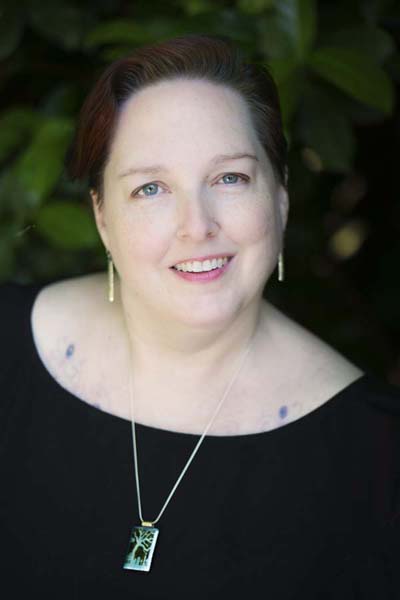
Jennifer Brozek, photo by M. Dutta

Jennifer Brozek is a 2x Bram Stoker Award Nominee, most recently for Last Days of Salton Academy.

Your specialty seems to be YA.

Yes, it has turned into that, but that wasn’t always the case. In the past, I did a lot of tie-in fiction for Shadowrun (cyberpunk with magic) and Battletech, which was Young Adult, but Shadowrun was not. I’ve had the most acclaim for my YA work, and every YA novel I’ve written has been nominated or has actually won an award.

This seems to be a success formula for you.

I’ve discovered that and tend to write for age twelve to seventeen. Many adults like my work, too, and I think a lot of it is because I never talk down to teenagers. If they don’t understand something, they have Google. They can look up something they don’t understand.

Read More Read More

Hobo Fights: A Chat with Image Comics’ Rock Candy Mountain Creator Kyle Starks

Hobo Fights: A Chat with Image Comics’ Rock Candy Mountain Creator Kyle Starks

Rock Candy Mountain Volume One-small

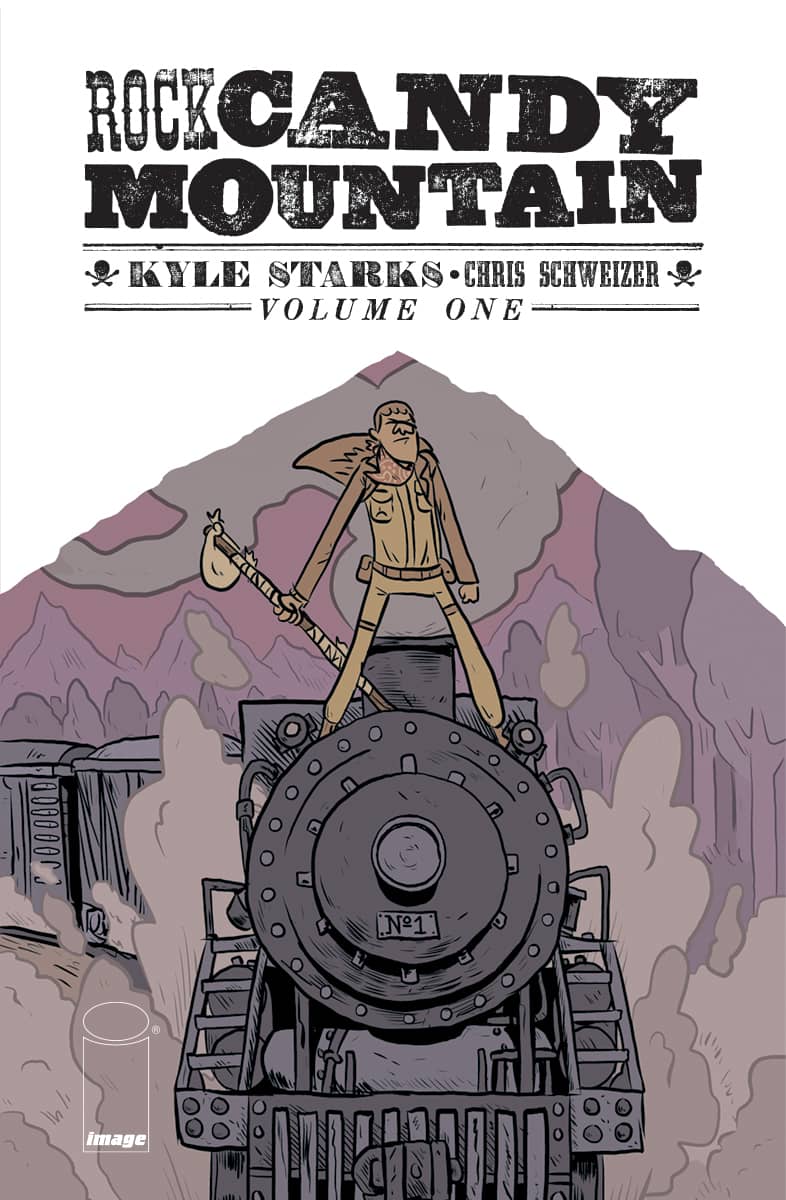
Image Comics is soon releasing the first trade paperback of Kyle Starks’ Rock Candy Mountain, collecting issues 1-4. The original solicitation runs as follows:

Eisner-nominated comic creator Kyle Starks would like to invite you to enter the magical world of hobos. The world’s toughest hobo is searching through post-WW2 America for the mythological Rock Candy Mountain, and he’s going to have to fight his way to get there. Lots of hobo fights. So many hobo fights. A new action-comedy series full of high action, epic stakes, magic, friendship, trains, punching, kicking, joking, a ton of hobo nonsense, and the Literal Devil. Yeah. The Literal Devil.

Who could turn down a description like that? I had a chance to catch up with Kyle for an e-mail interview about this fiesta of fisticuffs and the hobo code of honor.

Read More Read More

How Did That Get Published?

How Did That Get Published?

OdysseyPopeLast time out I talked about how the experience of reading has changed, from listening to the storytellers in the market square, to downloading a book onto your e-reader of choice. Publishing has also gone through some sea changes, though its practical history really only begins with Gutenberg. Before that, as I mentioned in the earlier post, there was more copying than publishing going on.

It wasn’t until professional printers were ubiquitous, however, that what we now think of as publishing really got started. Nowadays people tend to divide the publishing world into “traditional” publishing, with people like DAW, Ace, and Tor, etc. and “self-publishing” where you pay for your books to be printed, or for an e-book to be created (or do it yourself if you have the skills) or you take advantage of the kind of e-publishing that a business like Amazon offers. The point being that you take on all the risk and all the expense yourself.

Read More Read More