Browsed by
Author: John ONeill

New Treasures: Watcher of the Dark
New Treasures: Watcher of the Dark

Watcher of the Dark-smallYou’d think that, after nearly 40 years of collecting science fiction and fantasy, I’d be accustomed to looking past the cover while on the hunt of promising new books.

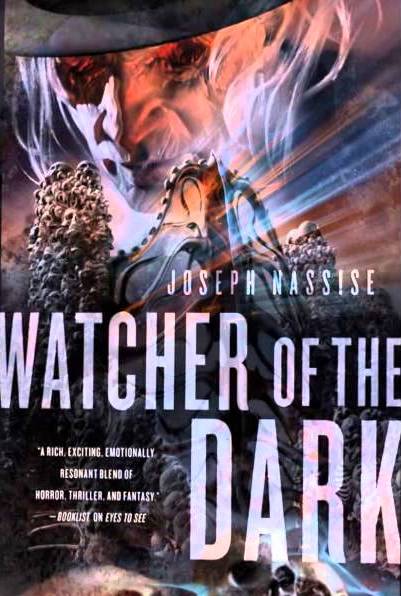
Naaah. Good covers are underrated, and great covers can tell you a more than a simple plot summary. And Watcher of the Dark has a very intriguing cover indeed, featuring a fabulously detailed Lovecraftian horror dominating a bone-strewn alien landscape, while a sinister blind man looms over the whole affair, plotting his evil… wait a minute.

Is that blind guy the hero, exorcist Jeremiah Hunt? My. He’s definitely got a certain style (click the image at right for a bigger version.) This is even more intriguing than I thought.

New Orleans was nearly the death of Jeremiah Hunt, between a too-close brush with the FBI and a chilling, soul-searing journey through the realm of the dead that culminated with a do-or-die confrontation with Death himself.

Hunt survived, but found no peace. When he performs an arcane ritual to reclaim the soul of the magically gifted, beautiful women who once saved him, he must flee the law once again, to the temporary sanctuary of Los Angeles, city of angels.

In L.A., Hunt must contend with Carlos Fuentes, who sees in the blind exorcist a means to obtain the mystical key that opens the gates of Hell. Fuentes knows Hunt’s weakness is his loyalty – to the woman he loves and to another supernaturally gifted friend – and threatens to torture them in order to get Hunt help complete his dreadful quest.
Read More Read More

Manly Wade Wellman, Fletcher Pratt, and Appendix N: Advanced Readings in D&D

Manly Wade Wellman, Fletcher Pratt, and Appendix N: Advanced Readings in D&D

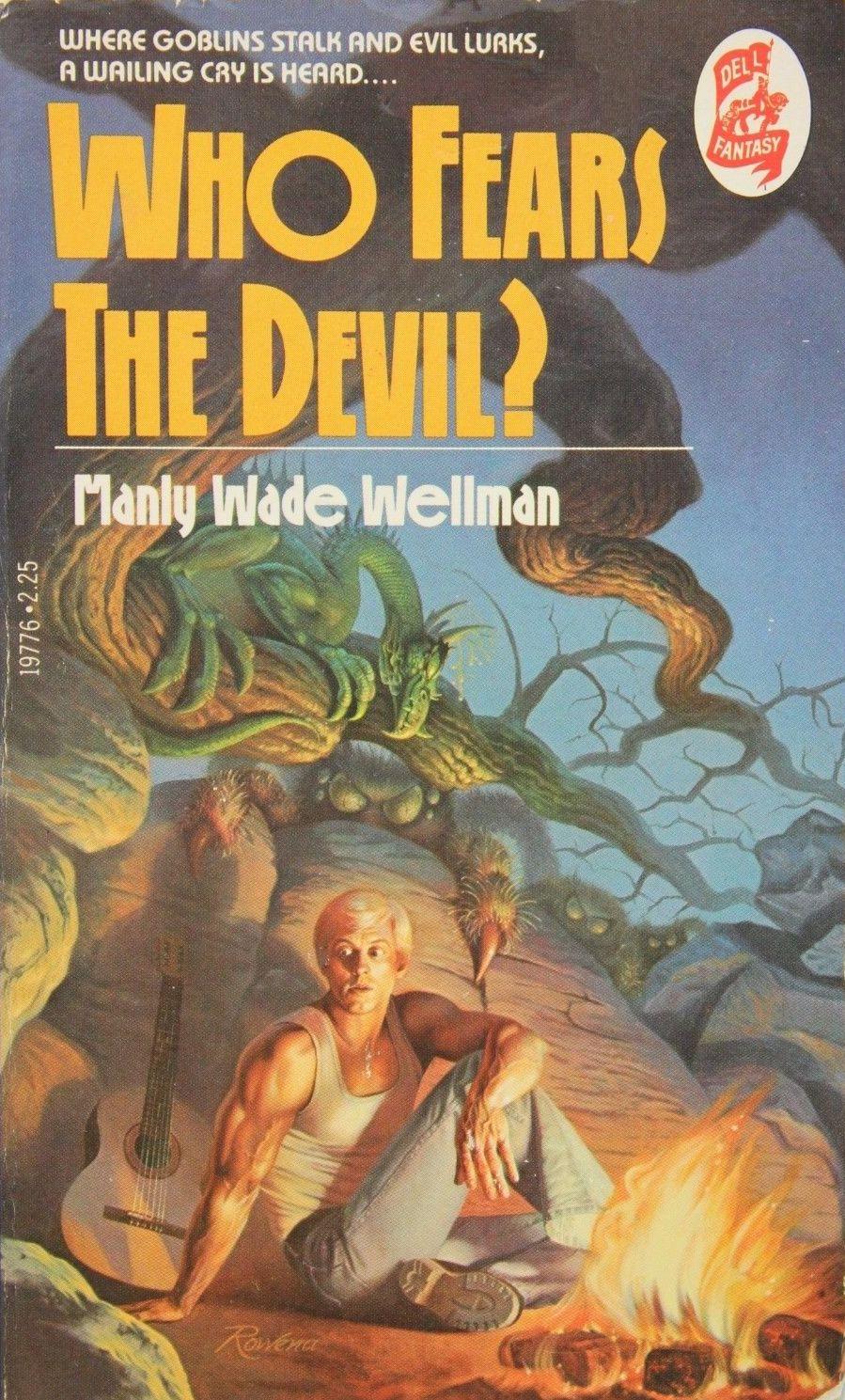
Who Fears the Devil-smallI’ve been waiting for Mordicai Knode and Tim Callahan at Tor.com to get to both Manly Wade Wellman and Fletcher Pratt as part of their ongoing exploration of Gary Gygax’s famous Appendix N — and not very patiently, either.

Manly Wade Wellman is consistently one of the most beloved authors we feature here at Black Gate. Just three days ago Fletcher Vredenburgh reviewed his Battle in the Dawn: The Complete Hok the Mighty, and a while back new Black Gate blogger Alex Bledsoe offered a fine reminiscence of Wellman’s Appalachian fantasy tales in “How I Discovered Silver John.” The most popular contest in our history was our call for The Best One-Sentence Reviews of Manly Wade Wellman, and the winners received a copy of Haffner Press’ gorgeous The Complete John Thunstone.

And Fletcher Pratt? He wrote The Well of the Unicorn, one of the 20th Century’s most acclaimed heroic fantasy novels (none other than Lester del Rey called it “The best piece of epic fantasy ever written.”) With his frequent collaborator L. Sprague de Camp, he was also the author of the very popular Incomplete Enchanter and Gavagan’s Bar series.

So I’ve been looking forward to both authors receiving the Appendix N treatment. And now at last the wait is over.

Sadly, Tim doesn’t seem to fully briefed on the greatness that is Manly Wade Wellman:

I didn’t know anything about Manly Wade Wellman before Mordicai and I embarked on this project. I had never heard of the author, outside of the mention of his name in Appendix N.

Ouch. Well, I’d read almost nothing by Clark Ashton Smith prior to last week (when I read his brilliant pulp horror story “The Vault of Yoh-Vombis“), so I guess we all have our blind spots.

The real question is: What does Tim think of Wellman now?

Read More Read More

See the First Glimpse of Maleficent, a Dark Fantasy from Disney

See the First Glimpse of Maleficent, a Dark Fantasy from Disney

Who is Maleficent?

Maleficent was the name Disney gave to the wicked witch in the classic animated film Sleeping Beauty (1959). She is one of the superb creations of 20th Century film and the character has endured well beyond the original movie. Maleficent has appeared in numerous other Disney books and movies, including the TV series House of Mouse, Ridley Pearson’s Kingdom Keepers novels, the ongoing ABC series Once Upon a Time, and perhaps most notably as a major character in the popular Kingdom Hearts video games. When the Ultimate Disney website hosted their top 30 Disney Villains countdown, Maleficent ranked #1.

Now her story is being told properly, in a big-budget live action release from Disney scheduled to arrive May 30. Described as both a prequel and a remake of Sleeping Beauty, the film presents the story from the point of view of Maleficent. Brad Bird (The Incredibles, Mission: Impossible: Ghost Protocol) is behind the project; it was written by Paul Dini and Linda Woolverton, and directed by Robert Stromberg. Imelda Staunton, Miranda Richardson, and Elle Fanning star, and the title role is portrayed by Angelina Jolie.

Watch the first trailer below to get a taste of this new dark fantasy from Disney. It promises to be a wholly different take on a famous story.

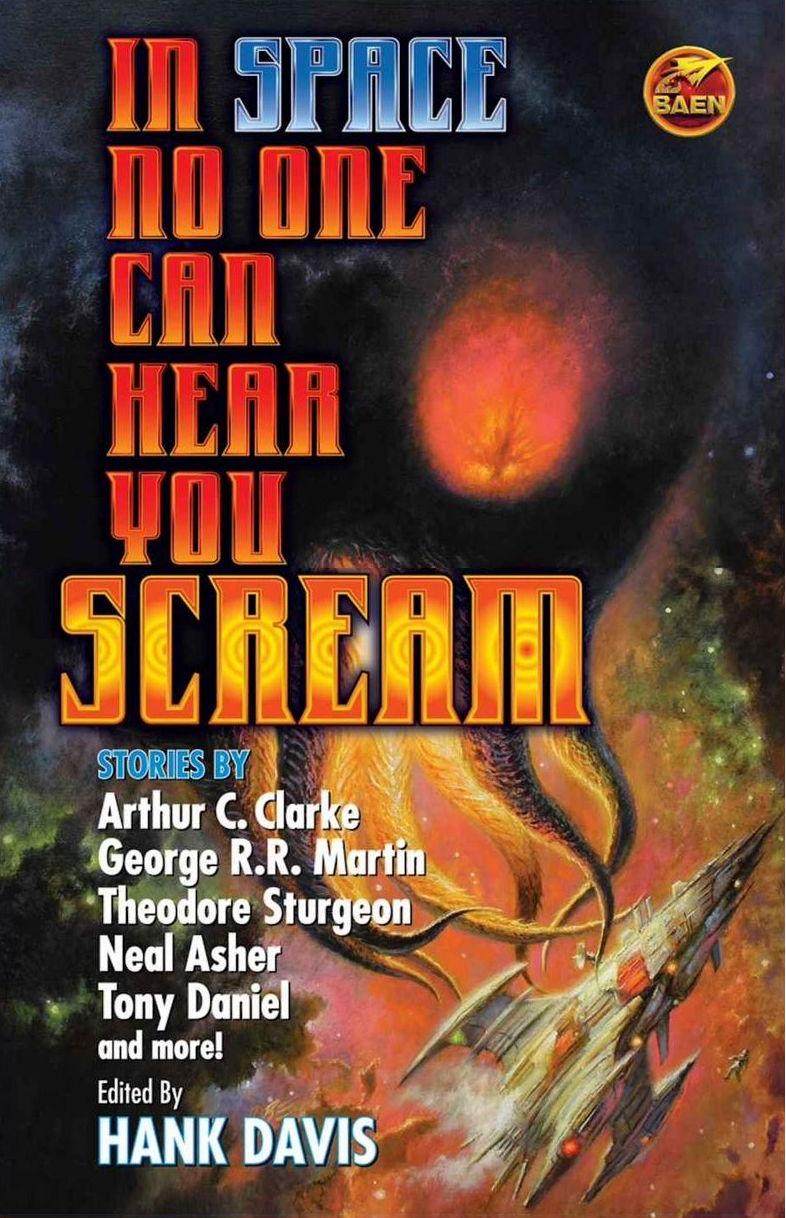
New Treasures: In Space No One Can Hear You Scream, edited by Hank Davis

New Treasures: In Space No One Can Hear You Scream, edited by Hank Davis

In Space No One Can Hear You Scream-smallIn 2013, no one remembers that “In Space No One Can Hear You Scream” was the tag line of a 1979 horror movie.

Well, after 34 years, I guess it’s okay to recycle a decent tag line, even for a film as popular as Alien. Especially when the end product is as intriguing as this Halloween-themed science fiction anthology. The moment I saw it I thought, “I wonder if it has the really great horror SF, like Arthur C. Clarke’s “A Walk in the Dark,” and George R.R. Martin’s “Sandkings?” It has both, in fact, alongside 11 short stories and novelettes from Theodore Sturgeon, Elizabeth Bear and Sarah Monette, and others — plus a long novella from James H. Schmitz.

THE UNIVERSE MAY NOT BE A NICE NEIGHBORHOOD…

“The oldest and strongest kind of fear is fear of the unknown,” the grand master of horror, H.P. Lovecraft, once wrote. And the greatest unknown is the vast universe, shrouded in eternal cosmic night. What things might be on other planets — or in the dark gulfs between the stars?

Giving very unsettling answers to that question are such writers as Arthur C. Clarke, Robert Sheckley, James. H. Schmitz, Clark Ashton Smith, Neal Asher, Sarah A. Hoyt, Tony Daniel and more, all equally masters of science fiction and of terror.

One might hope that in the void beyond the earth will be found friendly aliens, benevolent and possibly wiser than humanity, but don’t be surprised if other worlds have unpleasant surprises in store for future visitors. And in vacuum, no one will be able to hear your screams — as if it would do any good if they could…

Here’s the complete table of contents.

Read More Read More

November/December Magazine of Fantasy & Science Fiction now on Sale

November/December Magazine of Fantasy & Science Fiction now on Sale

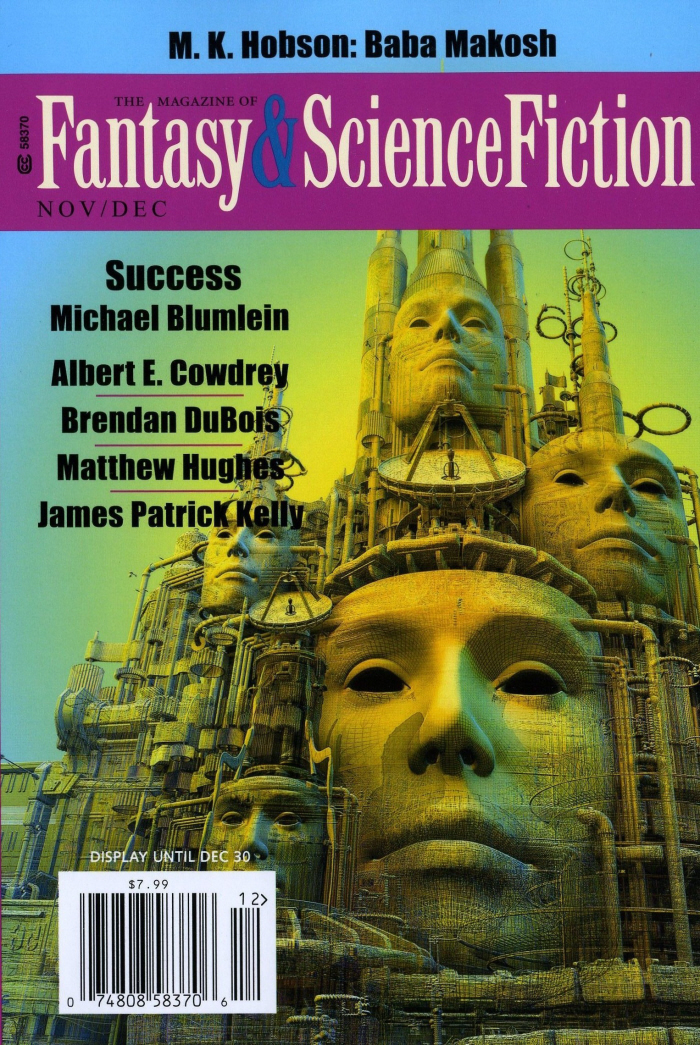
F&SF Nov-Dec 2013-smallI wish I had time to really keep up with F&SF. As it is, I barely have time to run out to the bookstore every two months to pick up a copy.

Nonetheless, I’m proud to be able to support the magazine. Ever since it switched to a bimonthly format in April 2009, six double issues a year, the huge 256-page issues have felt more like anthologies than a magazine. Editor Gordon van Gelder maintains a nice mix of SF and fantasy — including the occasional sword & sorcery piece — the only major magazine to dare to blend genres.

Colleen Chen reviewed the issue at Tangent Online:

“Baba Makosh” by M. K. Hobson is my favorite story of this issue. Three Comrades, fighting for the Red Army in the Russian civil war, are sent as a squad to seek Hell… Baba Makosh leads them to a village and a great building made of twisted roots, inside which they meet her sons, who look like stags but walk like men, and her husband — whom only Pudovkin sees is the horned god Veles. His companions are too busy gorging on cheese to notice. Pudovkin begins to question the post-revolutionary principles of the Red Army — principles he has supported until now — as Veles and Baba Makosh show through their words and actions that the traditions his grandfather loved, cruel though they may seem, have a strength and a rationale for existence that cannot be controlled nor defeated.

This piece offers beautiful, lush writing, a unique plot, strong characters, and folklore intertwined with history so skillfully that the whole takes on a magical quality that transports the reader completely to this new reality. The story is worth dissecting and even more worth reading as a whole — it’s rich in theme, with every word and line placed with purpose.

The issue also includes a novella by Michael Blumlein and novelettes and stories by Matthew Hughes, James Patrick Kelly, Albert E. Cowdrey, Tim Sullivan, and others. Here’s the complete Table of Contents.

Read More Read More

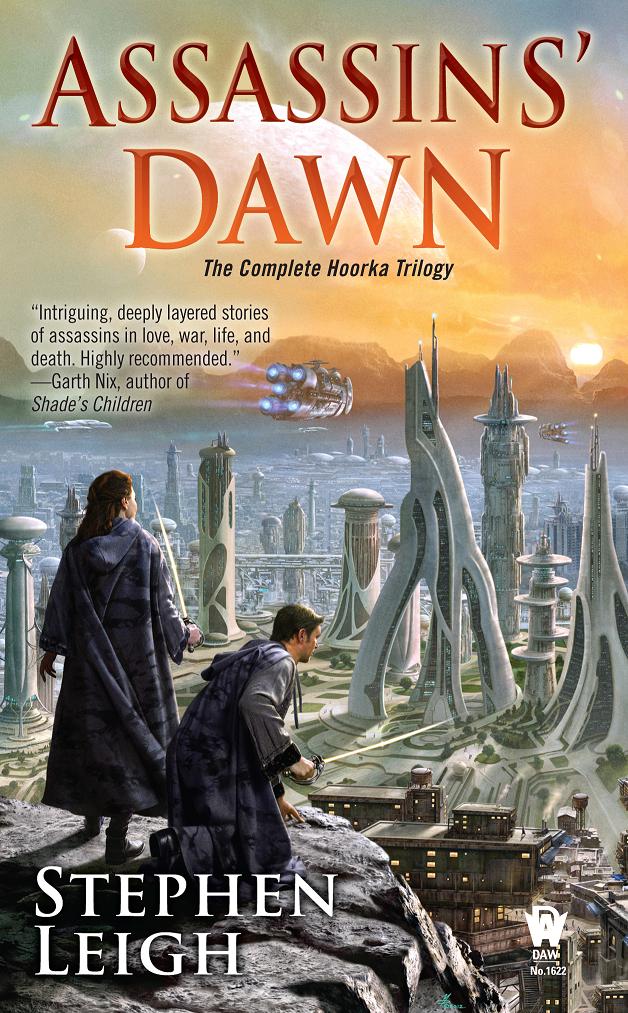
New Treasures: Assassin’s Dawn: The Complete Hoorka Trilogy, by Stephen Leigh

New Treasures: Assassin’s Dawn: The Complete Hoorka Trilogy, by Stephen Leigh

Slow Fall to Dawn-small Dance of the Hag-small A Quiet of Stone-small Untitled-3

[Click on any of the images above for bigger versions.]

Paperback publishing has come a long way since the early 80s. Improved binding and glues have made producing thicker books much more economical. Or something, I dunno. But we’re definitely living in the golden age of the omnibus, when publishers are cramming shelves with big, fat paperbacks collecting forgotten fantasy and SF series from prior decades, all for about the same price as every other dopey paperback.

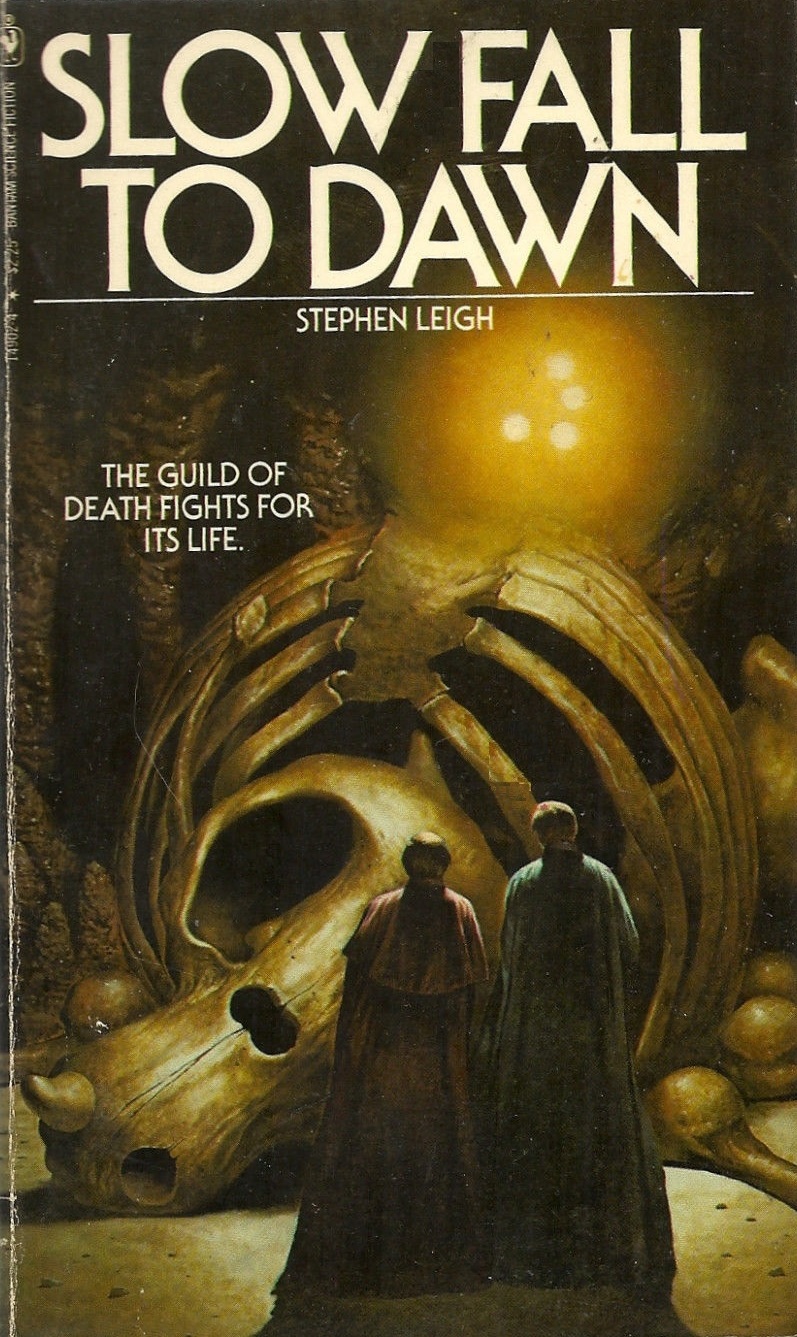
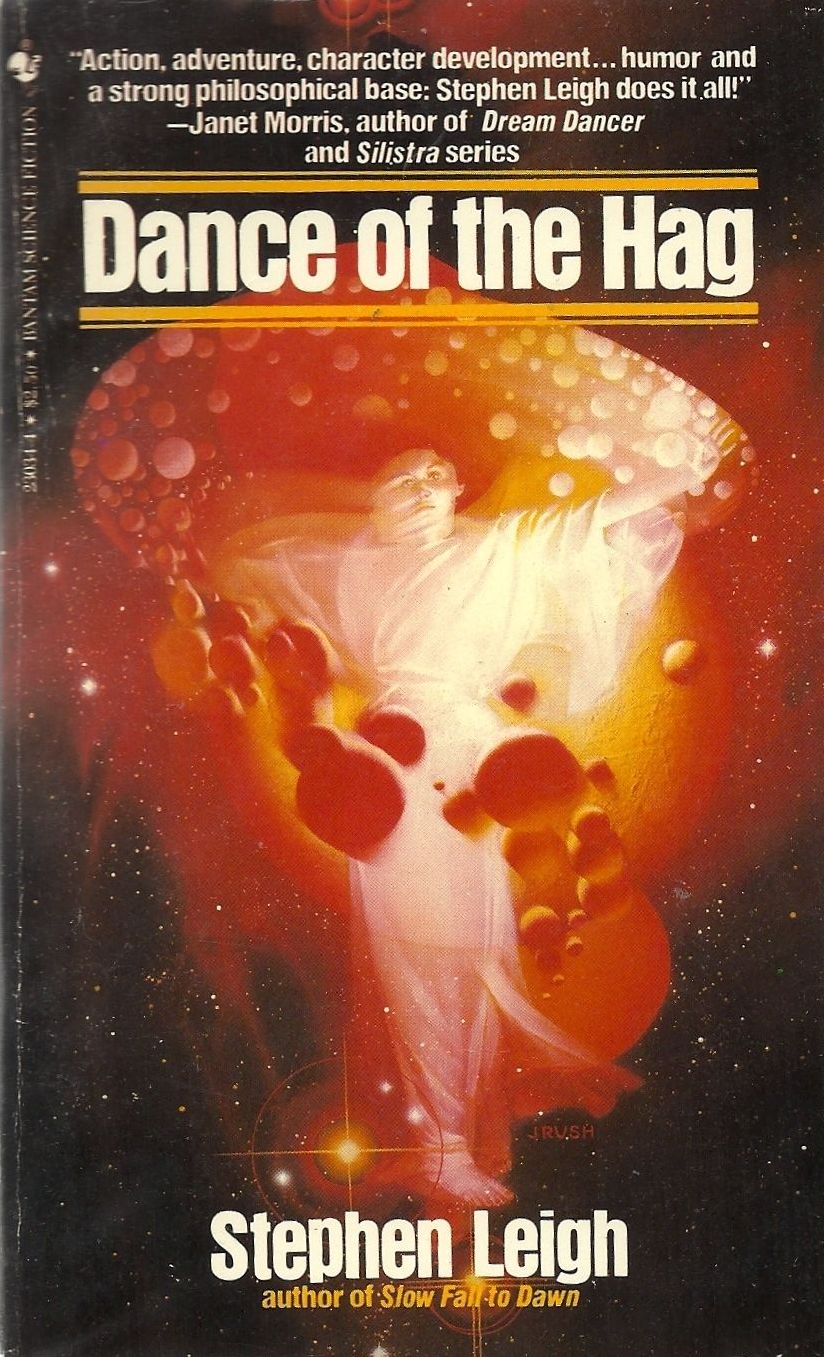
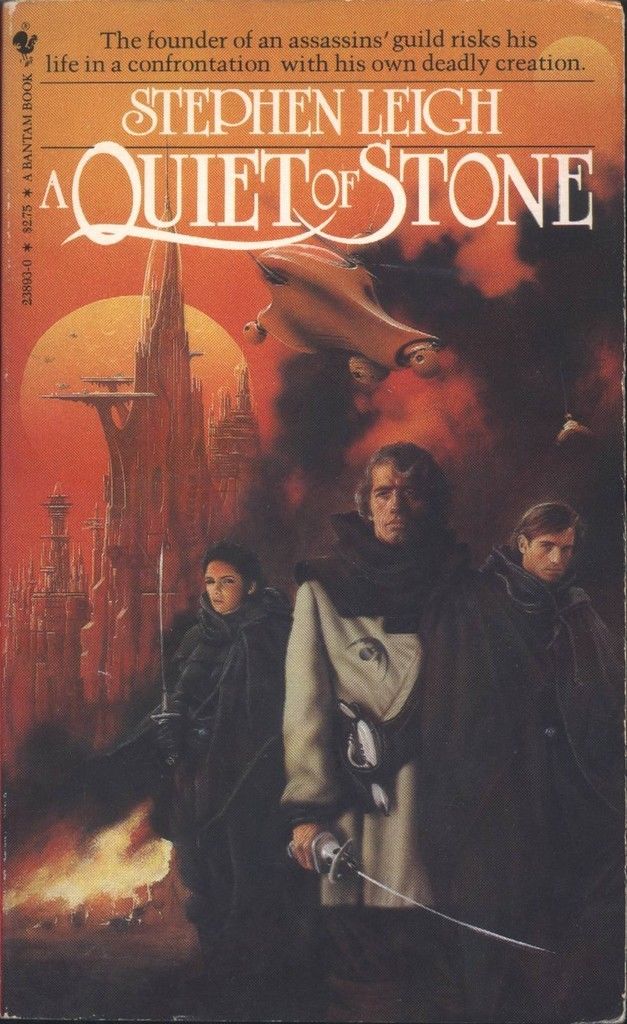
Is that a great deal, or what?  I certainly thought so on Saturday, when I found a handsome volume collecting all three novels in Stephen Leigh’s long out-of-print science fantasy Hoorka Trilogy on the shelves at Barnes & Noble. Assassin’s Dawn includes Slow Fall to Dawn (1981), Dance of the Hag (1983), and A Quiet of Stone (1984). The Hoorka are a guild of assassins with a strict code: any victim that can survive until dawn may go free, unmolested. But the consequences of this law can be harsh, especially when the client has no such scruples, as their leader Gyll discovers as he tries to take his guild offworld, into the newly thriving Alliance, a star-spanning organization attempting to put together the pieces of a once-great empire.

Stephen Leigh is also the author of The Crystal Memory, Dark Water’s Embrace, Dinosaur Planet, Speaking Stones, The Bones of God, and The Abraxas Marvel Circus. His publisher DAW has been something of a pioneer in the fantasy omnibus biz, with a nice assortment from Terry A. Adams, Tanya Huff, Marion Zimmer Bradley, C. J Cherryh, Jennifer Roberson, S. Andrew Swann, Peter Morwood, and many others.

Assassin’s Dawn was published May 2013 by DAW. It is 610 fat pages, priced at $8.99 for both the paperback and digital versions.

The Crawling Horrors of Mars: Clark Ashton Smith’s “The Vaults of Yoh-Vombis”

The Crawling Horrors of Mars: Clark Ashton Smith’s “The Vaults of Yoh-Vombis”

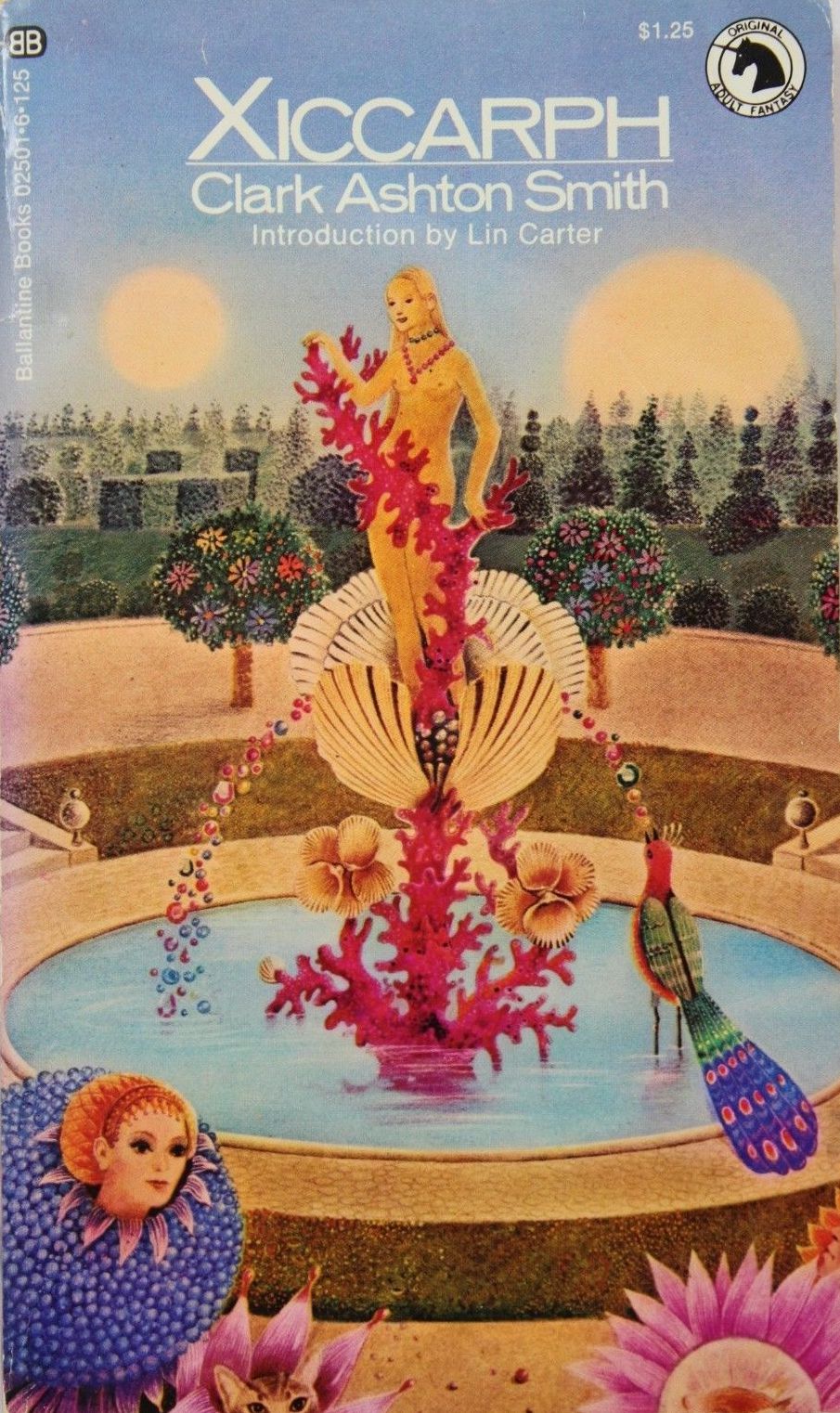
Xiccarph-smallI have a confession to make. I’ve read almost nothing by Clark Ashton Smith.

I know. I suck. CAS was one of the most important fantasy writers of the pulp era. Alongside H.P. Lovecraft and Robert E. Howard, he established Weird Tales as the most important and influential fantasy magazine of the early 20th Century.

It’s not like I haven’t had plenty of folks on the BG staff trying to steer me right. Ryan Harvey’s epic four-part examination of The Fantasy Cycles of Clark Ashton Smith, starting with The Averoigne Chronicles way back in 2007, was a terrific bit of scholarship, and I was proud to publish it. More recently, John R. Fultz offered a detailed study of Smith’s poem “The Hashish Eater,” and Matthew David Surridge joined the discussion with his 2012 article “A Few Words on Clark Ashton Smith.” Just a few examples.

I blame Isaac Asimov for my early ignorance. Asimov strongly disliked Smith’s ornate style, famously relating the tale of the first CAS story he tried to read, in which he encountered the word “veritas,” which Smith used instead of “truth.” Yes, Asimov noted, veritas does mean truth, but he couldn’t fathom why anyone would use it instead of simply using “truth.” He put the story down and never tried Smith again.

Asimov introduced me to most of my early pulp heroes, in books like Before the Golden Age, The Hugo Winners, and The Early Asimov. His prejudice must have stuck with me, since I read almost nothing by Clark Ashton Smith for my first few decades as an SF reader.

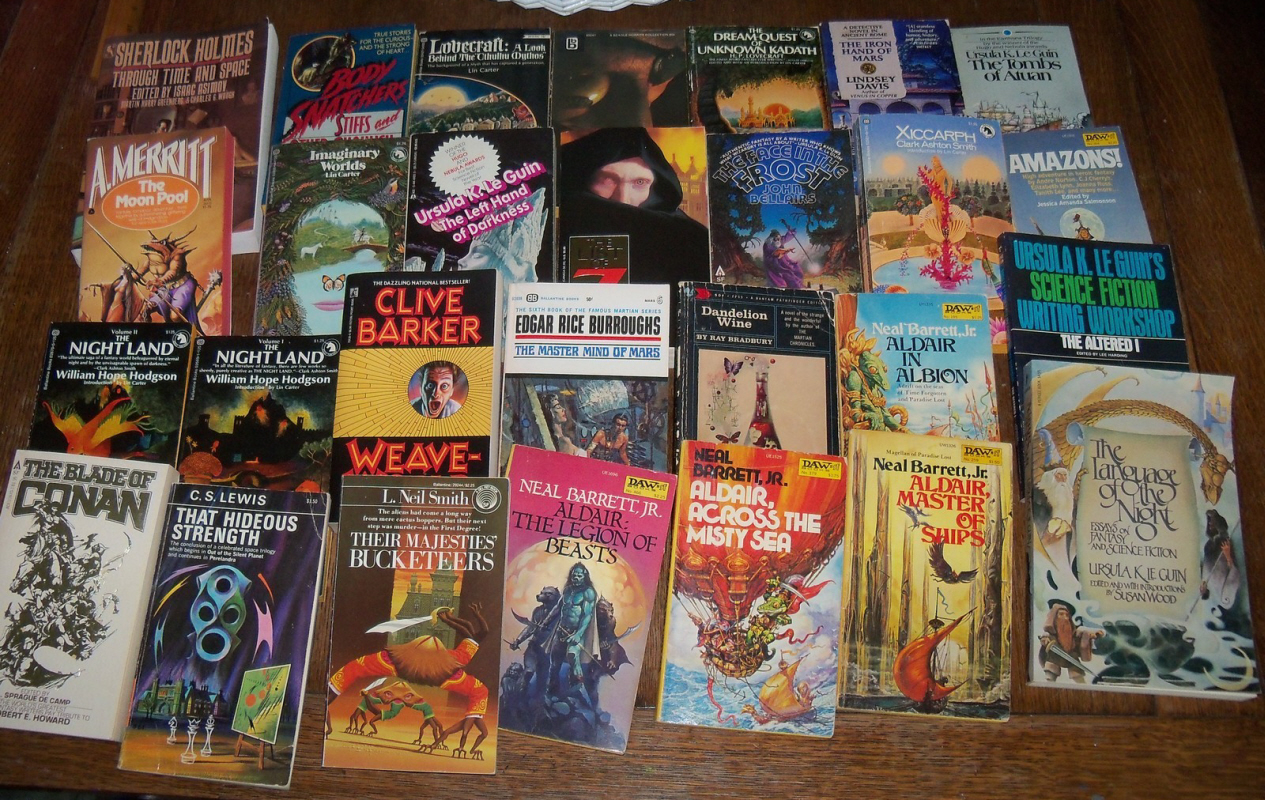
Fortunately, this genre gives you lots of chances. Back in September I purchased a marvelous collection of 28 vintage paperbacks. One of the prizes in the lot was Xiccarph, part of Lin Carter’s highly collectible Ballantine Adult Fantasy library. Before putting it away I decided to dip into it. Here’s what I found on page two of Carter’s intro:

Since Weird Tales quite logically had a right to prefer tales that were weird, Smith conformed. In doing so he invented a minuscule sub-genre all his own.

To see precisely what I mean, turn to the story called “The Vaults of Yoh-Vombis,” which is included in this book.

Read More Read More

New Treasures: The City of Dreaming Books by Walter Moers

New Treasures: The City of Dreaming Books by Walter Moers

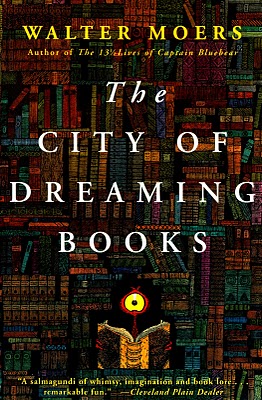
The City of Dreaming BooksWalter Moers got my attention with his first novel in English, The 13½ Lives of Captain Bluebear, which relates adventures of human-sized bear with blue fur on the fictional continent of Zamonia.

Okay, I know how that sounds. But Moers, who’s also a cartoonist and painter, brings cartoon sensibilities to the page with consummate skill, and his whimsical tales of Zamonia have captured hearts and minds around the world. The 13½ Lives was followed by Rumo, A Wild Ride Through the Night, and The Sorcerer’s Apprentice.

The City of Dreaming Books sounds like his most intriguing title yet, featuring a city-sized library filled with secrets, haunted by the mysterious Shadow King…

Optimus Yarnspinner has inherited from his godfather an unpublished manuscript by an unknown writer. He sets off to track down the mysterious author, who disappeared into Bookholm — the so-called “City of Dreaming Books.” Yarnspinner falls under the spell of this book-obsessed metropolis, where an avid reader and budding author can find any number of charming attractions — priceless signed first editions, salivating literary agents, and for-hire critics. But as Yarnspinner pursues the trail of the missing author, the darker side of Bookholm begins to unveil itself — cold-blooded book hunters, fearsome cyclopean booklings, sharp-toothed animotomes, and of course, the Shadow King, whose howls rise from deep beneath the city at night. Will Yarnspinner survive his quest into this world where reading is a genuine adventure?

Like most of his books, this one features a cover by Moers, and numerous black & white illusrations throughout. Moers’ art is as charming as it is unique, equal parts Virgil Finlay and Dr. Seuss.

I found the brand new sequel, The Labyrinth of Dreaming Book, in the Dealer’s room at Windycon last week for the first time. That means it’s time for me to stop dithering and finally read this one.

The City of Dreaming Books was published by Overlook Press in 2008. It is 462 pages, priced at $17.95 in trade paperback at $11.99 for the digital edition. It was translated from the German by John Brownjohn.

Read a Free Pathfinder Tales Story from Howard Andrew Jones

Read a Free Pathfinder Tales Story from Howard Andrew Jones

Pathfinder Tales logoEvery time I call Howard, he’s writing. He’s typing while we’re talking. He denies it, but I can hear the keyboard in the background. I think he wrote his first novel while waiting in line at the DMV. The man is the hardest working writer in the business.

Two weeks ago I called up to ask if he remembered that Edison Marshall Hercules novel he mentioned to me a while back (he did — Earth Giant), and while we were talking he wrote an entire short story. “Bells for the Dead.” If I hadn’t distracted him, it probably would have turned into a novel. The man drives me crazy.

Anyway, the story is now online at Paizo, as part of their free Pathfinder Tales library — which already includes BG Contributing Editor Bill Ward’s story “The Box,” and an earlier tale from Howard, “The Walkers from the Crypt” (which he wrote while waiting for a red light to change).

“Bells For the Dead” features the gunslinging bounty hunter Lisette from Howard’s new novel Stalking the Beast, in a brand new adventure. It will be published in four parts at Paizo.com. Read the first installment here.

Interested in winning a free copy of Stalking the Beast? Enter our contest! Just tell us your favorite sword & sorcery tale in one paragraph or less, and win one of five copies, compliments of Paizo. Full details here.

Howard’s previous Pathfinder book was Plague of Shadows, released in 2011. His most recent novel was The Bones of the Old Ones.

Interested in more Pathfinder goodness? Black Gate can hook you up. Check out the latest right here — including the first chapters of Dave Gross’s novels King of Chaos and Queen of Thorns, and our review of Tim Pratt’s Liar’s Blade.

New Treasures: The Tilting House by Tom Llewellyn

New Treasures: The Tilting House by Tom Llewellyn

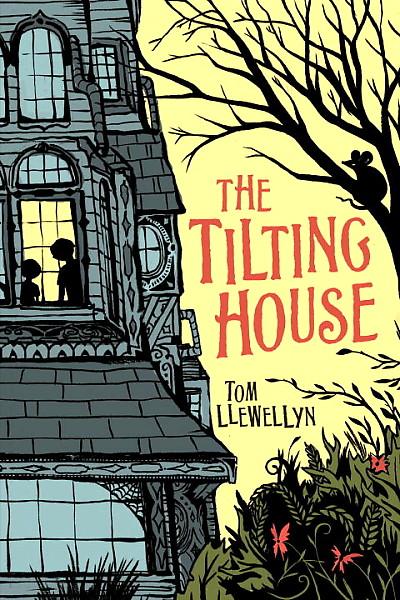
The Tilting House-smallI love kid’s books. It was kid’s books like Alfred Hitchcock and the Three Investigators and The Case of the Marble Monster that first taught me to love reading, and I’ve never really lost my appreciation for straight-up adventure tales, or a good spooky mystery.

So I still buy them from time to time. And overall, the same story elements appeal to me today that did in 1974, when I was 10 years old:  treasure maps, strange inventions, haunted houses, and rats with hidden agendas. All the building blocks of drama, really.

Which explains why Tom Llewellyn’s The Tilting House appealed to me the moment I laid eyes on it, and left me unable to put it down until I had purchased it:

Talking rats. Growth potions. Buried treasure.

Brothers Josh and Aaron Peshik are about to discover that their new home with the tilting floors hides many mysteries. When the boys and their neighbor Lola discover the hidden diary of F.T. Tilton, the brilliant but deranged inventor who built the house, they learn a dark secret that may mean disaster for the Peshik family. Can the kids solve the riddles of the tilting house before time runs out?

Mad science, mischief, and mishaps combine in the suspenseful and imaginative tale of The Tilting House.

The Tilting House was Tom Llewellyn’s first novel; he followed it with A Matter of Life and Seth: Life is a battle. High School is Murder in 2013.

The Tilting House was published by Trigygle Press, a division of Random House, in April 2011. It is 152 pages, priced at $15.99 in hardcover and $10.99 for the digital edition. It is illustrated by Sarah Watts, who also did the colorful cover.