Blogging Arak 9: Adventure on the High Seas
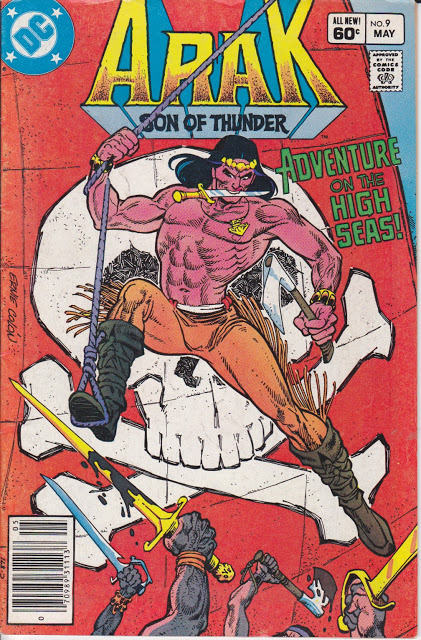 With the return of Roy Thomas to the scripting helm, Arak issue 9 has our protagonists Arak and Valda resuming their quest to rescue Malagigi from his demonic imprisonment in far-off White Cathay. After having rescued Pope Hadrian and having rid the world of one Black Pope, our stalwart heroes are set for some adventure on the high seas. It’s time for a one-off pirate tale, but one in which Thomas manages to work in Vesuvius and an encounter with the lost souls of Pompeii.
Arak is about fed up with cities: “He-No take me — I’ll be glad when we’re done with the cities of your world, and I can take to the forests again.”
But first they have to pay a visit to Neapel (modern-day Naples) to find Pope Hadrian’s friend Gallio, who can provide them passage to Byzantium. The Holy Bishop of Rome told them that they would know Gallio by the ring he wears, “which shows two hands grasping but a single cross.”
As with every past arrival at a new city, the first signs are ominous. People are packing up and leaving the port in droves, because “there’s no longer work there for free laborers — or honest seamen!”
They soon discover the reason: Gallio’s ship is now manned mostly by slaves. When they begin inquiring down at the bay, two “lecherous merchants” immediately hone in on Valda, because, as Thomas narrates, “Alas, however, in these unenlightened days, the presence of an attractive woman on the docks usually has but one meaning for the sea-rovers of Neapel…”
Need I tell you how their pawing at her ends? With her knife at the throat of one, of course, and the other one nearly skewered like the pig he is. Their lives are spared, though, in exchange for pointing the way to Gallio’s ship.
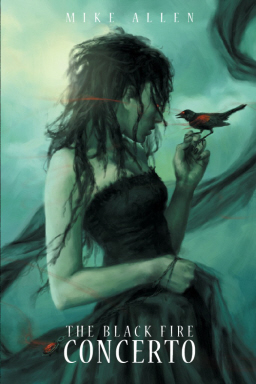
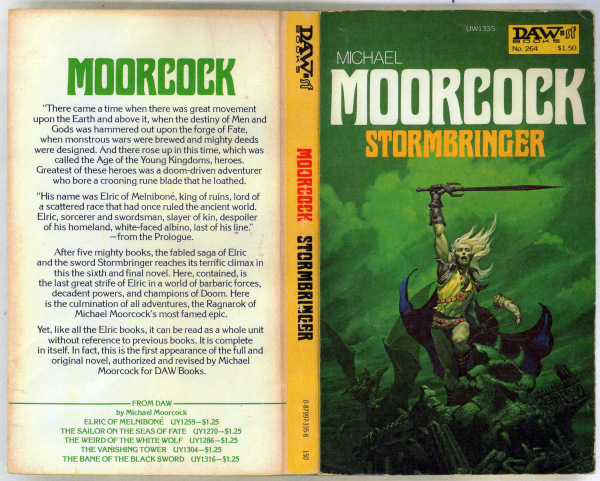



 It’s not uncommon for writers of fictions called ‘literary’ to use science-fictional or fantastic elements in their work. And it’s not uncommon for sf readers to suggest that they’re using those elements wrongly, with a lack of understanding of the material they’re working with — usually, depending on the specific case, either because the writer didn’t understand the history of the way the element in question has been treated in prior (genre) works, or simply because they haven’t thought the logic of what they’re doing through in a rigorous way. Personally, I find this is rarely a problem in the fantastic ‘literary’ works that I read. And, intriguingly, when it is a problem, it’s not necessarily a significant problem.