New Treasures: The Bloodsounder’s Arc Trilogy by Jeff Salyards
New Treasures: The Bloodsounder’s Arc Trilogy by Jeff Salyards

Scourge of the Betrayer-small Veil of the Deserters-small Chains of the Heretic-small

Every time a fantasy trilogy successfully wraps up, Black Gate throws a little fiesta. (Someone has to cherish these little publishing milestones. We think it should be us.)

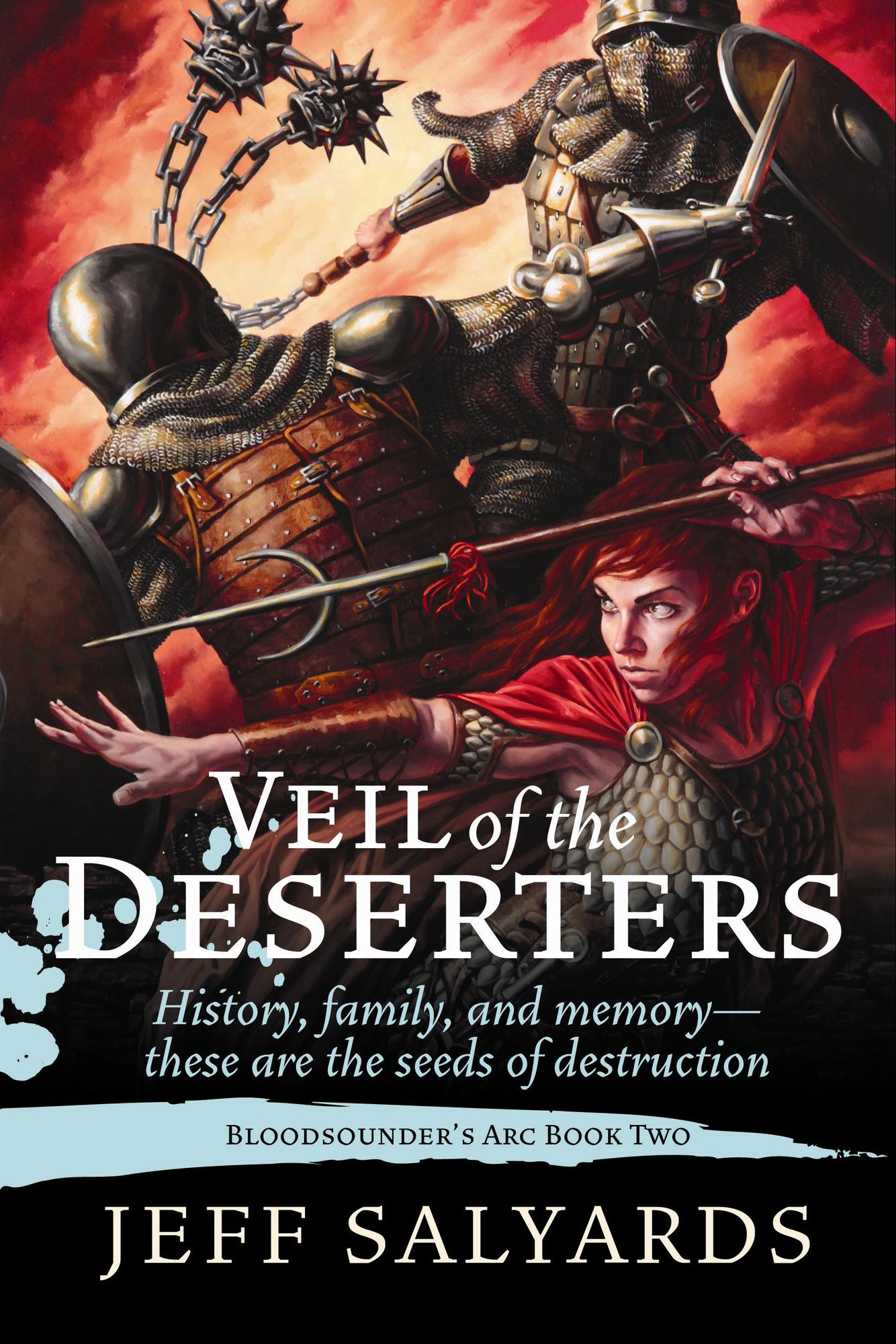
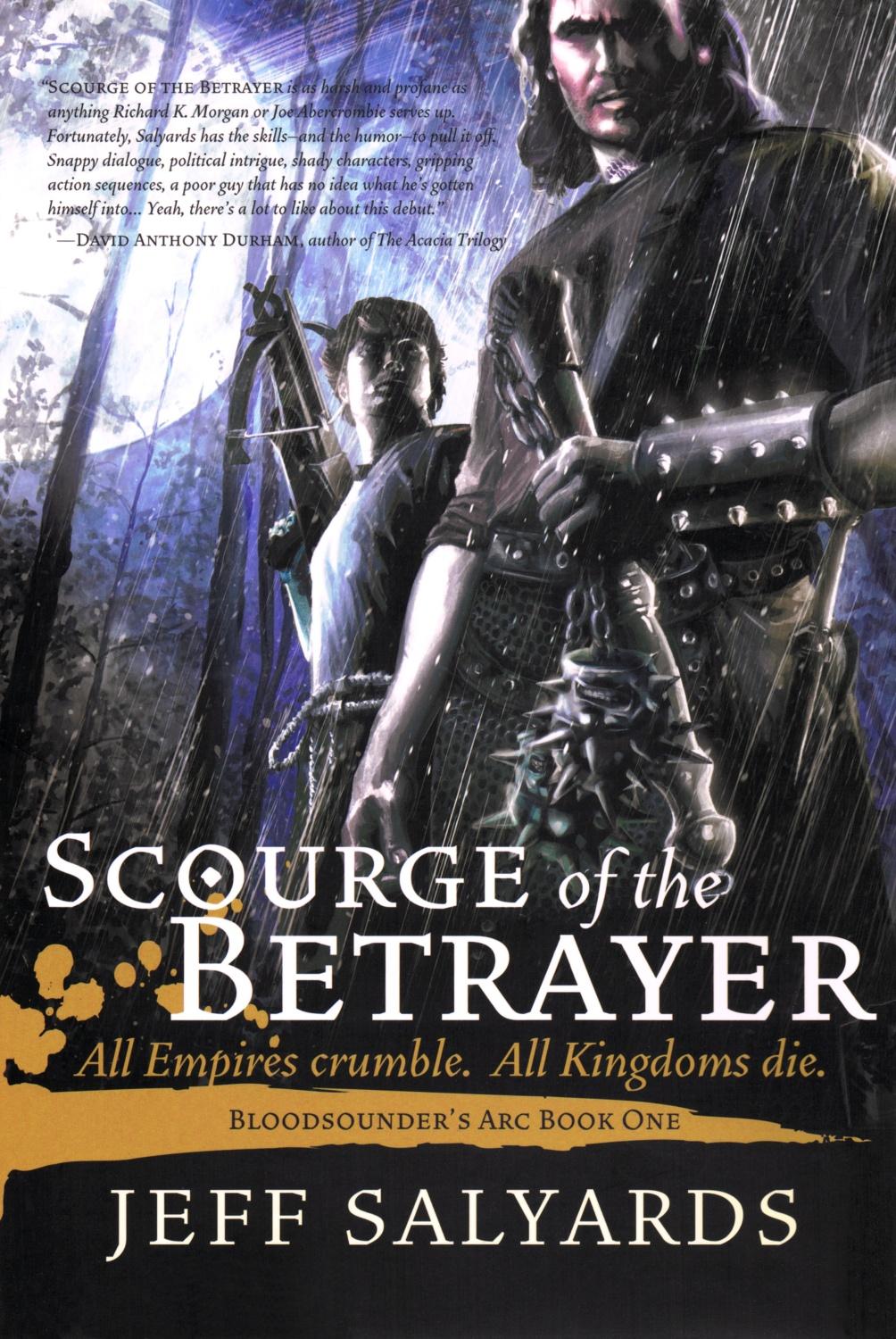
Jeff Salyards’ Bloodsounder’s Arc trilogy began with Scourge of the Betrayer, his debut novel, back in January 2013. Veil of the Deserters was released in June 2014, and now the balloons and shrimp tacos are standing by for Tuesday’s release of Chains of the Heretic, the third and final volume. (We used to celebrate with cheeseburgers, but last year Tor started publishing Pathfinder trilogies, and I gained 30 pounds.)

Now that the whole series is available, I’m looking forward to tucking into Bloodsounder’s Arc. Over at SF Signal Nick Sharps called the first volume “both Debut of the Year and Fantasy of the Year. It is also one of the finest debuts I have ever read.” At B&N.com, Paul Goat Allen said:

Scourge of the Betrayer is a literary appetizer that will undoubtedly captivate anyone who enjoys fantasy, be it epic fantasy, adventure fantasy, military fantasy, etc. If you’re a fan of Cook’s Black Company, or GRRM’s A Song of Ice and Fire, or of classic fantasy sagas like Leiber’s Fafhrd and the Gray Mouser and Moorcock’s Elric, this is a debut novel that is, like Jagger said, ‘what you need.’”

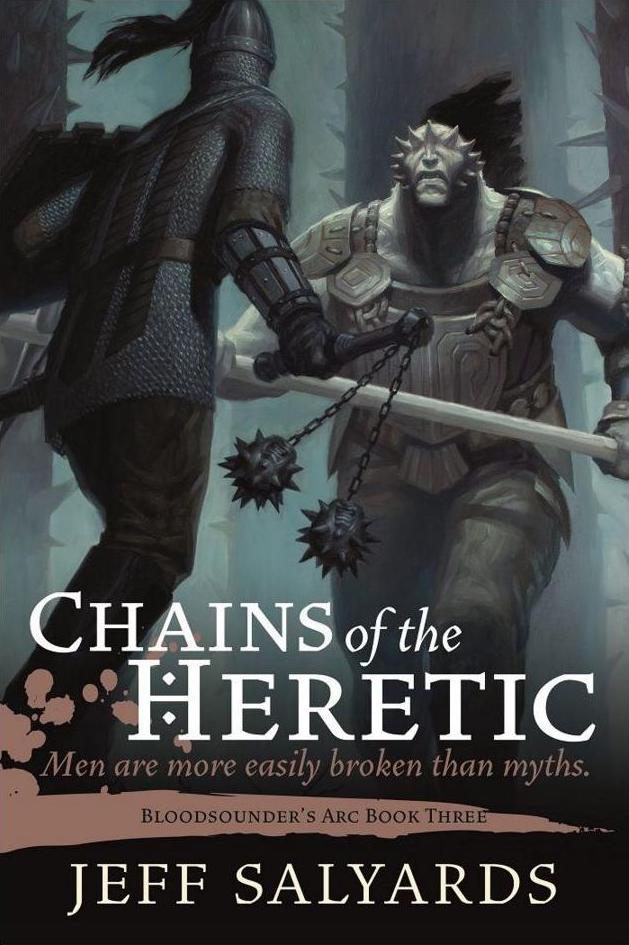
Sounds pretty promising to me. Chains of the Heretic will be published by Night Shade Books on February 16, 2016. It is 524 pages, priced at $25.99 in hardcover and $11.99 for the digital edition. The cover is by Ryan Pancoast. Read an excerpt from Scourge of the Betrayer here.


Bud Webster, July 27, 1952 – February 14, 2016

Bud Webster, July 27, 1952 – February 14, 2016

Bud Webster wonders if he can afford TEXT
Bud Webster doing what he loved – selling books

It’s never easy to write obituaries. It’s especially difficult when they’re members of the Black Gate staff.

I was already a fan of Bud Webster’s Past Masters column, thoughtful biographical pieces on the enduring impact of our finest writers, when I first approached him to become a Contributing Editor. His first article for us, a marvelous discussion of Tom Reamy, and a continuation of his Who? series on neglected genre authors, appeared in Black Gate 15.

Bud didn’t waste my time with a superficial survey of Reamy’s fiction — anyone could have done that. Instead, he delivered an impeccably researched, 3,400-word piece that dove into Reamy’s history and early influences. It was the kind of piece that triggered an outpouring of discussion and gratitude from BG‘s readers (Keith West even drove to Breckenridge, Texas so he could send Bud a photo of the empty lot where Reamy’s house once stood).

It was the beginning of a long and fruitful partnership with Bud. He was briefly our poetry editor, before the death of the print magazine made that title superfluous. He became a prolific early blogger for us, contributing a dozen posts, mostly on his favorite subjects — the pros and cons of selling vintage books, his role as an stfnal historian, and the magical books that first lured him into the hobby.

Bud wrote extensively on the hobby he loved so much. His first book was Anthopology 101 (2010), an affectionate look back at the classic SF anthologies that helped define the genre. It was quickly followed by The Joy of Booking (2011) and Past Masters, & Other Bookish Natterings (2013). All three were collections of his earlier columns.

Read More Read More

JourneyQuest: Onwaaard!

JourneyQuest: Onwaaard!

journeyquest

I disbelieved the search results and tried again, but got the same lack of results. Has no one at Black Gate mentioned JourneyQuest? With their Kickstarter for season three underway, this must be corrected! Onwaaard!

JourneyQuest is a web series from writer/director Matt Vancil and many of the other fine folks who brought us The Gamers series of movies. These are known for grabbing RPG tropes with both hands and bashing the scenery, with the same actors portraying the players and their characters. Even my wife, who had led a sheltered gaming life and wasn’t familiar with the tropes, thought these movies were hilarious.

Read More Read More

The Lost World: A Classic Sixties SF Blockbuster

The Lost World: A Classic Sixties SF Blockbuster

Lost World 4

The Lost World (1960)
Directed by Irwin Allen

The shorthand version of this review is that The Lost World was directed, co-written and co-produced by Irwin Allen. If you know anything about Allen, who had something of a lock on science fiction TV in the Sixties, you’d probably have a pretty good idea of what to expect. It’s not outstanding production values, award-winning scripts and stellar acting.

To give some perspective, The Lost World was released a year before Allen’s Voyage to the Bottom of the Sea came to the big screen and a few years before the latter as made into a TV show. A show that was followed by in quick succession by other Allen productions, such as Lost in Space, The Time Tunnel, and Land of the Giants. While I didn’t find The Lost World to be a very “good” movie, I thought it was an entertaining example of a blockbuster SF/adventure movie from this era.

Read More Read More

Blogging The Insidious Dr. Fu-Manchu by Sax Rohmer – Part One: “The Zayat Kiss”

Blogging The Insidious Dr. Fu-Manchu by Sax Rohmer – Part One: “The Zayat Kiss”

NOTE: The following article was first published on March 7, 2010. Thank you to John O’Neill for agreeing to reprint these early articles, so they are archived at Black Gate which has been my home for over 5 years and 250 articles now. Thank you to Deuce Richardson without whom I never would have found my way. Minor editorial changes have been made in some cases to the original text.

ZayatInColliersinsidious 1Arthur Henry Ward was born in England in 1883. His father hoped his son would make his way through life as a respectable businessman, but young Arthur was determined to make a name for himself as an author.

He discovered immortality with the invention of two unlikely monikers that conjured an air of exotic intrigue when they debuted in print a century ago. The first was his chosen pen name, Sax Rohmer and the second was the name of the character at the heart of his first published novel, Dr. Fu-Manchu.

Over the years, the name lost its hyphen and became synonymous with the moustache artists and actors always depicted the character as wearing despite the fact that he was always described in print as clean-shaven. Dr. Fu-Manchu is a brilliant and honorable scientist who is opposed to British colonial interference in the East. Using a variety of fiendish inventions, insects, and assassins, he sets out to remove Western influence and silence those who know too much about the East.

Most intriguing in our post-9/11 world, the Devil Doctor chooses to fight his battles not in China, but on British soil using terror as his weapon. He is opposed in his efforts by stalwart British colonialist Nayland Smith and Smith’s bodyguard and Fu-Manchu’s chronicler, Dr. Petrie. Rohmer’s stories spanned five decades moving in real time with his characters aging alongside their author. For much of the first half of the last century, Dr. Fu-Manchu was the villain readers loved to hate.

Read More Read More

The Books of David G. Hartwell: Foundations of Fear and The Ascent of Wonder

The Books of David G. Hartwell: Foundations of Fear and The Ascent of Wonder

Foundations of Fear-small The Ascent of Wonder-small

We lost David Hartwell on January 20th. This is our fourth article in a series that looks back at one of the most important publishers in our industry.

David Hartwell’s first anthology, The Battle of the Monsters and Other Stories, was published through tiny Gregg Press in 1976. He reached a bigger audience ten years later with his second, Christmas Ghosts (1987), co-edited with Kathryn Cramer. After that came his real breakout book, the massive The Dark Descent (1987), which Tor kept in print for a decade, and eventually reprinted in three paperback volumes.

David had found his forte: huge retrospective anthologies that put both his exceptional taste and his encyclopedic knowledge of the field on full display. Libraries snapped them up, they garnered him major awards, and they established him as one of the most respected editors in the field. He produced roughly a dozen of them in his career, each one a feast that readers can return to time and again.

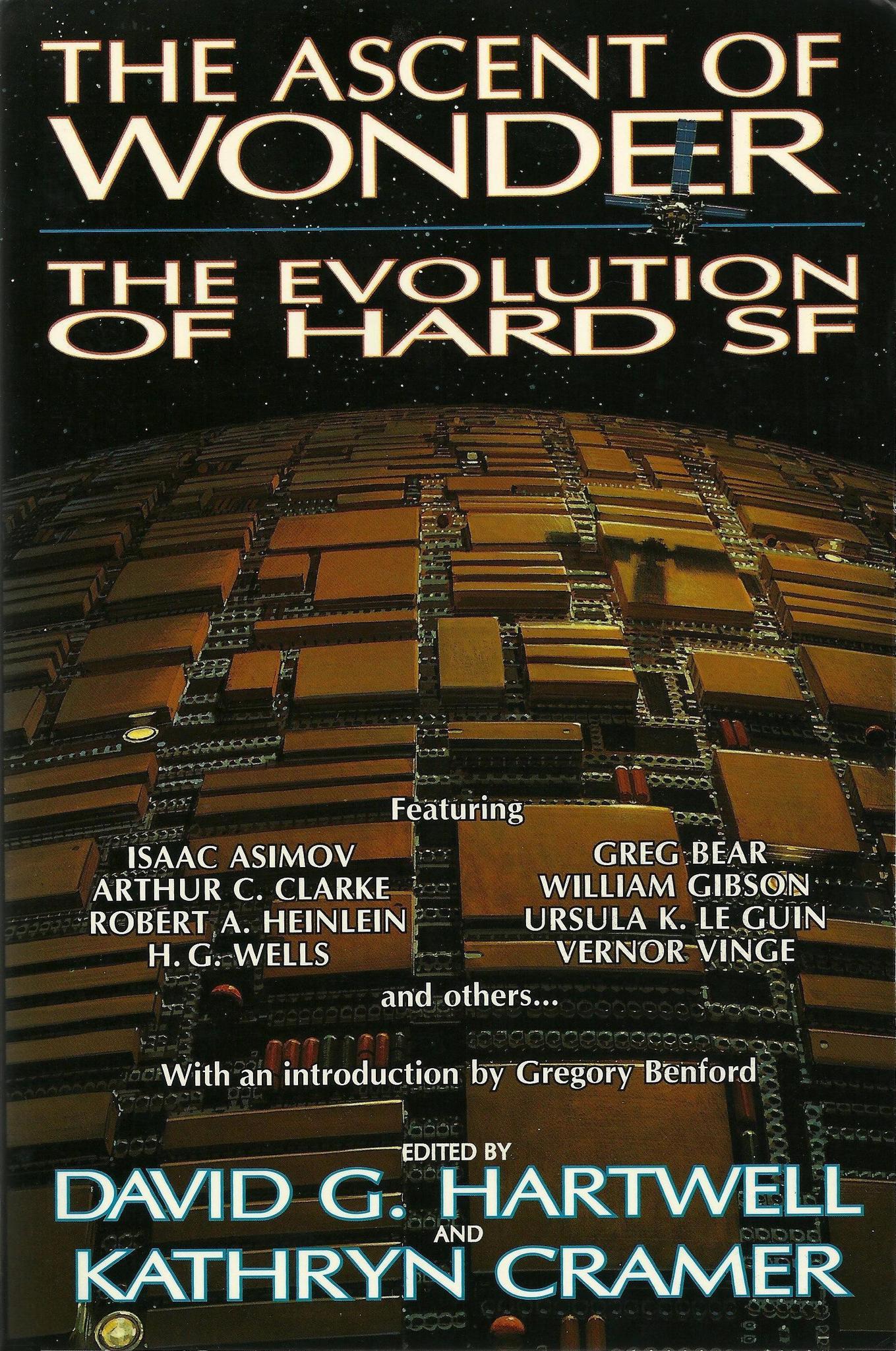
Today I want to look at two of his best from the early 90s: Foundations of Fear (1992), the companion volume to The Dark Descent, which convincingly made the case for the thriving genre of 20th Century supernatural horror, especially at novella length; and The Ascent of Wonder: The Evolution of Hard SF (1994), a massive 990-page tome that aimed to be the definitive exploration of science fiction’s “visionary core,” co-edited by Kathryn Cramer.

Read More Read More

Future Treasures: Lovecraft Country by Matt Ruff

Future Treasures: Lovecraft Country by Matt Ruff

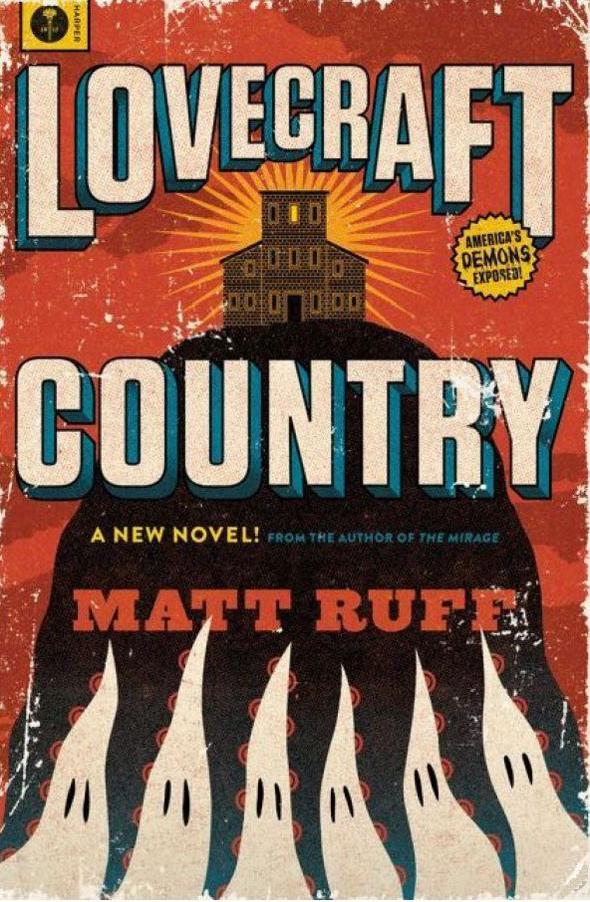
Lovecraft Country-smallI’ve followed Matt Ruff’s career since his 1988 debut novel Fool on the Hill, a modern fairy tale set in the campus of Cornell University. His more recent novels include Set This House in Order, the tale of a man with hundreds of personalities who’s asked to assist a co-worker also afflicted with multiple personality disorder, and The Mirage, an alternative history of 9/11.

His latest novel blends historical fiction, pulp noir, and Lovecraftian horror as it follows a black man on his journey across America. A journey in which he faces police harassment, discrimination… and the attentions of something far darker.

Chicago, 1954. When his father Montrose goes missing, 22-year-old Army veteran Atticus Turner embarks on a road trip to New England to find him, accompanied by his Uncle George—publisher of The Safe Negro Travel Guide — and his childhood friend Letitia. On their journey to the manor of Mr. Braithwhite — heir to the estate that owned one of Atticus’s ancestors — they encounter both mundane terrors of white America and malevolent spirits that seem straight out of the weird tales George devours.

At the manor, Atticus discovers his father in chains, held prisoner by a secret cabal named the Order of the Ancient Dawn — led by Samuel Braithwhite and his son Caleb — which has gathered to orchestrate a ritual that shockingly centers on Atticus. And his one hope of salvation may be the seed of his — and the whole Turner clan’s — destruction.

A chimerical blend of magic, power, hope, and freedom that stretches across time, touching diverse members of two black families, Lovecraft Country is a devastating kaleidoscopic portrait of racism — the terrifying specter that continues to haunt us today.

Lovecraft Country will be published by Harper on February 16, 2016. It is 384 pages, priced at $26.99 in hardcover and $11.99 in digital format.

Superhero TV: Watching Supergirl With a 10-Year Old

Superhero TV: Watching Supergirl With a 10-Year Old

supergirl - 1

From my point of view, Marvel has been dominating the superhero movie business. Doing my best to raise a better nerd, I’ve showed the best movies to my son (Avengers, Cap, Iron Man I and II, Ant-Man, etc). I’ve heard good things about Agents of SHIELD and Agent Carter, but I’m not sure if I’d enjoy it with no superheroes. So what’s left for Papa + Boy + popcorn movie night?

I’ve been hearing great things about DC TV: Arrow, Flash and Supergirl. Arrow comes with a PG rating and my son hasn’t been desensitized to violence yet, so I parked that one and all the bullet casings used in its filming.

Then I thought: should I start with the Flash or Supergirl?

I knew he would love the Flash. That’s a no-brainer. Even talking about someone who can run faster than the speed of sound is something that gets his heart tripping. But, thought I, if he loves the Flash, what happens when I show him Supergirl? Will he feel it’s a step down?

Read More Read More

Interzone #262 Now on Sale

Interzone #262 Now on Sale

Interzone 262-smallThe January/February issue of Interzone magazine is now on sale. With the new year comes a new cover artist, Vincent Sammy, who illustrates this issue with a piece titled “The Orion Crusades” (click the image at right for a bigger version.)

Interzone #262 contains six stories:

“The Water-Walls of Enceladus” by Mercurio D. Rivera
“Empty Planets” by Rahul Kanakia
“Geologic” by Ian Sales
“Circa Diem” by Carole Johnstone
“A Strange Loop” by T.R. Napper
“Dependent Assemblies” by Philip A. Suggars

Non-fiction this issue includes an interview with artist Vincent Sammy, on his thoughts on providing the cover art for the next six issues, Future Interrupted by Jonathan McCalmont, Time Pieces by Nina Allan, this month on Virgina Woolf, plus David Langford’s Ansible Link, and the regular columns: book reviews, Nick Lowe’s Mutant Popcorn film reviews, and Tony Lee’s DVD column, Laser Fodder. Issue 262 is nearly 100 pages and packed with fiction, columns, and top-notch art.

Interzone is the sister magazine of Black Static, both are published by TTA Press in the UK. The distinguished Andy Cox is the editor of both.

Read More Read More

On the Trail of the Octopus

On the Trail of the Octopus

Serial Squadron DVDseriados-the-trail-of-the-octopus-posterEric Stedman of The Serial Squadron has a well-deserved reputation for restoring vintage serials (in many cases salvaging otherwise lost serials) and preserving them for posterity. As Sax Rohmer’s 133rd birthday is rapidly approaching, I thought I would turn our attention to a vintage 1919 serial that borrowed quite a few elements from Rohmer’s work, The Trail of the Octopus. The Serial Squadron released their restored version of this forgotten gem in 2012.

The original serial produced by Hallmark Pictures nearly a century earlier comprises 15 chapters. The serial is centered around an Asian criminal mastermind, Wang Foo (known as “The Octopus”) who commands an international gang of Egyptians, Chinese, Africans, Turks, Jews, even a cult of devil worshippers in pursuit of an ancient Egyptian artifact, the Sacred Talisman of Set. While Fu Manchu was the head of an international secret society that contained Europeans as well as Asians and Arabs, it’s impossible not to see that The Octopus commands all of the stereotypical foreign and/or exotic elements feared by white Europeans just after the First World War.

Read More Read More