Was Homer a Historian After All? A Look at The Trojan War: A New History
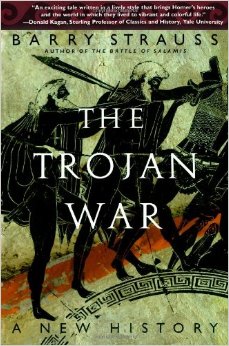 Imagine if the Trojan War happened pretty much as Homer described it? How would modern archaeology, scholarship, and our understanding of war help us understand the events of the Illiad?
Yes, on the face of it, Barry Strauss’s The Trojan War – A New History is an odd book. It’s a bit like John Morriss’s Age of Arthur, which took Nennius and Geoffrey of Monmouth more or less at their word, much to the derision of other Dark Age historians.
However, this isn’t a Dark Osprey flight of fantasy; Strauss is well aware that he’s doing a “just suppose” kind of history and he does make a good argument as to why we should at least consider Homer as more journalist than fabulist.
For a start, Homer was (probably) based on the coast of Asia Minor (modern-day Turkey was the home to many Greek colonies), and may have had access to local historical sources, including traditions reflecting the Trojan point of view.
The interventions of the gods mirror the rhetoric of numerous Middle Eastern inscriptions in which kings and Pharaohs do mighty deeds while the gods hold their hands in person. The Trojans and their allies also feel authentic to “Asia,” and the rhetoric and political landscape matches what we now know of the milieu.
 Thursday, June 14: as good a day as any to begin an adventure. I walked downtown that afternoon under looming clouds to Concordia University’s EV Building, where I picked up my accreditation for the 2016 edition of the Fantasia International Film Festival. I’d been looking forward to writing about this year’s festival for Black Gate virtually since last year’s had ended. Now things were finally about to begin. A laminated press pass, a festival schedule, a thick program book: the guide to the adventure unfolding over the next three weeks, to fantasy and horror and science fiction and a lot more.