Fantasia 2016, Day 6: Twice-Told Tales (The Throne and The Lure)
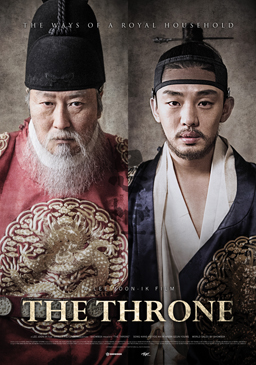 Sometimes the movies I get to see on a given day at Fantasia have an obvious common theme. Sometimes not. Sometimes there’s a commonality binding two otherwise different movies, but it’s tenuous. So it was that on Tuesday, July 19, I watched a Korean historical drama called The Throne (originally Sado), and followed it with a Polish musical-fantasy-tragicomedy called The Lure (originally Córki dancingu). They’re both films based on older stories, in the first case recorded history from the eighteenth century, and in the second Hans Christian Andersen’s fairy tale “The Little Mermaid.” As you might imagine from those two very different source materials, these are very different movies in very different genres. But it also seemed to me that the process of retelling the stories was very different as well.
Let’s begin with The Throne, which reinterprets history in high style. Directed by Lee Joon-ik from a script by Cho Chul-hyun, Lee Song-won, and Oh Sung-hyeon, it begins one rainy night with a rebellion led by Prince Sado (Yoo Ah-in) against his old father, King Yeongjo (Song Kang-ho). It fails, and Sado’s condemned to death. The precise crime and precise punishment are determined by legalistic rules that Yeongju must follow or risk his throne; the result is that Sado’s condemned to a slow death, imprisoned in a small box without food and water. We see Sado slowly waste away, but most of the film takes place in flashback, as we learn about his life and his relationship with his father, and why he led the rebellion and why he failed.
The structure of the movie is masterful, unveiling events bit by bit. It’s not quite a mystery structure, as there’s no central investigator revealing the truth, no doubt in anyone’s mind about what’s happened or why. Instead Sado’s slow death triggers a series of memories, both Sado’s own and those of his family. As the memories accrue, we start being able to draw connections between symbols and between repeated phrases and repeated choices. Things acquire different meanings at different times. Something as simple as the choice of a gate through which the king walks, or the presence of Sado at a certain point in his father’s ritualised washing ceremony, comes to have terrible significance. We get to understand Sado, and then Yeongjo, and then Sado through Yeongjo and the way Yeongjo had to raise him.
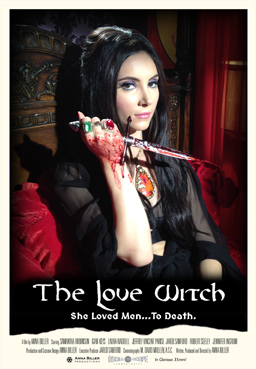 I had only one movie on my schedule for Monday, July 18, but thanks to the good offices of the people at the Fantasia Film Festival and at Oscilloscope Laboratories, I ended up able to catch another film first. The Love Witch was a movie that I’d been unable to watch in its theatrical showing at Fantasia due to a scheduling conflict. After seeing it Monday, I’d go on to the Hall Theatre for The Wailing (Goksung), a two-and-a-half hour Korean horror film. The movies made for an odd contrast. In both cases I greatly appreciated them but came away fairly sure I wasn’t part of their primary audience. But movies play to whoever sees them, and perhaps writing about these films will bring them to the attention of people with better perspectives than my own.