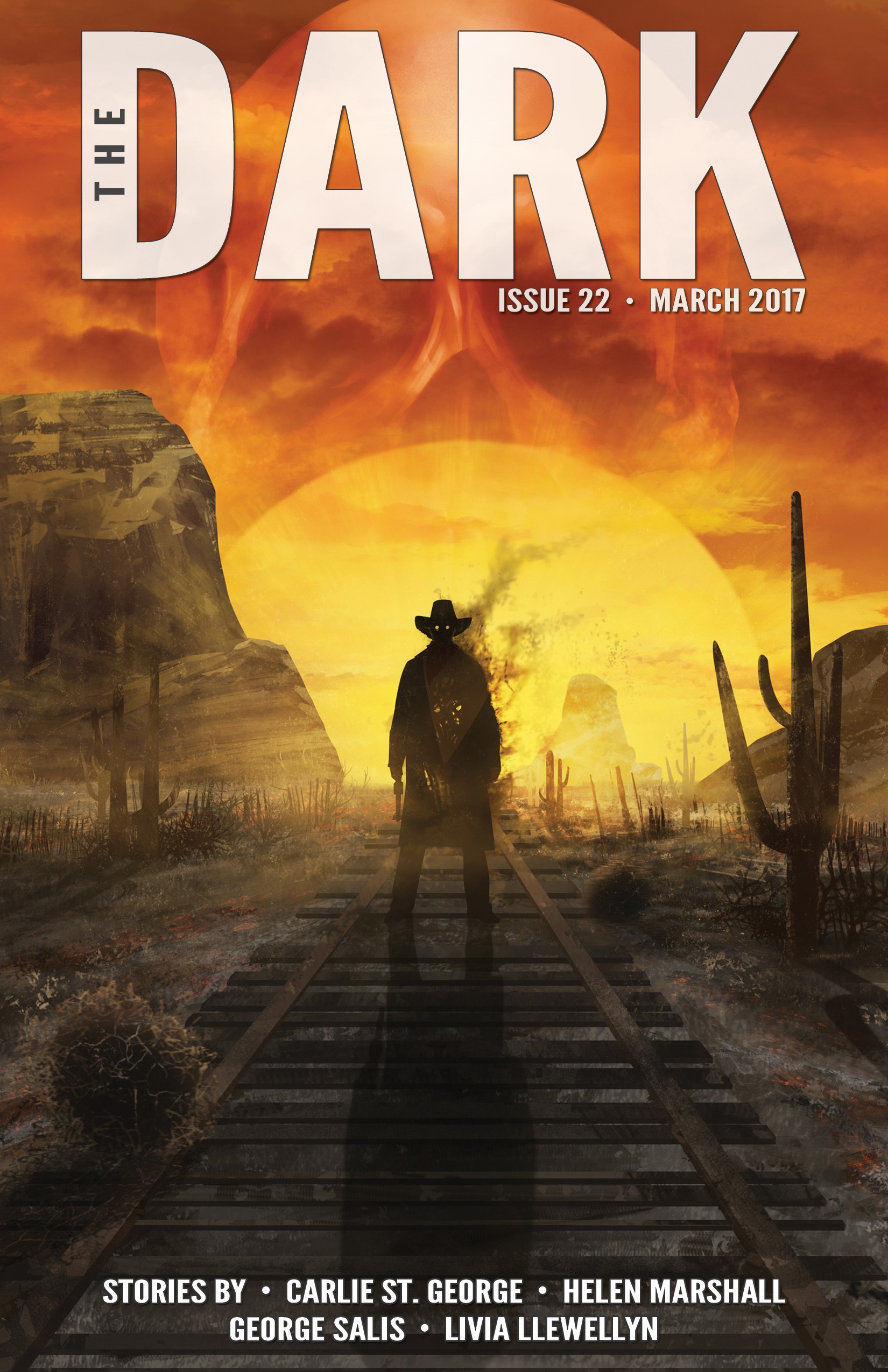
The Valley of Gwangi Finally Reaches Blu-ray Because I Mistakenly Said It Never Would
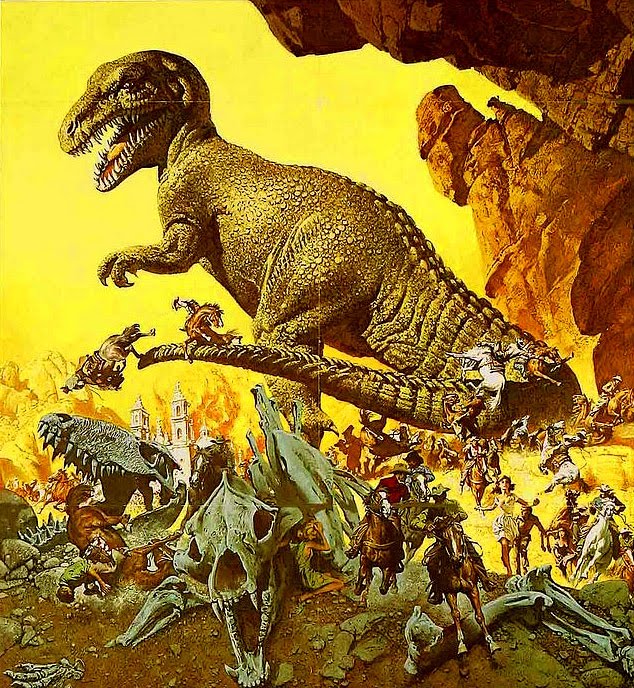 During my years of writing for Black Gate, I’ve repeatedly pointed out certain films aren’t available on Blu-ray or DVD … only to discover after I post the article that said films are already scheduled for a release. This happened again three weeks ago when I mentioned that the only Ray Harryhausen film still unreleased on the Hi-Def format was The Valley of Gwangi. I dug myself in deeper by predicting we wouldn’t see one for years because of how slowly Warner Bros. moves with its catalogue titles.
Yet here I am in possession of a Blu-ray from Warner Archive of The Valley of Gwangi and writing about it. Maybe I should start making gloomy declarations about the Blu-ray chances of other favorite movies, just to invoke the intervention of the muse who controls home video releases. (Melpomene, I believe.)
Everyone who loves movies probably has a specific film that seems as if it were made just for them. A Ray Harryhausen stop-motion giant monster in a Western? That’s what I call Ryan Harvey Niche Marketing. The only way The Valley of Gwangi could be more targeted to me is if 1) the monster was Godzilla, 2) Peter Cushing was one of the stars, and 3) Sergio Leone directed it. However, if such an event actually occurred, the shockwaves would’ve knocked Earth from its axial tilt and annihilated civilization. Perhaps it’s for the best we stopped at “Ray Harryhausen giant monster Western.”
Although The Valley of Gwangi has some of the flaws found in other Ray Harryhausen-Charles H. Schneer films (workmanlike direction, some stilted performances), it’s still one of the greatest dinosaur movies ever made, in the same league as One Million Years B.C. and Jurassic Park. Is Jurassic Park overall a superior movie? Yes, but in terms of creative dinosaur action, The Valley of Gwangi competes. The only dinosaur movie that ranks higher than these is the original King Kong.
 People can have all kinds of reasons to use another name, or to change their names permanently, for that matter. There are personal or family reasons, like marriage or adoption. There are political or social reasons, like marking a religious conversion, or immigration – though that last’s not as common now as it was in the early to mid-20th century. My own father, for example, changed his name to Malan because British authorities – to whom he had to report regularly as a displaced person after WWII – suggested that he try to sound less Polish since he was planning to stay in England. He chose a name much in the news at that time, and that’s why my brother and I are often asked if we’re South African.