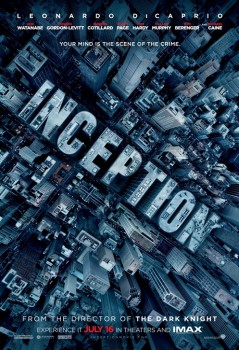
 Inception (2010)
Written and Directed by Christopher Nolan. Starring Leonardo DiCaprio, Joseph Gordon-Levitt, Ellen Page, Tom Hardy, Marion Cotillard, Cillian Murphy, Ken Watanabe, Tom Berenger.
You expected a review of The Sorcerer’s Apprentice, didn’t you? I respect Dukas and Goethe too much for that. As apparently does the rest of the nation, since over the weekend the film made roughly the amount of change found in the lint catcher of the dryer.
Inception right now is the movie conversation. No matter what else occurs in cinema during 2010 (Tron Legacy! So hyped for that), this will known as the year of Inception. Even if We Make Contact. Inception is guaranteed to become a speculative-fiction classic that will sit on the same shelf with Metropolis, Blade Runner, 2001: A Space Odyssey, Alien, The Terminator, The Matrix, et al.
What? Did you think I was going to go against the grain of critical and viewer opinion that has almost cased and mounted Inception in the Hall of Fame?
I’m not. I can’t. The movie deserves every accolade it has received. I don’t even think there can possibly be a fan-backlash against it like there was with Avatar. Inception is as good as you’ve heard it is, and for many of you, it might even be far better.
But don’t walk into the theater with expectations, or even that much knowledge about it. Writer-director Christopher Nolan remained closed-mouth about the film in the build toward its premiere, which was the perfect approach. Inception isn’t exactly a “twist” movie (Bruce Willis was dead all along!), but it is a film of the constant escalation of surprise. Its story continues to plunge deeper and deeper, turning more complex with each passing scene, where the stories of most movie strip away complications as they head toward their finales. It’s a reversal that recalls Nolan’s second movie, the breakthrough Memento, but Inception is much more intricate in design. Hell, it makes Memento seem linear! Therefore, even though Inception can’t be spoiled with a single sentence the way you might spoil The Crying Game, it’s still best if you know as few details about the plot as possible or any of the specific scenes before you go in.
…
Read More Read More
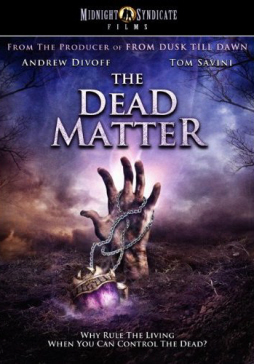 Here at the Black Gate offices we’ve sent the entire gaggle of lazy summer interns to the local Hot Topics store to camp out in the 100% humidity of a Chicago summer to wait for tomorrow’s release of Midnight Syndicate’s movie The Dead Matter. We could have let them stay in the air conditioning and buy it off Amazon.com, but what fun would that be?
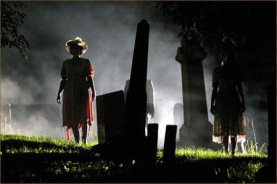 The Dead Matter
 I’ve been telling you about this one for quite awhile and now it’s finally here!
 No seriously, I can’t believe I’m writing this. But here goes.
 John O’Neill’s editorial in Black Gate 14 touched on gaming, on wargaming and role-playing, and on the way these things shaped the way friends interact. It hit home for me, because I recognised in my life much the same sort of phenomenon John described in his own.
 TTA Press
 In the name of journalistic integrity, with stomach fortified by a hearty breakfast, I took myself to a Sunday morning matinee of
  The Door Into Fire, by Diane Duane