Vintage Treasures: Threats… and Other Promises by Vernor Vinge
Vintage Treasures: Threats… and Other Promises by Vernor Vinge

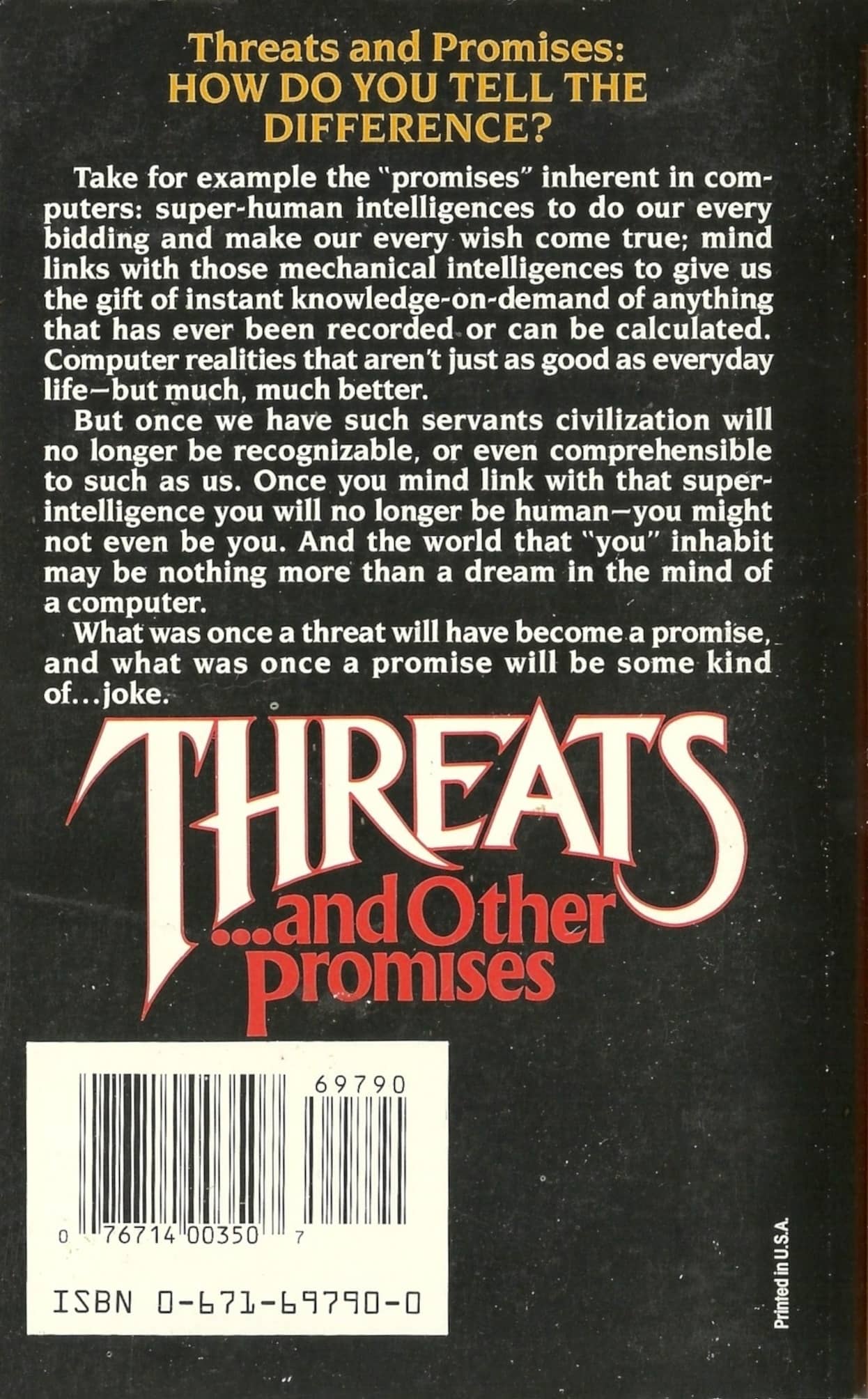
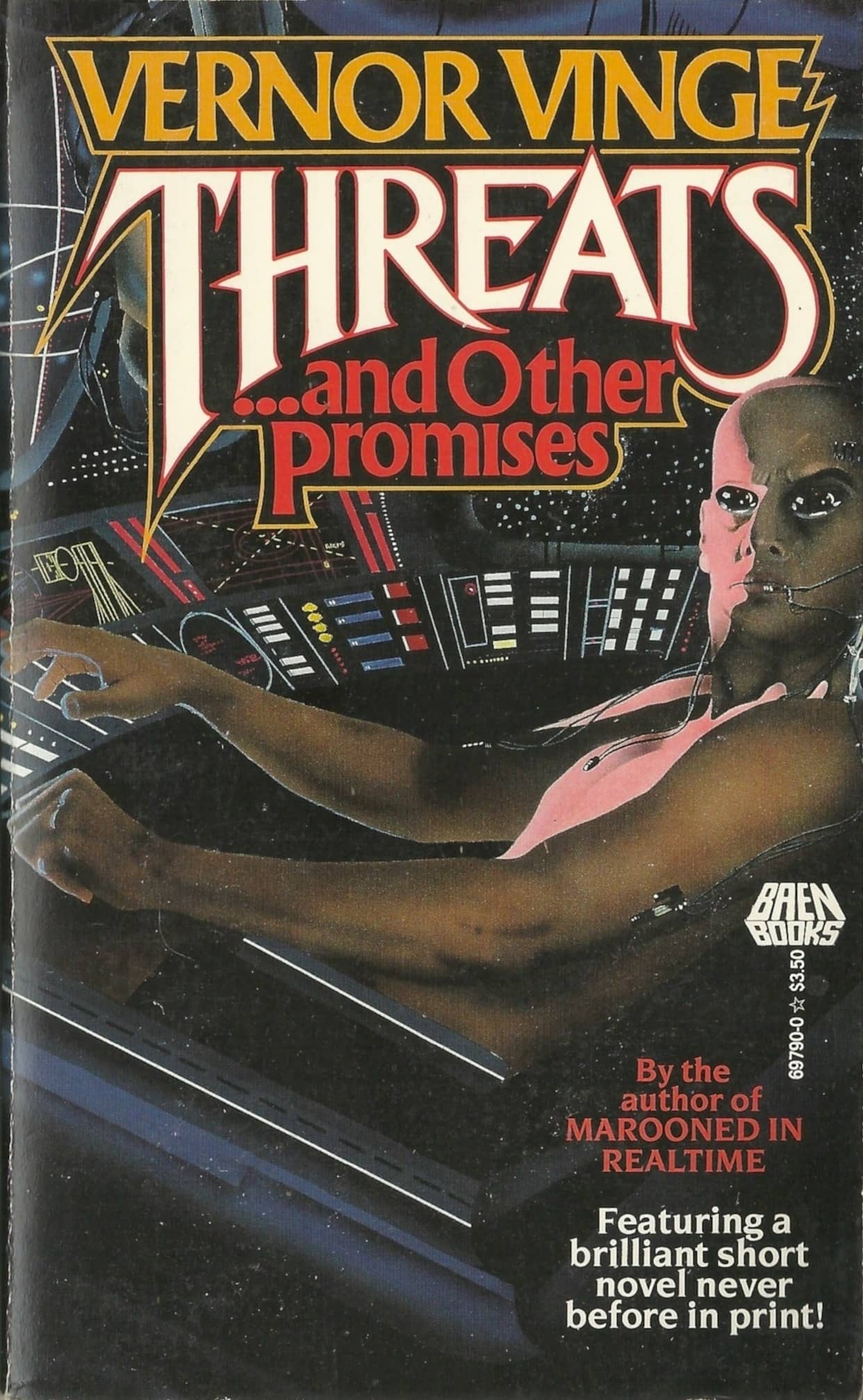
Threats… and Other Promises (Baen, November 1988). Cover by E. M. Gooch

Vernor Vinge is one of our greatest modern science fiction writers. He’s widely credited with introducing the singularity into modern parlance with his 1993 essay “The Coming Technological Singularity.” He’s won the Hugo Award five times, for his novels A Fire Upon the Deep, A Deepness in the Sky, and Rainbows End, and his novellas “Fast Times at Fairmont High,” and “The Cookie Monster.”

His first short story collection True Names … and Other Dangers appeared in 1987; it was followed quickly by Threats … and Other Promises in 1988. Both were paperback originals from Baen, and both were nominated for the Locus Award for Best Collection. The latter is remember today chiefly for the novella “The Blabber,” the first story in Vinge’s celebrated Zones of Thought universe, setting for much of his most popular fiction. I first learned about it from Alan Brown’s insightful review at Tor.com, here’s the bit that grabbed my attention.

“The Blabber” describes a human colony world settled by emigrants from the American Great Lakes region. Both Earth and this new colony are located in the “Slow Zone,” a region where travel and communications are limited to the speed of light, and superhuman intelligence is impossible. Beneath this region, in the “Unthinking Depths,” even human-level intelligence is impossible… The fringes of the galaxy are the “Beyond,” where the speed of light is no longer a limiting factor, and superhuman beings and intelligences live.

In “The Blabber,” the human colony, located just within the Slow Zone, is visited by a trading expedition from the Beyond, looking to trade advanced technology for cultural artifacts from the humans. The story is a bravura effort, mixing thoughtful scientific extrapolation with wonders that would be right at home in the space opera tales of science fiction’s pulp era. Vinge found a way to escape the bounds of rigid extrapolation, but in a way that was internally consistent. There is a joy and sense of wonder in “The Blabber” that I had not seen in Vinge’s work before. So when I heard that A Fire Upon the Deep would be set in that same universe, I looked forward to it with great anticipation. Anticipation that was rewarded in abundance.

If you’re like me and you like to sample authors with short fiction first, Threats…. and Other Promises is a great place to start. Here’s the complete Table of Contents.
Read More Read More

The Frustrations (and the Surprising Successes) of Marketing Your Book

The Frustrations (and the Surprising Successes) of Marketing Your Book

I’ve joined a new FB group called “Writers Helping Writers.” One of the members asked about marketing. This is what I said:

Marketing is easy. Effective marketing that actually sells books, however, is hard. My son works for Facebook, so he helped me with an advertising campaign on the platform. We had a $250 budget for one of my collections, The Experience Arcade and Other Stories. One of the ads reached 1,900 readers. 103 people clicked on it. We did sell books, but not enough to pay back our investment. We found the same pattern to be true on the other books we promoted on Facebook.

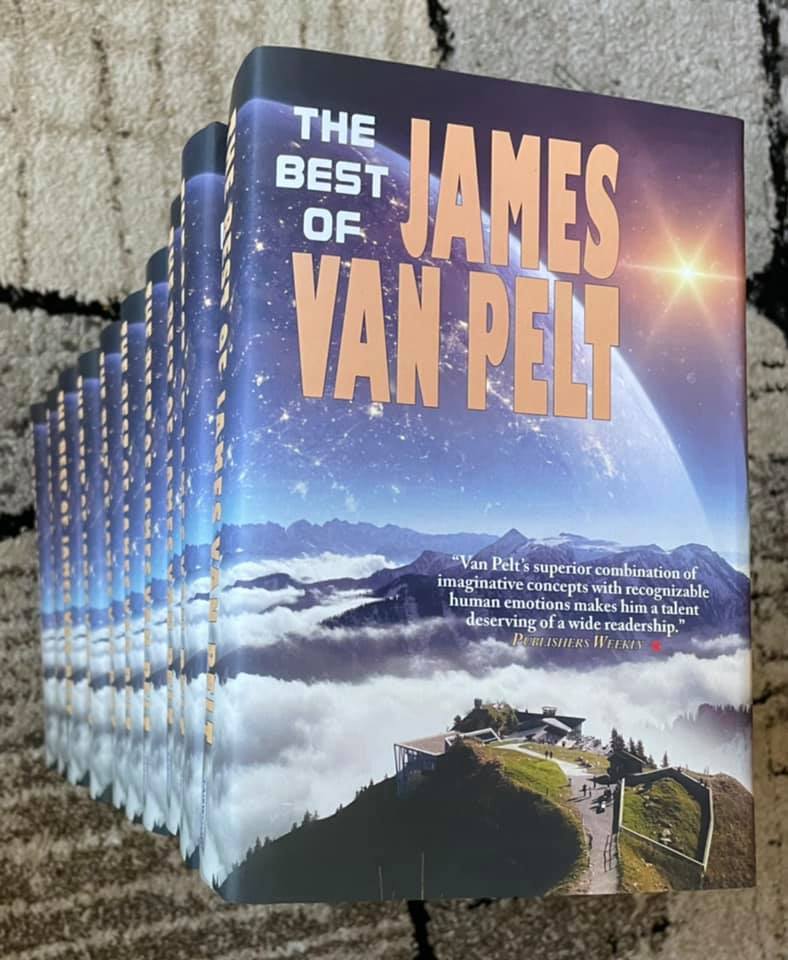
I have tried quite a bit with marketing: Facebook, Goodreads, advertising in convention bulletins and program books, signings, YouTube videos, readings, postcards, bookmarks, flyers, tee shirts. Also, my publisher has worked hard to get the books to reviewers (my latest book, The Best of James Van Pelt, received a starred review at Publishers Weekly! Hooray!). All of my attempts sold some books, but none of them profited more than I spent. I didn’t pay for any of the reviews, by the way.

The successful books I’ve had seemed to take off on their own. My first collection, Strangers and Beggars and Other Stories, was recognized by the American Library Association as a “Best Book for Young Adults” and has sold several thousand copies. I didn’t do anything to make that happen — I didn’t even know it was a thing.

Read More Read More

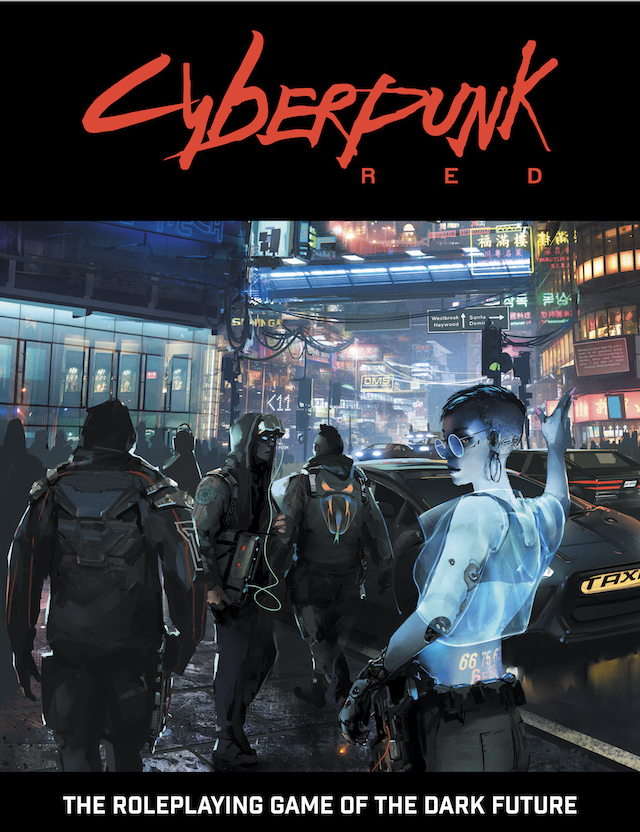
Cyberpunk Red: Style and Substance

Cyberpunk Red: Style and Substance

IMG_0957

In 1990, R. Talsorian released Cyberpunk 2020, a revision to the original game from the 1980s. This was followed by many supplements and the gaming world had a tabletop RPG that enabled players to engage with a world with elements they saw and read in Blade Runner, Hardwired, Neuromancer, and Strange Days. The game proved so popular that many still play it today. When a third edition was released, it proved so unpopular that it is basically forgotten.

A few years ago the creators of The Witcher video game series, CD Projekt Red, reached out to R. Talsorian. See, they had played Cyberpunk 2020, and they wanted to create a new video game and thought it might be fun to use Cyberpunk 2020 as the basis. Thus, Cyberpunk 2077 — a much anticipated video game — was born.

Read More Read More

Where Preposterous Dreams Meet the Raw Edges of Reality: Islam, Science Fiction, and Extraterrestrial Life by Jörg Matthias Determann

Where Preposterous Dreams Meet the Raw Edges of Reality: Islam, Science Fiction, and Extraterrestrial Life by Jörg Matthias Determann

Islam, Science Fiction, and Extraterrestrial Life: The Culture of Astrobiology in the Muslim World
by Jörg Matthias Determann
I.B.Tauris, Bloomsbury Publishing (269 pages, $115.00 in hardcover/$103.50 digital, September 17, 2020)

Science fiction and ETs in the Muslim world? Why, yes. Ask Professor Jörg Matthias Determann, a faculty member in the Liberal Arts & Sciences program at the Virginia Commonwealth University School of the Arts in Qatar (the world’s richest country), and Associate Editor, Arabian Peninsula, of the Review of Middle East Studies. He is a historian who worked at Zentrum Moderner Orient, Freie Universität Berlin, the University of London, King Saud University in Saudi Arabia, and was a visiting scholar at the King Faisal Center for Research and Islamic Studies in Riyadh. He is fluent in Arabic, making him a useful guide to the sciences and mythologies of what are called “Muslim-majority countries,” which includes far-flung territories such as Indonesia and Pakistan, plus Saudi Arabia, Iran, Turkey, etc. — in all, a quarter of the world’s population. These in turn are torn by often ferocious enmity between Sunni (about 90%) and Shi’a (about 10%). A bit like Catholics versus Protestants five centuries ago — and they didn’t even have sf to worry about.

I’m fairly sure hardly anyone native to the western centers of science fiction, especially North America, UK, France, Germany, Australia,  has a clue about sf or fantastika in those Islamic lands. Perhaps it’s assumed that reading or writing the usually godless worlds of sf imagination is forbidden or even attracts death threats (p. 148) by excessively devout Muslims. To some extent, as Determann shows, this is so. In 1999, a Syrian-born scholar “issued a fatwa about the permissibility of reading science fiction… ‘If these stories contain lies, such as Darwin’s theory (evolution), and other things that are contrary to the facts stated by Islam… then the Muslim should avoid them” (p. 7). Darwin’s lies, eh? Sigh.

Read More Read More

A (Black) Gat in the Hand: More Cool & Lam from Hard Case Crime!

A (Black) Gat in the Hand: More Cool & Lam from Hard Case Crime!

I say Erle Stanley Gardner, and you say…Ed Jenkins? Lester Leith? Paul Pry? Stop that!! All correct, but we were looking for Perry Mason. Probably the most famous defense lawyer in fiction, Mason made Gardner the best-selling author in the world at the time of his death. Raymond Burr is forever linked in minds as the picture of Mason.

But my favorite books from Gardner are those featuring his duo of Cool and Lam. And Hard Case Crime has released their fourth and final volume featuring the mismatched pair. Top of the Heap, Turn on the Heat, and The Count of 9, were all previously reissued. And as I wrote about here, Hard Case published the previously unreleased second novel, The Knife Slipped. William and Morrow Company had objected to the content and declined to publish it upon completion. Gardner moved right along and wrote Turn on the Heat, which became number two, released in January of 1940. There would be twenty-seven more books, with the final, All Grass Isn’t Green, hitting shelves in 1970. And The Knife Slipped joined the list in 2016.

Kudos to Hard Case for getting some of this series back in print. The paperbacks from Dell and Bantam can be found used, but not always on the cheap. And getting them in good condition can be a bit difficult. I myself don’t even have all 29 yet, and I’m a C&L fanboy. It’s good that Hard Case has made it easy to buy a couple of these books. And of course, it was FANTASTIC to find a lost Cool and Lam title.

If you’ve not read Cool and Lam, the widowed Bertha Cool runs a detective agency, and she hires the disbarred, down on-his-luck Donald Lam: at slave wages. His cunning and sneakiness produce results and he pushes his way into a partnership in book five.

Bertha LOVES money. She basks in the fees that Donald brings in, but she incessantly complains about the razor-thin line he walks with the law. And about his expenses, which are not at all unreasonable. She’s just so cheap she makes Scrooge look generous.

This constant friction makes for an entertaining duo. As Donald writes,

‘At that, our partnership would probably have split up long ago if it hadn’t been so profitable. Money in the bank represented the most persuasive argument in Bertha’s life, and when wit came to a showdown where the dissolution of the partnership was threatened, Bertha could always manage to control her irascible temper.’

Read More Read More

The Season of Gaming: Pathfinder

The Season of Gaming: Pathfinder

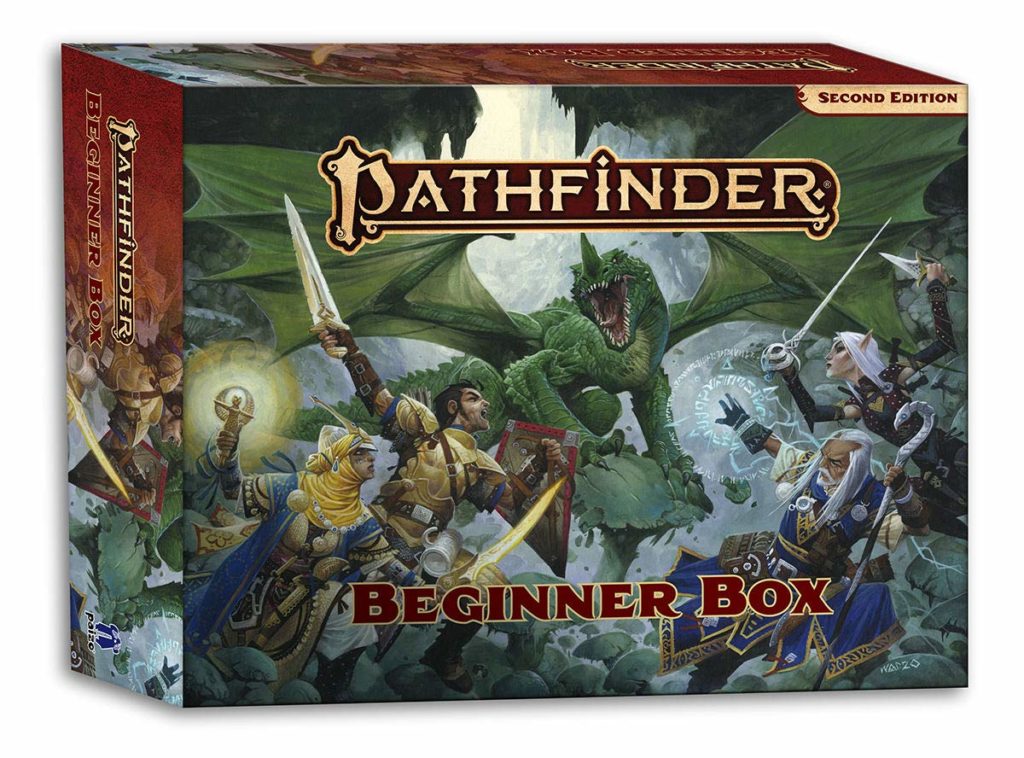
Since its release at 2019 GenCon, the RPG Pathfinder Second Edition has been growing in popularity. With a character creation system that allows for immense character customization, it has won over many converts among the scores of existing fans of the game’s first edition, even with all of the difficulties involved in getting those fans together to play the game during a global pandemic.

It’s worth a quick recap of what Paizo has put out to support and expand this game in just a little over a year:

You can get the harcopies of these gaming resources through pretty much any game shop, but digital copies (as well as the hardcopies) are available directly through Paizo.com. If ordering Paizo products – including First Edition Pathfinder, Pathfinder Adventure Card, or Starfinder products – through their website, there’s a one-time promotional code of “holiday21” good through January 17, 2021.

Read More Read More

Pulp Hero Press Re-releases Waters of Darkness by David C. Smith and Joe Bonadonna

Pulp Hero Press Re-releases Waters of Darkness by David C. Smith and Joe Bonadonna

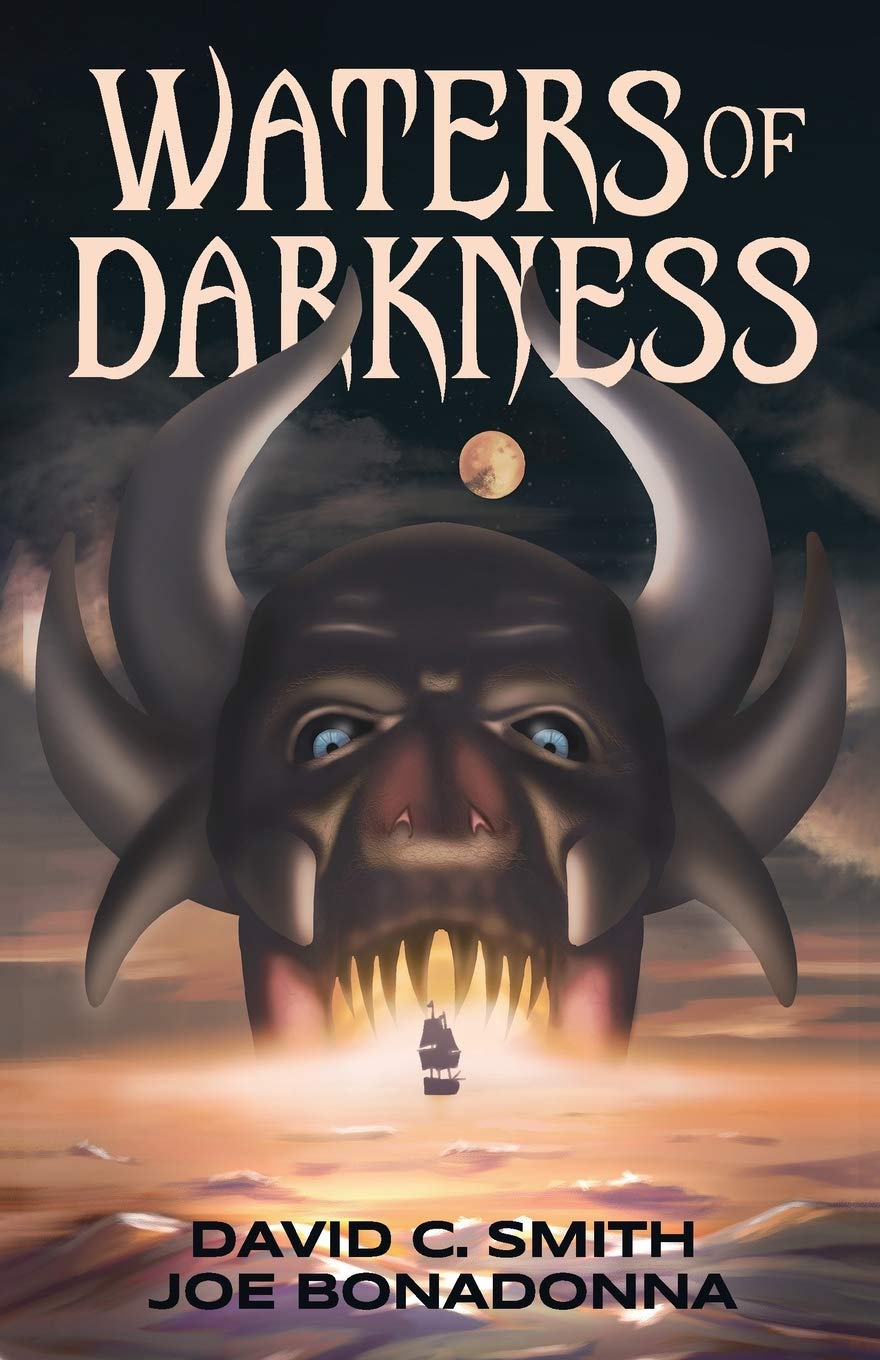
Waters of Darkness (Pulp Hero Press, October 19, 2020). Cover uncredited.

Pulp Hero Press has reprinted David C. Smith and Joe Bonadonna’s classic sword & pirate novel Waters of Darkness. Joe and Dave are well known to readers of Black Gate, and their first collaboration was very warmly received when it first appeared from Damnation Books in 2013. Here’s a slice from William Patrick Maynard’s enthusiastic BG review, “Set Sail on the Waters of Darkness.”

The shade of Robert E. Howard lingers over every page of Waters of Darkness, the first collaboration by these two talented authors to see print.

The principal characters, Crimson Kate O’Toole and Bloody Red Buchanan, would have fit in nicely had this 17th Century swashbuckler first seen print in the pages of Weird Tales in the 1930s. A quest for fabled treasure sets these two buccaneers sailing for the Isle of Shadow in the far distant Eastern Seas. They find themselves combating an evil priest of Dagon and the sorcerer in his thrall along the way and most of the crew of the Raven pays the cost for their having crossed paths.

This book is extremely fast-paced and is perhaps the new pulp title that most closely rings with the authentic flavor of classic pulp. It is not surprising since David C. Smith was always among the top echelon of Robert E. Howard pastiche writers, and Joe Bonadonna has quickly established himself as a breath of fresh air in the new pulp world.

Together, the mixing of both men’s styles (classic pulp of the finest caliber with quirky and highly literate mixing of fantasy, hard-boiled humor, and an expansive cinematic vocabulary) produces what will doubtless be hailed as one of the finest new pulp titles of the year…. This has already been a strong year for new pulp, but this is one swashbuckler that isn’t likely to be equaled.

Waters of Darkness was published by Pulp Hero Press on October 19, 2020. It is 200 pages, priced at $14.95 in trade paperback and $4.99 in digital formats. The cover art is uncredited. Read a generous excerpt as part of our Black Gate Online Fiction imprint.

See all our coverage of new releases by Black Gate authors here.

The Discovery of Digests!

The Discovery of Digests!

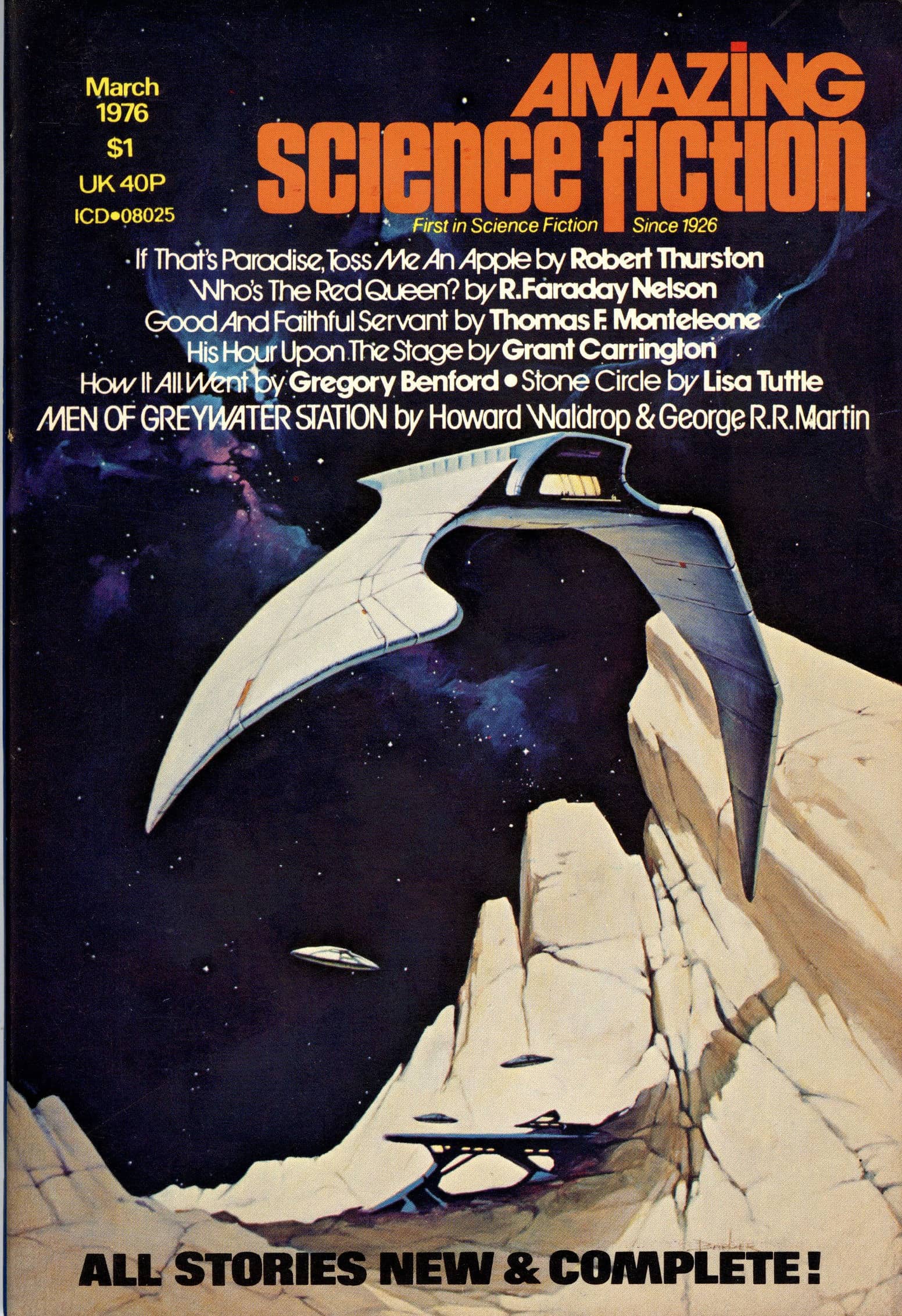
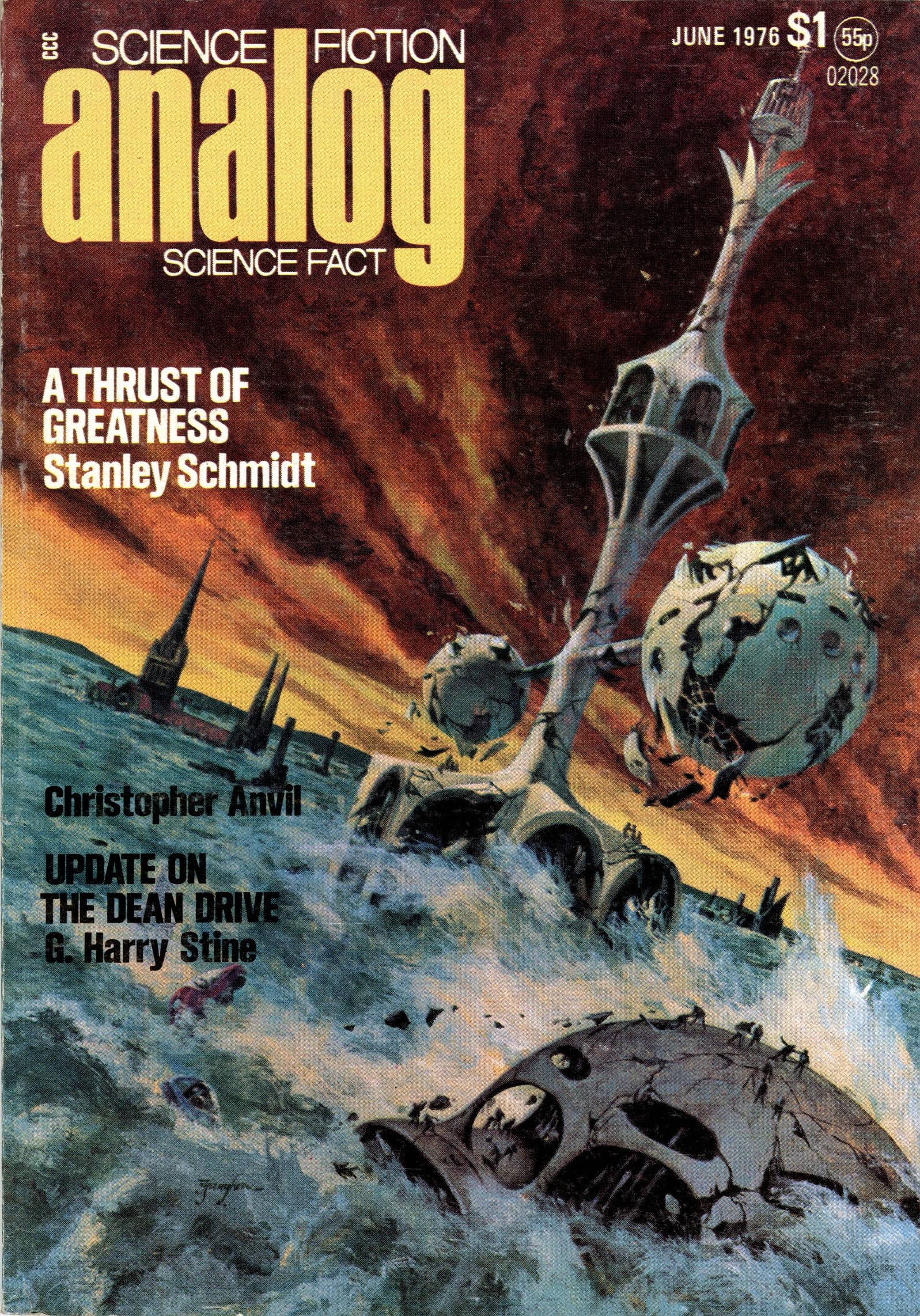
Amazing Stories, March 1976 (cover by Barber), Analog, June 1976 (cover by Jack Gaughan)

On a sunny day back in May of 1976, I went with my dad to his office. He was only going to work for a few hours, then we were going fishing. To kill some time, I went over to the drugstore across the street. There I discovered something life changing — science fiction digests!

I was a big SF fan already by that time (just short of my 13th birthday) but I had no idea that SF magazines existed. I bought the issues they had of The Magazine of Fantasy & Science Fiction, Analog, Amazing Stories and Fantastic Stories. How could I not, seeing those great covers!

Read More Read More

Future Treasures: Persephone Station by Stina Leicht

Future Treasures: Persephone Station by Stina Leicht

Stina Leicht has had an impressive career over the last decade. Of Blood and Honey came in sixth in the 2012 Locus Poll for Best First Novel; sequel And Blue Skies from Pain appeared on the nomination list for the Locus Award for Best Fantasy Novel. Her two-book flintlock fantasy series The Malorum Gates wrapped up in 2017.

Her new novel Persephone Station arrives from Saga Press next month, and it’s a significant departure for Leicht — a space opera that Publishers Weekly calls a “sprawling, frenetic science fiction take on The Seven Samurai,” which sounds like something I need.

Here’s an excerpt from the Kirkus review.

In this earnest space opera, an ensemble of badass women and nonbinary and queer characters fight corporate overlords on the semilawless planet Persephone.

A century ago, the Emissaries, hidden beings indigenous to Persephone, gave the gift of prolonged life to Rosie, a nonbinary cleric-colonizer, and Vissia, now head of the corporation that owns the planet. Despite and because of that gift, Vissia’s bent on exploiting the Emissaries until nothing is left. Rosie, now a crime boss, enlists Angel, the expelled former student of an all-female martial arts academy, and her team of revivified United Republic of Worlds soldiers, to protect the Emissaries. Unless they can be convinced to reveal themselves and join the URW, making the corporate claim on Persephone void, the odds are not in their favor…. Their gender-fluid nonbinariness is just one part of a delightfully complex, genuine, and amoral character who could make this novel worth your time.

Persephone Station will be published by Saga Press on January 5, 2021. It is 512 pages, priced at $27 in hardcover and $9.99 in digital formats. I can’t find any information on who created the cover, but I like it.

See all our coverage of the best upcoming SF and fantasy here.

Rogue Blades Presents: Charles, My Friend

Rogue Blades Presents: Charles, My Friend

The following is a memorial article from author David C. Smith for late author Charles R. Saunders.

Charles Saunders and I first began corresponding in 1977, when we were both writing for the semiprozines of the time. He wrote to me first, beating me to the punch, because I admired his work and had considered dropping him a line. As it turned out, I was privileged to know him for more than 40 years. I’ve lost count of the number of letters and emails we shared; unfortunately, all the early letters I received from him are now gone. I stored them in file folders in banker’s boxes that were destroyed when our basement flooded with 30 inches of water in 2001. I joked with him once about that: What will all the historians and fanboys do when they find out that I lost all your letters? There will be no history to write! He told me that he hadn’t held onto my letters, either, so we were even. We did not take it all that seriously. Now, of course, I regret the loss of those letters of his, as well as of his newspaper editorials, copies of which he sent me regularly.

Ironically, we never met in person, although we spoke on the phone just once. I called to bug him for the name and address of his producer at New Horizons, the Roger Corman outfit that had produced Amazons, based on Charles’s story Agbewe’s Sword. This was in 1986. I wanted to get my script Magicians at least read by someone in the business, and Charles was kind enough to help me make the contact, although of course nothing came of my effort. 

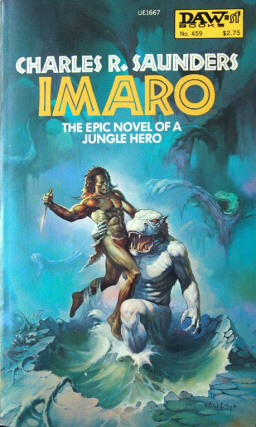
I don’t recall much of what we discussed in those early letters; mainly it was back and forth musings about our stories, our hopes of seeing them published, and our shared interest in history, as well as our political and social interests, which were aligned. As time went on, we both had middling success with our fiction, seeing some of what we wrote appear as paperback originals. The botched debut of the original edition of Imaro in 1981 by DAW Books hit him hard, although for any of us who know his work, it felt absolutely correct to have Imaro in print from a corporate New York publisher. Imaro was followed by The Quest for Cush in 1984 and then The Trail of Bohu in 1985. And there ended the saga of Imaro, it seemed, at least for a time.

By then, Charles had moved to Halifax, Nova Scotia, from Ottawa, where he had gone in 1969 rather than be drafted to fight in Vietnam. He had been radicalized in the late sixties in Chicago, where he had associated with the Black Panthers — which, despite the image of them propagated by the FBI, were concerned primarily with doing good for, and fighting for justice in, African American communities. He had grown to maturity during days of rage in our country; although he was six years older than I, inevitably, our politics were of a kind: we believed in and supported progressive causes on both sides of the border, especially social justice issues. (In the 90s, a mutual correspondent of ours referred to “feminazis” in a letter to Charles. Imagine his reaction to that.) And he was, I believe, twice married and divorced, something else we had in common. 

Read More Read More