The Wolfman
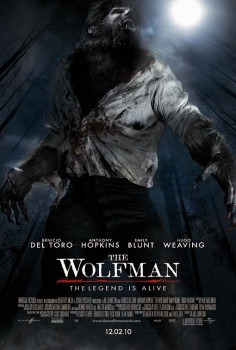 The Wolfman (2010)
Directed by Joe Johnston. Written by Andrew Kevin Walker and David Self from the Screenplay by Curt Siodmak. Starring Benicio Del Toro, Anthony Hopkins, Emily Blunt, Hugo Weaving.
The re-make of the 1941 Universal horror classic The Wolf Man had a hellaciously crazy time getting to you this weekend. Original director Mark Romanek was removed from the film right before shooting commenced, giving replacement director Joe Johnston only two weeks of prep time. The studio rejected Danny Elfman’s classically-toned orchestral music and hired Pauls Haslinger from Tangerine Dream to re-score the picture . . . only to reject his music a month before the release date and put Elfman’s music back in. The movie, shot in the summer of 2008, was pushed back repeatedly, with new editors brought on in what seemed like a flurry of desperation to save a troubled, messy film.
All this caused considerable concern among old school horror fans like myself, for whom the George Waggner/Lon Chaney Jr. The Wolf Man is a primary text. (Read my thoughts on the original here.) Maybe the movie was in serious trouble; or perhaps Universal wanted to get it just right. We all wanted this film to work; we feared it would not.
I can now confidently report, as a Universal-and-Hammer Horror geek, that the compound word 2010 The Wolfman most definitely does work. It shows evidence of breaks and tears and furious hammering to cover construction difficulties. It has pacing trouble (for once, a movie that goes too fast), character and plot loose ends, and a female lead who doesn’t bring much to the film. It’s flawed, when you come down to silver tacks (not brass tacks; this is a werewolf film). But The Wolfman is also bloody furious fun of a kind that contemporary horror films just haven’t given to somebody with my tastes in a long time. Terence Fisher fans, James Whale fans, Jack Pierce fans, Lon Chaney Jr. Fans, werewolf fans, Victorian London fans, steampunk fans, go see this movie . . . warts and bare patches and all, this is your film.
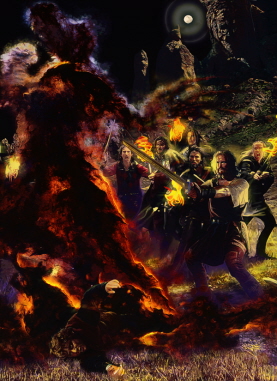 A band of desperate men pursue the slave traders who stole their families… across cold barrows where a dread thing sleeps.
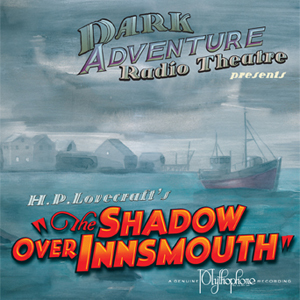 I work for a small software company in Champaign, Illinois. I live in St. Charles, about three hours away. I spend a lot of time in the car. I’ve learned to love audio books.
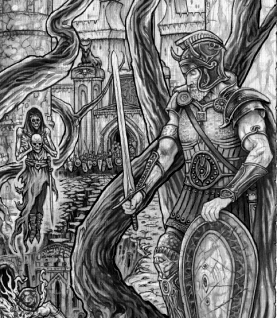 Next up in our Black Gate 14 Preview is an old-school Sword & Sorcery epic from talented newcomer Matthew David Surridge.
 It doesn’t take much psychic ability to figure out a lot about a person just by walking through their front door. We look for subtle indications that our impression outside their abode was either right on or dead wrong. We keep an eye out for hidden aspects of their personality that might reveal themselves in subtle ways. For instance, did you stumble upon a racy mag stacked amongst the Better Homes and Gardens at your boss’ summer BBQ party? BINGO!
 Continuing from
  Brand and his shipmates face dread sorcery on a strange isle in John C. Hocking’s “The Bonestealer’s Mirror,” the sequel to “The Face in the Sea” from Black Gate 13.
 The
The