 Linwood Vrooman Carter (1930-1988) was one of the heroes of my youth. In the decades since his death his reputation has wallowed in the aftermath of the Last Great Sword & Sorcery Boom. He helped start it, with the Conan books he and L. Sprague de Camp brought back into print, edited, and in many cases wrote, as with the Ballantine Adult Fantasy Series of works he edited and thus brought back into print. (Not adult fantasy as in sex, but adult fantasy as in great classic works that weren’t kid stuff). Books by Lovecraft and Clark Ashton Smith and James Branch Cabell; title I never would’ve read in a million years otherwise, but books which shaped the tastes of many another fantasy enthusiast, myself among them.
Despite the vast number of books written in the Sword & Sorcery genre in the past 80 years, when I found myself again turning an eye toward them, one of the first people I sought out was Carter. I distinctly remember the day, age 13, when I bought his Enchantress of World’s End off the spin rack at the Wal-Mart in Harrison, Ark.
The bare-bosomed, bright red beauty on the cover caught my eye, as did the unpronounceable names (Northern YamaYamaLand, Dzimdazoul’s Deep – not to mention the Ethical Triumvirs of Chx!), and of course the cast: Ganelon Silvermane, muscle-clad hero with the mind of a child, his master the Illusionist of Nerelon, face always hidden behind veil of purple mist, and the delightful, freckled, long-legged and sexy Xarda, Knightrix of Jemmerdy.
…
Read More Read More

 In the mail today, just in time for Halloween, is the blood-spattered graphic of the October/November
 cover of Black Static magazine, the horror and dark fantasy counterpart that alternates monthly appearances with Interzone science fiction published by the folks at
  In a few days, the clock will click over from October 31st, Halloween, and pass into November 1st, a day usually associated with the major retailers of North America vomiting out as much Winter Holiday displays they can. (Once they waited until the day after Thanksgiving, but now I think they are prepared to creep into mid-October as well, before the pumpkins are even carved.)
 For this edition of my irregular review of the latest (more or less) short fiction, I thought I’d try something a little different. Usually I try to focus on the stories that worked the most for me, with maybe some attention on those that didn’t and why; at the same time, I also try to convey a flavor of everything else, if only just to alert you that an author is in the publication without, for any number of reasons, wanting to get into discussing the story to any great length. Note the use of the word “try.” One of the challenges here is to provide some substantive, possibly even useful, discussion to an audience that I’m assuming hasn’t already read the material. As
  I’ve been guest-blogging (with fellow Pyr author
 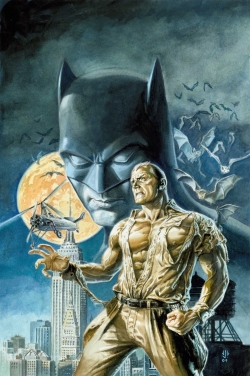 The comic book superhero was born in the late 1930s, during the time when the dominant form of popular culture reading was the pulp magazine. During the next decade, the pulps would start their slow demise: wartime paper shortages that forced the publishers to cut back on the more risky material to focus on the steady sellers, the paperback influx competed on the genre scene and were popular with soldiers overseas, and the rise of the comic book took away much of the younger readers. That the comic book should play such a large part in the end of the pulp magazine industry is an ironic reversal, since the hero pulps fueled the creation of those first four-color superheroes. No Batman without the Shadow. No Superman without Doc Savage.
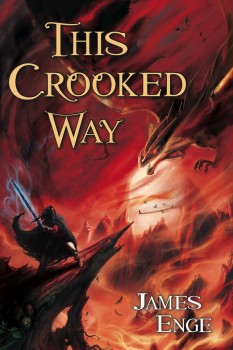 James Enge’s Morlock stories have been some of the most popular fiction we’ve published in Black Gate. His first Morlock novel, Blood of Ambrose, published by Pyr in April, was very warmly received, and described as “A future classic… this novel succeeds beautifully” (The Great Geek Manual) and “Like Conan as written by Raymond Chandler” (Paul Cornell).
 I’ve been in reviewer overload lately, reading, taking notes, and penning reviews for the next issue of Black Gate. But, more than that, I’ve also been coordinating our crop of reviewers this time out, and thinking in terms of what exactly it is that ought to be in the review section of the magazine, not just in the reviews I put up on my own website. Having done over 50 reviews in the last year and a half or so, I think I’ve learned a few things, and I’d like to share my thoughts on what a good review should consist of. And at the end of this essay I’ll also offer some practical advice to anyone that wants to become a web reviewer themselves and share the reasons behind just why someone would want to take the time to review a book in the first place.