Locus magazine announces the 2010 Locus Awards Winners
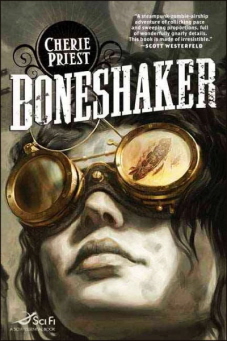 The 2010 Locus Awards winners were announced today, at the annual Science Fiction Awards Weekend in Seattle. The winners include:
Best SF Novel: Boneshaker, Cherie Priest (Tor)
Best Fantasy Novel: The City & The City, China Miéville (Del Rey; Macmillan UK)
Best First Novel: The Windup Girl, Paolo Bacigalupi (Night Shade)
Best Young Adult Book: Leviathan, Scott Westerfeld (Simon Pulse; Simon & Schuster UK)
Best Novella: ‘‘The Women of Nell Gwynne’s,’’ Kage Baker (Subterranean)
Best Novelette: ‘‘By Moonlight,’’ Peter S. Beagle (We Never Talk About My Brother)
Best Short Story: ‘‘An Invocation of Incuriosity,’’ Neil Gaiman (Songs of the Dying Earth)
Best Anthology: The New Space Opera 2, Gardner Dozois & Jonathan Strahan, eds. (Eos; HarperCollins Australia)
Best Magazine: The Magazine of Fantasy & Science Fiction
The Locus Award has been presented annually since 1971. It’s given to winners of Locus magazine’s annual readers’ poll. You can find the complete list of winners at Locus Online.
Congratulations to all the winners!
 Over at
 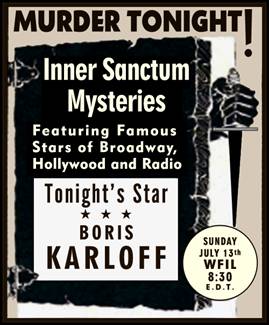 I’ve always been most terrified by the stuff I’ve never even seen. I’ve screamed my way through ghost hunting expeditions having never once actually laid eyes on an apparition of any kind. Jaws is one of my favorite movies, mainly for the scenes when you know the shark is somewhere just outside your line of sight, and I have read books that have made me afraid to have any part of me not under the covers once I’m in bed, for days on end.
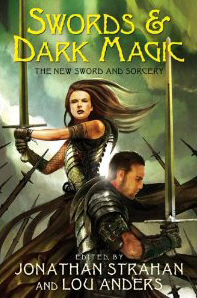 It isn’t often we see a new Sword & Sorcery anthology, especially one from a major publisher.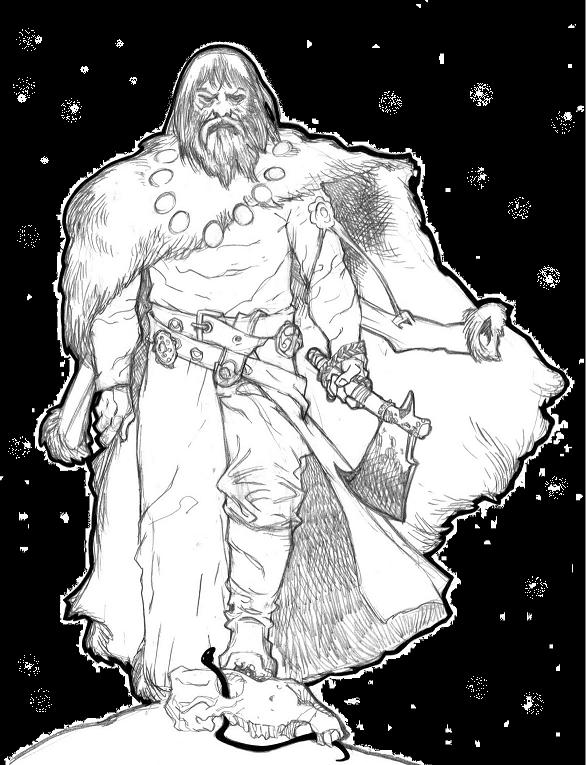
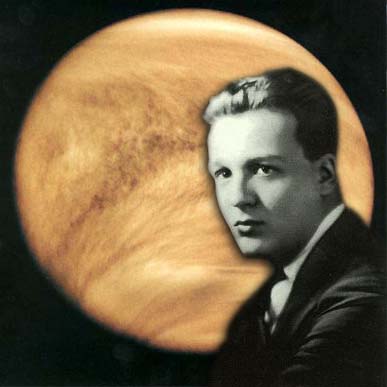 Last week, our esteemed editor John O’Neill posted
  Graham McNeill’s novel Empire: The Legend of Sigmar (Black Library) is this year’s winner of the David Gemmell Legend Award for Best Fantasy Novel of 2009.
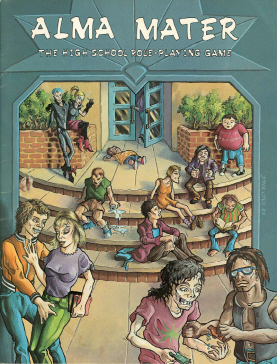
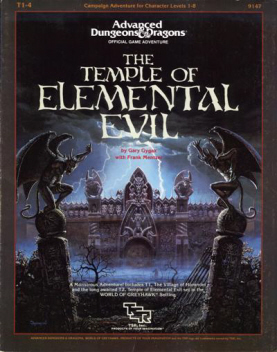 Role-playing games have always interested me because, at heart, they’re about stories. They’re ways to tell stories that you don’t know in advance, ways to bring people together to create something unpredictable but still structured in a narrative form. Now, that said, the question is: how do you go about doing that? If you’re writing a module, an adventure, that referees are going to pick up off a store shelf (or download from a web site), what do you give them to help create that story with their players?
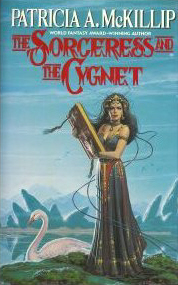 Corleu is an oddity, a white-haired youth in a black-haired tribe of wanderers. His family has a talent for foresight, but all he has is a knack for stories. And then one year the tribe goes south for the winter and finds itself in a marsh where time seems to stand still, where the flowers are perfect but the skies are invisible behind the mists — and no one knows how long they’ve been there. No one but Corleu notices anything wrong.