A Review of Jhereg by Steven Brust
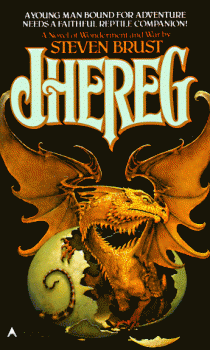 Jhereg
By Steven Brust
Ace (224 pages, $2.50, April 1983)
I’ve played in a lot of tabletop RPGs, including a couple of homebrewed systems and homebrewed worlds. I’ve never encountered one that goes into the culture-changing potential of resurrection, though. It’s treated as an acceptable break from reality, a way to keep things fun, one that has little effect on the world besides providing a way for the campaign’s archnemesis to keep coming back.
Jhereg, by Steven Brust, the first book in his 12-volume Vlad Taltos series, takes the notion of reliable magical resurrection and creates a society around it.
Vlad Taltos is an Easterner and a gentleman, which isn’t a common combination. Easterners are an underclass compared to Dragaerans. The Dragaeran clan called House Jhereg allows anyone, even Easterners, to buy in — a distinct advantage, since it allows them access to the Dragaeran Empire’s sorcery. Unfortunately, the Jheregs may be the most egalitarian family in the Empire, but they also operate a lot like the mafia. Citizenship is not cheap.
 “Evil powers…disappear
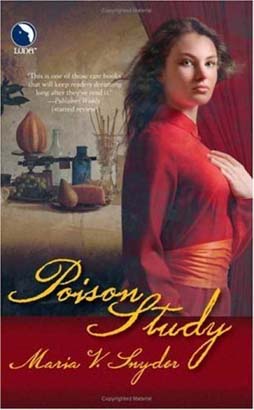 Five years ago, my first novel, Poison Study was published. It came out in hardback with a beautiful red and gold cover that was loosely based on Vermeer’s painting The Girl with the Pearl Earring.
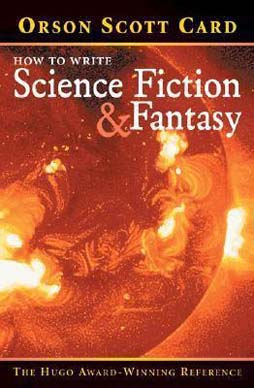 Back in 1995, I’m reading Orson Scott Card’s How to Write Science Fiction and Fantasy – because I had written a bunch of short stories that were all soundly rejected and I was thinking perhaps I needed a few pointers (no comments on still having my short stories rejected).
 As I write this, I am just now sitting down at my computer in my apartment after coming back home from the World Fantasy Convention in Columbus, OH. I’ve literally tossed down my suitcases on the bed moments ago. My lips are chapped. I am tired.
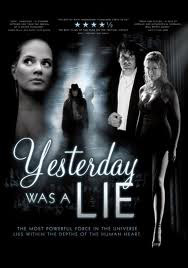 “Yesterday Was A Lie” is an indie film that indulges in experimental exposition right out of the gate.
 Tonight, children go trick-or-treating, and many adults go to Halloween parties, thereby, perhaps, proving Ogden Nash’s line that children get more joy out of childhood than adults get out of adultery. For myself, though, I’ll be counting down the minutes to midnight, scrawling notes and making plans. Because at 12 AM, November 1,
 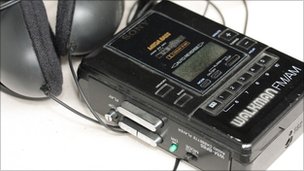 The woman held in one hand a small cigarette-package-sized radio, its antenna quivering. From this sprang tiny copper wires which ended in a dainty cone plugged into her right ear. There she was, oblivious to man and dog, listening to far winds and whispers and soap-opera cries, sleep-walking, helped up and down curbs by a husband who might just as well not have been there. This was not fiction.