Howard Andrew Jones Reviews HeroScape
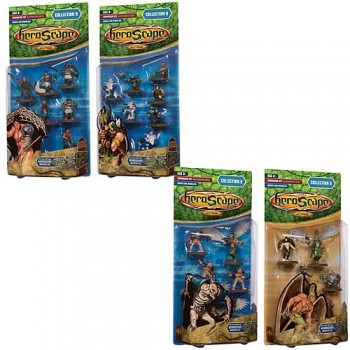
In 2004, I made my first trip to GenCon and was overwhelmed by the experience. I don’t remember much about the specific tables I visited, but I do remember coming across this new game, HeroScape, which applied a modular style to tactical war gaming – not just in the building of the army (which was usually modular in some sense), but in the design of the playing surface and terrain.
Just as Howard describes himself below, I was also the sort of person who always chose storytelling games over wargames. I had bought some Warhammer units, but had spent so much time painting them that I’d never actually gotten around to playing the game … and even if I had, the lack of terrain would have annoyed me.
With HeroScape, all of these elements came packaged together in a master set, and you could expand on the experience easily enough with various expansion packs. Six years later, Howard describes his experience with the current incarnation of the game.
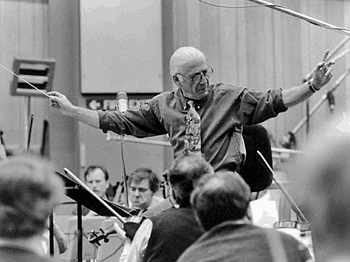 I always write with music playing. That’s not much of an admission. A few writers prefer to work in silence, but most that I have talked to say that they need to have music in the background while they work at their keyboards or notebooks. Some writers like to listen with headphones on as an extra seal against the rest of the world, but I only do that if I’m working in a public environment. Otherwise, I let my massively stuffed iPod play through the huge speakers in my apartment to surround me with music as I work.

 Pulp Winds
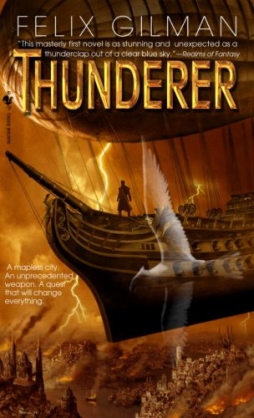 I want to write about the novels of Felix Gilman, who I believe is one of the strongest new novelists in fantasy fiction today. He’s written three books, Thunderer, Gears of the City, and The Half-Made World, all of them accomplished and powerful, fusing imaginative range with a compelling style and real insight into character and voice. I’ve written about Thunderer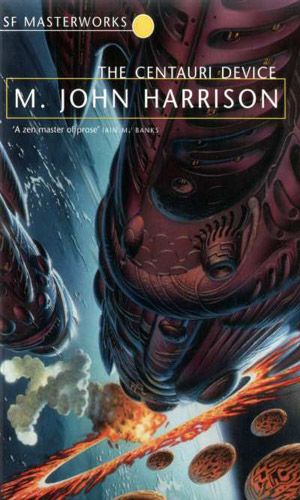
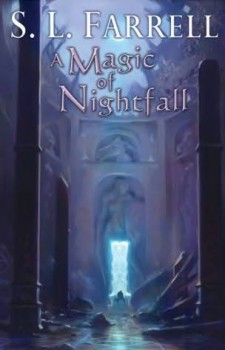 A Magic of Nightfall
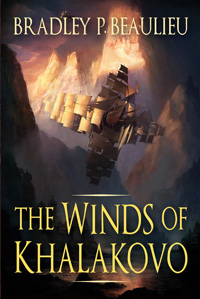 Selling novel-length fiction is tough. Really tough. Anyone who’s been in it for any length of time can tell you how competitive it is, how quickly the rejections can stack up, how frustrating it can be to get someone to even look at your manuscript. If you’re like me, you’ve tried submitting dozens of query letters in hopes that someone will at least ask for a few pages of the work itself. I mean, that’s fair, right — to at least look at the stuff before you reject it?