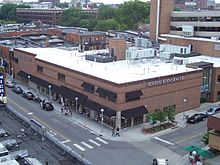
 So everyone’s crying about the demise of Borders, though it wasn’t that long ago we were all crying about how it and evil twin Barnes and Noble were driving local independent bookstores out of business, even as we were shopping mostly at Amazon to get the books we found browsing at the physical bookstore at a better price (sinner, heal thyself). Like everyone else, I used to love going into the megastores, and maybe felt a little guilty about it, but not so much that I stopped doing it, because the small guys just didn’t have the inventory to browse through. Which is also why I used to like going into Tower Records, too, but the same thing that’s happening to the music megastore (of which “Borders ‘n Noble” was once a subset) is catching up to the bookstore. You want to browse inventory, you go online, for both selection and prices. And you don’t have to get into the car and drive anywhere to do it.
On a personal level, the Borders closing doesn’t affect me. Here in Charlottesville, we have more used bookstores per square foot than coffee shops, along with long established local retailer of new books and, yes, a Barnes and Noble (though not a superstore, meaning little in the way of music or video, though that’s being downsized anyway). And, truth, be told, it’s been a while since the Borders experience peaked; in an effort to become profitable, the chain started emphasizing mass merchandising over book selling, becoming more like a mall store than an intellectual haven, and there was nothing more idiotic than staff running around with those silly headsets to give the illusion of instant customer service.
The primary attraction of going into a Borders (and Tower and all the other megastores) was that feeling that you can get in your hands just about almost anything you wanted, no matter how esoteric, and that’s not quite the same thing as pressing “The Look Inside” link online. While as eReaders ultimately displace the physical book, that distinction may become less important, but whether chat rooms and customer reviews can replace the barista who can recite from Nietzche, Heinlein and Bob Dylan is another matter.
Nor is the experience disappearing entirely for bookstores (or record stores), but it’s going to be harder to find if you don’t live in Portland (Powell’s Books) or New York City (Strand, for example, which is cleverly offering a free gift at its store to anyone who comes in with a Borders Rewards card). These bookstores continue to survive because, unlike Borders, they haven’t tried to replicate their physical presence across the country like the Borg while still expanding their online footprint. Moreover, their brand identity distinguishes themselves from Amazon as knowledgable curators of their product (as opposed to a legion of Harriet Klausners and algorithms that tell you what you like based on past purchases). Therein may lie the future of the physical bookstore.
That and maybe Apple acquiring Barnes and Noble.
…
Read More Read More
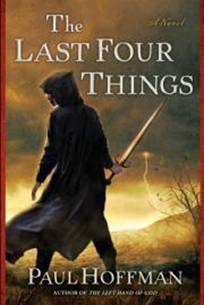 The options for your summer reading list are as copious as the Speedo bathing suits which have suddenly appeared on the rooftop sun deck of the Black Gate offices, but not nearly as difficult to speak about.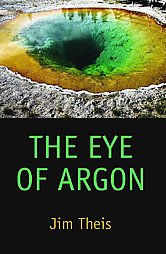
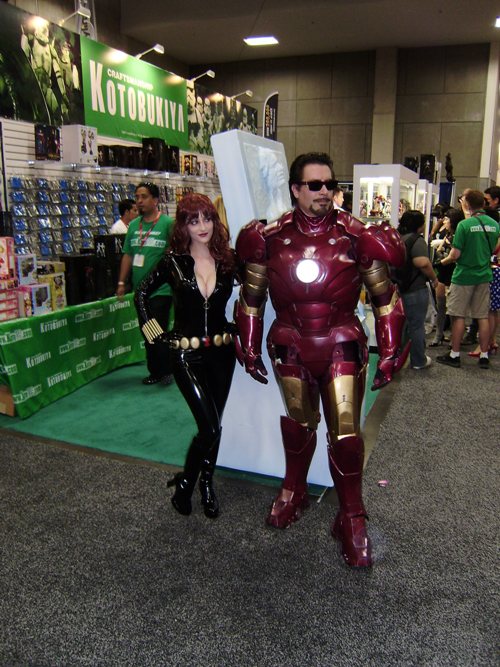
 Cowboys & Aliens (2011)
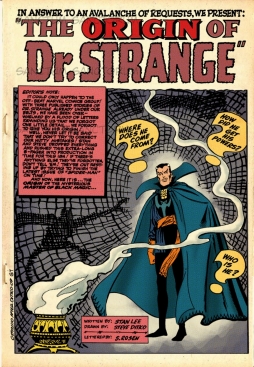 One of my favourite Marvel Comics characters, certainly my favourite of all their big names, is Doctor Strange. Like most established Marvel characters, he’s been handled a lot of different ways over the course of time. I’d like to look back, and look closely, at one of the early tales that defined him most clearly — specifically, his origin story.

 Last week in
 The Odyssey stands alongside Gilgamesh as perhaps the earliest Western examples of fantasy literature.