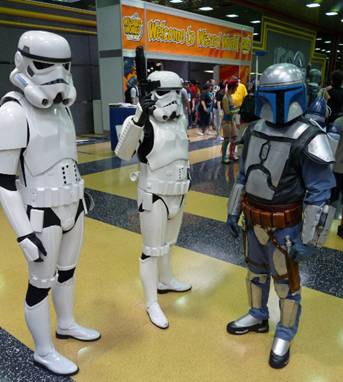
Edgar Rice Burroughs’s Venus, Part 1: Pirates of Venus
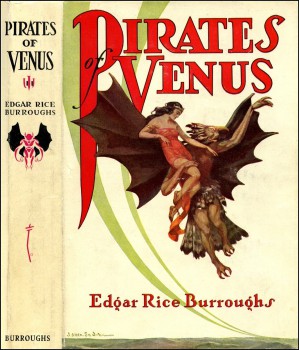 Next year brings the hundredth anniversary of Edgar Rice Burroughs’s first two published novels: A Princess of Mars and Tarzan of the Apes, as well as a big-budget film version of A Princess of Mars from Disney. (The film is saddled with the unfortunately bland title of John Carter. Fear of a Red Planet?) The effect these novels had on popular cultural was immense: they created a whole medium, they altered the nature of reading for pleasure. Pulp magazines existed before Edgar Rice Burroughs had the idea he could write better than the tripe found in the publications where he was working to place ads; but it was the success of first Under the Moons of Mars (the serial title for A Princess of Mars) and then Tarzan of the Apes in 1912 that made the pulps into the artillery of the Reader Revolution. The pulps turned the U.S. into a nation of readers, and ERB fired the first two shots in the revolution.
Then, twenty years into the revolution, he fired off the few rounds of his “Venus” series.
I have planned some festivities for the upcoming centenary of the Burroughs Upheaval. One is an ambitious project I have wanted to try on Black Gate for the last two years. But as a prologue to my 2012 ERB projects here in 2011, I’ve chosen to present a look at Burroughs’s least popular series, the last one he started before his death.
These posts will have a different structure from my usual free-form analysis style. Inspired by columns I’ve seen on the movie review sites I frequent (particularly “Franchise Me” on CHUD.com), I’ve laid out a template for tackling each of the five installments of the Edgar Rice Burroughs “Venus Saga.” An experiment? Or an admission that trying to go academic on this series feels like the wrong approach? I’m not sure myself, but here it goes….
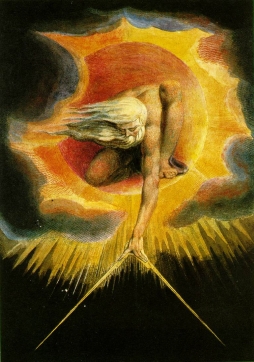 Perhaps my favourite fantasy writing is arguably not fantasy at all. The epics and prophecies of William Blake certainly read like fantasy to many people, I think, albeit fantasy in a distinctive, unfamiliar form. But is the word appropriate? Blake himself was a visionary — he literally saw visions — and may well have believed that some at least of his writing was literally true. Does the definition of fantasy reside in the writer, or the reader? And how would Blake himself want his writing to be viewed?
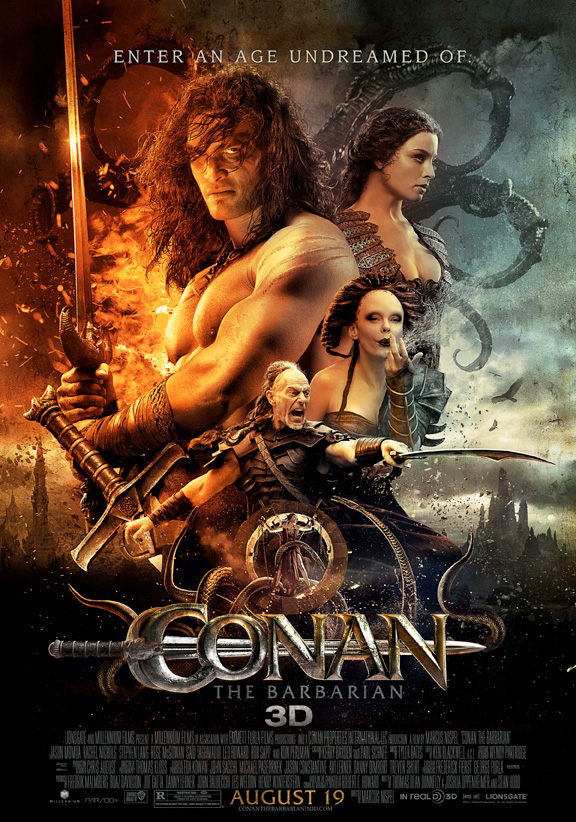 Friends, Bloggers, Conan Fans, lend me your ears! I come not to defend the new CONAN movie, but to present an informal overview that examines what works and what doesn’t work. To begin, I’ve seen a lot better movies … and I’ve seen a LOT worse movies.
 The new
 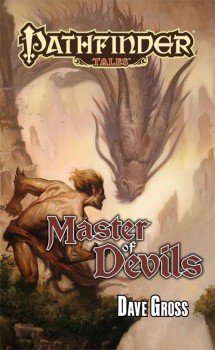 Master of Devils
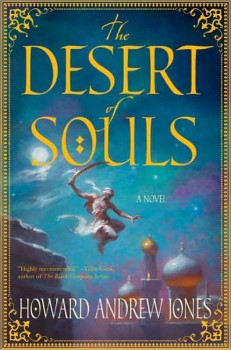 Sohaib Awan at Fictional Frontiers interviews Black Gate Managing Editor Howard Andrew Jones on his first novel The Desert of Souls, non-Western fantasy, juggling modern expectations in historical fiction, and much more:
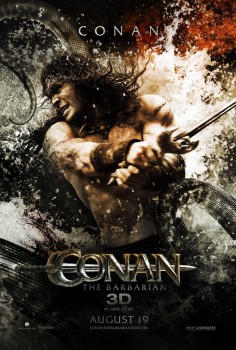 I’ve refrained from talking about Conan the Barbarian (2011) until now, despite my love for Robert E. Howard’s works. But now that we’re poised on the eve of its U.S. release, I thought I’d weigh in with my personal hopes—and fears—regarding the film.