Bargain Fantasy at Amazon.com
Bargain Fantasy at Amazon.com

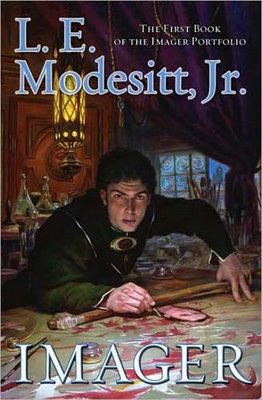
imagerI can’t be the only reader out there who laments the decline of the remainder.

You know what I’m talking about. Those big tables near the front of Barnes & Noble, covered with aging hardcovers for $5.98, and about a metric ton of leftover Valentine merchandise. Yeah, those remainders.

It’s not that remainders are gone. But with the loss of Borders, and the slow evaporation of bookstores in general, I don’t get to browse as many aisles of cheap books as I used to. Bummer. Remainders were a great way to try out new authors on the cheap, and pick up a discount Star Trek calender in mid-January (and get Ali a late Valentine’s card, to be truthful, but that’s not really my point.)

What is my point? This is the age of the Internet! And remainders aren’t dead; they’ve just moved online. Booksellers like Amazon.com routinely offer 60 – 80% discounts on close-out books of all kinds, including best-selling science fiction and fantasy, and a diligent search usually turns up hundreds.

Here’s some of the best bargains I found this week on my regular search for discounted SF & Fantasy in Amazon’s Under-20-bucks list:

Now, just like the old days, qualities for most of these titles are limited at these prices, so you have to act fast. Shipping is extra, but for US readers, Amazon will ship free if your total is above $25.

Good hunting, fellow bargain hunters!
The 2012 Sword & Sorcery Mega Panel

The 2012 Sword & Sorcery Mega Panel

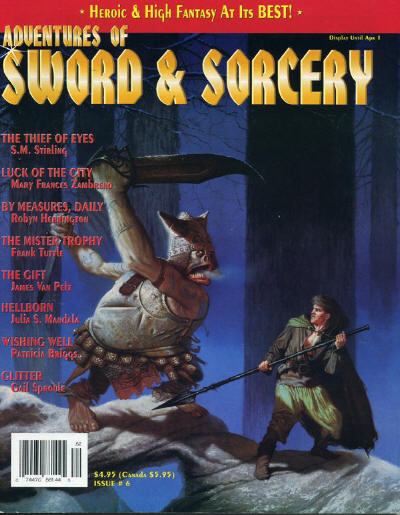
adventures_of_sword_and_sorcery-6John DeNardo and his team at SF Signal know when they have a good thing going.

Take for example the genre-defining 2010 Sword & Sorcery Panel Podcast, recorded at the World Fantasy Convention in Columbus, Ohio and featuring the official brain trust of modern S&S: Howard Andrew Jones , Ryan Harvey, Bill Ward, James Enge, Jason M. Waltz, Sam Sykes, John R. Fultz, Alex Bledsoe, Matthew Wuertz, and the ever-humble John O’Neill.

How do you top that? I know — impossible, right?

Well, all credit to Patrick Hester and Jaym Gates at SF Signal for making a terrific effort. In episode 108 of the SF Signal Podcast they’ve assembled a knock-out line-up of heavy hitters to discuss Sword and Sorcery for the modern reader. Including:

  • Lou Anders — publisher and editor of mega-publisher Pyr
  • Violette Malan — author of The Mirror Prince and many others
  • James L. Sutter — Paizo editor and author of Pathfinder Tales: Death’s Heretic
  • Scott H. Andrews — author, and editor of the splendid Beneath Ceaseless Skies

The podcast features original music by John Anealio. Part One is now available here.

STURGES TOPS THE TOPPER WITH SHORTCUT MAN 2

STURGES TOPS THE TOPPER WITH SHORTCUT MAN 2

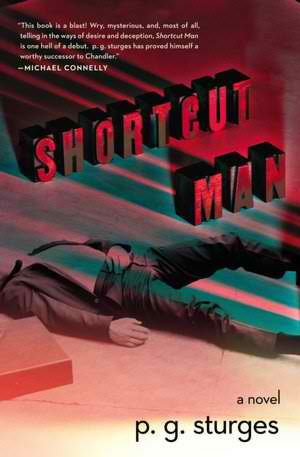
ap-book-review-shortcut-man-17944457jpg102452072The late Leo McCarey is remembered by most film buffs today for his imitation Capra-corn, The Bells of St. Mary’s and Going My Way starring everyone’s favorite likeable cad, Bing Crosby as the sort of priest you’d find in a parish where the nuns looked like Ingrid Bergman. Turn back the clock a few more decades and McCarey was the finest comedy director in Hollywood capturing the very best performances from Laurel & Hardy, an aging Harold Lloyd, and the Marx Brothers in their prime (when Zeppo was still part of the act). McCarey patented the chain reaction gag which tasked the comedy filmmaker with finding a way to consistently “top the topper.”

That was no mean feat. Once you get your biggest belly-laugh from the audience and then set out to find an even bigger laugh, you’re laying the groundwork for disappointment. Quite simply, no one can be that funny all the time. Yet McCarey managed it time and again and so did several other comedy directors who followed in his wake like Howard Hawks, a young Frank Capra (before sentimentality robbed him of his comic timing), Preston Sturges, and Billy Wilder. Very few others have managed to scale those same dizzying heights since Hollywood’s Golden Age and the lost art of the chain reaction gag is one of the measures by which one may easily separate modern and classic comedy. Comedy, in its purest form, allows us to break the pain barrier and laugh.

Such ruminations on the art of comedy are entirely appropriate when discussing P. G. Sturges, a new talent who arrived on the literary scene last year with The Shortcut Man. It was easily my favorite book of 2011. It had everything going for it: a hardboiled mystery mixed with high farce, a keen ear for dialogue, and an even sharper wit in laying bare personal and cultural failings in modern society. Any book that makes the reader think, consistently laugh, and still keeps them riveted to discover the next twist the story will take is exceptional.

Read More Read More

Maid(en) For Me: Gods Of Metal Back On Tour With Maiden England

Maid(en) For Me: Gods Of Metal Back On Tour With Maiden England

That's a lot of hair!

What does a mid to late 30-something (closing in on 40, if I’m being honest) consumer of books like Styrbiorn the Strong,  Dune, and World War 2 military history do in between bouts of reading and writing posts for Black Gate? Why, listen to Iron Maiden, of course! I can blast “Invaders” and vicariously experience a Viking raid, play “To Tame a Land” and hear bassist Steve Harris’ take on Frank Herbert’s classic SF novel, and fire up “The Longest Day” for a stirring rendition of the events of D-Day and Omaha Beach.

Iron Maiden has always been a favorite of mine. I personally consider them the best heavy metal band of all time, edging out the likes of Judas Priest (on whom Maiden holds an edge by virtue of a more consistent catalog—Priest has more dud albums) and even heavy metal originators Black Sabbath (whom they beat due to longevity—Black Sabbath spent decades residing in the “where are they now” file, living off past glories). Maiden is to heavy metal what The Lord of the Rings is to fantasy—not the first on the scene, but the best. In my opinion of course, and your mileage may vary.

I’ve always thought of Iron Maiden as the heavy metal band that catered to the nerdy crowd. If you were smart, you liked history and science fiction/fantasy, and of course you liked Iron Maiden. They were and are the antidote for those critics who sneered at metal, labeling it as mindless noise, the stuff of “sex, drugs, and rock-and-roll.” Faux-metal hair bands like Poison and Warrant gave metal a bad reputation, but Iron Maiden elevated this much-maligned genre of music into an art form.

Read More Read More

Goth Chick News: Another Priceless Tidbit from Ridley Scott

Goth Chick News: Another Priceless Tidbit from Ridley Scott

image0021This very nearly made me scream like a 14-year-old girl attending a Justin Bieber concert with Robert Pattinson.

Close, but not quite.

Apparently Ridley Scott is engaging in a little viral marketing for his upcoming Alien prequel, Prometheus; “viral” in that he’s trusting people like us to find this stuff and circulate it like the lunatic fan boys / girls we are.

Far be it from me to not live up to Mr. Scott’s expectations, so here it is.

TED is a nonprofit organization devoted to “Ideas Worth Spreading.” It started out (in 1984) as a conference bringing together people from three worlds: Technology, Entertainment, Design (“TED,” get it?).

Since then TED has grown in leaps and bounds. Along with two annual conferences, TED includes the award-winning “TEDTalks” video site, the Open Translation Project and TED Conversations.

Read More Read More

Thomas M. MacKay Reviews The Enchantment Emporium

Thomas M. MacKay Reviews The Enchantment Emporium

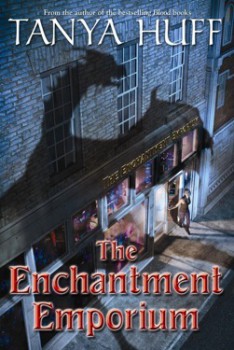
the-enchantment-emporium-coverThe Enchantment Emporium
Tanya Huff
DAW (473 pp, $7.99, June 2010)
Reviewed by Thomas M. MacKay

Canadian writer Tanya Huff has well-established credentials in the speculative fiction world, having written a number of respected novels, spanning the range from traditional epic fantasy, to contemporary fantasy, to full-on science fiction. Certain common themes tend to appear in her work, though handled gracefully and without detracting from the story. Ms. Huff’s work commonly challenges any cultural bias toward inequality – whether among races, genders, or for any other reason – and questions the validity of sexual inhibitions, while never denying the real and powerful impact that love imposes.

In the Gale family, “charming” preserves its original meaning, as the Gales still follow the old ways of the Goddess and the Wild God. Twenty-four year old Allie Gale grew up learning how to cast charms and mix potions, taking her place in the third circle among her many cousins, and trying to avoid crossing the Aunties – because Gale power grows as you age, and the oldest generation of women together possess the power to change the world. But magic still can’t give you purpose, and Allie is back home trying to figure out what to do with her heart and her life after losing her job as a research assistant at the Ontario Museum and still struggling to get over her gay ex-boyfriend. When Allie’s wild grandmother, the one Gale Auntie that lives apart from the family, doesn’t come home for the May Day ritual, Allie’s restlessness grows. The next day comes word that Allie’s Gran has died and left Allie an esoteric little store in Calgary. The Aunties don’t really believe their sister is dead, but they send Allie off anyway to figure out what her Gran is up to.

Read More Read More

The Best in Fantasy Manga

The Best in Fantasy Manga

fairy-tail-1When I was invited to write a guest post, I immediately turned to manga. To my knowledge, Black Gate has never had a post dedicated to Japanese comics before, and I think that absence needs to be rectified.

The series I am about to recommend to you are as good, as dramatic, and as entertaining as any American comic book or even fantasy and science fiction novel.

What follows is a list of some of my personal favorites, as well as those that are must reads. At the end, I will list some of the series that I have not gotten to yet, but am looking forward to.

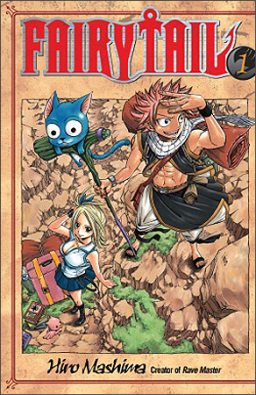
Fairy Tail by Hiro Mashima

Ongoing. Kodansha has released 17 volumes in translation with vol. 18 due in March.

Lucy Heartfilia, a celestial spirit wizard, and Natsu Dragneel, a fire dragon slayer, form the nucleus of Team Natsu. Stealing a book from a corrupt noble and crushing dark guilds are just some of the adventures that Team Natsu and their friends find themselves in as they ensure Fairy Tail’s reputation as the strongest and most infamous wizard guild in Fiore.

Though the series starts out with a heavy does of comedy, the series has steadily gotten darker and more serious with each succeeding story arc yet still maintains an upbeat feel. Indeed, the series really starts to pick up with the Galuna Island arc. The great thing about Fairy Tail is that Mashima does not neglect minor characters. They all have moments in the spotlight. I personally find the series fun and enthralling, and it is without question my favorite series.

Read More Read More

Art of the Genre: Review of the Inner Sea World Guide

Art of the Genre: Review of the Inner Sea World Guide

pzo9226_500My very first campaign setting, as probably the bulk of old time gamers would also claim, was The World of Greyhawk. I still have great nostalgia for that world, and the classic adventure modules set in it, but sometimes you just need to upgrade, you know? I mean, Greyhawk is over thirty years old, and has gone through a number of facelifts, but still it’s always nice to try on something new.

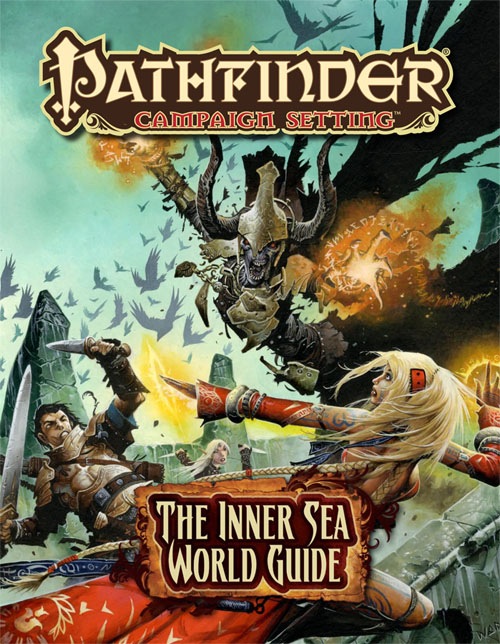
And speaking of new! How about Paizo’s Pathfinder Campaign Setting The Inner Sea World Guide. I mean the name alone is worth the price! I’m not sure when the first time I saw this book, but I know when I did I WANTED IT!

Pathfinder is already an outstanding supplemental system, with a massive amount of core books, adventure paths, and gazetteers, but if you’re looking for a new age setting or simply want to steal some quality ideas for your own world, this book is an incredible resource.

As I delved into the pages it was like opening a Pandora’s Box of fantasy grandeur. The book begins with a nice expansion of the races of The Inner Sea, and like Iron Kingdoms did some years back for their setting, Paizo defines twelve different human races before delivering a nice history on the usual suspects like elves, dwarves, and the like.

I was intrigued by this kind of detail, and as I flipped through the different races I couldn’t help by smile at those chosen and the great adventures that could be set in a country populated by these individuals.

Read More Read More

Vintage Treasures: SPI’s Swords and Sorcery

Vintage Treasures: SPI’s Swords and Sorcery

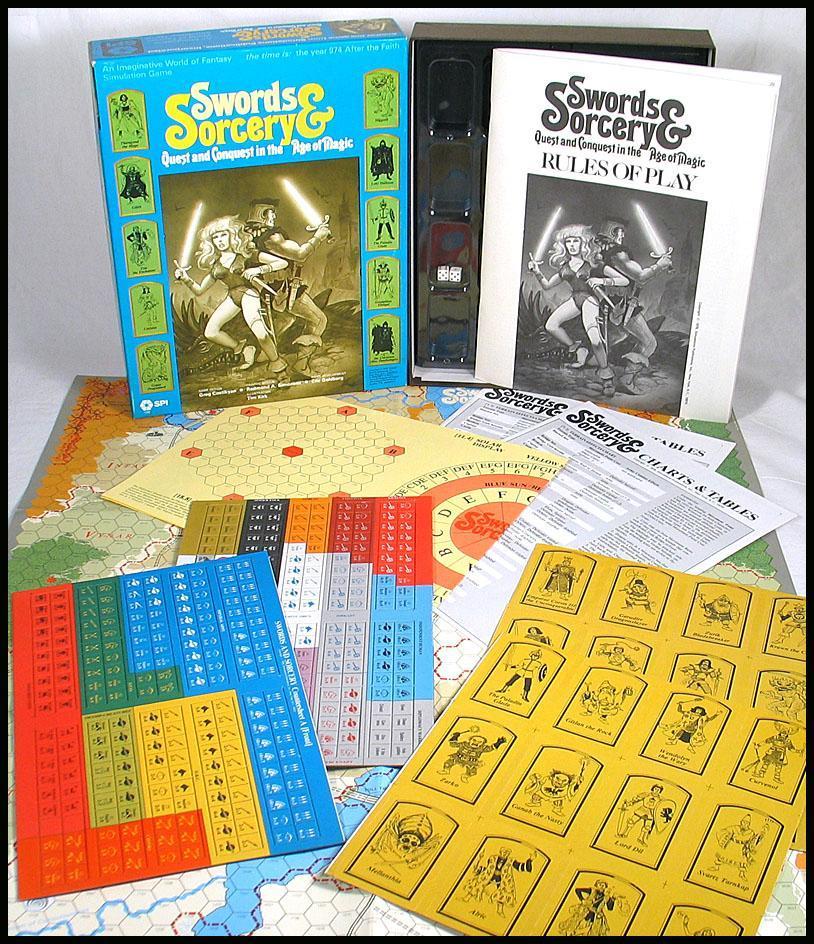
82 bucks later, all this was mine. Click for bigger version.
71 bucks later, all this was mine. Click for bigger version.

Well, technically it’s not a new treasure, since it was first published in the late Middle Ages of fantasy gaming (1978). But this copy is new to me, courtesy of eBay.

And just look at it. Isn’t it gorgeous?

Okay, so maybe you’re not into vintage fantasy games the way I am (that shout you hear is my long-suffering wife, saying “Like that’s even possible.”) Or maybe you find the flimsy paper maps and counters of older board games a little quaint, compared to the deluxe contemporary offerings from Fantasy Flight and Wizards of the Coast.

But really, you just have to open the Swords and Sorcery box to know it’s something special. 400 counters, 56 playing cards, a big 56-page rulebook, player aids, a tantalizingly complex Diplomacy Display… and best of all, that beautiful map.

Yeah, maybe it’s a little shallow to fall in love with a game because of a map. But really, isn’t a cool setting at the heart of all great fantasy?

And the setting for Swords and Sorcery isn’t just cool. It’s sumptuous.

Read More Read More

Edgar Rice Burroughs’s Mars, Part 5: The Chessmen of Mars

Edgar Rice Burroughs’s Mars, Part 5: The Chessmen of Mars

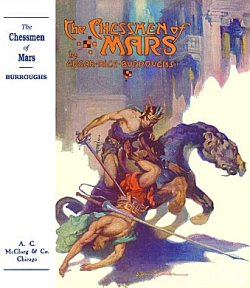
chessmen-of-mars-1st-edition1“The squares shall be contested to the death. Just are the laws of Manator! I have spoken.”

After Edgar Rice Burroughs pulled the Martian novels in a different direction with Thuvia, Maid of Mars, he retreated from Barsoom for a spell to concentrate on other projects. Eight years passed between the writing of Thuvia and the publication of the next adventure, The Chessmen of Mars, which switched to yet another hero and heroine to hurl into the unknown regions of Mars. In the process, Burroughs gave science fiction a new board game to play.

Our Saga: The adventures of earthman John Carter, his progeny, and sundry other natives and visitors, on the planet Mars, known to its inhabitants as Barsoom. A dry and slowly dying world, Barsoom contains four different human civilizations, one non-human one, a scattering of science among swashbuckling, and a plethora of religions, mystery cities, and strange beasts. The series spans 1912 to 1964 with nine novels, one volume of linked novellas, and two unrelated novellas.

Today’s Installment: The Chessmen of Mars (1922)

Previous Installments: A Princess of Mars (1912), The Gods of Mars (1913), The Warlord of Mars (1913-14), Thuvia, Maid of Mars (1916)

The Backstory

Thuvia, Maid of Mars was a success, and it made sense that when Burroughs returned to Mars he would repeat the same formula of third-person narration and a different hero and heroine pair in a one-off adventure. Although John Carter’s son Carthoris seemed a natural to continue as the hero, Burroughs chose to use a full-blood Martian as his lead for the first time. The decision to change protagonists once before made it easy to do it a second time, and with Carthoris already paired with Thuvia, picking a new character meant ERB could start over with a fresh love interest. (He rarely let his heroes switch heroines once they dedicated themselves. Tarzan could get away with it with La of Opar, but only because of amnesia.)

Read More Read More