George R.R. Martin: “A Writer Who Needs to Get Writing”
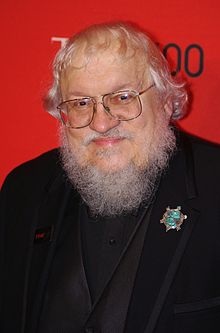 George R.R. Martin is profiled by The Huffington Post today in a piece titled “13 Writers Who Need To Get Writing.”
Martin is the poster child — his smiling face is at the top — but the article also pokes Philip Pullman (“We want him to write The Book of Dust, the latest companion book to the His Dark Materials series”), George Saunders (“His quirky, disturbing sci-fiesque suburban short stories have critics fighting over each other… write a goddamn novel already”), and The Night Circus author Erin Morgenstern (“Morgenstern says her next book is “a film noir-flavored Alice in Wonderland“… WE WANT TO READ IT NOW.”)
In other GRRM news “The Princess and the Queen,” a new novella set in the world of A Song and Ice and Fire, will appear in Martin and Gardner Dozois’s upcoming “massive crossgenre anthology” Dangerous Women. Here’s the scoop from Martin’s blog:
Mine own contribution… well, it’s some of that fake history I have been writing lo these many months, the true (mostly) story of the origins of the Dance of the Dragons. The stand-alone stories, not part of any series, feature some amazing work as well. For those who like to lose themselves in long stories, the Brandon Sanderson story, the Diana Gabaldon story, the Caroline Spector story, and my “Princess and Queen” are novellas. Huge mothers.
Read the complete details at Tor.com.
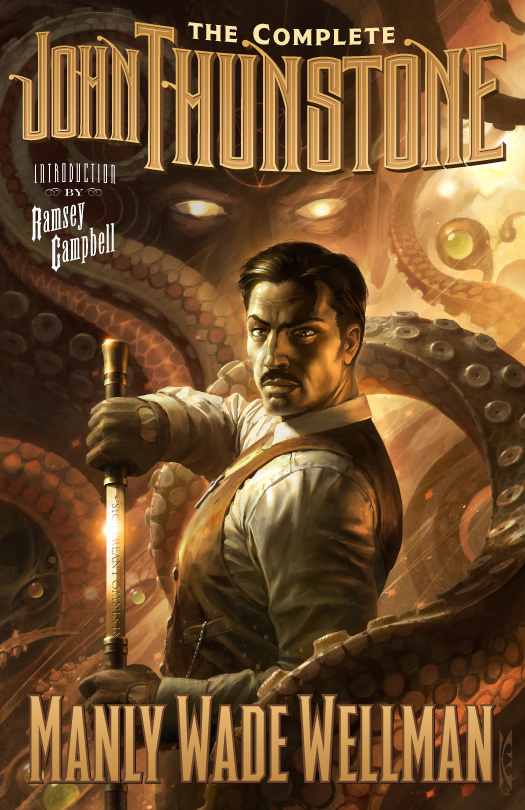
 I confess: I’m horror-illiterate. Being horrified on my way to some other reading experience is often worthwhile, but reading just to poke my
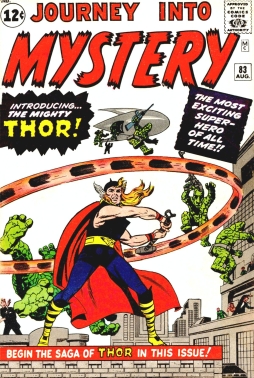 Journey Into Mystery first appeared in 1952, one of a number of anthology titles from publisher Martin Goodman’s line of comic books. Over the years, the title featured a lot of short horror, fantasy, and science fiction tales, many of them collaborations between editor/scripter Stan Lee and artists like Steve Ditko and Jack Kirby. Until 1962. At that point Goodman’s comics were beginning to change direction, following a revival of interest in the super-hero genre. A team book, The Fantastic Four, had taken off. A solo book had followed, The Incredible Hulk. Heroes would now be his company’s main product, and the line would soon come to be known as Marvel Comics. The horror anthology books would be taken over by recurring super-hero characters, and Journey Into Mystery would be the first of the bunch. So with issue 83, in August 1962, in a story credited to Stan Lee and artist Jack Kirby, it introduced its new lead: the mighty Thor, Norse god of thunder.