Browsed by
Category: Writing

PublishAmerica Settles Lawsuit Against Writer Beware

PublishAmerica Settles Lawsuit Against Writer Beware

Writer Beware Logo-smallVictoria Strauss had a review column, Fantastic Fiction: Books for Younger Readers, in the first three print issues of Black Gate. She was marvelous to work with, and her column was one of my favorite parts of the magazine, but her own growing success as a novelist (Garden of Stone, The Burning Land, The Awakened City) soon stole her away from us.

With author A.C. Crispin, Victoria founded the invaluable Writer Beware, a SFWA-backed volunteer organization that roots out and exposes scammers and con artists preying on aspiring writers. Today Victoria announced the settlement of an ongoing suit that arose from those efforts.

I’m finally getting to post about something I’ve been keeping under my hat for quite some time… On March 18, 2014, America Star Books, formerly PublishAmerica, filed suit against me, Michael Capobianco, Rich White, and Writer Beware in the Circuit Court for Charles County, MD.

The lawsuit alleged defamation per se on the basis of two posts from this blog: one from March 2013 covering the second class action lawsuit filed against PublishAmerica, and one from January 2014 covering PublishAmerica’s new name and services as America Star Books. A total of $800,000 in punitive and compensatory damages was demanded, plus interest and attorneys’ fees…

After a long delay by the Maryland court, the case reached the discovery stage. Shortly after my attorneys sent interrogatories and discovery requests to ASB, ASB’s attorney, Victor Cretella, contacted us to discuss the possibility of a settlement. A final settlement was signed by all parties in January of this year. In exchange for agreement by myself, Michael, and Rich not to seek recovery of legal fees, ASB agreed to release all claims asserted against me, Michael, Rich, and Writer Beware, and to stipulate to Dismissal With Prejudice. ASB does not admit any lack of merit, nor do I and the other defendants admit any liability.

I’m enormously pleased to see Victoria, and Writer Beware, prevail in this suit. Read Victoria’s complete announcement here.

The Refusal To Sprawl: Emily St. John Mandel’s Station Eleven

The Refusal To Sprawl: Emily St. John Mandel’s Station Eleven

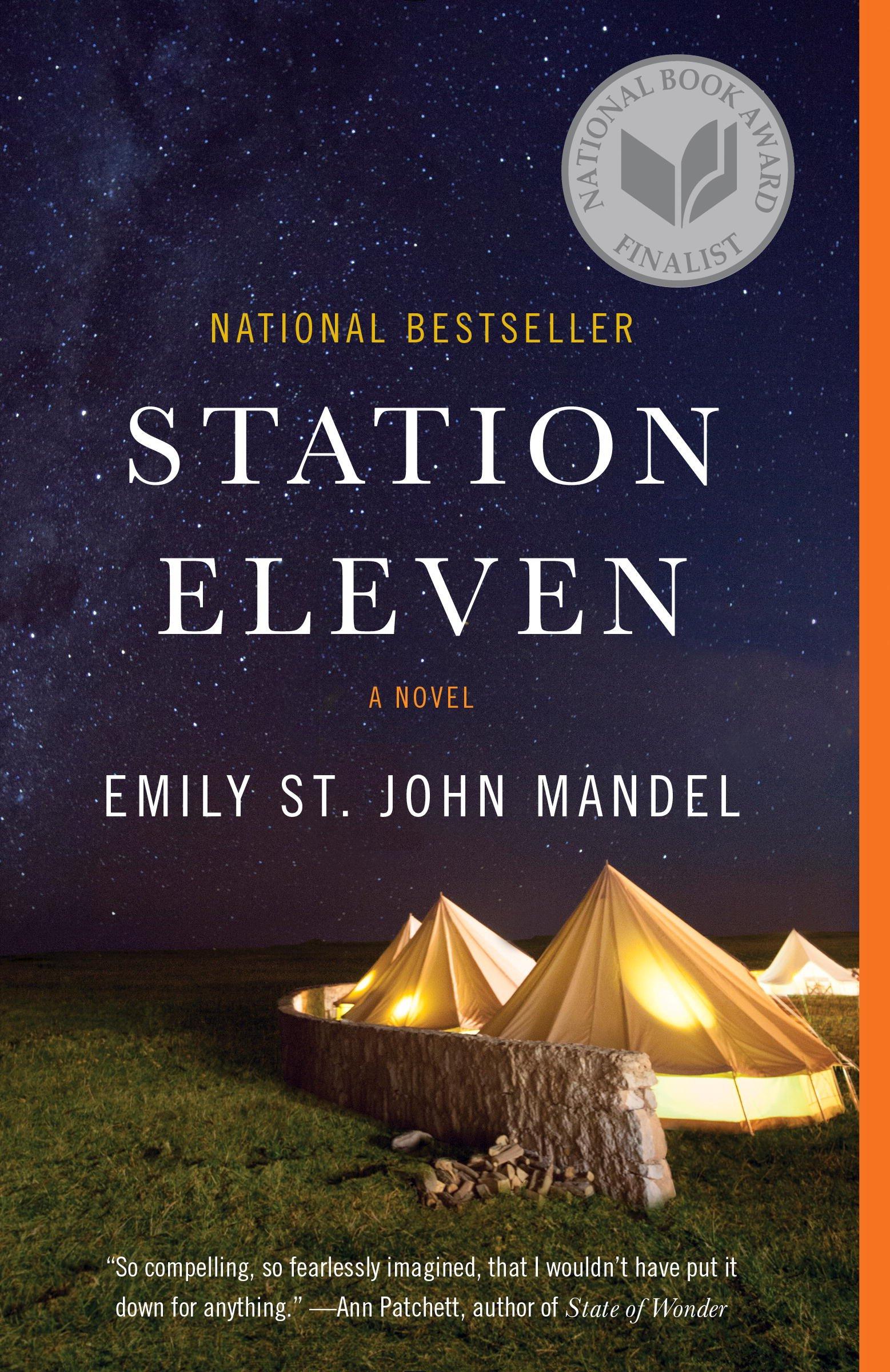
Station Eleven-smallTo peruse the book jacket of Station Eleven, one would think that this novel has a traditional main character (Kirsten). This, like the utterly misleading picture on the front –– the yellow tents and curving wall never crop up, so far as I can tell –– is a lie.

Station Eleven is akin in many ways to A Song Of Ice And Fire in that it positions a dozen main characters and asks us to follow them all, sometimes for moments, sometimes for chapters, in what amounts to a kind of prose chorale. The effort is largely successful, but it also suggests a grander canvas, one that Mandel, who surely thinks of herself as a writer of literary work, has no intention of pursuing.

Contrast with Mr. Martin: when he sets his dozen, then fifty, characters in motion, he follows every one, rabbit hole after rabbit hole. This is not to say that either approach is more valid than the other, but it’s telling; the one method begets only a single book, the other a series or even a cycle.

Once again, I find myself puzzled by the (apparently necessary) differences between genre and literary publishing tropes. I honestly don’t think Mandel even considered expanding her storylines, or following her characters farther afield. Expansion and long-form digressions are all but expected in fantasy and science fiction, and the short novel (say, Flowers For Algernon) is a rare bird these days, and getting rarer.

But in nominally literary work? One book, and you’re out. Covers closed, shelve the title. Move along, people. Nothing more to see here.

Read More Read More

Things Your Writing Teacher Never Told You: When the Form Is the Story

Things Your Writing Teacher Never Told You: When the Form Is the Story

Writing Team

(This article is a follow up to my blog post “Story In Its Many Forms“)

In a previous blog (linked above), I talked about my Exploring Fantasy Genre Writing class and how they’re required to try their hands at forms beyond the basic short story: including poetry, blues songs, plays or radio plays, comic books, and mock journalism (any of the print or broadcast forms). For other weeks, they can choose yet a different form, but they can’t work in the exact same form twice.

They adapt to some forms fairly easily, because they see the parallels and similarities to the form they’re most comfortable with. And though different parallels and similarities exist between any two forms, they just can’t see them sometimes.

Read More Read More

Gardner Dozois on the New Sword & Sorcery

Gardner Dozois on the New Sword & Sorcery

Spaghetti western town-smallOn Facebook yesterday editor Gardner Dozois theorized that the essential influence on modern Sword & Sorcery, which differentiates it from the classic pulp S&S of Robert E. Howard and Fritz Leiber, may be the Spaghetti Western.

While we’re talking about fantasy, I’ve been reading a lot of what’s being called “the New Sword & Sorcery” lately, stuff by people like Joe Abercrombie, Scott Lynch, K.J. Parker, Daniel Abraham, and it struck me what the one essential influence was that aesthetically separates the New Sword & Sorcery from the Old Sword & Sorcery, since both have sword-wielding adventurers, monsters, and evil magicians: it’s the Spaghetti Western. Clearly Spaghetti Westerns have had a big influence on the TONE of this new work. Gone are the gorgeous, jewel-encrusted temples stuffed with huge snakes and giant idols with jeweled eyes and slinky sinister priestesses in jeweled bikinis where Conan used to hang out. Instead, the most common setting seems to be a remote jerkwater village, either parched and sun-blasted or drizzling and half-buried in mud, extremely poor and mean, swarming with flies, packed with venal, dull-eyed, illiterate peasants who are barely smarter than morons, if they are, and who have no power or influence in the wider world, and certainly no money, and who stare blankly and slack-jawed at our heroes as they enter town, either kicking up clouds of dust at every step or splashing muddy water.

You know this place. Think of every degraded village in every Spaghetti Western you’ve ever seen.

Read his comment (and the fascinating discussion thread with folks like Eleanor Arnason, Joe Bonadonna, Scott Oden, Elizabeth Lynn, Christopher Fowler, Darrell Schweitzer, Lisa Tuttle, and others) here.

Things Your Writing Teacher Never Told You: Serial POV – In its Myriad Forms

Things Your Writing Teacher Never Told You: Serial POV – In its Myriad Forms

This is part 6 in the Choosing Your Narrative Point of View Series

infinity mirror

Continuing in our exploration of 8 distinct POVs, we come to:

#5.  Serial: 1st,  2nd, Tight Limited 3rd, Limited 3rd, or Blended

The Serial POV is a common variation of Mixed View Points in genre fiction.

It’s sort of like serial monogamy. You use more than one character’s viewpoint, but you don’t go hopping around in multiple heads in the same sentence, paragraph, or scene, often not even in the same chapter. This can be done with a series of alternating 1st Person, alternating 2nd Person (Very unusual!), alternating Tight Limited 3rd, alternating Limited 3rd Person, or an alternating blend of some or all of the above.

Read More Read More

Why We Shouldn’t Hunt The Trope To Extinction

Why We Shouldn’t Hunt The Trope To Extinction

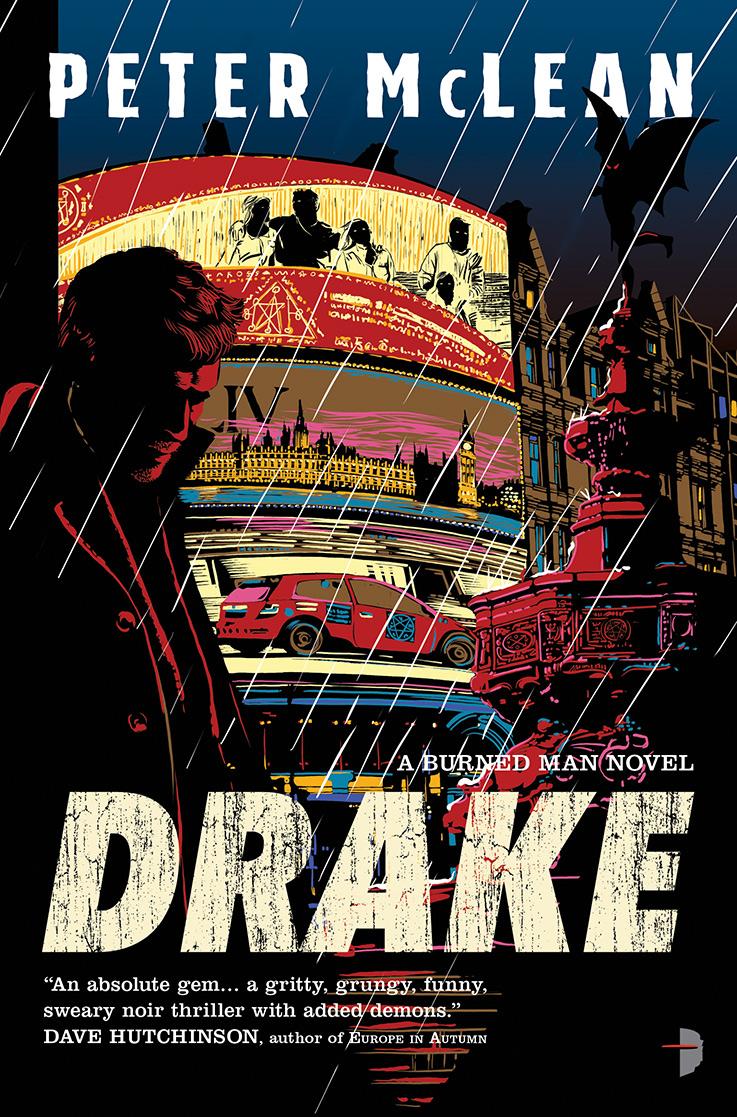
Drake Peter McLean-smallThe incredibly addictive TVTropes.org website has this to say about the trope :

Merriam-Webster defines trope as a ‘figure of speech.’ For creative writer types, tropes are more about conveying a concept to the audience without needing to spell out all the details.

Wikipedia uses a lot more words to say basically the same thing.

It’s important to understand that this doesn’t make the trope a cliché, but rather a sort of shorthand for writers to convey an image or concept or character to the reader in as few words as possible.

The poor old trope had had a lot of bad press in recent years. A lot of people seem to want to deconstruct the little critter, or subvert it or discredit it. Basically people seem to want to hunt the trope to extinction, and I think that’s unfortunate.

Now I agree some members of the trope herd have got a bit long in the tooth and are probably due for culling. No one really needs to read another fantasy novel where a simple farmboy turns out to be the Chosen One / Long Lost Heir who is foretold by prophecy and destined to save the world, do they? No, so the “Farmboy” trope is probably due to meet the huntsman, and I think the “Damsel in Distress” has probably had her day too.

Read More Read More

Big Magic in a Business Suit

Big Magic in a Business Suit

Marshall Versus the Assassins-small
12th century and mystic conspiracy stuff — Go!

So I am doing a historical project for a client. I’ve done this before several times now: “12th century and mystic conspiracy stuff —  Go!

How does this chime with Elizabeth “Eat, Love, Pray” Gilbert’s Big Magic that was all about; “Be serious about having fun being creative but don’t burden it or yourself by taking it too seriously or expecting too much from it”?

What happens when your creativity becomes a serious thing because (a) people are paying you for it, and (b) you are using it to pay other people (like shops that sell food your children eat)? What happens when you are (c) doing it to order?

In my case we’re talking writing fiction. In other cases it could be sword fighting (I know several people who do this professionally), writing, costuming, dancing, burlesque…(we know who you are).

How do you play for money?

Read More Read More

Tommy Guns, Prohibition, and…. Magic?

Tommy Guns, Prohibition, and…. Magic?

Black City Saint-smallEpic fantasy has been and I think always will be a mainstay of the fantasy genre as a whole and it is for this which I am of course well-known thanks not only to my Dragonrealm saga, but also such shared worlds as Dragonlance, World of Warcraft, Pathfinder, Iron Kingdoms, and more. I certainly enjoy epic fantasy as well, naturally having read among so many others the Lord of the Rings. Still, as with most readers, I also enjoy a variety of other offerings in fantasy, especially urban fantasy… which leads me to Black City Saint.

I have delved a bit into urban fantasy in the past, most notably Frostwing. Still, although I utilized Chicago as the background in that novel and two others, never before Black City Saint has the city, its history, and the characters been so entwined. It’s far simpler to merely set a story in a modern setting that everyone knows and put in those touches that remind the reader where they are. More complex — and at the same time more exciting for me as the author — is to turn to a time period that, although not all that long ago, remains sharply different from that in which we live. Having grown up around the Chicago area, I had heard many of the names, many of the stories, concerning the prohibition era. Always a fan of the mystery genre, I assumed that I might use those stories in that way, but the notion of Nick Medea entered and changed everything.

I love the mixing of genres. Some of my favorite novels include mysteries with magic. It was therefore not at all surprising to me that I took a few steps farther than I had with my previous excursions into urban fantasy and introduced into Roaring Twenties Chicago possibly the least likely protagonist — St. George of dragon fame.

And, yes, the dragon came with him.

Adding a character such as St. George into the mix meant making certain that the world he lived in had even more depth. With his lengthy life, that meant research had to go back beyond the Roaring 20s, which in turn brought into the story new elements that not only helped cement character development, but added to the depth of the city itself. The actual history of Chicago became a character of its own, molding the story and the protagonists in the process.

Read More Read More

Things Your Writing Teacher Never Told You: Pro-Tip From A.J. Aalto

Things Your Writing Teacher Never Told You: Pro-Tip From A.J. Aalto

AJ AaltoNicknamed “The Writerghoulie” in the early days of Twitter, A.J. Aalto is a Canadian urban fantasy writer, author of the paranormal comedy series The Marnie Baranuik Files, and an active member of the Horror Writers Association.

Butt-In-Seat: Discipline and the Muse

The Muse loves to strike when you’re in the drive thru or walking your llama and can’t immediately capture those perfect snippits of dialog or subtle plot twists.

There are many ways to get around this. First of all, don’t own a llama. Secondly, set up regular meetings with yourself, to get your creative mind into the habit of showing up for work on your schedule.

Any time I have trouble being disciplined, I return to the habit that seemed to work best for me. Pro tip: 4 A.M. is prime creative time. I set my alarm, snarl at the clock, slap it a few times, throw myself out of the sack, slog to my office to load my documents, and put on a pot of tea. While the kettle heats up, I curse my boss; since I am my boss, I know exactly which insults cut the deepest.

Then I start the music in my headphones: Dubstep, K-pop, whatever music my teenagers say I’m too old to listen to. Then I shake my booty in the dark kitchen, where no one but my cat has to witness my cool-ass dance moves. Once the tea is ready, I’m wide awake and ready to work; thanks to the habit, the Muse is, too. In the beginning, you may need to bribe yourself to show up at 4 A.M. (I find that desk-chocolates work and desk-kale does not), but once the habit is fixed, it’ll be much easier to get your butt where it needs to be.

Read More Read More

Superhero TV: That’s Agent Carter To You

Superhero TV: That’s Agent Carter To You

Carter 1I don’t know how I forgot “superhero” when I wrote about characters and their jobs a couple of weeks ago, but I was powerfully reminded of my lapse – and inspired – by two excellent posts from my friends and fellow BG bloggers, Derek Kunsken (Supergirl) and Marie Bilodeau (The Flash). Today I’d like to put in a word for the Marvel TV universe, where there’s at least one heroine that’s neither an alien, nor a human with superpowers: Peggy Carter of the Strategic Scientific Reserve (SSR) is 100% human.

A number of factors make this show stand out for me. For one, the creators have managed to pull off a series that is a little bit prequel, a tad bit sequel, as well as a sort of spinoff, that doesn’t rely on deep knowledge of either Captain Americ or Agents of Shield – or anything else in the Marvel universe for that matter. Plus, it avoids the drawback of most prequels: you know who isn’t going to die.

Read More Read More