Browsed by
Category: Vintage Treasures

When the 21st Century was Far Future: Frank R. Paul: The Dean of Science Fiction Illustration

When the 21st Century was Far Future: Frank R. Paul: The Dean of Science Fiction Illustration

Frank R Paul The Dean of Science Fiction Illustration-smallI consider Frank R. Paul to be one of the most important — if not the most important — artist in the history of science fiction.

It’s odd then that so few readers today are familiar with his work. Jerry Weist set out to correct that with Frank R. Paul: The Dean of Science Fiction Illustration, a dream project of his that was released only after Weist’s death in 2011.

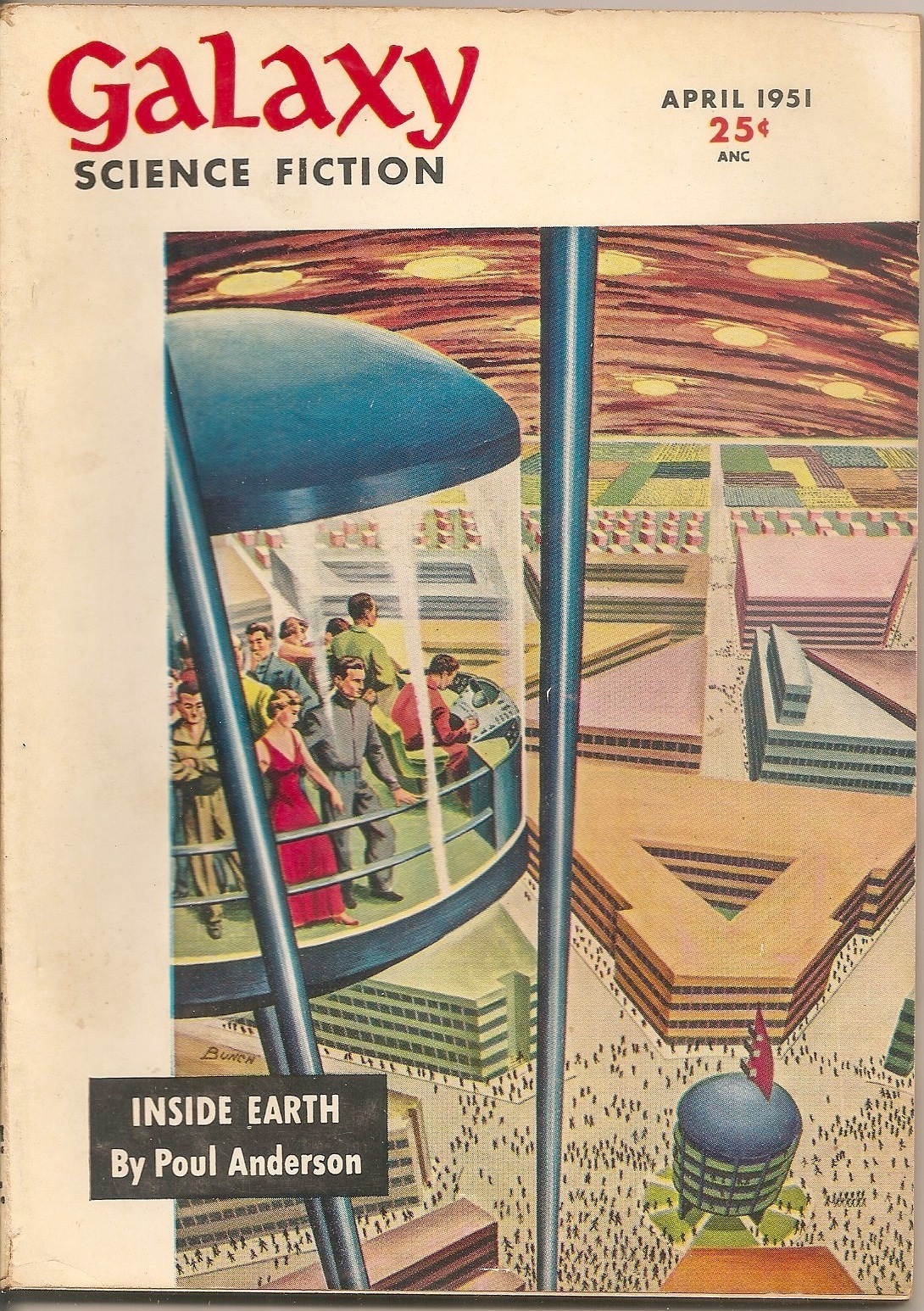
Paul virtually created American Science Fiction, alongside Hugo Gernsback, in the late 1920s. He was the cover artist Gernsback chose for the first science fiction magazine, Amazing Stories — every single issue, for over three years, until Gernsback lost control of it in 1929.

That meant Paul crafted many of the defining images of early science fiction, including his interpretation of Buck Rogers (on the cover of Amazing August 1928), H.G. Wells’s The War of the Worlds (August 1927), and Edgar Rice Burroughs’s John Carter of Mars (Amazing Stories Annual 1927). He made exciting new concepts like space travel, picture-phones, aliens, and robots vivid and real to an America where most people didn’t even own a telephone.

When Gernsback left Amazing behind and founded a new stable of magazines — including Science Wonder Stories and Air Wonder Stories — he took Paul with him. Altogether, Paul painted over 300 magazine covers before his death in 1963, most of them for Gernsback.

Paul had numerous artistic firsts. He was the first to paint a space station, for the cover of the August 1929 Science Wonder. He painted the cover for Marvel Comics #1 in October, 1939, giving the world its first look at the Human Torch.

Paul did countless interior illustrations as well. In addition to his striking cover art, he executed a famous series of original paintings imagining life elsewhere in the solar system for the back covers of many of Gernsback’s magazines.

Read More Read More

Vintage Treasures: Avalon Hill’s Elric Young Kingdoms Adventure Game

Vintage Treasures: Avalon Hill’s Elric Young Kingdoms Adventure Game

Elric Avalon Hill-smallAll the recent fuss over The Kingkiller Chronicles TV adaptation has reminded me just what it takes to really break into public consciousness in this industry. I’m glad quality fantasy like A Game of Thrones and The Name of the Wind has been catapulted into the big leagues… especially since I know that most fantasy novels on sale this month will vanish from shelves long before the end of the year.

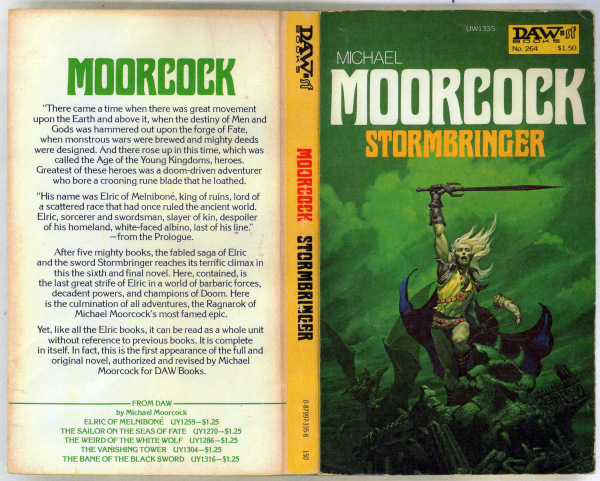
It takes a really exceptional property to endure without some kind of media tie-in. Fantasy like Michael Moorcock’s Elric, for example — still extremely popular among Black Gate readers, at least, despite the fact that the character first appeared, in the short story “The Dreaming City,” over 52 years ago.

Of course, just because Elric hasn’t been made into a Peter Jackson trilogy doesn’t mean he’s been completely ignored. Maybe there hasn’t been a Hasbro action figure or Saturday morning cartoon or feature film — but who needs all that stuff when you can play a board game from Avalon Hill, publishers of Magic Realm and Titan?

Avalon Hill’s Elric Young Kingdoms Adventure Game — man, that’s a mouthful of a title — was a deluxe board game published in 1984 and, to be honest with you, it wasn’t all that popular out of the gate. It was a re-packaging of Chaosium’s 1977 Elric: Battle at the End of Time, designed by Charlie Krank and Greg Stafford.

Avalon Hill had had some success re-publishing a handful of Chaosium’s products, especially Dragon Pass (1981), one of the most popular fantasy board games ever made, and I always kinda figured Chaosium threw in Elric as part of a package deal.

Read More Read More

Amazing Stories, January 1962: A Retro-Review

Amazing Stories, January 1962: A Retro-Review

Amazing Stories January 1962-smallThis seems to me a fairly significant issue of Amazing, in its way, though  it doesn’t feature any of the really significant Goldsmith discoveries (no Zelazny, no Le Guin, no Bunch); nor are any of the stories lasting classics. But all of the writers are reasonably well-known, and it does feature one somewhat important sort-of-debut, as well as a near farewell.

The cover is by Ed Emshwiller, illustrating Ben Bova’s “The Towers of Titan.” (His wife Carol appears in form-fitting spacesuit.) There is a back cover illustration too, in black-and-white, by Virgil Finlay, for the serial, Mark Clifton’s “Pawn of the Black Fleet.” Interiors are by Finlay, Emshwiller, Adkins, Summers, and Kilpatrick.

The letter column, “… Or So You Say,” has letters from Ken Winkes, H. James Hotaling, and Bob Adolfsen, none of the names familiar to me, discussing among other things the question of whether serials are a good idea.

The book review column, The Spectroscope, by S. E. Cotts, reviews Daniel F. Galouye’s Dark Universe (very favorably – and indeed the novel became a Hugo nominee), Lester Del Rey’s Winston juvenile Moon of Mutiny (very unfavorably), Arthur C. Clarke’s non-fiction collection The Challenge of the Spaceship, John C. Lilly’s Man and Dolphins, an account of the author’s research on dolphins and in particular their intelligence and capacity for language (Cotts reveals himself as rather a skeptic in this area); and also a curious review of an Ace Double, Kenneth Bulmer’s No Man’s World backed with Poul Anderson’s Mayday Orbit.

Cotts modestly praises No Man’s World as “plain uncomplicated entertainment” – no real argument there from me – but he dismisses Mayday Orbit as a “minor trifle” – in itself not an absurd judgment, but if it is a minor trifle then so too surely is No Man’s World!

Read More Read More

Vintage Treasures: The Best of Robert Bloch

Vintage Treasures: The Best of Robert Bloch

The Best of Robert BlochRobert Bloch — who died in 1994 at the age of 77 — had a lengthy and enviable career as a dark fantasy and horror writer, producing over 30 novels and hundreds of short stories.

Of course, all of that was overshadowed by his greatest success: the 1959 novel, Psycho, adapted by legendary director Alfred Hitchcock as perhaps his most famous film.

But there’s a lot more to Robert Bloch than just Psycho, as most fans know. Bloch was one of the earliest members of the Lovecraft Circle and Lovecraft was his early mentor. Bloch began writing to Lovecraft in 1933, after discovering his stories in Weird Tales, and his first professional sales to the same magazine a year later — when he was only 17 — were heavily influenced by him. Bloch even used Lovecraft as a (doomed) character in his 1935 short story “The Shambler from the Stars.” Lovecraft returned the favor, killing off his character “Robert Blake” in “The Haunter of the Dark” (1936), which he dedicated to Bloch.

Bloch gradually expanded his correspondence to Clark Ashton Smith, August Derleth, and others laying the groundwork for what would eventually be known as the Cthulhu Mythos. Together, they built on Lovecraft’s work, kicking off a tradition that is still very much alive today.

Bloch didn’t just hobnob with the Lovecraft Circle — in 1935, he joined The Milwaukee Fictioneers, a group of pulp fiction writers including Ralph Milne Farley, Raymond A. Palmer, and Stanley Weinbaum. Around the same time, he became friends with C.L. Moore and her husband Henry Kuttner. Man, those pulp writers sure stuck together.

After Lovecraft’s death in 1937, Bloch continued writing for Weird Tales, but also expanded to other markets, including Amazing Stories, Famous Fantastic Mysteries, F&SF, and many others. Real notice came with his early story, “Yours Truly, Jack the Ripper,” which originally appeared in Weird Tales in 1943 and became one of the most reprinted fantasy tales of the 20th Century.

Read More Read More

Fritz Leiber, Edgar Rice Burroughs, and Appendix N: Advanced Readings in D&D

Fritz Leiber, Edgar Rice Burroughs, and Appendix N: Advanced Readings in D&D

Swords and Ice Magic-smallOver at Tor.com, Tim Callahan and Mordicai Knode continue with their thoughtful and entertaining tour through Gary Gygax’s famous Appendix N, the library of fantasy and SF titles referenced in the back of the Dungeon Master’s Guide. In the past few weeks, they’ve covered Fritz Leiber and Edgar Rice Burroughs — proving once again that they can write these columns faster than I can keep up.

So we’ll play catch-up today. Here’s what Mordicai says about Leiber, author of the genre-defining Fafhrd and the Gray Mouser tales.

Guys, Fritz Leiber’s Fafhrd and Gray Mouser are basically the bee’s knees. In fact, I might go so far as to say they are the most Dungeons and Dragons of anything on the Appendix N list… The thing about the Lankhmar stories is that they are actually how people play the game as well… Let me illustrate it thus: Fafhrd straps fireworks to his skis at one point in order to rocket across a jump. That sort of insanity is just so… well, so Dungeons and Dragons; I don’t know how Leiber does it… Leiber’s imagination is so fruitful that, well, it is like he has a chaos theory generator in his head. Billions of flapping butterflies.

So true! And here’s Tim on how Edgar Rice Burroughs’s John Carter novels may have influenced level limits.

Read More Read More

Professor Jameson’s Space Adventures, or Zoromes Make the Happiest Cyborgs

Professor Jameson’s Space Adventures, or Zoromes Make the Happiest Cyborgs

Amazing Stories April 1938-smallI first ran across Neil R. Jones’s Prof. Jameson stories in junior high while reading Isaac Asimov’s Before the Golden Age — which, by the way, is one of my favorite anthologies.

Neil R. Jones’s first Prof. Jameson adventure appeared in the July 1931 issue of Amazing Stories. In this first story, “The Jameson Satellite,” Mr. Jones gives us all the background information that we’ll ever need to follow this wonderful over-the-top space adventures of Professor Jameson and his Machine Men colleagues, the Zoromes!

Within the first few pages, we learn that Professor Jameson of the 20th century had a horrible revulsion against being buried and subsequently becoming worm food after his death. So, to ease his mind, he arranged to have his body placed in a hermetically sealed rocket after his death and then launched into orbit around the Earth.

Following me so far? Good. So now we skip ahead 40,000,000 years to find the Professor’s orbiting Tupperware bowl still circling a now-dead Earth, which is itself orbiting a dying Sun which has cooled off and become a Red Giant (we now figure that this’ll actually take somewhere around 5 billion years to happen). So far so good? Good!

We then meet a group of intergalactic explorers who are at this very moment investigating our dying solar system. Their sensors pick up a metallic object orbiting the Earth.

Now of course the reader knows immediately what the object actually is. When they finally approach Earth and discover Prof. Challenger’s coffin-ship, they take it aboard their own greatly larger ship.

It turns out that the Zoromes aren’t your run-of-the-mill extra-terrestrial explorers. Nope, they are actually cyborgs! The Zoromes wanted dearly to explore the galaxy, but knew their mortal bodies wouldn’t survive a journey that might entail thousands of years, so they traded flesh and bone for metal and circuitry. Makes sense to me.

Read More Read More

King Arthur Revisited: Donald Barthelme’s The King

King Arthur Revisited: Donald Barthelme’s The King

41EQ75FAXGLThe legend of King Arthur has become one of literature’s greatest footballs, and it gets punted hither and yon with often quite careless abandon. Legions of celluloid spinoffs litter the vaults of Netflix, and on the printed page, one can select from heavyweights like Mallory, White, or Steinbeck to enjoy your Age of Chivalry fix.

Flying well under the radar is one of the twentieth century’s best known metafictional writers, Donald Barthelme. His story collections, including City Lights and Sixty Stories, are classics of the form, endlessly inventive, cartwheeling-freewheeling-Catherine wheeling lunacies that manage nonetheless to pack a surprising emotional punch.

Most of Barthelme’s output centered on short fiction, but every so often he ventured into the realm of the novel, as with his knowing, nudge-nudge/wink-wink Snow White and his unjustly forgotten Arthurian outing, The King.

Released by Harper & Row in 1990 and featuring the evocative, jutting illustrations of Barry Moser, The King is an anachronistic treat from start to finish, and hilarious besides.

Read More Read More

New Treasures: Against the Slave Lords

New Treasures: Against the Slave Lords

Against the Slave LordsI think the release of Against the Slave Lords is cause for celebration.

Against the Slave Lords is a hardcover collection of four interconnected Advanced Dungeons & Dragons adventure modules, the A1 – A4 series Scourge of the Slave Lords, originally published in 1980 and 1981. It includes new forewords by the four surviving designers. Lawrence Schick, for example, relates how his inspiration came from fellow author and dungeon master Harold Johnson:

In his campaign one night, Harold had our characters get captured, whereupon he took away all our stuff and threw us in a dungeon. The challenge: escape without relying on all our carefully hoarded adventuring gear. Were our characters people with skills and brains, or were they really just lists of equipment?

It also includes the maps and all of the original black-and-white interior art. Most intriguing of all, there’s also a brand new fifth adventure that sets the stage for the entire series, published here for the first time. Danger at Darkshelf Quarry is designed for low-level players (levels 1-3).

Why celebrate? It signals that publishers Wizards of the Coast are serious about bringing the canonical works of first edition D&D back into print. I was plenty excited at their last premium hardcover reprint, Dungeons of Dread, as it collected some of the most famous adventures written by AD&D‘s creator, Gary Gygax — including Tomb of Horrors and The Lost Caverns of Tsojcanth (still one of my favorite adventure modules of all time) — all of which were long out of print and hard to find.

Read More Read More

Magic Realm Lives Again

Magic Realm Lives Again

DIGITAL CAMERAMagic Realm, designed by Richard Hamblen and released by Avalon Hill in 1979, is adventure fantasy role-playing wrapped up in a board game. No surprise, given the time. It has a complexity rating of 9 on Avalon Hill’s 10-point scale, is loaded with chits, and has a rule book approaching 100 pages of two-column small print.

In modern parlance, Magic Realm has crunch. And all that crunchy goodness is now available for free on your computer.

Before we examine the computer version, let’s have a look at the basics of play. There are sixteen characters for players to choose from in Magic Realm. Most of the usual tropes are covered: White Knight, Black Knight, Amazon, Wizard, Elf, Dwarf, etc.

Players choose their own victory conditions, setting goals of Gold, Fame, Notoriety, Usable Spells, and Great Treasures. They travel roads, caves, hidden paths and secret passages that stretch across the twenty tiles making up the board, and you’re not likely to see the same board configuration twice.

The exploration element is handled well. Goblins and dragons both show up on a tiles with caves, but until you get to a tile and hear a howl or roar, see the ruins or smell the smoke, you don’t know if goblins, dragons, neither, or both live there.

And knowing is critical. The White Knight can probably take a dragon, but a group of goblins will overwhelm him. The Amazon, on the other hand, can’t scratch a dragon with her starting equipment, but she can usually work her way through a half-dozen of the weakest goblins. (The Elf doesn’t care either way, as he can run away from both.)

Read More Read More

Fantasy Out Loud III: Suffer the Children?

Fantasy Out Loud III: Suffer the Children?

the-mysterious-benedict-society-0316003956-l_5462In the original 2011 edition of Fantasy Out Loud, I took a stab at reviewing the fantasy books I had read aloud to my children. Back in those halcyon days, The Hobbit was front and center.

Some eighteen months later, my boys are older and taller, but not necessarily wiser. Much to my chagrin, older son Corey, aged thirteen as of this writing, no longer wants me to read aloud to him prior to bedtime. On his own, he’s lately polished off all four of the Hitchhiker’s Guide books, and is now slamming through Arthur C. Clarke’s Childhood’s End, which he describes as “weird.” (We’ll see what he says when he gets to the end, one of the best reveals in written English.)

But, because Corey is tackling these titles on his lonesome ownsome, this column is necessarily dedicated to eight-year-old Evan, who still can’t get enough of pre-bed daddy readings.

In the last year, fantasy titles we’ve tackled include The Warriors: Into the Wild, The Mysterious Benedict Society, Black Beauty, Summerland, Tuck Everlasting, and Magic By the Lake.

Well, all right: Black Beauty isn’t strictly fantasy, since author Anna Sewell never allows Beauty to actually speak, but for a horse to be so observant, so proscriptive, so downright brilliant?  Sounds like fantasy to me.

Here’s the rub: Evan did not like these books equally. Nor do his growing sense of taste and literary discretion always parallel, sadly, my own. At least two of the books above were volumes I would have preferred to hurl across the room, but in one case especially, despite my jaundice, Evan was enraptured.

Read More Read More