Browsed by
Category: Vintage Treasures

Human Enclaves and Experimental Planets: Rich Horton on The Sun Saboteurs/The Light of Lilith

Human Enclaves and Experimental Planets: Rich Horton on The Sun Saboteurs/The Light of Lilith

The Sun Saboteurs-small The Light of Lilith-small

Over at Strange at Ecbatan, Rich Horton reviews another great old Ace Double, this one featuring Damon Knight’s The Sun Saboteurs, paired with G. McDonald Wallis’ The Light of Lilith.

Damon Knight of course was one of the great writers in SF history, a Grand Master. The Sun Saboteurs was his second of four Ace Double halves (three separate books). It is an expansion of his 1955 novella “The Earth Quarter,” and it is about 37,000 words long. G. (for Geraldine) McDonald Wallis is almost unknown in the SF field — this novel and her 1963 Ace Double half Legend of Lost Earth are her only in-genre publications. However, she had an extensive career under the name “Hope Campbell”…

I don’t really think that Don Wollheim (or whoever else selected Ace Double pairings) necessarily chose stories that were thematically or otherwise related, but every so often it happened. This is a particularly striking case. Both The Sun Saboteurs and The Light of Lilith present a strikingly anti-Campbellian theme. In both, humans are presented as evil warmongers amid a generally peaceful Galaxy. In both, humans are forced to accept their inferiority to many alien species, and in both, many or most humans simply fail to do so. In both, humans are faced with isolation in the Solar System, and eventually with extinction. That said, one novel is far better than the other.

Read More Read More

New Treasures: Perchance to Dream: Selected Stories by Charles Beaumont

New Treasures: Perchance to Dream: Selected Stories by Charles Beaumont

Perchance to Dream Charles Beaumont-smallCharles Beaumont authored several highly regarded short story collections, including Yonder: Stories of Fantasy and Science Fiction (1958), Night Ride and Other Journeys (1960), and The Magic Man and Other Science-Fantasy Stories (1965), and was also the screenwriter for a number of classic horror films, including 7 Faces of Dr. Lao, The Intruder and The Masque of the Red Death. But he’s best remembered today as the writer of some of the most famous Twilight Zone episodes, including “The Howling Man,” “Miniature,” and and “Number Twelve Looks Just Like You.” Perchance to Dream: Selected Stories is a new collection of his classic tales, with a foreword by Ray Bradbury and an afterword by William Shatner. Shatner’s piece recalls meeting Beaumont when he was cast as the lead in The Intruder, and their misadventures on the set together.

It is only natural that Charles Beaumont would make a name for himself crafting scripts for The Twilight Zone — for his was an imagination so limitless it must have emerged from some other dimension. Perchance to Dream contains a selection of Beaumont’s finest stories, including five that he later adapted for Twilight Zone episodes.

Beaumont dreamed up fantasies so vast and varied they burst through the walls of whatever box might contain them. Supernatural, horror, noir, science fiction, fantasy, pulp, and more: all were equally at home in his wondrous mind. These are stories where lions stalk the plains, classic cars rove the streets, and spacecraft hover just overhead. Here roam musicians, magicians, vampires, monsters, toreros, extraterrestrials, androids, and perhaps even the Devil himself. With dizzying feats of master storytelling and joyously eccentric humor, Beaumont transformed his nightmares and reveries into impeccably crafted stories that leave themselves indelibly stamped upon the walls of the mind. In Beaumont’s hands, nothing is impossible: it all seems plausible, even likely.

Perchance to Dream: Selected Stories was published by Penguin Classics on October 13, 2015. It is 336 pages, priced at $16 in trade paperback, and $9.99 for the digital edition.

Clones, Deep Space Ships, and Surviving the Apocalypse on a Submarine: The Pocket Richard Cowper

Clones, Deep Space Ships, and Surviving the Apocalypse on a Submarine: The Pocket Richard Cowper

Time Out of Mind-small Profundis-small Out There Where the Big Ships Go-small

Richard Cowper was a British SF and fantasy writer who published over a dozen novels and four short story collections between 1967 and 1986. Sadly, much of his output never made it across the Atlantic. Ballantine reprinted his first two novels in paperback, Breakthrough (1969) and Phoenix (1970), and DAW published perhaps his most famous novel, The Twilight of Briareus, in paperback in 1975. But those two ignored the rest of his work.

Fortunately, in the late 70s and early 80s Pocket Books brought six of his novels to the US, including the complete The White Bird of Kinship trilogy, and they were the sole publishers of his collection, Out There Where the Big Ships Go. It was the Pocket editions that first caught my eye on bookstore shelves in Ottawa — particularly the three gorgeous Don Maitz covers above. (You’ll note the maple leaf emblem on the top left of the Canadian editions.)

Read More Read More

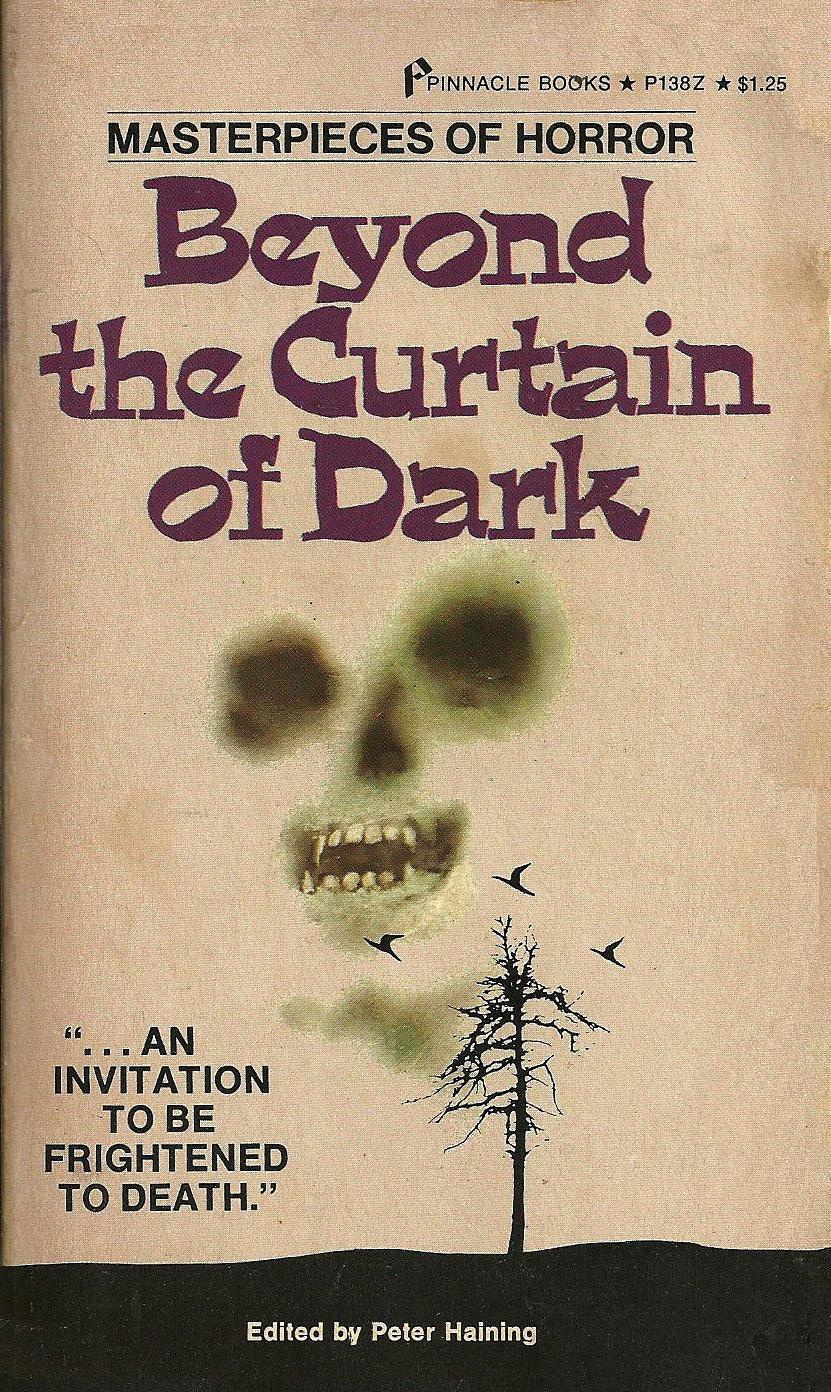
Vintage Treasures: The Great White Space by Basil Copper

Vintage Treasures: The Great White Space by Basil Copper

The Great White Space-small The Great White Space Basil Cooper Sphere-small The Great White Space Basil Cooper-small

Basil Copper received a Lifetime Achievement Award at the World Horror Convention in 2010, and is remembered today for his short fiction (collected in the mammoth two-volume set Darkness, Mist and Shadow: The Collected Macabre Tales of Basil Copper from PS Publishing), and for his much-loved Solar Pons stories, which Bob Byrne has discussed in detail right here at Black Gate.

But he also published a handful of fondly remembered novels, such as Necropolis (1980), The House of the Wolf (1983), and Into the Silence (1983). His first novel, The Great White Space (1974), is considered one of the best Lovecraftian horror novels ever written. Valancourt Books, whose impressive horror catalog I surveyed after getting a glimpse of their glorious table at the World Fantasy Convention last year, reprinted it in a handsome trade paperback in 2013 (above right). But the copy that tumbled into my hands was the 1976 Manor Books edition (above left), which I found in a recently-acquired collection on eBay.

Read More Read More

Did the Butler Do It? Dean R. Koontz’s A Werewolf Among Us

Did the Butler Do It? Dean R. Koontz’s A Werewolf Among Us

A Werewolf Among Us-small A Werewolf Among Us-back-small

A Werewolf Among Us
by Dean R. Koontz
Ballantine Books original paperback edition (211 pages, $1.25, January 1973)
Cover art by Bob Blanchard

Wow — check out that price! $1.25! Hard to believe, isn’t it?

I can’t recall exactly how I discovered this enjoyable mash-up of two very different genres. I was probably hanging out in one of the many bookstores that were, in those days, like Starbuck’s: one on almost every other street corner. We had the big chain stores like Kroch’s & Brentano’s, and Walden’s (later Waldenbooks) here in Chicago, of course, among smaller, local chains like Barbara’s Bookstore (still around), and then later we had The Stars My Destination and The Fantasy and Science Fiction Book Shop, two of the best book stores I’ve ever patronized. Crown Books came along in 1977, founded by Robert Haft, and then Barnes & Noble emerged, followed by the rise and fall of Border’s Books and Music, plus a chain called Books-A-Million, which I haven’t seen around in a long time. There were also scores of “Mom and Pop” operations, selling both new and used books, and you could go into any Sears-Roebuck, Marshall Field’s, Montgomery Ward, Woolworth’s, Post-Office News, drug store, and candy store and find books of all kinds. In the early 1970s I worked across the street from a small but very eclectic book store called Brainfood, and I’d spend my 30-minute lunch break (often extended beyond that time), browsing and shopping.

It was the best of times. Period.

Then along came the internet and Amazon.

Read More Read More

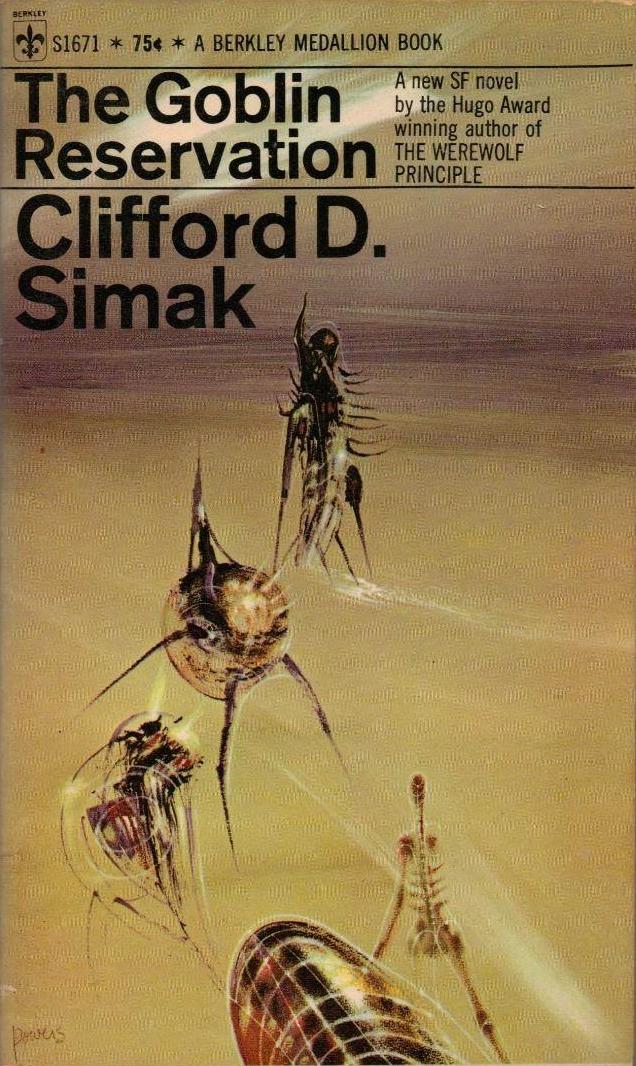
Future Treasures: The Complete Short Fiction of Clifford D. Simak, Volumes 1-3

Future Treasures: The Complete Short Fiction of Clifford D. Simak, Volumes 1-3

I Am Crying All Inside And Other Stories-small The Big Front Yard and Other Stories-small The Ghost of a Model T And Other Stories-small

Clifford D. Simak is one of my favorite writers. He wrote over 100 short stories in his lifetime, and published more than 20 collections, but even to this day not all of his short fiction has been collected. Especially neglected is much of his early pulp work, written for magazines like Wonder Stories, Astounding, and Thrilling Wonder in the 1930s.

The lack of a complete collection of Clifford D. Simak’s short stories has been keenly felt among many old-school fans. So as you can imagine, I was delighted to discover that Open Road Media has undertaken the first comprehensive collection of all of Simak’s short stories — including his science fiction, fantasy, and western fiction. The first three books, I Am Crying All Inside, The Big Front Yard, and The Ghost of a Model T, go on sale later this month.

All three, like all six volumes announced so far, are edited by David W. Wixon, the Executor of Simak’s Literary Estate. Wixon, a close friend of Simak, contributes an introduction to each volume, and short intros to each story, providing a little background on its publishing history and other interesting tidbits.

Read More Read More

Amazing Stories October 1960: A Retro-Review

Amazing Stories October 1960: A Retro-Review

Amazing Stories October 1960-smallAt the 2015 Worldcon, Sasquan, one of the dealers had a nice stash of old magazines. I bought a bunch of Goldsmith-era Amazings and Fantastics. This is one from quite early in Cele Goldsmith’s editorial career. Indeed, Norman Lobsenz’s editorial calls it “the first issue of the “new” Amazing that we have been talking about.”

He adds “There is one problem facing us … the constant shortage of first-rate stories.” This is a point he would make other times in editorials (and in the letter column), to a greater degree than I have ever seen from an editor in the pages of a magazine.

The cover here is by Alex Schomburg. The interiors are by two of the greatest artists in the field’s history, Virgil Finlay and Ed Emshwiller, and a name I didn’t recognize, Bernklau, who seems to have been active in the field only from 1959 to 1961 (in a variety of magazines). He was probably the Art Bernklau who did covers for Beacon Books in the same period.

Besides the editorial, the features include S. E. Cotts’ book review column, the Spectroscope; a science article by Lester Del Rey, “Homesteads on Venus,” and the lettercol, “Or So You Say.”

Cotts opens the book review column be celebrating that the column has more space. There is mention of SF in other media: an article in the National Review (“SF seems a strange bedfellow for such a right-wing magazine” says Cotts – a curious remark), SF on TV (Twilight Zone), on record, and an opera. This last is Harry Martinson’s Aniara (music by Karl-Birger Blomdahl). Martinson eventually (quite controversially) shared a Nobel Prize for literature.

Read More Read More

Vintage Treasures: Special Wonder, Volumes 1 & 2, edited by J. Francis McComas

Vintage Treasures: Special Wonder, Volumes 1 & 2, edited by J. Francis McComas

Special Wonder-small

The Magazine of Fantasy & Science Fiction was founded in 1949 by Anthony Boucher and J. Francis McComas, who believed science fiction and fantasy could aspire to a literary niche far above the level of the pulp magazines of the 30s and 40s. With F&SF they succeeded brilliantly, launching a magazine with a discerning adult readership that published some of the best fiction of the 20th Century — and is still published today.

Anthony Boucher remained editor of F&SF from Fall 1949 to August 1958. After his death in 1968, McComas assembled a tribute anthology called Special Wonder, collecting stories from 29 of the top writers in the field. It was published in hardcover in 1970 by Random House, and then reprinted in paperback in two volumes in January and February of 1971 by Beagle Books (above). Special Wonder contained reprints that were “to Tony’s taste,” most of which had been published in F&SF, and in aggregate they provided a splendid representative sample of the kind of writing that Boucher sought out, nurtured, and made a home for in the field.

Read More Read More

Dr. Strange, Part I: Establishing the Mythos: Master of the Mystic Arts in The Lee-Ditko Era

Dr. Strange, Part I: Establishing the Mythos: Master of the Mystic Arts in The Lee-Ditko Era

dr strange 1
The brilliant, eerie worlds of Dr. Strange.

I’ve always liked Dr. Strange. Issue #43 was one of the first four comics my mother gave me in 1980. Stephen Strange is a lonely, stoic hero whose scope of danger and action is nearly always cosmic, and whose inner demons are as powerful as anything he faces with magic.

By the time I was finishing high school, my collection had grown to the point that I had a pretty good grip on his adventures from his first appearance in 1963 to his loss of everything in the late 80s.

Our fearless leader John O’Neill blogged recently about the news of the Dr. Strange movie. I don’t know how I feel about the movie — I have a lot of trouble with disappointing adaptations, but like I did with the Adam Warlock books, I’d like to take a retrospective look on my favorite comic sorcerer.

In my head, the classic Dr. Strange can be broken into three periods. In this post, I’ll look at the establishment of the Dr. Strange mythos in the Lee-Ditko era (roughly Strange Tales #130-#141).

In the early 1960s, there were essentially two creative engines at Marvel. Stan Lee and Jack Kirby had created Thor, the Hulk, the X-Men, Iron Man, the Avengers, and the Fantastic Four. Stan Lee and Steve Ditko had created Spider-Man.

Read More Read More

Vintage Treasures: Pamela Sargent’s Women of Wonder

Vintage Treasures: Pamela Sargent’s Women of Wonder

Women of Wonder The Classic Years-small Women of Wonder The Contemporary Years-small

In 1973, author Pamela Sargent began to assemble stories for a groundbreaking anthology: Women of Wonder, collecting science fiction stories by women, about woman. It was the first anthology of its kind, and as you can probably imagine, Sergeant ran into some obstacles when she tried to sell it. Here’s Ms. Sargent:

For over two years, I tried to find a publisher for Women of Wonder, and the reactions of editors were instructive. A few editors thought the idea was wonderful but decided not to do the book anyway. Some editors found the book absurd, a couple doubted whether I could find enough good stories to fill the book, and one editor didn’t think there was a large enough audience for such an anthology.

But the audience was there, and so were the authors.

That’s taken from the introduction to the fourth volume in the series, Women of Wonder: The Classic Years, published by Harcourt Brace in 1995.

Read More Read More