Browsed by
Category: Vintage Treasures

Collecting Isaac Asimov: Mark R. Kelly on the Best of Asimov

Collecting Isaac Asimov: Mark R. Kelly on the Best of Asimov

Isaac Asimov collection-small

It’s hard for me to be objective about Isaac Asimov. By modern standards, much of his fiction is not very readable. But the man introduced me to science fiction virtually single-handedly. More than that, he also instilled in me an enduring love of the pulps (via the amazing Before the Golden Age), taught me the fascinating history of the genre, and showed me convincingly that science fiction was, at its core, a community of writers — of fascinating people, who deserved to be read and known.

But of course, it began with his fiction. I thrilled to many of his books in my youth, especially I, Robot and his Foundation novels. I even read — and immensely enjoyed — The Early Asimov, a collection of barely-publishable stories from the earliest days of his career, interleaved with Asimov’s funny and self-deprecating remembrances of life as an aspiring teenage writer in the late 30s. You probably had to be an aspiring teenage SF writer yourself to have any hope of appreciating that book… but I was, and I loved it.

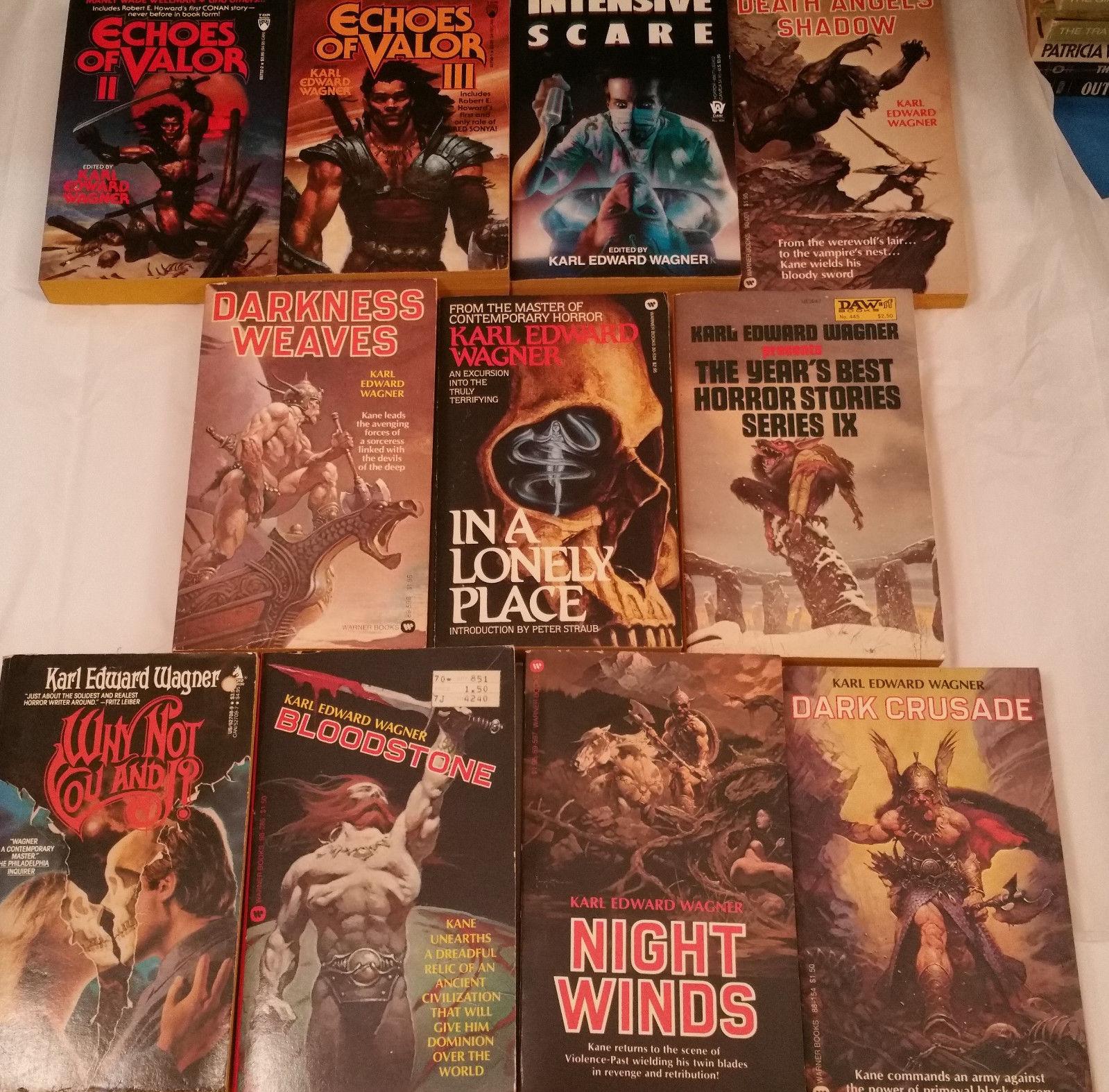
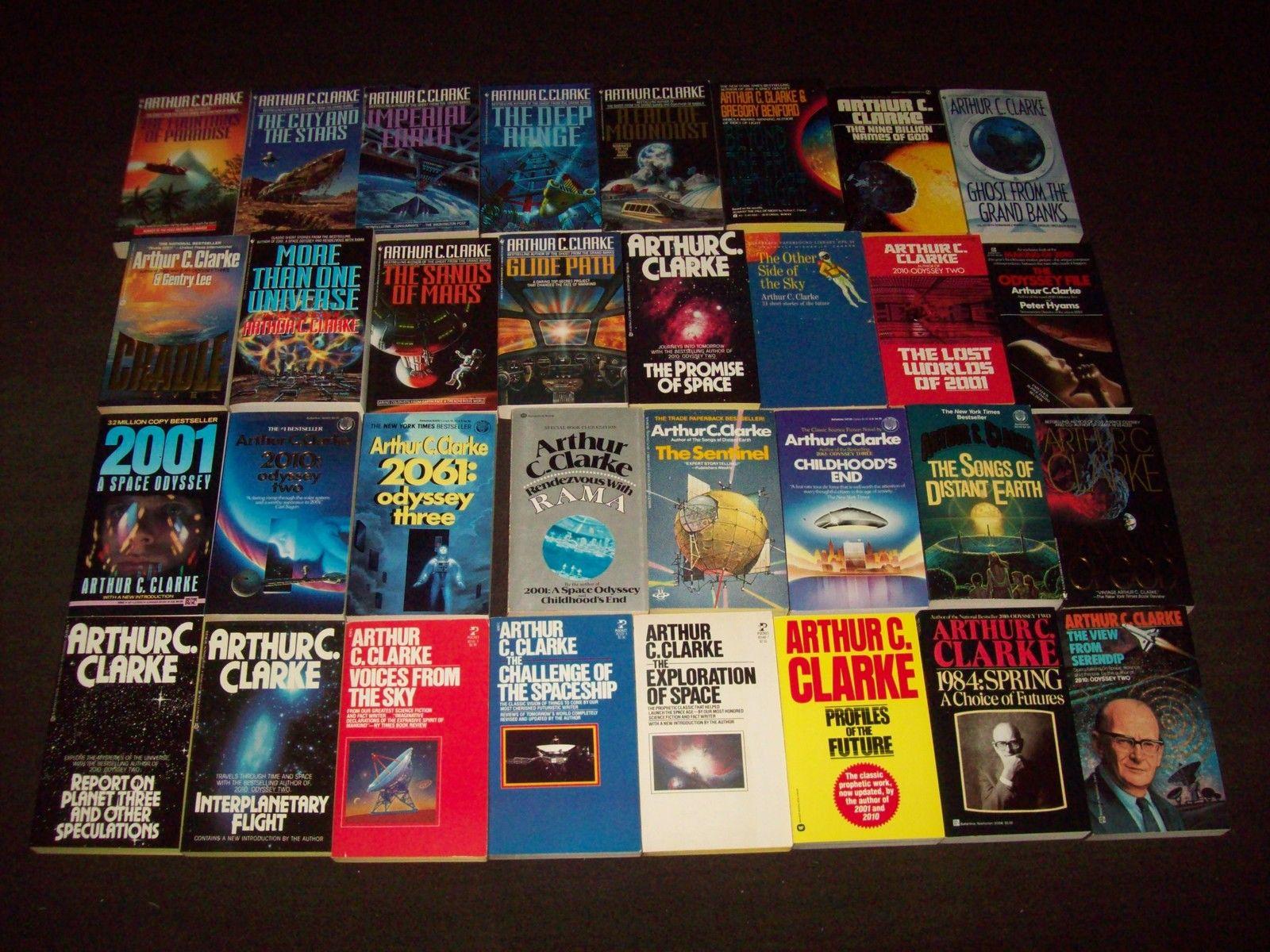
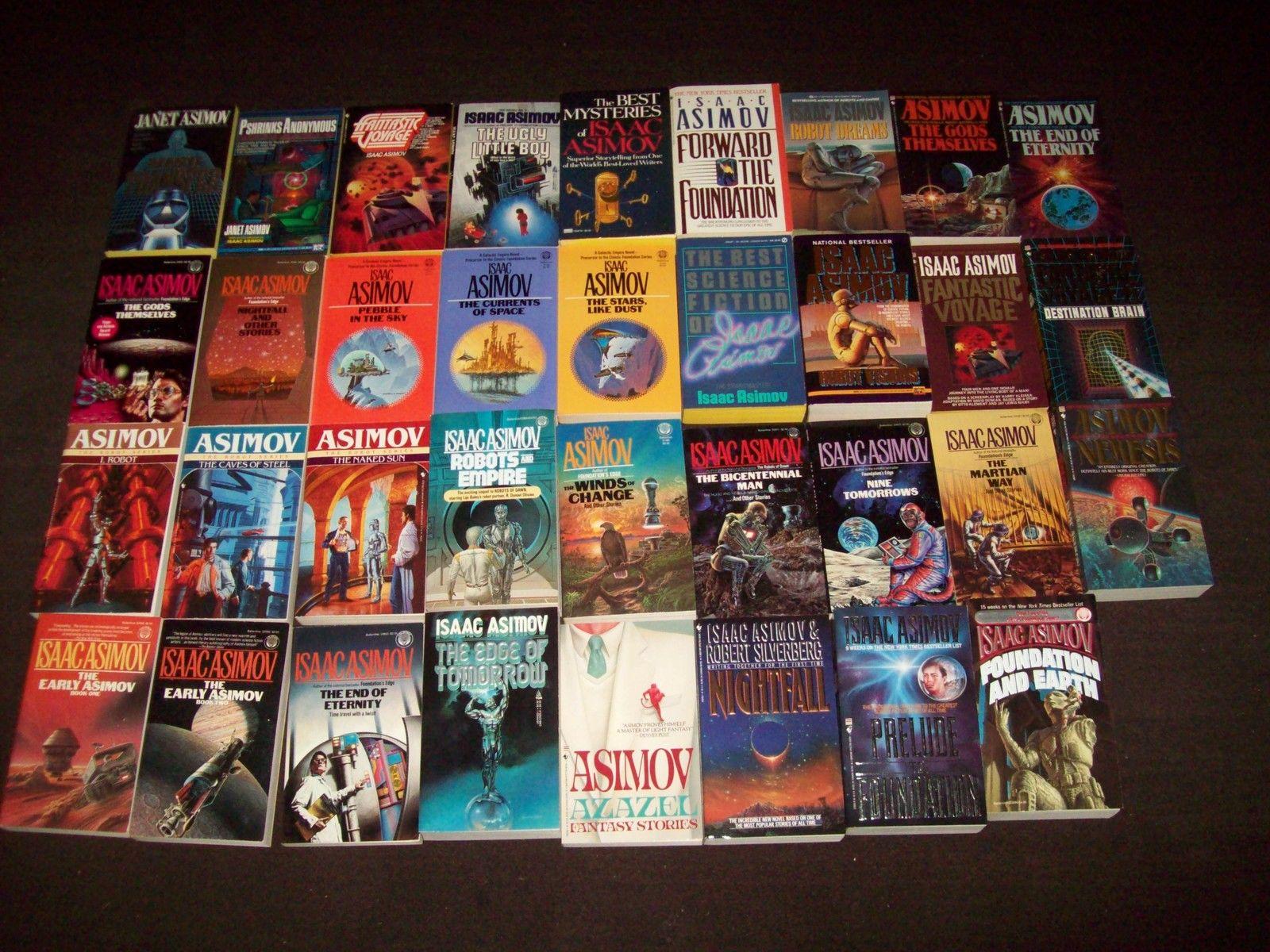
I recently bought the collection of 35 Isaac Asimov books above on eBay. I paid quite a bit for it ($82.17, which is a lot for relatively modern paperbacks), but they were all in virtually flawless condition, and my copies had been read to pieces. I’ve been slowly unpacking the box they arrived in, and taking the time to sample Asimov’s fiction and non-fiction. It’s been a long time since I returned to the man who first acquainted me with SF. Coincidentally, I discovered that Locus Online editor Mark Kelly has been, like me, re-reading Asimov as an adult and blogging about the experience, and I found his thoughts mirrored my own in many respects.

Read More Read More

Vintage Treasures: A Lower Deep by Tom Piccirilli

Vintage Treasures: A Lower Deep by Tom Piccirilli

A Lower Deep-back-small A Lower Deep-small

I read Tom Piccirilli’s A Choir of Ill Children in 2004, and it sent me scrambling to find his other novels. The first I came across was his 2001 novel A Lower Deep, the tale of the Necromancer and his demonic companion Self, who wander the spectral highways as the Necromancer attempts to prevent Armageddon.

The Publishers Weekly review offered a nice summary, but also warned about the novel’s graphic content:

The Necromancer must battle the leader of his old coven, Jebediah DeLancre, who has created a new band of witches intent on forcing Christ to return to Earth prematurely. When Jebediah offers to raise Danielle, the Necromancer’s only love, from the dead in exchange for his cooperation, he finds himself torn between good and evil… a stream of characters, spirits and demons wander in and out of this disturbing tale, including Michael the Archangel, who is wrested from the stomach of the Necromancer’s father. Piccirilli (The Night Class) attempts to lighten the story up with Self’s flippant one-liners, but a glut of gory details will keep readers squirming. This tale is not for the fainthearted…

Piccirilli was also the author of Deep into the Darkness Peering (1999), November Mourns (2005), Headstone City (2006), and The Midnight Road (2007), among others. He died earlier this year.

A Lower Deep was published by Leisure Books in October 2001. It is 363 pages, priced at $5.99 in paperback. A digital edition was released in 2011 by Crossroad Press & Macabre Ink. The cover is uncredited.

Red Moon and Black Mountain by Joy Chant

Red Moon and Black Mountain by Joy Chant

oie_1024853Qhsh9stJoy Chant’s first novel, Red Moon and Black Mountain (1970), was published when she was only twenty-five years old. In the afterword to a later novel she explains how the world of her stories, Vandarei, grew out of fantasies she made up for herself as a child. At one point she made herself the great and majestic Queen of this world. The story of three siblings — Oliver, Penelope, and Nicholas — pulled out of England into the land of Vandarei, it reads a little like the Chronicles of Narnia crossed with The Lord of the Rings and wrung through Alan Garner’s darker fantasies.

The novel has often been dismissed as a mere clone of Tolkien’s work — most recently right here at Black Gate by Brian Murphy — but RMBM is a book that has also received tremendous praise over the decades. In his introduction to the first American edition, published as part of his Ballantine Adult Fantasy series, Lin Carter refers to it as a masterpiece. James Stoddard, author of The High House, calls it the best fantasy novel no one reads. It was the second recipient of the Mythopoeic Award back in 1972.

I first read RMBM about fifteen years ago, but retained only the dimmest memories of it. Rereading it, I will say it is one of the best works of epic high fantasy I’ve ever read. While not the toil of a lifetime, Chant draws on the same deep body of European mythology and archetypal characters as Tolkien with similar power and effect. Maybe due to its roots in her childhood imagination and definitely out of a deep well of talent, in Vanderei, its people, and its legends, Chant created a deeply heartfelt and fantastic world.

A mysterious figure lurking along the garden path sends the children out of this world and into Vandarei out of grave necessity. Penelope and Nicholas materialize along a path trod by the grave and steely princess In’serinna and her retinue. Oliver arrives among the nomadic Khentors and their single-horned horses. All the children have a part to play in an upcoming struggle for the future of Vandarei. Oliver, especially, will find himself tested to his limits.

Read More Read More

Warring Supercomputers, Deep Space, and Cold Equations: 5 Tales from Tomorrow

Warring Supercomputers, Deep Space, and Cold Equations: 5 Tales from Tomorrow

5 Tales from Tomorrow-back-small 5 Tales from Tomorrow-small

5 Tales from Tomorrow
Edited by T. E. Dikty
Crest Books (176 pages, $0.35, December 1957)
Cover by Richard Powers

T.E. Dikty edited a bunch of SF anthologies, mostly throughout the Fifties and many in collaboration with Everett F. Bleiler. Aside from Clifford Simak and perhaps one-hit wonder Tom Godwin, the names in this volume are not quite the SF A-list, but the results are mostly not bad.

“Push-Button Passion,” by Albert Compton Friborg

As I was reading this story I couldn’t help wondering if Friborg was the pseudonym for a better known author – Kurt Vonnegut. It has that whimsical, satirical feel that one tends to associate with Vonnegut. Turns out that it is indeed a pseudonym, but for an academic named Bud Foote, whose SF output was limited to this and one other short story, also published in the Fifties.

Read More Read More

Vintage Treasures: The Joyous Invasions by Theodore Sturgeon

Vintage Treasures: The Joyous Invasions by Theodore Sturgeon

The Joyous Invasions-smallI’ve been gradually surveying the many collections of Theodore Sturgeon, one of the finest — some would say the finest — short story writers the field has ever seen. They’re easy to obtain, and very inexpensive, although the vast majority have been out of print for over three decades.

Well, most of them are easy to obtain. There are a few exceptions, and one of them is The Joyous Invasions, a collection of three novellas that appeared only in the UK. I’ve been trying to find a copy since I first discovered it existed earlier this year, and I finally succeeded last week. Here’s the description.

Alien Incursions

A tiny parasitic being whose task is to prepare humanity for an extra-terrestrial takeover. Its method: to make all dreams come true…

The ultimate sick TV show of the future — where the attractions are children struck down by a mysterious disease from outer space…

An alien field-expedition to Earth, which bases itself in a cheap boarding house — with weird and very unexpected results…

Here, together in one volume, are three stunning novellas by one of the giants of modern Science Fiction

The Joyous Invasion contains two of Sturgeon’s most famous stories, and one I’d never heard of.

“To Marry Medusa” (Galaxy Science Fiction, August 1958)
“The Comedian’s Children” (Venture Science Fiction Magazine, May 1958)
“The [Widget], the [Wadget], and Boff” (The Magazine of Fantasy and Science Fiction, November 1955)

Read More Read More

Fantastic, January 1962: A Retro-Review

Fantastic, January 1962: A Retro-Review

Fantastic Stories January 1962-smallA Goldsmith era Fantastic, again, also from the stash I picked up at Sasquan. This one has a cover by Lloyd Birmingham, illustrating, rather faithfully, Randall Garrett’s “Hepcats of Venus” (a story probably published at about the last time one could have published it). The cover also advertises an Erle Stanley Gardner (of Perry Mason fame) SF story, “The Human Zero.” Interior illustrations are by Virgil Finlay, Leo Summers, and one Kilpatrick. I don’t recognize the last one, by name or style, and the ISFDB shows only 5 appearances by him or her, all in Amazing or Fantastic in 1961/1962.

The features are as usual for Fantastic on the scant side – Norman Lobsenz’ editorial and the letter column, According to You. The latter features a long letter by Mrs. Alvin A. Stewart on the subject of her dislike for David Bunch, in the process rehashing an ongoing debate. There are letters praising two serials in previous issues, James White’s Second Ending (which is excellent) and Manly Banister’s Magnanthropus, which I haven’t read, though I found the sequel (Seed of Eloraspon) to be fitfully enjoyable but far from a masterwork, and on the whole kind of preposterous. Paul Zimmer (presumably Marion Zimmer Bradley’s brother, and an author in his own right, Paul Edwin Zimmer) thought Magnanthropus the best serial Fantastic ever published. (Zimmer also takes a swipe at Bunch.) On the other hand, Fred Patten (a name to conjure with in fandom!) thought Magnanthropus a tremendous letdown after Second Ending.

I have to say I somewhat miss lettercols with that sort of spirited discussion of the stories in previous issues.

Read More Read More

Vintage Treasures: John the Balladeer by Manly Wade Wellman

Vintage Treasures: John the Balladeer by Manly Wade Wellman

John the Balladeer-small John the Balladeer-back-small

Manly Wade Wellman, whom Karl Edward Wagner called “the dean of fantasy writers,” was one of the great 20th Century fantasists, particularly in the field of the “occult detective.” He created several memorable occult investigators, including Judge Pursuivant and John Thunstone. But his most enduring creation is surely Silver John, also known as John the Balladeer.

Silver John, a Korean War vet who becomes a wandering singer in the Appalachian mountains of North Carolina, appeared in around 20 stories published between 1951 and 1987, chiefly in The Magazine of Fantasy & Science Fiction, and later in anthologies like Shadows and Whispers. The stories were gathered in several volumes over the years, and these books are highly collectible today. In 1988 Baen Books released a complete collection of the Silver John stories in paperback, John the Balladeer, with a captivating painting by Steve Hickman.

Read More Read More

A Prophet Without Honor: J.G. Ballard

A Prophet Without Honor: J.G. Ballard

Awards are important

After the past several months of Socratic dialogue/pie fight/drunken Hell’s Angels motorcycle-chain melee (in other words, after dozens of articles and hundreds – thousands? – of comments on the Hugo debacle, for you late arrivers), we here at Black Gate have firmly answered the nonmusical question, “What are awards good for?” In a nutshell, we have established that awards can help writers find a wider audience, they can provide a bit of financial leverage for those who win them, and perhaps most of all, they can be tangible forms of validation and encouragement for those whose work is often difficult, lonely, and (unless your name starts with George, has two middle initials, and ends with Martin) financially unrewarding.

All of that being said however, consider this: Tolstoy never won the Nobel Prize for Literature. (He was passed over ten times.) Cary Grant never took home a Best Actor Oscar. Martin Scorsese didn’t win Best Director for Taxi Driver, Raging Bull, or Goodfellas — he won for The Departed (do you really want to argue that one, tough guy?) and Howard Hawks, the director of Red River, The Big Sleep, Bringing Up Baby, His Girl Friday, To Have and Have Not, Rio Bravo, and (unofficially) The Thing From Another World, was never even nominated.

F. Scott Fitzgerald never won the Pulitzer Prize for Fiction — but Edna Ferber did, the year The Great Gatsby was published. The Best Picture Oscar of 1952 went to The Greatest Show on Earth. (I’ll spare you some Googling and tell you that it’s a Cecil B. DeMille circus picture. Now you just take a minute and think about that.) Try watching The Greatest Show on Earth today — just try. Only don’t do it alone; you’ll definitely want someone present to hear all of your witty zingers and rude asides, or to perform the Heimlich Maneuver if you choke on a buffalo wing during the epic train derailment scene, in which Jimmy Stewart scales unheard-of heights of tragic heroism… all in clown make-up.

Read More Read More

Against Despair: Lord Foul’s Bane by Stephen R. Donaldson

Against Despair: Lord Foul’s Bane by Stephen R. Donaldson

oie_27655TFfFCuYt

“To the Lords of Revelstone, I am Lord Foul the Despiser; to the Giants of Seareach, Satansheart and Soulcrusher, The Ramen name me Fangthane. In the dreams of the Bloodguard, I am Corruption. But the people of the Land call me the Gray Slayer.”

                                                                                                                                       Lord Foul to Thomas Covenant

Lord Foul’s Bane came out in 1977, one of two books pulled from the submissions pile by the del Reys in their search for another Tolkien. The first was the Lord of the Rings-derived The Sword of Shannara (reviewed here), which makes total sense. But this? It’s a work full of crushing despair along with a miserable and unpleasant protagonist who refuses to be the hero people want and need. He also rapes a 16-year old girl. This is not the rolling green hills of Middle-earth and hobbits.

I can remember the reactions of people in my circle. My father hated it all around. My friend’s mom, a high school English teacher, loathed it as well, supposedly for its criminally bad prose alone. I myself found it dense, impenetrable, and dull. I was only twelve but I had already read LotR twice, so I just assumed it was no good. The only person I knew who read it and its sequels was a friend who read any and all fantasy without a drop of discrimination.

Even today much of the reaction toward Donaldson’s series is negative. In Modern Fantasy: The Hundred Best Novels, David Pringle describes it as an “unearned epic.” During Cora Buhlert’s dustup with Theo Beale over morality in fantasy she said she could never get past Covenant being a rapist. James Nicoll wrote that Covenant should win a “special lifetime achievement award” for the “most unlikeable supposedly sympathetic protagonist.”

I finally read Lord Foul’s Bane a few years ago and found it a fascinating book. I got sidetracked from reading the rest of the initial trilogy but my present desire to read some epic high fantasy brought me back to it. Also, my friend, Jack D., keeps asking me if I’ve read these and if not why not. I don’t think he reads a ton of fantasy so his love for Donaldson’s work is something that I found especially intriguing. So I went back and came away a captive of Donaldson’s strange first novel.

Read More Read More

Vintage Treasures: Cautionary Tales by Chelsea Quinn Yarbro

Vintage Treasures: Cautionary Tales by Chelsea Quinn Yarbro

Cautionary Tales-small Cautionary Tales-back-small

There’s nothing quite like finally laying your hands on a book that’s eluded you for years. That happened this week with Chelsea Quinn Yarbro’s first collection, Cautionary Tales, published in paperback by Warner Books in 1980 with a moody and gorgeous cover by Leo & Diane Dillon, showing a group of aliens and humans conducting a (surprisingly effective) seance. Cautionary Tales collects 13 science fiction and dark fantasy stories published between 1971 and 1978 in magazines like Galaxy and IF, and anthologies like Chrysalis. and Faster Than Light.

It has an introduction by none other than James Tiptree, Jr, only recently revealed as ex-Army major and CIA operative Alice Sheldon in 1980. Tiptree writes:

If you are looking for the jolly engineering dilemmas of plastic space jocks on the Aldebaran mail run, look elsewhere. You will indeed find a spaceship here, but what goes on among the all-too-real crew of “Dead in Irons” is harsh human shame, a story of innocence compelled to participate in ghastly deeds, able at the end only to strike one lost blow of vengeance. Deftly touched behind the grind of pain is a convincing extrapolation of the star civilization that bore it.

On the other hand, and just to surprise you, Yarbro has given here what is the only merry, even charming tale of After the Holocaust that I can recall: “Frog Pond,” And for still another facet, view the curdlingly mundane problems besetting a lady ghoul attempting to gain access to the city morgue, in “Disturb Not My Slumbering Fair.” (It should be noted that Yarbro does a brisk business in vampires in another of her many lines of work.) But for pure alien beauty, remarkably seen through alien eyes, “Un Bel Di” is quite unforgettable, even apart from the cruelty that is perpetrated there.

Read More Read More